
Reviewed · MACHU PICCHU TOURS
Ancascocha Trek To Machu Picchu 4 Days And 3 Nights
The Ancascocha Trek reaches Machu Picchu by a quieter, wilder route than the classic Inca Trail or Salkantay. You begin near Soqma, climb past Perolniyoc waterfall and cliff-top ruins, cross the 14,599-foot Kuychiccasa Pass, and finish with a guided visit to the famous Inca citadel.
I like two things right away: the scenery changes constantly, from waterfalls and farmhouses to snowy peaks and high valleys, and the small-group format gives your guide room to adjust the pace and explain what you are seeing. Guides named in past departures include Lino, Eddy, Christian, Edison, and Lina. The catch is serious altitude and steep walking, so this is not a soft introduction to trekking.
Key points to know before booking
- A high pass sets the tone: Kuychiccasa reaches 14,599 feet, making fitness and altitude readiness essential.
- Perolniyoc adds a fine opening: You see a waterfall and an Inca site before the remote mountain stages begin.
- Less-used trails mean more quiet: This route avoids the heavier traffic associated with the classic Inca and Salkantay paths.
- Camping is part of the value: Two nights under canvas, meals, park fees, a guide, and support are included.
- Machu Picchu comes at the end: The trek finishes with a guided visit to one of the New7Wonders of the World.
- Budget for the final bus: Round-trip bus tickets between Aguas Calientes and Machu Picchu are not included.
Why choose the Ancascocha route to Machu Picchu
The Ancascocha trail suits hikers who want Machu Picchu to be the final chapter of a mountain journey, not a stand-alone day trip. The route begins away from the usual crowds and takes you through high Andean country where farming, stone ruins, llamas, waterfalls, and snow-capped mountains share the same view.
I especially like the sense of progression. On the first day, you are not simply marching toward a famous site. You start with a waterfall, stop at an Inca settlement, pass working farms, and climb toward a huge mountain pass. The scenery gives you plenty to look at when your legs need a reason to keep moving.
The route is also more demanding than the headline length suggests. Four days can sound manageable, but the first day includes a long uphill push to high altitude, and the pass rises above 14,500 feet. The supplied fitness guidance calls for a strong physical condition, and that advice should be taken seriously.
This is best for you if you already enjoy long walks, can handle steep climbs, and want a quieter alternative to the classic Inca Trail. If your main goal is comfort, easy walking, or a relaxed visit to Machu Picchu, a train-based trip with shorter walks will fit better.
More Hiking Tours in Cusco
- From Cusco: 7 Lakes Ausangate Trek with Breakfast and Lunch
★ 4.8 · 360 reviews - Cusco: Rainbow Mountain Tour and Red Valley Hike (Optional)
★ 4.7 · 149 reviews - Cusco: Full-Day Rainbow Mountain & Red Valley Trekking Tour
★ 4.5 · 121 reviews
Day one: Soqma, Perolniyoc, and the 14,599-foot pass
Your morning begins with pickup at your hotel in Cusco and a drive of about 1 hour and 45 minutes to Soqma, at roughly 10,512 feet. That transfer matters because it puts you straight into mountain country rather than using the first day for a long approach walk from the city.
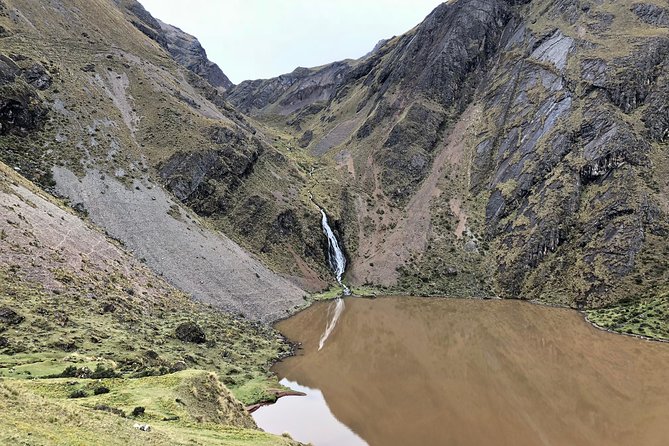
The hike starts with about two hours to a lookout for Perolniyoc cascade. The waterfall is one of the day’s first rewards, and it gives you a strong opening view before the trail turns toward ruins and high country. Bring a camera, but keep it easy to reach. You will want to stop without unpacking your whole bag.
After another 45 minutes, you reach the Inca site of Perolniyoc. The ruins sit on a cliff top above the valley, giving you both a cultural stop and a wide view of the surrounding mountains. Your guide explains the site’s background, then you have time to walk among the remains at your own pace.
That combination is one of the route’s best features. You get an ancient site without having to wait until Machu Picchu for a dose of Inca architecture. The stop also breaks up the walking, which helps on a day that becomes much harder later.
From Perolniyoc, the trail climbs steeply for around an hour to Rayan, at about 12,139 feet. This is the planned lunch stop, with food prepared by the trek chef. Meals are more than a convenience here. At high altitude, stopping for a proper lunch gives you time to eat, drink, and recover before the longest climb of the day.
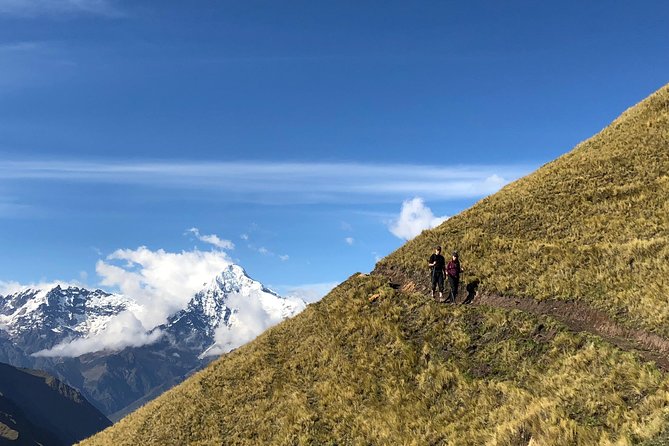
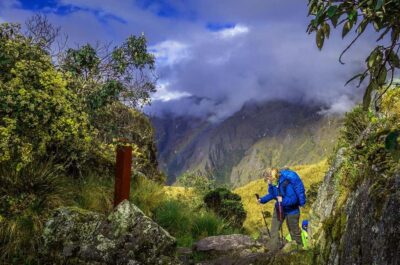
The afternoon brings about three hours of uphill walking toward Kuychiccasa Pass. This is the section that separates a scenic mountain hike from a serious high-altitude trek. You pass rustic farmhouses, see llamas, and gain views of the snow-covered Nevadas as the trail rises.
At 14,599 feet, the pass is the day’s major physical test. Take the pause at the top. The view across Chancachuco Valley is the kind that makes a hard climb feel worthwhile, but you should not rush the descent or treat the pass as a casual photo stop. Cold, wind, fatigue, and thin air can all arrive at once.
The final 45 minutes to camp are downhill and easier on the lungs, though tired legs may disagree. Camp is in Chancachuco Valley at about 14,147 feet. The campsite is prepared before you arrive, so you can change into warmer clothing rather than setting up tents after a long day.
That prepared camp is a meaningful part of the package. It lets you focus on food, warmth, and sleep. Still, high camping is high camping. You should expect basic outdoor conditions, not hotel comfort.
The middle days: remote valleys, villages, and changing scenery
The supplied schedule gives its most precise walking details for the opening day, while the trip description presents the full route as a four-day journey through the Ancascocha area to Machu Picchu. You should confirm the exact distances, camp locations, train arrangements, and daily walking times with Action Peru Treks before departure.
What is clear is the character of the route. You pass ancient Inca remains, small Andean villages, working farms, lakes, waterfalls, green fields, alpine areas, and snowy peaks. The scenery changes enough that the walk does not feel like four repeats of the same mountain view.
The route’s quieter quality is a major reason to consider it. The Ancascocha trail is promoted as an alternative to the more familiar Inca and Salkantay routes, and the available trip details place you in a much less crowded setting. You are not choosing this trek for a polished path or a steady stream of facilities. You are choosing it for open country and a stronger sense of distance from town.
The human side matters too. Several departures included a guide, cooks, and horsemen or mule handlers. Names connected with previous groups include Lino, Eddy, Christian, Edison, Lina, Oscar, Elsa, Eliquin, and Joel. The exact team can vary, but the pattern is useful: the support crew helps carry equipment, prepares meals, and gets camp ready while you walk.
Past groups have given special attention to the cooking. That is worth noting because hearty, well-timed meals can change how you feel about a demanding trek. Do not assume every drink or snack is covered, though. Alcohol is available to buy, and food or drinks outside the stated meal plan are not included.
Reaching Machu Picchu after the mountain route
The reward is not only the first view of Machu Picchu. It is arriving there after several days of remote walking, high passes, cold camps, and changing Andean scenery.
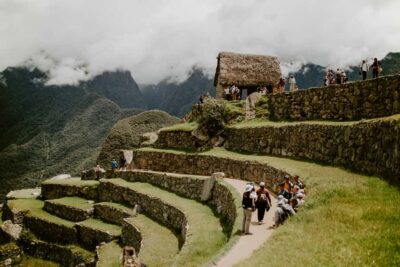
The package includes a guided tour of the ruins, so you are not left to wander without context. That guide-led visit is important at Machu Picchu, where the layout can look like a beautiful collection of stone terraces unless someone explains how the main areas fit together.
You also receive one night at a bed-and-breakfast in Aguas Calientes. After two nights camping, that overnight stop gives you a more comfortable base around the Machu Picchu visit. The package does not include round-trip bus tickets from Aguas Calientes to the ruins, so set aside extra money for that transport.
The available information does not state the exact train schedule or spell out how the final transfer is arranged. Ask about those details before paying, especially if you need to coordinate flights, another tour, or a fixed departure from Cusco.
more ways to reach machu picchu
- From Cusco: Full-Day Group Tour of Machu Picchu
★ 4.7 · 1,767 reviews - Machu Picchu Day Trip from Cusco
★ 4.5 · 1,644 reviews - Machu Picchu: Full-Day Tour from Cusco with Optional Lunch
★ 4.6 · 927 reviews - Cusco: 4-Day Inca Trail to Machu Picchu with Accommodation
★ 4.8 · 432 reviews
What the $730 price really covers
At $730 per person, the price is reasonable for a guided, supported four-day trek if you would otherwise need to arrange each part separately. The package includes national park fees, a local guide, two camping nights, breakfast, lunch, dinner, hotel pickup and drop-off, camping support, and one night at a bed-and-breakfast in Aguas Calientes.
The meals are a key part of the value. You are not carrying four days of food, and a chef prepares buffet-style lunches and dinners. Camping equipment and camp preparation also reduce the amount of gear you need to organize yourself.
The price is not all-inclusive. You need to account for:
- Round-trip bus tickets between Aguas Calientes and Machu Picchu
- Alcoholic drinks
- Food and drinks not specifically included
- Possible excess luggage charges
The listing also gives both meal inclusions and a general note saying food and drinks are excluded unless specified. Read that as breakfast, lunch, and dinner included, with extras at your own cost.
A maximum group size of 30 is stated, although the experience is described as a small-group trip. Thirty is not a tiny group, so ask for the expected group size for your date. A smaller actual group will make guide access and pace control easier.
Fitness, altitude, and practical preparation
The central question is not Can you walk for four days? It is Can you handle steep walking above 14,000 feet? The first day alone includes a climb to Kuychiccasa Pass and camping at roughly 14,147 feet.
You should arrive prepared for cold conditions at camp, changing weather, and long periods on your feet. Warm clothing is especially important because the itinerary specifically allows time to change into warmer layers on arrival at Chancachuco.
Good walking shoes are essential, as are water, sun protection, personal medication, and a small daypack. The provided details do not list a gear rental service or a detailed packing list, so ask Action Peru Treks what camping gear is supplied and what you must bring.
Give yourself time in Cusco before the trek if your schedule allows. The tour begins early, with the meeting information showing a 5:00 AM opening time, and the route quickly reaches high altitude. The information supplied does not promise an acclimatization day, so do not assume one is built into the package.
Children must be accompanied by an adult. Service animals are allowed. Confirmation is provided when booking, and mobile tickets are accepted.
Guide quality and group support
A good guide matters greatly on this route. You need someone who can explain the Inca sites, watch the pace on the steep sections, and keep the group organized when the altitude slows people down.
Names such as Lino and Eddy appear repeatedly in the available trip feedback, along with Christian, Edison, and Lina. The strongest praise centers on guides who stayed attentive, made adjustments for different ability levels, and explained the ruins and trail. If one of these guides is important to you, ask whether that person is assigned to your departure rather than assuming it.
The support crew also shapes the experience. Camps prepared before arrival and meals cooked along the route remove much of the daily work. You still need to carry your personal items and manage your own energy, but you are not responsible for hauling the full camping operation.
A maximum of 30 people can make the group feel less intimate than the phrase small group suggests. On the other hand, a larger group may provide more social energy and a wider range of walking companions. Ask about the expected number, guide-to-hiker ratio, and porter or mule arrangements.
The main drawbacks to weigh
The altitude is the obvious concern, but there are a few others.
First, the itinerary supplied is more detailed for day one than for the remaining days. That does not make the trek a poor choice, but it does mean you should request the full day-by-day schedule before booking. Confirm the route into Aguas Calientes, the train details, and the timing of the Machu Picchu visit.
Second, the bus at Machu Picchu is extra. That cost is easy to overlook because park fees and a guided ruins visit are included.
Third, four days leaves little room for a slow pace. You get a remarkable route in a compact schedule, but difficult sections may feel more pressured than they would on a five-day version. Several departures in the available feedback were five-day Ancascocha trips, which may suit you better if you want more recovery time. This specific product is four days and three nights.
Finally, camping at high altitude is not for everyone. The prepared campsite helps, but it does not change the basic conditions. If you sleep poorly in cold weather or struggle with altitude, the final reward may come at a high physical cost.
Who should book this trek
I would choose this trek if you want:
- A less crowded route toward Machu Picchu
- Waterfalls, ruins, villages, llamas, and snowy peaks
- A demanding high-altitude challenge
- Meals, camping support, park fees, and transfers bundled together
- A local guide and a guided visit to Machu Picchu
- A mix of wilderness and cultural stops rather than a direct hike to the ruins
I would think twice if you want gentle walking, a low-altitude route, guaranteed private guiding, or a fully itemized schedule before booking. The four-day plan is ambitious, and the pass is high.
Action Peru Treks has received a perfect 5 rating from 77 listed reviews, with 100 percent recommending the experience. The most praised elements are organization, guides, food, scenic variety, and the care provided by the wider trek crew. Those are strong signs, but your own success will still depend on fitness, acclimatization, and asking clear questions before departure.
Should you book the Ancascocha Trek?
Book it if the route itself excites you. The appeal is not simply checking Machu Picchu off a list. It is reaching the ruins after a hard, quiet passage through the Andes, with Perolniyoc waterfall, Inca remains, farm communities, llamas, and the huge Kuychiccasa Pass along the way.
At $730, the included camping, meals, national park fees, guide, transfers, and Aguas Calientes night make a solid package. Just budget for the Machu Picchu bus, confirm the less detailed parts of the schedule, and be honest about high-altitude fitness.
You can cancel for a full refund up to 24 hours before the local start time. Cancellations within 24 hours are not refunded, and late changes are not accepted.
FAQ
How long is the Ancascocha Trek to Machu Picchu?
The trek lasts approximately four days and three nights.
Where does the trek begin?
The walking portion begins in Soqma, located about 1 hour and 45 minutes by vehicle from Cusco, at approximately 10,512 feet.
Is hotel pickup included?
Yes. Hotel pickup and drop-off are included.
How high is the highest pass?
Kuychiccasa Pass reaches approximately 14,599 feet.
Is camping included?
Yes. The package includes two nights of camping.
Are meals included?
Breakfast, lunch, and dinner are included. Food and drinks outside the specified inclusions are not covered.
Are national park fees included?
Yes. National park fees are included in the price.
Is a night in Aguas Calientes included?
Yes. The package includes one night at a bed-and-breakfast in Aguas Calientes.
Are Machu Picchu bus tickets included?
No. Round-trip bus tickets from Aguas Calientes to Machu Picchu are not included.
What level of fitness is required?
You should have a strong physical fitness level. The route includes steep uphill walking and reaches very high altitude.
What is the maximum group size?
The stated maximum is 30 people.
What is the cancellation policy?
You receive a full refund if you cancel at least 24 hours before the experience start time. Cancellations or changes made within 24 hours are not accepted and are not refunded.
More 4-Day Experiences in Cusco
- 4 Day Tour to the Manu National Park
★ 5.0 · 81 reviews - Cusco Sacred Valley and Machupicchu 4 Days
★ 5.0 · 80 reviews - 4 Day Inca Trail Trek to Machu Picchu Multi day tour
★ 5.0 · 70 reviews - Classic Inca Trail 4 Days to Machu Picchu
★ 5.0 · 69 reviews
More Hiking & Trekking in Cusco
- Salkantay Trek Challenge – 3 Days / 2 Nights
★ 5.0 · 101 reviews - From Cusco: Rainbow Mountain Trek
★ 4.5 · 98 reviews - Private Palccoyo Rainbow Hike Without the Crowds
★ 5.0 · 86 reviews - Choquequirao Trek 4 days and 3 nights
★ 5.0 · 81 reviews
Recently added around Cusco
- Palcoyo colored mountain hike + stone forests★ 4.6 · 3 reviews
- Maras Moray★ 5.0 · 3 reviews
- Full-Day Condor Viewpoint & Inca Sites Tour★ 5.0 · 3 reviews
- From Cusco: Vinicunca Mountain of Colors Excursion + Ticket★ 5.0 · 3 reviews
- Excursion Cusco – Puno – Titicaca Observatory Train★ 5.0 · 3 reviews
- Machu Picchu: Private Tour Guide Service for up to 15 people★ 4.5 · 3 reviews
- Machu Picchu: 1-day tour by Vistadome Observatory train★ 5.0 · 3 reviews
- Cusco: Chonta Canyon and Condor Flight Tour with Lunch★ 5.0 · 3 reviews
Machu Picchu Tours, compared.
4-Day Inca Trail to Machu Picchu with Accommodation
Read our review →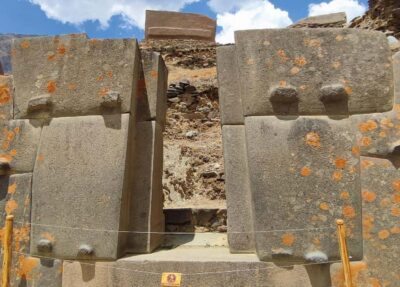
2-Day Trip to the Sacred Valley and Machu Picchu
Read our review →
Machu Picchu 2-Day Inca Trail with Panoramic Train
Read our review →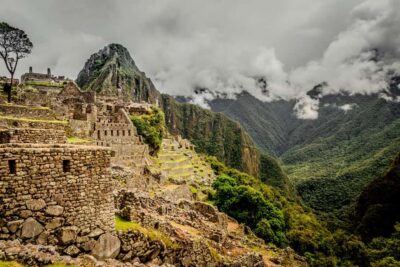
Browse the lists this tour appears in