
Reviewed · MACHU PICCHU TOURS
Cusco: 5-Day Salkantay Ultimate Trek to Machu Picchu
The most striking part of this five-day Salkantay trek is the sudden change from icy Andean peaks to warm cloud forest. You begin beneath Salkantay and Humantay mountains, cross a high pass at 4,630 meters, then walk through waterfalls, fruit trees, and coffee country before reaching Machu Picchu.
I like the visit to Humantay Lake, which adds a memorable half-day outing to the first stage, and I like the overnight in Lucmabamba. Staying with a local family and learning about coffee gives this route more human interest than a simple march from camp to camp. The guide and support crew also receive especially strong praise for care and organization.
The catch is the altitude and effort. Day 1 reaches 4,200 meters, Day 2 climbs higher, and the trail includes long ascents and descents. This is not a soft introduction to Peru’s mountains, and anyone with back problems or a history of altitude sickness should choose carefully.
Key points to know before you book
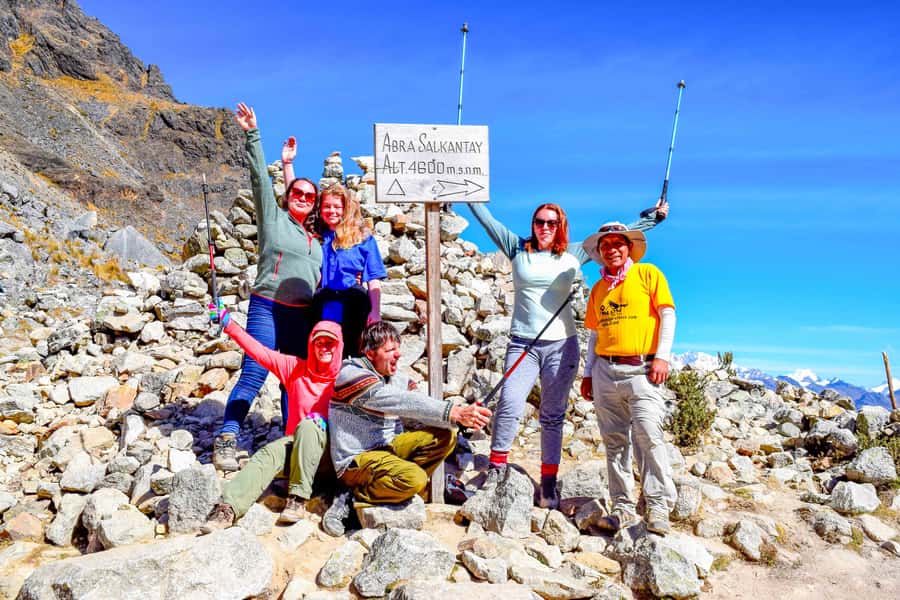
- The highest point is Salkantay Pass at 4,630 meters, where thin air and broad mountain views reward a demanding climb.
- Humantay Lake is visited on Day 1, at 4,200 meters, so you face serious altitude early in the trek.
- Lucmabamba adds a local touch, with a family stay and a chance to learn about coffee farming.
- Llactapata offers a less common view of Machu Picchu, reached by an original Inca trail before the final approach.
- The $669 price covers a lot, including meals, support horses, four nights of accommodation, Machu Picchu entry, the bus, and return transport to Cusco.
- Groups are capped at 10 people, and groups of nine or more receive an assistant guide.
Why this route feels different from a standard Machu Picchu trip
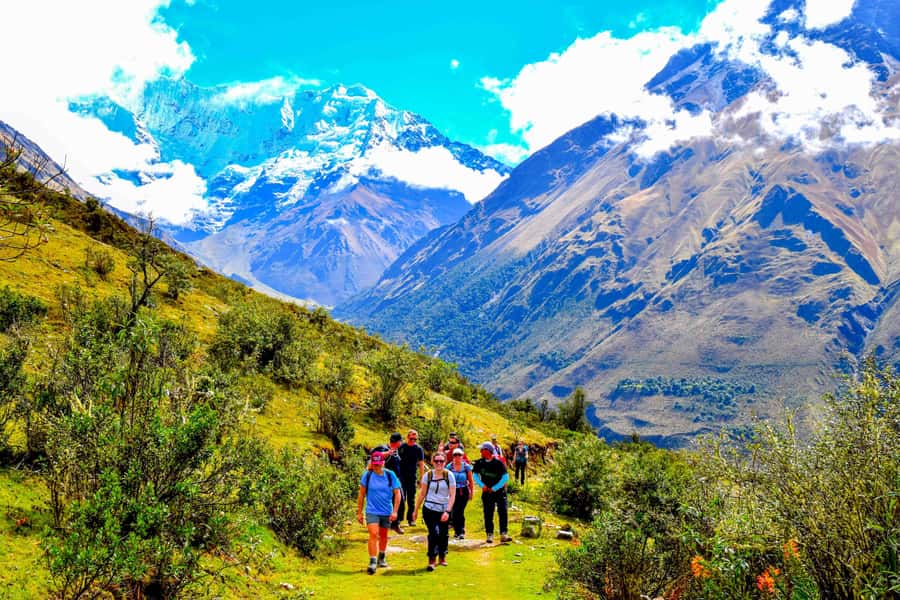
Many trips to Machu Picchu focus on the ruins alone. This one makes the journey part of the main event. You move through several distinct zones: dry high mountain terrain, glacial country, steep valleys, cloud forest, and the warmer slopes near the Urubamba Valley.
That variety is the route’s great strength. You do not spend five days looking at the same kind of scenery. The opening stages are wide and exposed, with snow-covered summits and rocky ridges. Later, the trail becomes greener and more sheltered, with waterfalls, fruit trees, and thick plant growth.
The route also gives you several ways to understand the Andes. Salkantay Pass carries spiritual importance in the region. Llactapata connects the final approach to the Inca past. Lucmabamba brings you into present-day rural life, where coffee farming remains part of the local economy.
The tradeoff is that this is a serious trek, not simply a sightseeing package with a few walks added. You camp for most of the journey, carry daypack essentials, and spend long hours on uneven mountain paths. The support system helps, but it does not remove the physical work.
More Hiking Tours in Cusco
- From Cusco: 7 Lakes Ausangate Trek with Breakfast and Lunch
★ 4.8 · 360 reviews - Cusco: Rainbow Mountain Tour and Red Valley Hike (Optional)
★ 4.7 · 149 reviews - Cusco: Full-Day Rainbow Mountain & Red Valley Trekking Tour
★ 4.5 · 121 reviews
Day 1: Soraypampa and the climb to Humantay Lake
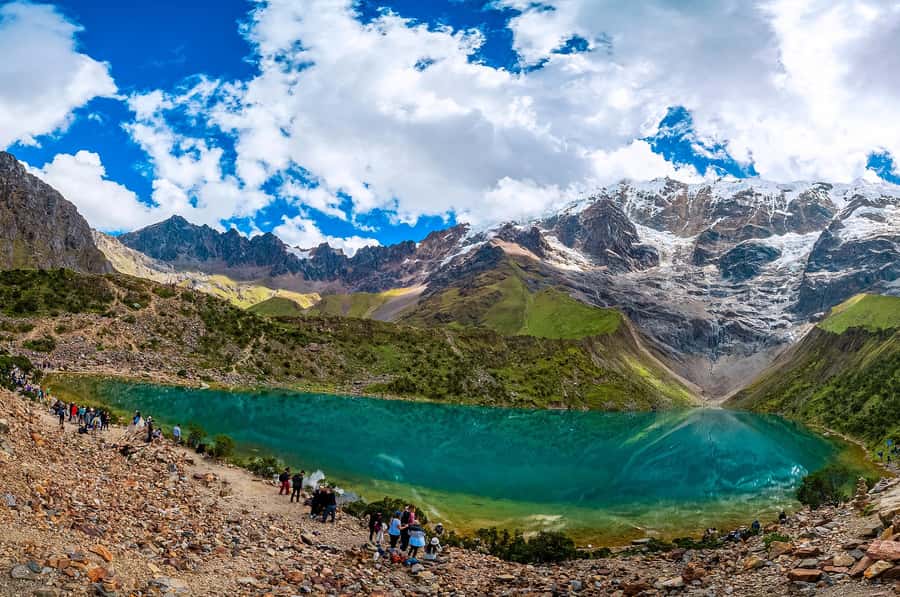
The first day takes you toward Soraypampa at 3,800 meters. The view is immediate and dramatic, with Salkantay Mountain rising to 6,271 meters and Humantay Mountain filling the high-country skyline.
You hike in thin, crisp air toward Humantay Lake, located at 4,200 meters. Its turquoise water comes from glacial melt, and the surrounding peaks give the lake a stark, almost unreal setting. This is one of the most memorable stops on the entire route, but it also tests your body at the start of the trip.
A classic Peruvian lunch is served during the day, using fresh local ingredients. Since breakfast on Day 1 is not included, you need to handle that meal before setting out. You also need to bring your own water for the first four hours, after which water is supplied.
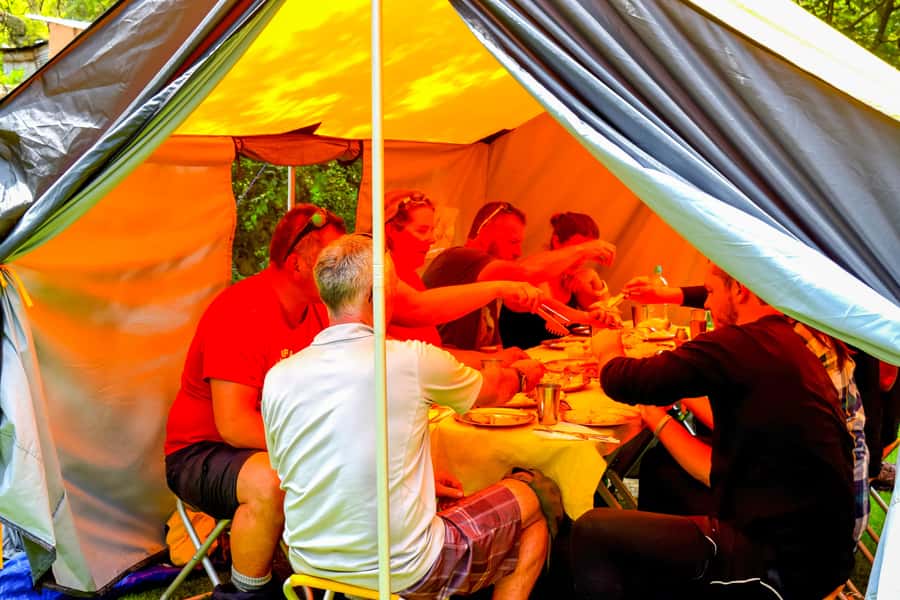
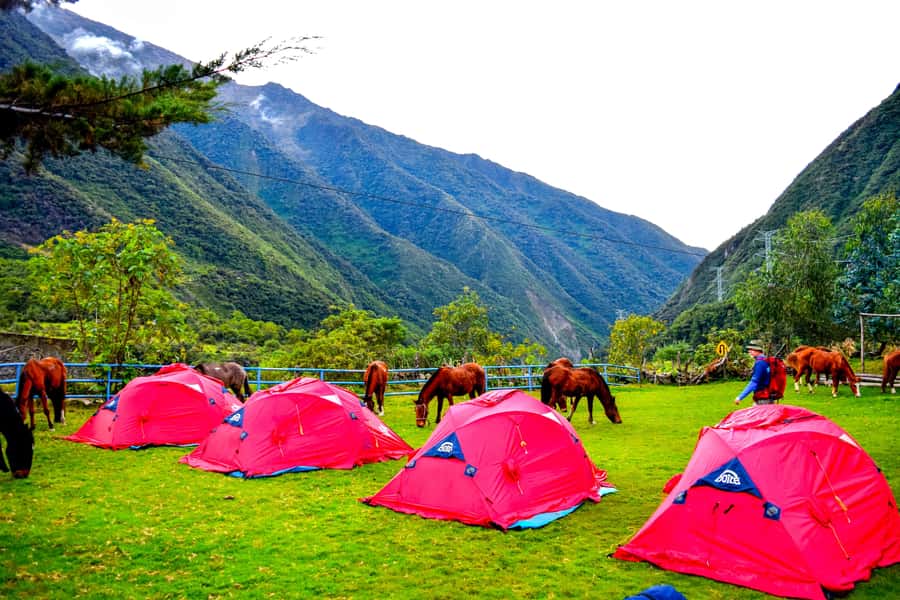
After the lake, you return to camp for dinner. The camp includes a dining tent with tables and chairs, a four-person tent shared by two trekkers, and a double-thickness foam mattress. Staff bring wake-up tea each morning, a small comfort that becomes quite welcome in a cold mountain camp.
The first night is likely to feel basic rather than luxurious. Still, the combination of hot food, support staff, and a sheltered dining area makes the camping setup more manageable. Bring warm clothing and rain protection, since mountain weather can change quickly.
Day 2: Salkantay Pass at 4,630 meters
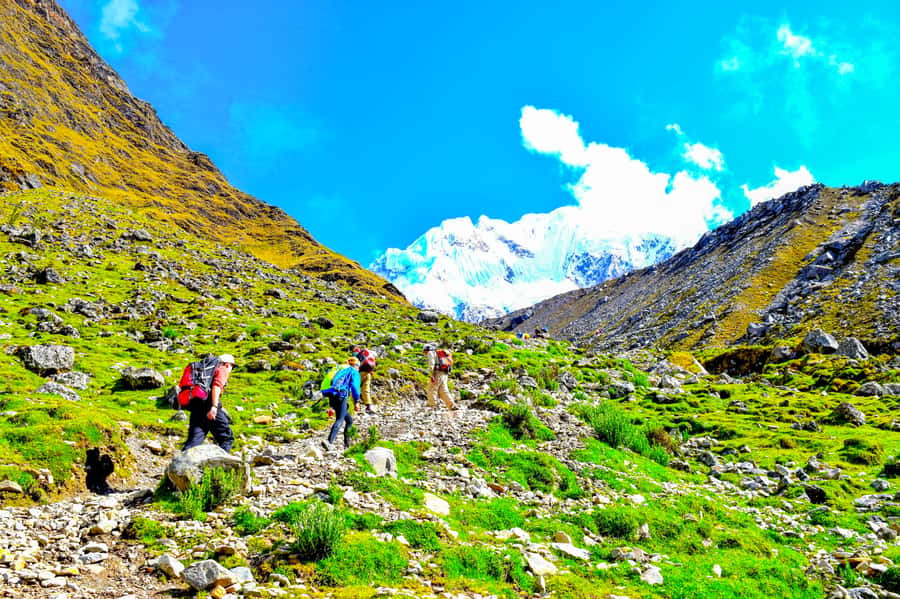
Day 2 is the hardest and highest section. You climb to Salkantay Pass, reaching 4,630 meters above sea level. The views open toward snow-capped peaks, sharp ridges, and deep valleys, but the thin air can slow even fit hikers.
This is the day to keep your pace steady. You do not gain anything by racing ahead, especially when the route reaches its highest point. A professional guide, oxygen bottle, and first-aid kit are included, but you still need to tell the guide promptly if you feel unwell.
After the pass, the scenery changes quickly as you descend toward a higher jungle zone. The contrast is one of the route’s best features: bare, cold mountain country gives way to more plant life and softer colors. It also means the trail begins to feel warmer and more enclosed.
The support horses carry equipment and up to 7 kilograms of your personal belongings. That is a useful allowance, but you should still pack with restraint. Keep the items you need during the day in your own daypack, and use the supplied duffle bag for clothing and overnight gear.
Day 3: Five hours through cloud forest to Lucmabamba
Day 3 trades the high pass for cloud forest. The trail descends through misty surroundings with waterfalls, fruit-bearing trees, and unusual plants and animals. The route covers about five hours before reaching Playa Sahuayaco at 2,200 meters.
This is where the Salkantay route becomes especially varied. The air is warmer, the vegetation thicker, and the walking experience very different from the exposed heights of the previous day. If you enjoy seeing how quickly Andean climates change with elevation, this section is a major reason to choose the trek.
In the afternoon, you continue to Lucmabamba at 2,000 meters. The campsite is near the start of an old Inca route to Llactapata, but the local setting is just as important. You stay with a family and learn about their coffee farm, giving you a direct connection to daily life in the area.
That family visit is valuable because it prevents the trek from becoming only a sequence of viewpoints. You get a look at agriculture and local work in a place that feels tied to the surrounding land. The supplied details do not promise a formal coffee tasting or a specific farm activity, so think of this as a chance to learn about coffee production rather than a full workshop.
more ways to reach machu picchu
- From Cusco: Full-Day Group Tour of Machu Picchu
★ 4.7 · 1,767 reviews - Machu Picchu Day Trip from Cusco
★ 4.5 · 1,644 reviews - Machu Picchu: Full-Day Tour from Cusco with Optional Lunch
★ 4.6 · 927 reviews - Cusco: 4-Day Inca Trail to Machu Picchu with Accommodation
★ 4.8 · 432 reviews
Day 4: The Inca trail to Llactapata
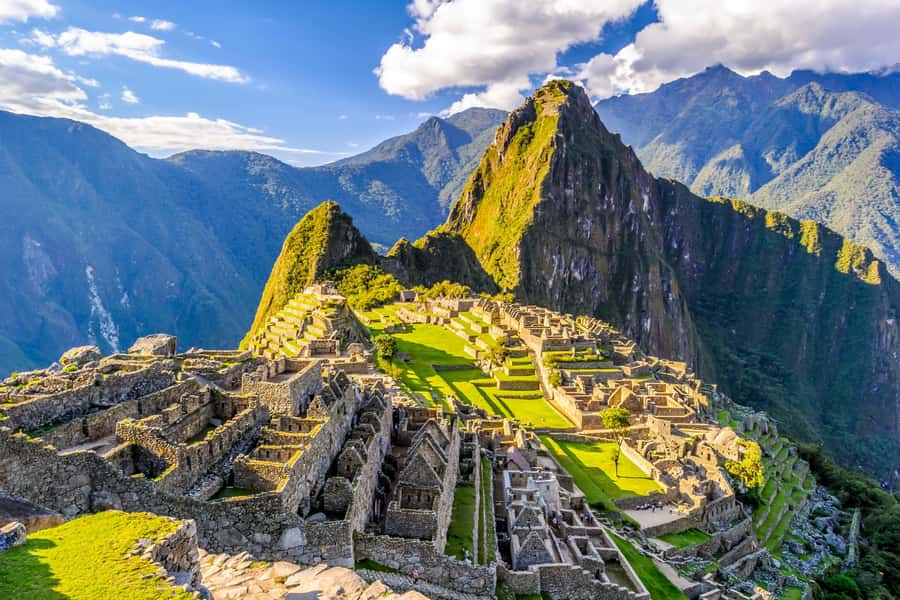
After breakfast, you climb for about two hours along an original Inca trail to Llactapata. The ruins sit at 2,840 meters and are less frequently visited than Machu Picchu itself.
The reward is the view. From Llactapata, you get an early sight of Machu Picchu from a different angle, before reaching the main citadel. This creates a fine sense of approach. You see the destination in the distance, then continue toward it rather than arriving without context.
The climb is not long by highland standards, but it comes after several demanding days. The trail can feel tough because you are still carrying your daypack and have already completed major climbs and descents. Take your time and let the guide set a sensible rhythm.
From Llactapata, you descend through cloud forest for about an hour and a half to the Hydroelectric Station at 1,890 meters. You then travel to Aguas Calientes, the town below Machu Picchu, for the night.
A hotel stay here is a welcome change after camping. It gives you a proper base before the early visit to the citadel and lets you prepare for the final morning without another night in a tent.
Day 5: Machu Picchu with a guided visit
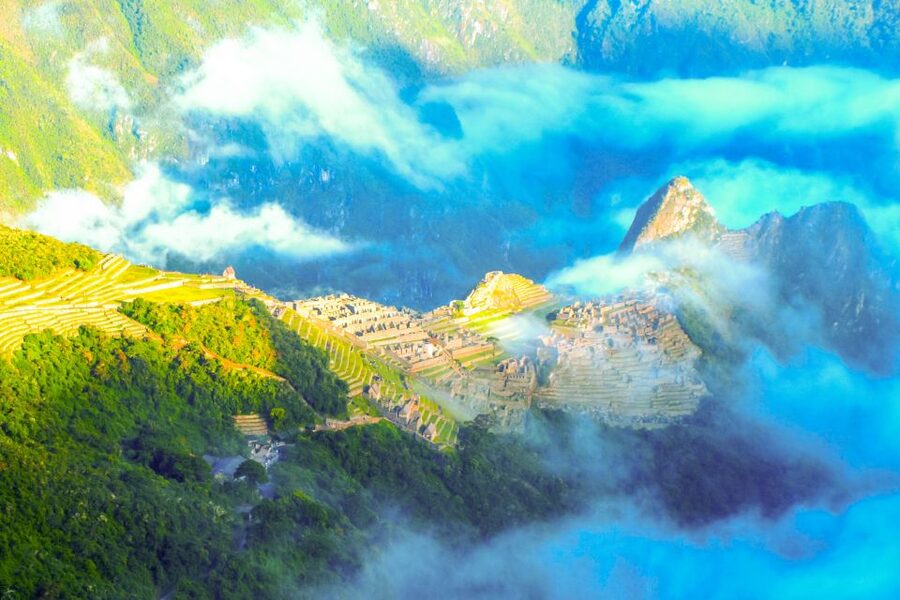
The final morning begins with breakfast and a bus up to Machu Picchu at 2,430 meters. Your guide leads a detailed tour of the citadel, covering temples, ceremonial areas, terraces, and storage buildings.
A guide is particularly useful here. Machu Picchu is visually powerful, but the site can become a collection of stone walls without explanation. A structured visit helps you understand how the main areas fit together and gives purpose to what you are seeing.
Optional mountain hikes are available if booked and paid for separately. Huayna Picchu costs $85, while Machu Picchu Mountain is also listed as an option, though no separate price is provided for it here. If you want one of these climbs, confirm availability and cost before departure rather than assuming it is part of the $669 package.
After the citadel visit, the group returns to Aguas Calientes for a short rest and lunch. Lunch and dinner on Day 5 are not included, so budget for both. In the afternoon, you take a train to Ollantaytambo, followed by a van ride to Cusco.
The return is long, but the transport is already arranged. That matters after five days on foot, especially when you would rather not work out separate train, transfer, and city transport details yourself.
What the $669 price really includes
At $669 per person, this trek offers solid value for a five-day route. The price includes a professional English or Spanish-speaking guide, a cook, support horses, four breakfasts, four lunches, four afternoon snacks, four dinners, camping equipment, a hotel in Aguas Calientes, Machu Picchu entry, the bus to the citadel, and transport back to Cusco.
You also receive hotel pickup from the central Cusco area and a pre-departure briefing one or two days before departure. At that meeting, you meet the guide and group and receive the duffle bag carried by horse during the trek.
The package does not cover everything. You pay separately for a sleeping bag, trekking poles, breakfast on Day 1, lunch and dinner on Day 5, travel insurance, and any optional mountain entrance. Dietary requests such as vegetarian, vegan, or gluten-free meals can be arranged if you tell the operator when booking and confirm them at the briefing.
I see the best value in the combination of logistics and support. You are not only paying for a guide on the trail. You are also paying for food preparation, animal support, camp organization, accommodation in Aguas Calientes, the Machu Picchu entry, and the return journey to Cusco.
Guides, group size, and support on the trail
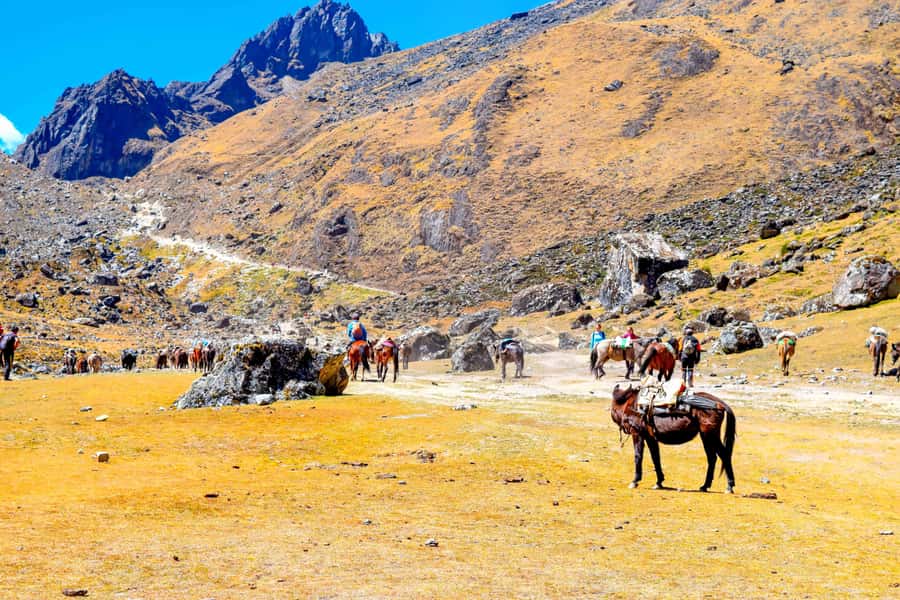
The group maximum is 10 people, which is small enough for the guide to keep track of the party without creating a crowded procession. The tour operates with at least two participants. Groups of nine or more receive an assistant guide.
The guide and support crew are central to the quality of this experience. The strongest praise focuses on excellent guiding and careful support, which is exactly what you want on a route with major altitude changes. A good guide can help with pacing, point out important features, and respond quickly when someone struggles.
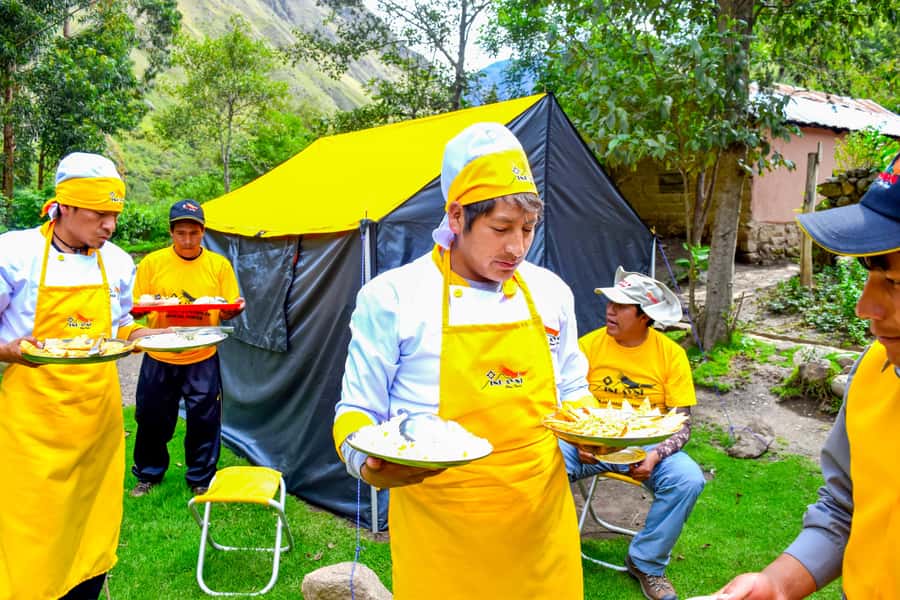
The cook is another key part of the setup. Four dinners, four lunches, four breakfasts, and afternoon snacks are included, along with morning wake-up tea. You should still expect expedition-style meals rather than restaurant dining, but regular food makes a major difference on a demanding route.
An oxygen bottle and first-aid kit are carried as part of the safety equipment. These provisions are reassuring, but they are not a substitute for acclimatization or travel insurance. You should take altitude symptoms seriously and follow the guide’s advice.
What to pack for five days
Bring your passport or ID card, since a valid passport is required during the activities. You also need a sun hat, sunscreen, comfortable clothing, and rain gear.
A practical packing list includes:
- A daypack for water, sunscreen, rain gear, and personal items
- Warm layers for the first two days at high altitude
- Dry clothing for the warmer cloud forest
- A sleeping bag, unless you plan to hire one
- Trekking poles, unless you plan to hire them
- Personal medication and basic toiletries
- A small amount of cash for meals not included on Day 5 and other personal costs
The tour supplies a sleeping mattress, but not a sleeping bag. It also supplies water after the first four hours of Day 1. Plan ahead for that opening stretch rather than assuming bottled water will be available from the start.
Alcohol, drugs, pets, weapons, and sharp objects are not allowed. Travel insurance is highly recommended for the full trip.
Who should choose this Salkantay trek?
This route suits you if you want Machu Picchu to be the end of a real mountain journey. It works particularly well for hikers who value changing scenery, camping, local contact, and a guided visit rather than a quick rail trip to the ruins.
You should be comfortable with long days, steep sections, high altitude, and basic camp accommodation. The tour is not suitable for people with back problems, altitude sickness, or people over 70, according to the stated restrictions.
The route can also suit you if you want support without joining a large group. A maximum of 10 people keeps the experience fairly personal, while the guide, cook, horses, and transport reduce the amount of planning you must handle yourself.
It is less suitable if your main goal is comfort. You camp for four nights of the trip, face a demanding pass, and do not have all meals included. A shorter or less strenuous Machu Picchu plan may be better if you prefer hotels and easy walking.
Should you book it?
Book this trek if you want the full progression from high Andean peaks to cloud forest, coffee country, Inca ruins, and Machu Picchu. The standout moments are Humantay Lake, Salkantay Pass, the Lucmabamba family stay, and the first view of Machu Picchu from Llactapata.
The $669 price is fair for what is included, especially with meals, horses, camping support, hotel accommodation, entry fees, and return transport covered. Just add the cost of a sleeping bag, poles, insurance, Day 1 breakfast, Day 5 meals, and any optional mountain hike.
My practical advice is simple: prepare for altitude, pack for both cold and wet conditions, and use the pre-departure briefing to confirm dietary needs and optional hikes. If you are fit, properly prepared, and happy to trade comfort for a varied route, this is a strong way to reach Machu Picchu.
FAQ
How high does the Salkantay trek go?
The route reaches 4,630 meters at Salkantay Pass. Humantay Lake is visited at 4,200 meters, and Soraypampa is at 3,800 meters.
Is Machu Picchu entry included?
Yes. Entrance to Machu Picchu and the bus to the citadel are included.
Are meals included for all five days?
Four breakfasts, four lunches, four afternoon snacks, and four dinners are included. Breakfast on Day 1 and lunch and dinner on Day 5 are not included.
Is accommodation provided during the trek?
Yes. The package includes camping accommodation during the trek and a hotel in Aguas Calientes. A four-person tent is shared by two trekkers.
Can I bring less gear on the trail?
Yes. Horses carry the equipment and up to 7 kilograms of your personal belongings. You receive a duffle bag at the pre-departure briefing.
Are Huayna Picchu and Machu Picchu Mountain included?
No. These optional mountain hikes are not included in the listed price. Huayna Picchu is listed at an additional cost of $85, and availability should be confirmed before departure.
More Hiking & Trekking in Cusco
- From Cusco: Rainbow Mountain Trek
★ 4.5 · 98 reviews - Private Palccoyo Rainbow Hike Without the Crowds
★ 5.0 · 86 reviews - Choquequirao Trek 4 days and 3 nights
★ 5.0 · 81 reviews - Ancascocha Trek To Machu Picchu 4 Days And 3 Nights
★ 5.0 · 77 reviews
More Salkantay Treks
- Salkantay Trek Challenge – 3 Days / 2 Nights
★ 5.0 · 101 reviews - Small Group 5 Days Salkantay and Machu Picchu by Llactapata Tour
★ 5.0 · 88 reviews - Machu Picchu: 5-Day Salkantay Trek with Panoramic Train
★ 5.0 · 79 reviews - Salkantay Trek 4 Days to Machu Picchu by Glamping Sky Lodge Dome
★ 5.0 · 68 reviews
Recently added around Cusco
- Palcoyo colored mountain hike + stone forests★ 4.6 · 3 reviews
- Maras Moray★ 5.0 · 3 reviews
- Full-Day Condor Viewpoint & Inca Sites Tour★ 5.0 · 3 reviews
- From Cusco: Vinicunca Mountain of Colors Excursion + Ticket★ 5.0 · 3 reviews
- Excursion Cusco – Puno – Titicaca Observatory Train★ 5.0 · 3 reviews
- Machu Picchu: Private Tour Guide Service for up to 15 people★ 4.5 · 3 reviews
- Machu Picchu: 1-day tour by Vistadome Observatory train★ 5.0 · 3 reviews
- Cusco: Chonta Canyon and Condor Flight Tour with Lunch★ 5.0 · 3 reviews
Machu Picchu Tours, compared.



4-Day Inca Trail to Machu Picchu with Accommodation
Read our review →
2-Day Trip to the Sacred Valley and Machu Picchu
Read our review →
Machu Picchu 2-Day Inca Trail with Panoramic Train
Read our review →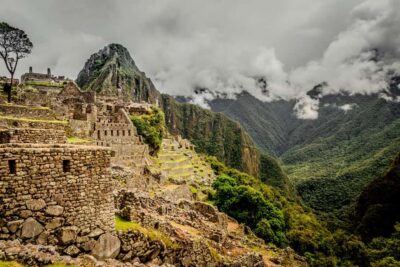
Browse the lists this tour appears in