
Reviewed · SILLAR ROUTE TOURS
4 hours Tour: Route of Sillar with Trek in Culebrillas
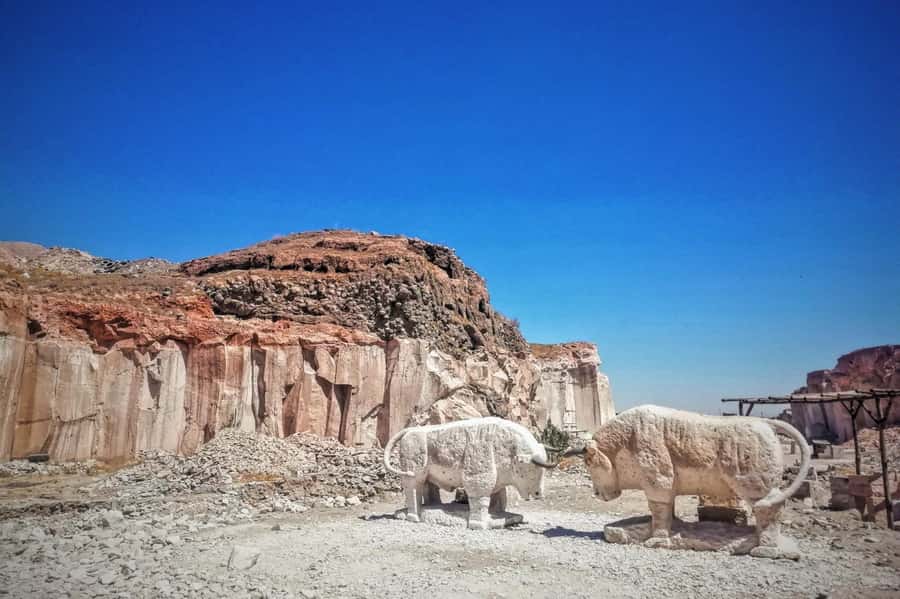
Arequipa’s famous white stone is not just a pretty building material. It is the product of hard quarry work, volcanic deposits, and generations of stonemasons. This half-day trip takes you from volcano viewpoints into the Añashuayco Quarry, then on foot through Culebrillas Canyon to see old Wari petroglyphs.
I like two things here: you get a close look at how ashlar is cut, and the short canyon walk adds a genuine outdoor element rather than keeping you in the van. The low $11 price is another strong point. The main caution is timing. One recent outing started 30 minutes late and felt rushed, and the English-language service can depend on guide availability.
Key points
- Añashuayco Quarry: See towering ignimbrite walls and a large stone carving of the Church of the Company of Jesus.
- Hands-on stonework: A stonemason may show you the daily process and let you try cutting a block of ashlar.
- Culebrillas Canyon walk: Follow a roughly 20-minute route between walls rising 15 to 20 meters.
- Wari petroglyphs: Look for carvings made more than a thousand years ago near the end of the canyon.
- Volcano and Chilina Valley views: Begin with a photo stop at a viewpoint overlooking Arequipa’s volcanic setting.
- Strong budget value: Transport and a professional guide are included for $11, but entrance tickets add 18 soles.
Why the Sillar Route is worth your morning
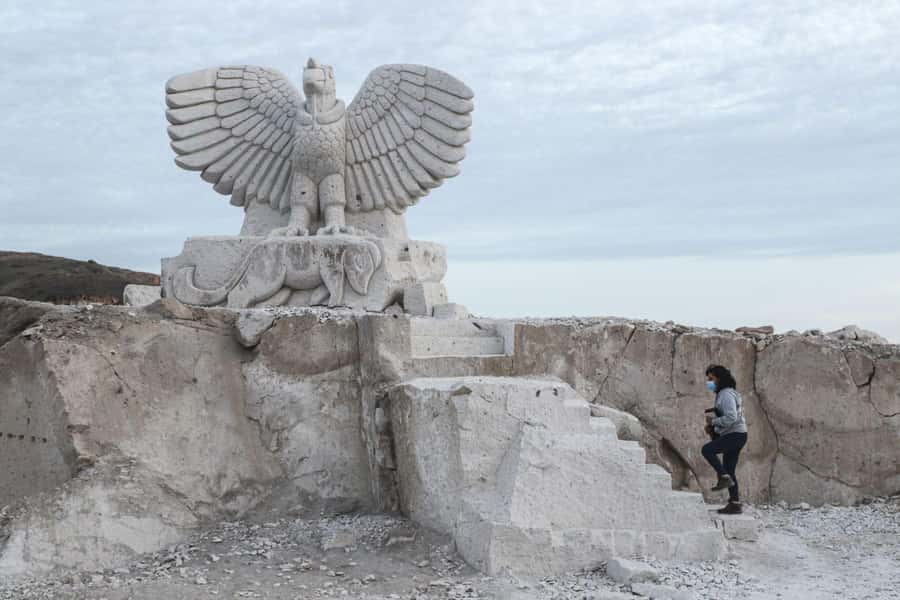
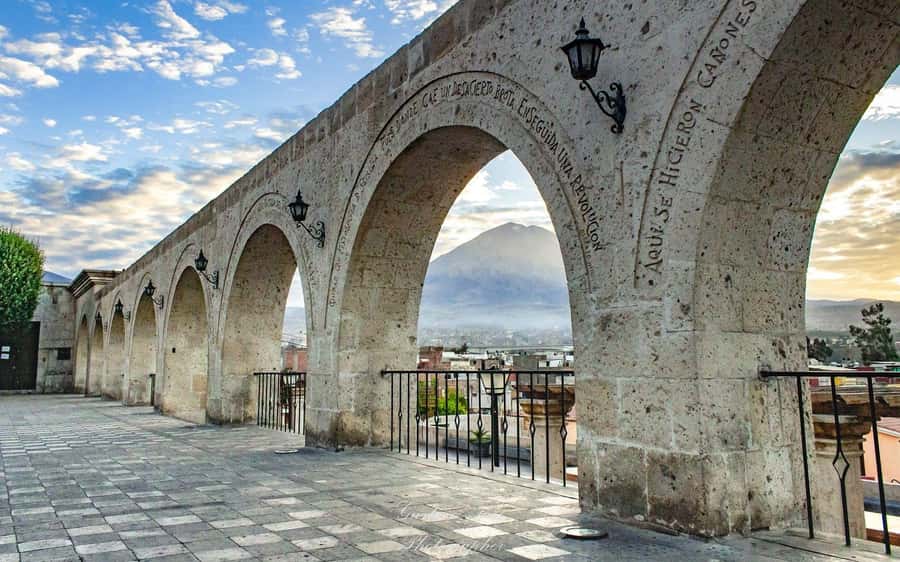
Arequipa is often called the White City because ashlar, or sillar, shapes so much of its historic center. This pale volcanic stone gives churches, mansions, and courtyards their distinctive look. On this tour, you leave the polished streets and visit the places where that stone is extracted and worked.
That change in setting matters. In town, ashlar can look smooth and almost delicate. At the quarry, you see the rough source material, the cut faces, and the enormous labor needed to turn blocks into architectural pieces. It is a useful connection between Arequipa’s buildings and the people who made them possible.
I also like the scale of the excursion. You do not need to give up a full day. The planned duration is 270 minutes, with a morning departure around 9:15 and a return to central Arequipa around 1:30. An afternoon departure at 2:00 is also available. This makes the outing easy to fit around a city visit, a meal, or a longer trip elsewhere.
The experience is not a major archaeological expedition, and the walking portion is short. If you want a strenuous hike or hours of detailed site exploration, this will feel limited. If you want a practical introduction to Arequipa’s stone, views, and nearby canyons, the format works well.
More Hiking Tours in Arequipa
- From Arequipa: Sillar Route Trek
★ 4.2 · 461 reviews - From Arequipa: 2-Day Colca Canyon Trekking Tour
★ 4.8 · 243 reviews - 2 Day 1 Night Trek / Colca Canyon
★ 4.5 · 92 reviews
Starting at Álvarez Thomas 115
The meeting point is the main office at C. Álvarez Thomas 115, on the same corner. Your name is checked against the list, followed by basic instructions before departure. The stated coordinates are -16.4003911, -71.5370347.
The first stretch is by tourist van. The itinerary allows about 25 minutes before the first viewpoint. Since the tour leaves from central Arequipa, give yourself enough time to find the office without hurrying. The finish is listed near Av. La Marina, close to the city center, rather than at the original office.
The transport is one of the practical advantages of booking this as an organized trip. The quarry and canyon are outside the central streets, and the route includes several separate stops. At this price, having transport and a guide bundled together is useful.
Still, keep an eye on the clock. The published schedule is approximate, and one outing was delayed by 30 minutes. That left less time at the stops. If your afternoon includes a fixed reservation, allow a cushion rather than planning everything tightly around the stated return.
The viewpoint over volcanoes and the Chilina Valley
The first stop is a viewpoint used to show Arequipa’s setting. You get a short break for photographs and a guided explanation, with about 20 minutes scheduled here. Depending on the season, the exact viewpoint may change, but the aim is the same: to see the volcanoes and the Chilina Valley before reaching the quarries.
This is a good opening stop because it gives the stone a wider context. Ashlar came from volcanic material, and Arequipa’s buildings are closely tied to the region’s volcanoes. The view helps you understand that the white stone in the city did not appear by chance. It comes from the geology around Arequipa.
Do not expect a long viewpoint visit. Twenty minutes is enough for a look, a few photographs, and an introduction from the guide. If cloud, light, or the season affects the view, the stop may be less dramatic than expected. The tour does not promise a particular volcano panorama every time.
Añashuayco Quarry and the making of ashlar
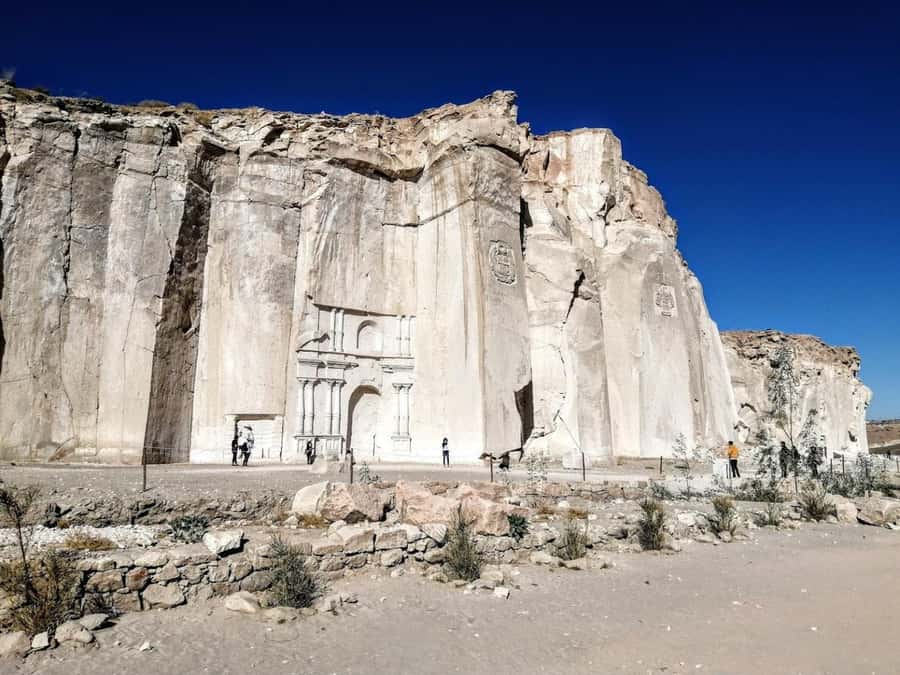
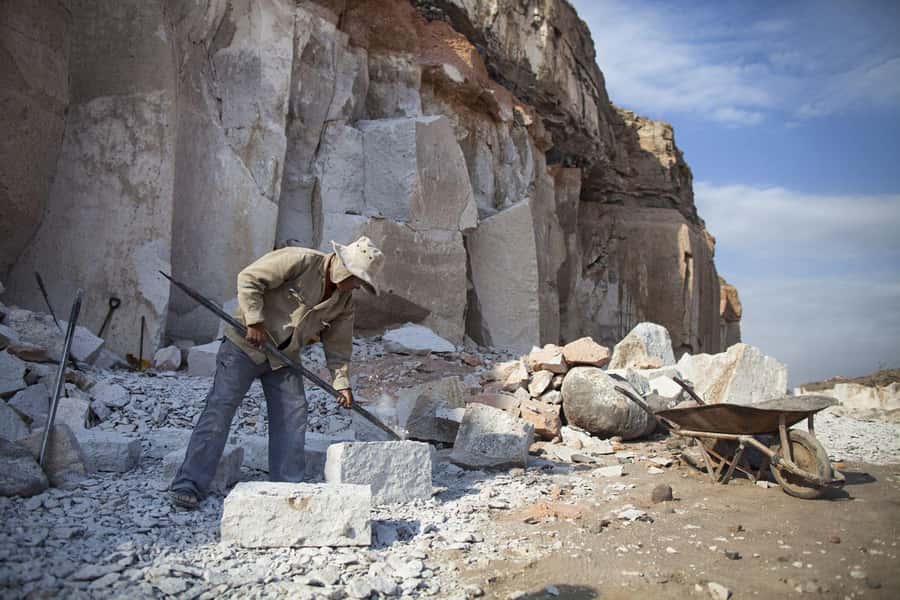
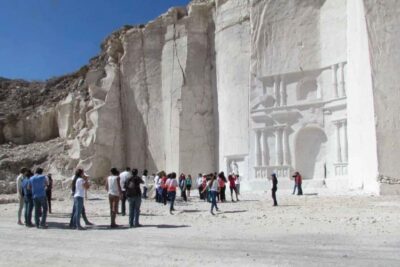
After roughly 45 minutes in the van, you reach the Añashuayco Quarry. This is the central stop, with about 50 minutes for photographs, explanation, free time, and walking. The quarry is still operating, and the stonemasons work early in the day.
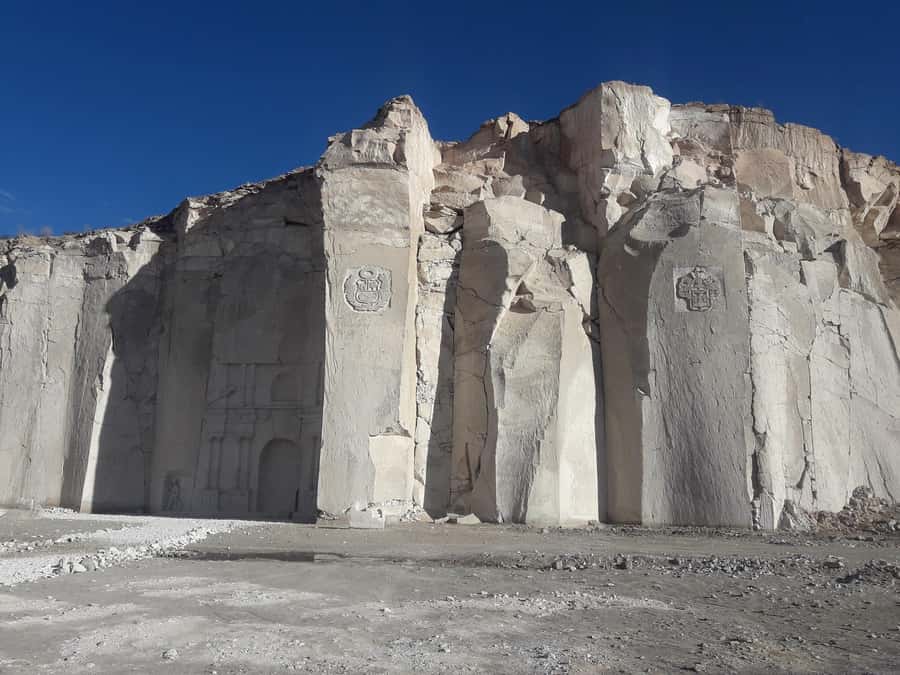
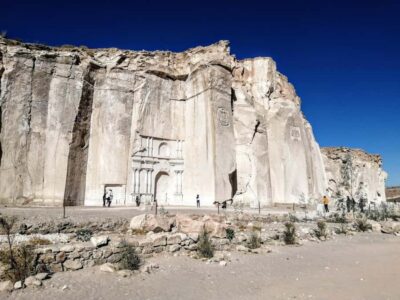
The sight is much more striking than a simple stone workshop. Extraction has cut broad cliffs into the ignimbrite, creating an immense canyon with walls several meters high. The exposed stone shows the scale of the work clearly. You are looking at a working industrial and cultural site, not a display built only for tourism.
Your guide explains the origin of ashlar, how it is produced, and the ways it has been used in Arequipa. That information is most useful when paired with what you can see around you. The block in front of you is not an abstract piece of geology. It is the starting point for the carved church fronts and stone details found in the city.
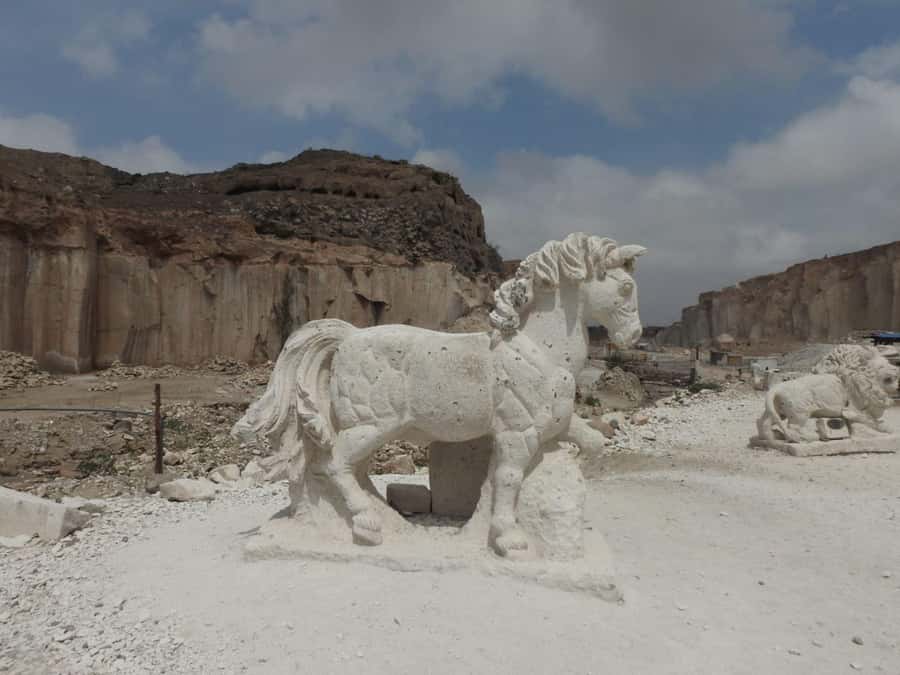
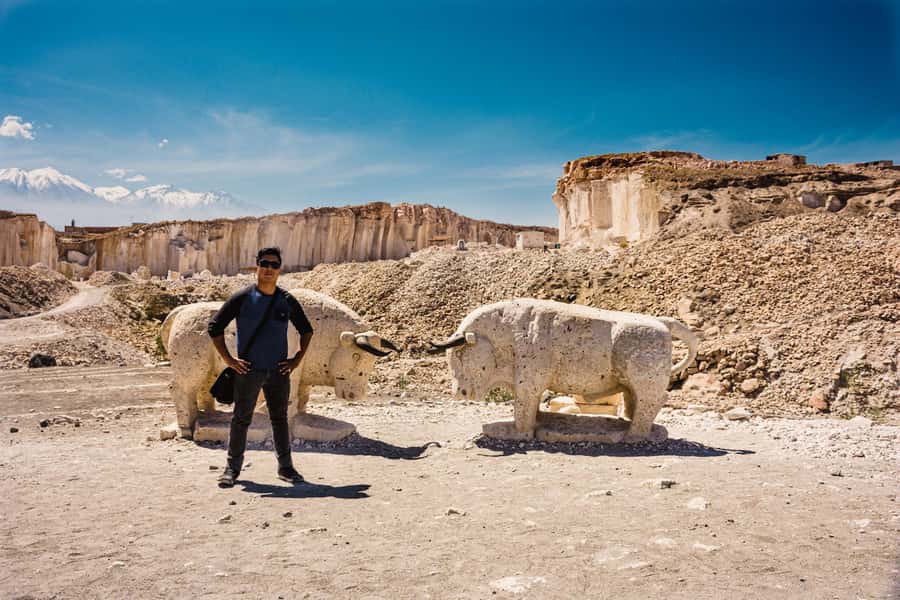
A particularly memorable feature is the mega carving of the Church of the Company of Jesus. Local stonemasons made it in the quarry, using the same material that gives central Arequipa much of its character. It makes a strong photograph, but it also gives you a better sense of the craft. The quarry is both a place of production and a place where stoneworkers show what the material can do.
The most unusual part is the chance to meet one of the stonemasons. The worker can explain the daily job and may let you try cutting one of the stone blocks yourself. This is not a substitute for learning the craft, but it gives you a direct feel for the material and the force required to work it.
That hands-on moment is worth protecting in the schedule. If the van arrives late or the group spends too long at the first viewpoint, the quarry visit may feel compressed. You want enough time to hear the explanation, take photographs, see the carving, and try the basic stone-cutting activity without rushing.
Because the quarry is active, conditions may feel rough rather than polished. The tour information does not promise a quiet museum setting or a detailed workshop demonstration every time. Treat the quarry as a working place first. That is part of its value.
more sillar route mornings
- Sillar Route and Culebrillas Petroglyphs
★ 4.5 · 89 reviews - Sillar Route in Arequipa and viewpoint of the Volcanoes
★ 4.0 · 71 reviews - Route of the Sillar | Quarries of Añashuaycos | Half day
★ 4.2 · 35 reviews - Sillar Stone Tour from Arequipa
★ 4.0 · 22 reviews
Walking into Culebrillas Canyon
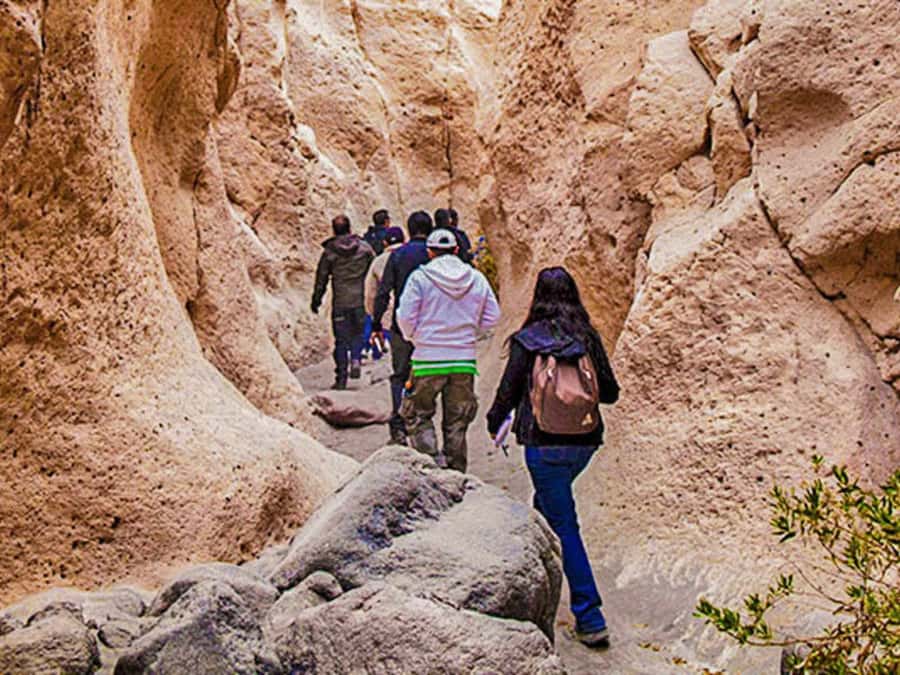
The van ride from Añashuayco to Quebrada de Culebrillas takes about 30 minutes. The canyon stop includes a guided visit, a break, photographs, and a walk of roughly 20 minutes. The published stop time is about 30 minutes, so this section moves at a brisk pace.
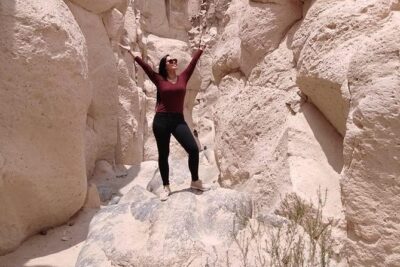
Culebrillas was formed by the passage of water. Its walls rise about 15 to 20 meters, and they become taller as you walk farther inside. The short route gives you a change of scale after the open quarry. Instead of looking across broad stone cuts, you move between narrow walls.
The walk is one of the best reasons to choose this tour over a simple drive to a viewpoint. You are not hiking for hours, but you do get to enter the canyon and see how water shaped it. The route should appeal to you if you want a modest trek without committing a full day to walking.
Near the end, you can see petroglyphs attributed to the Wari culture and dated to more than a thousand years ago. They add an archaeological layer to the outing. The quarry shows living stonework, while the petroglyphs point to people who used and marked this area long before modern Arequipa.
Keep your expectations sensible. A 20-minute walk is an introduction, not an extensive canyon trek. The tour does not give a longer hiking route or a long period for archaeological study. If you want time to examine every carving closely, the schedule may feel short. Listen carefully to the guide and keep an eye on the group so you do not lose time.
Apachetas and the return to Arequipa
Before leaving the canyon area, you see apachetas, small stone formations made by placing stones one on top of another. Here they are described as a sign of gratitude toward nature and as a symbol of good luck. The formations lend the final stop a quiet, reflective feel.
You do not need to treat them as a grand attraction. Their value is cultural and symbolic. After the quarry’s noise and the canyon’s narrow walls, they offer a slower moment to think about how people relate to the natural setting.
The return journey is scheduled to begin around 12:30, with arrival near the center at about 1:30. The listed finish is on Av. La Marina. Since the tour includes several van transfers, the return can be useful for anyone planning an afternoon in Arequipa.
The overall timing is worth reading carefully. The activity is advertised as four hours and also listed as 270 minutes, while the stated morning schedule runs from roughly 9:15 to 1:30. Those figures are close but not identical. Add the possibility of traffic or a late departure, and you should think of it as a half-day outing rather than a tour that ends at an exact minute.
What the $11 price really covers
At $11 per person, this is an inexpensive way to reach the Sillar Route. The price includes tourist transport and a professional guide who speaks English or Spanish. It does not include the entrance charge, which is listed as 18 soles total for the places visited.
That extra cost is small compared with the transport involved. A private ride to the quarry and canyon would normally make the trip more expensive, and you would lose the explanations about ashlar, the stonemasons, the carving, and the Wari petroglyphs. For a budget visitor, the package offers solid value.
The price is especially fair if you use the quarry visit well. The main benefit is not simply seeing white cliffs. You are getting access to a working quarry, a guide-led explanation, a large stone carving, and a chance to handle the process yourself. The canyon and viewpoint add variety without raising the outing to a full-day commitment.
The trade-off is that the low price comes with a group schedule and limited time at each stop. You do not control how long the van waits or how slowly the canyon walk proceeds. The experience can also change if the English-speaking guide is unavailable. One recent departure was conducted only in Spanish because the English guide was ill. The company offered a later date, but the change did not suit the schedule.
If English is important to you, confirm the language before setting out. The tour offers both English and Spanish, but the practical experience can depend on staffing that day.
Who should book this half-day outing
I would recommend this tour if you want to understand Arequipa beyond its main square. It suits you especially well if you like working sites, short walks, unusual photographs, and a bit of cultural background without spending a full day on the road.
It is also a good fit for budget-conscious visitors. The $11 rate keeps the cost low, and the included van is useful for reaching places that are not part of a typical city stroll. Add the 18 soles entrance charge when you set your budget.
Families and mixed-interest groups may appreciate the balance. Someone interested in architecture can focus on the ashlar and church carving. Someone who prefers the outdoors gets the canyon walk. Someone curious about older cultures has the Wari petroglyphs.
I would hesitate if you want a slow, highly detailed visit. The itinerary gives only about 50 minutes at Añashuayco and about 30 minutes at Culebrillas, so the pace is purposeful. A late start can reduce that time further. The tour is better understood as a compact sampler than as a complete study of the quarries.
Wear something suitable for a short walk and bring what you need for photographs. The supplied information does not specify a required dress code or hiking difficulty, so you should not expect a technical trek. The main practical issue is staying with the group and using the stop time well.
Book it for stone, canyon views, and good value
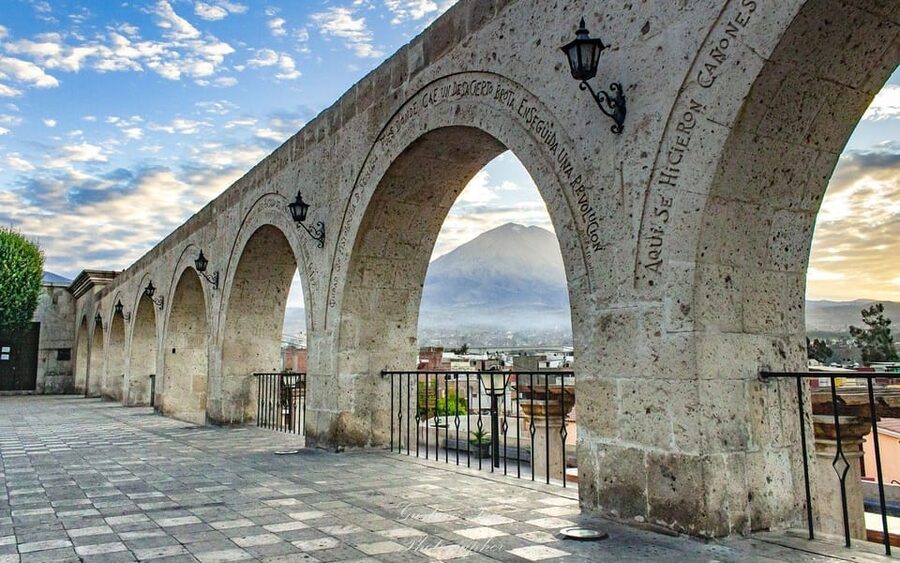
Book this outing if you want the clearest link between Arequipa’s white architecture and the volcanic stone beneath it. The Añashuayco Quarry is the heart of the experience, and the chance to see a working stonemason, try cutting ashlar, and stand beside the Church of the Company of Jesus carving gives the trip more substance than a standard photo stop.
Culebrillas makes the morning more varied, with a short canyon walk, Wari petroglyphs, and apachetas. The viewpoint adds a useful introduction to the volcanoes and Chilina Valley. At $11 plus 18 soles for entrance, the value is strong.
Skip it if you need a relaxed timetable, a long hike, or guaranteed English service without checking first. For most visitors with half a day free in Arequipa, though, this is a practical and inexpensive way to see the city’s stone in its original setting.
FAQ
How long does the Sillar Route tour last?
The activity is listed as 270 minutes, or about four and a half hours. The morning schedule begins around 9:15 and returns to Arequipa around 1:30, so you should allow roughly a half day.
Where does the tour begin?
It begins at the main office at C. Álvarez Thomas 115 in Arequipa. The meeting point coordinates are -16.4003911, -71.5370347.
Where does the tour finish?
The listed finish is near Av. La Marina in Arequipa, close to the city center.
Is transportation included?
Yes. Tourist transport by van is included in the tour price.
Are entrance fees included?
No. Entrance tickets cost 18 soles total for the places visited.
What languages are available?
The tour offers a live guide in English or Spanish. English service can depend on guide availability, so confirm the language before departure.
Is there an afternoon departure?
Yes. An afternoon shift is available at 2:00 pm.
More Hiking & Trekking in Arequipa
- Private 3 Day Colca Canyon Trekking tour (superior Service)
★ 5.0 · 58 reviews - Trekking, Waterfalls and Thermal Baths
★ 4.5 · 47 reviews - 3-Day Colca Canyon trek with Professional Guide
★ 5.0 · 40 reviews - 2 Day Trek Including Transfer to Puno / Colca Canyon
★ 4.5 · 38 reviews
Recently added around Arequipa
- From Arequipa: 1 Day Tour to the Colca Canyon + Buffet lunch★ 4.2 · 3 reviews
- Arequipa: Colca Canyon Trekking 2 days and 1 night + food★ 4.8 · 3 reviews
- Arequipa: Catarata de Pillones and Bosque de Piedras Tour★ 4.3 · 3 reviews
- 2-Day Colca Canyon Tour to Puno with accommodation★ 3.9 · 3 reviews
- From Arequipa: Full Day Colca Canyon Tour★ 4.5 · 3 reviews
- From Arequipa: Colca Canyon and Condor Watching Day Trip★ 3.7 · 3 reviews
- Cooking Class Typical Food in Arequipa★ 3.9 · 3 reviews
- Walking tour through the Historic Center of Arequipa★ 4.0 · 3 reviews
Sillar Route Tours, compared.
Sillar Route in Arequipa and viewpoint of the Volcanoes
Read our review →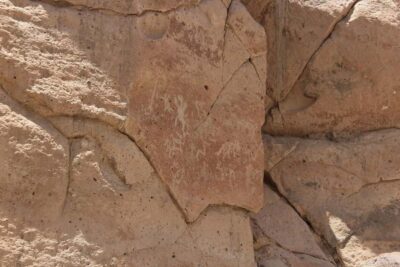
Route of the Sillar | Quarries of Añashuaycos | Half day
Read our review →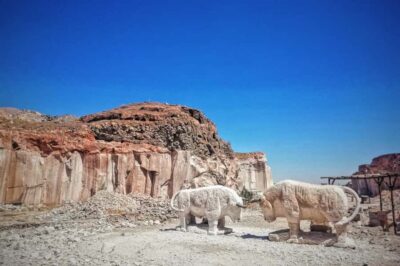
4-hour excursion: Sillar Route with Hiking in Culebrillas
Read our review →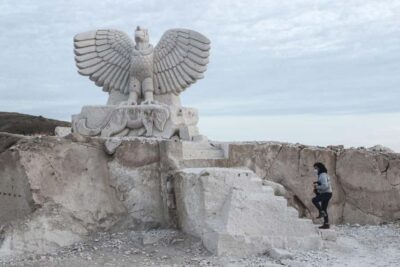
Trek to the Route of the Sillar and Culebrillas in Arequipa
Read our review →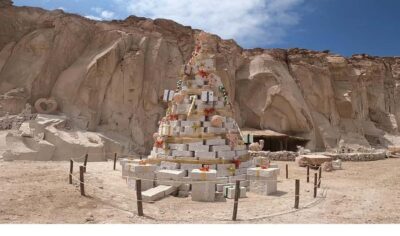
Arequipa | Tour of the Sillar Route + Culebrillas Canyon
Read our review →Browse the lists this tour appears in