
Reviewed · SILLAR ROUTE TOURS
Sillar Route in Arequipa and viewpoint of the Volcanoes
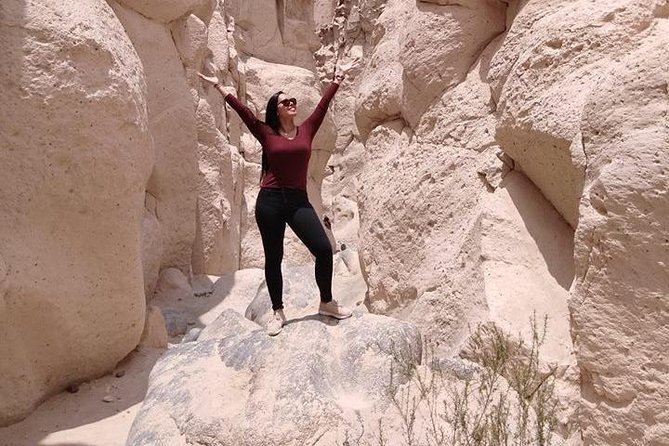
The most striking part of this outing is seeing Arequipa’s famous white building stone in its raw form. At the Añashuayco quarries, workers still cut volcanic ashlar by hand, while nearby carvings, murals, and the narrow Culebrillas canyon turn a geology lesson into a good photo stop.
I like the short three-to-four-hour format, which fits neatly into a busy Arequipa schedule. I also like the small maximum group of 15, round-trip transport, and choice of morning or afternoon departure. At $11 per person, it is an easy way to get beyond the city center without spending a full day.
The main caution is consistency. Pickup and check-in have sometimes felt loose, and an English booking may become a multilingual tour with much more Spanish than English. Bring cash for the entrance fee, sunscreen, insect repellent, and something to cover your nose in the dusty quarry.
Key points to know before you go
- See Arequipa’s building stone at its source: Watch workers cut and shape pale volcanic sillar in an active quarry area.
- Save room for Culebrillas Canyon: The petroglyph walk and narrow pink sillar formations are often the most memorable part.
- Expect a budget outing: The tour costs $11, but the entrance fee is extra and listed at $3.
- Prepare for quarry conditions: Dust, flies, sun, wind, and changing temperatures are part of the experience.
- Check the language arrangement: Guides may explain in both Spanish and English, but the balance can vary.
- Allow extra pickup patience: The advertised start is central Arequipa, yet pickup arrangements have not always been smooth.
Why the Sillar Route matters in Arequipa
Arequipa is famous for its pale colonial buildings, and the reason is under your feet and around the city’s old streets. Sillar is a light-colored volcanic stone formed from ash and other material released by eruptions. It became the signature building material for much of the historic center.
A walk around the Plaza de Armas shows the finished product: carved facades, churches, courtyards, and sturdy walls with a soft white glow in the sun. This tour takes you to the rough beginning of that story, where blocks are cut from the earth rather than displayed behind a museum barrier.
I find that context useful. Without it, the quarry can look like a dusty mine with a few statues. With it, you begin to see the connection between the workers’ hand tools, the stone blocks, and the grand architecture back in town.
The tour also gives you a glimpse of the volcano country around Arequipa. The route is not a full volcano excursion, and the supplied schedule does not promise a dedicated mountaintop viewpoint, but the drive and open quarry setting allow views toward the surrounding volcanoes when conditions are clear.
more sillar route mornings
- From Arequipa: Sillar Route Trek
★ 4.2 · 461 reviews - Sillar Route and Culebrillas Petroglyphs
★ 4.5 · 89 reviews - 4 hours Tour: Route of Sillar with Trek in Culebrillas
★ 4.2 · 69 reviews
Añashuayco quarries and the work of cutting sillar
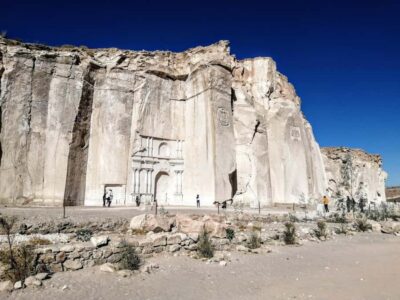
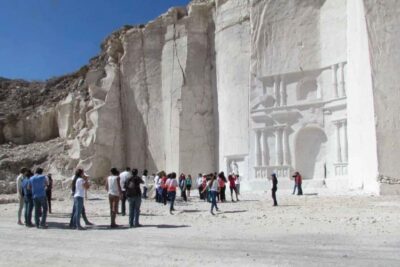
The first stop is the Añashuayco sillar quarry, where you spend about 50 minutes. This is the most direct look at the human work behind Arequipa’s architecture.
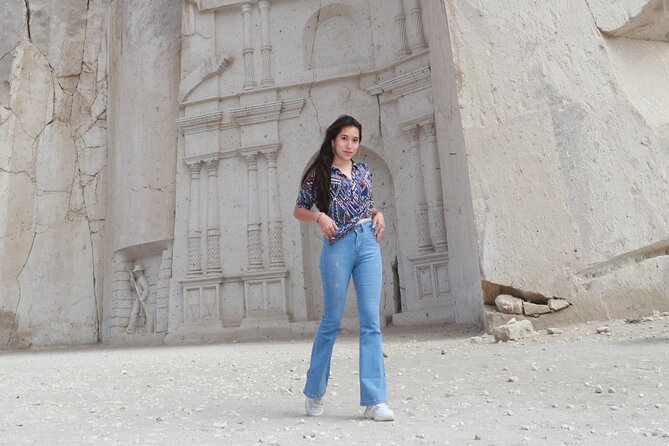
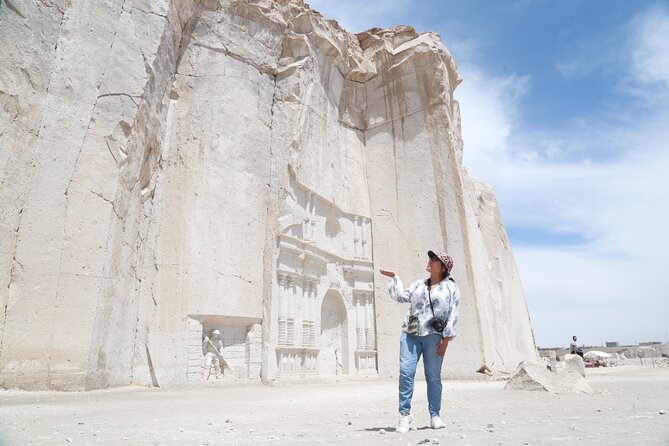
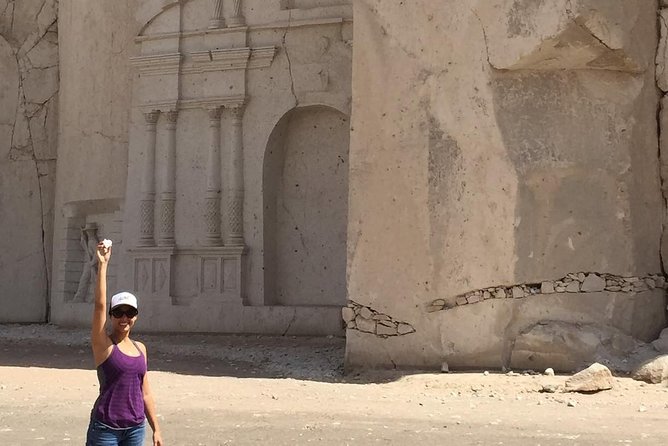
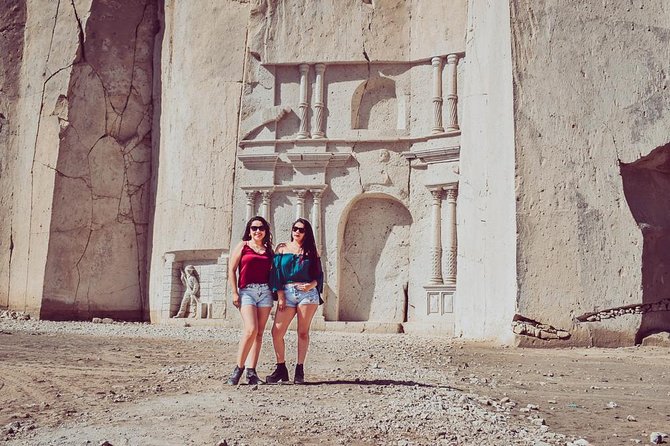
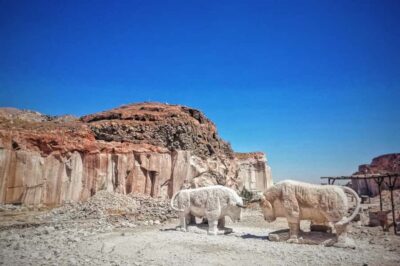
You can watch the local routine of cutting and shaping the stone in an artisanal way. Murals and carved pieces add visual interest, and the stone’s pale surface photographs well in strong daylight. The stop is less about polished presentation and more about seeing a working place.
One curious feature is the small pink ashlar cannon, formed naturally from the stone. It is an odd little landmark, and it gives the otherwise pale quarry a splash of color. The setting also provides the kind of unusual photographs that are difficult to get in the city center.
There are limits. This is still a quarry, not a formal cultural center. Dust can be heavy, and the area may feel rough around the edges. One useful precaution is to bring a mask or scarf for your nose and mouth, especially if you are sensitive to dust.
You may also encounter flies, particularly when the van doors and windows remain open during walks. Insect repellent is worth packing. Sunscreen matters too, since the open stone reflects light and shade can be limited.
The entrance fee is not included. It is listed as $3, but one booking experience found that an entrance cost more than expected. I would carry a little extra cash rather than arrive with only the exact advertised amount.
Culebrillas Canyon, petroglyphs, and pink stone
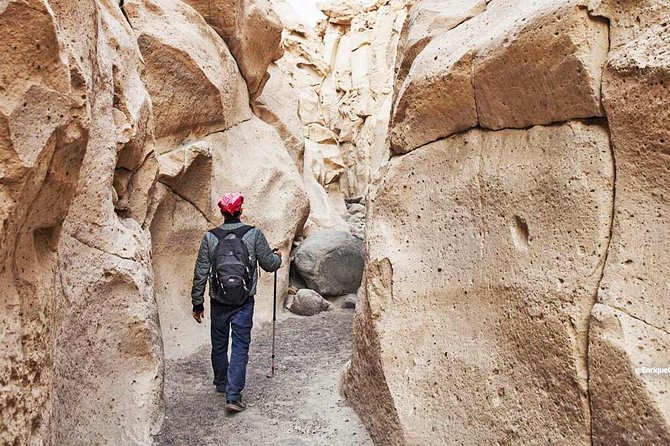
The route’s most appealing section is Culebrillas, a dry canyon cut through sillar. The schedule divides time between two quarry areas and the broader Sillar Route, but the narrow canyon walk is the part I would anticipate most.
The walk is described as relatively easy, with a distance of about 600 meters mentioned in one account. You are not signing up for a major hike, yet sturdy walking shoes are still important. The ground can be uneven, and open sandals would be a poor choice.
The canyon combines geology and archaeology. You can see the way volcanic stone forms the walls, then encounter petroglyphs at the end of the walk. The carvings give the visit a stronger sense of place than a simple quarry stop. They also reward taking your time instead of rushing from one photo point to the next.
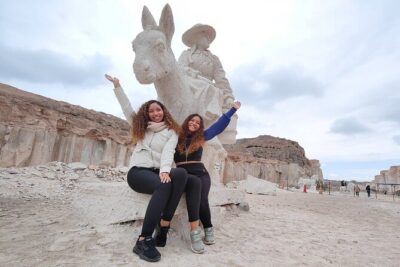
The small pink sillar canyon and natural stone shapes make this section especially photogenic. Statues and carved figures add a human touch, though the quality and appeal of the displays will depend on your taste. Some people may find them memorable; others may feel the quarry areas are more interesting than the manufactured attractions.
This section is protected, so you should not expect construction or major visitor facilities around the canyon. That protects the setting, but it also means a rougher, more exposed visit. Stay aware of the ground, keep your belongings secure, and follow the guide’s directions around the carvings.
Returning to Arequipa’s white buildings
After the quarry visits, the group returns toward central Arequipa. The useful part of the return is the contrast. You have just seen raw blocks and hand-cut stone, then you can look again at the finished sillar buildings in town.
That contrast gives the tour a clear beginning and end. The quarry explains where the material came from, while Arequipa’s historic center shows what generations of builders did with it. If you have time after the tour, take another look at the city’s stone facades with the quarry visit fresh in your mind.
The schedule gives around 40 minutes to the Sillar Route portion, but timing can shift with pickup, traffic, walking pace, and group arrangements. This is a compact introduction, not an exhaustive study of every quarry or building technique.
Somewhere else entirely, still within reach of Arequipa:
- From Arequipa: Colca Canyon Full-Day Guided Tour with Meals
★ 4.5 · 982 reviews - Tour to the Salinas Lagoon and National Reserve in Arequipa
★ 4.5 · 548 reviews - Arequipa: Chili River White Water Rafting with Hotel Pickup
★ 4.8 · 329 reviews - 2-Day Tour Colca Canyon in Arequipa with end in Puno
★ 4.6 · 248 reviews
Guides, languages, and the feel of the outing
The tour includes a professional guide, and several guides have been singled out by name in past bookings, including Alonso, Betsey, Jose Jose, and Christina. A good guide can add much more than basic facts by explaining how the volcanic material connects to Arequipa’s churches, houses, and nearby volcanoes.
Language is the biggest variable. The service may operate in both Spanish and English, and some tours have had a strong Spanish-speaking majority. If you book expecting a fully English experience, confirm the language arrangement in advance. Otherwise, you might spend long stretches listening to Spanish and receive shorter English explanations.
That does not automatically make the tour poor. If you speak Spanish, a multilingual format may work well. If you do not, the quality of the English commentary becomes very important. Some guides have offered useful history and stories in both languages, while other English explanations have been described as brief or difficult to follow.
Group size is capped at 15 people, which is a welcome limit for a short excursion. A small group makes it easier to hear the guide and move through the canyon, though the actual van may still feel crowded depending on the day’s bookings.
Transport, timing, and meeting points
The outing includes tourist transport from Arequipa and a return to the city. The listed starting point is C. San Agustín 102, near the center. The return point is by Templo de San Agustín on C. Sucre, two or three blocks from the Plaza de Armas because tour vehicles do not enter the plaza.
That end point is convenient for continuing your afternoon on foot. It is not a direct drop-off inside the main square, so keep the short walk in mind if you are carrying luggage or arranging another activity immediately afterward.
You can choose a morning or afternoon departure. I like that flexibility. A morning tour leaves the rest of the day open, while an afternoon departure can work well if you spent the morning exploring Arequipa’s churches and museums.
Pickup communication deserves some patience. There have been instances of late confirmation, delayed pickup, or unclear check-in instructions. One person waited about 40 minutes outside a hotel, and other bookings reported no pickup at all. Those incidents appear to be exceptions rather than the normal outcome, but I would arrive early, keep the operator’s contact details handy, and avoid scheduling a tight connection afterward.
The vehicle has been described as spacious and air-conditioned on some outings. Conditions can vary, and one account found the bus too warm when windows were closed. If you are sensitive to heat or dust, ask about ventilation before setting off.
What the $11 price really buys you
At $11, this is one of the easier Arequipa excursions to justify financially. The price covers transport and a guide, and the tour occupies only three to four hours. You are paying for a straightforward half-day outing rather than a polished, high-end cultural production.
The value is strongest if you want a quick introduction to sillar, a few unusual photographs, and a short canyon walk. It is also useful for families and anyone who wants to leave the city without committing to a demanding hike or a full-day trip.
The price is less attractive if you expect detailed English interpretation, perfectly timed pickup, or a major natural attraction at every stop. The quarry is working and dusty, and some displays may feel modest. You are seeing a real stone-cutting area, not a carefully staged theme park.
Budget for the separate entrance fee. The stated amount is $3, and because one person encountered a higher charge, carrying additional small cash is sensible. Food and extras such as queso helado are not included. That local dessert has been a pleasant extra for some people, but you should treat it as an optional purchase rather than part of the tour.
What to pack for the quarries
A few small choices can make this outing much more comfortable:
- Wear closed walking shoes with a firm sole.
- Bring sunscreen and a hat for the exposed quarry.
- Pack insect repellent because flies can be numerous near the canyon.
- Carry a mask or scarf for dust.
- Bring layers. Arequipa’s weather can shift from warm sun to cloud, wind, and cold.
- Keep about $3 or a little more available for entrance fees.
- Bring water, though no drink is listed as included.
- Charge your phone or camera. The carved stone, canyon walls, murals, and statues are made for photographs.
Do not dress for a city stroll alone. The tour begins and ends in town, but the middle section is dusty, uneven, and exposed.
Who should book this tour?
I would recommend it to you if you have an extra morning or afternoon in Arequipa and want to understand the material that gives the city its distinctive look. It works especially well for families, first-time visitors, photographers, and anyone who enjoys seeing traditional craft in an active setting.
It also suits people who value low cost and limited time. You can see two quarry areas, walk through a canyon, and return to town in roughly half a day.
I would hesitate if your main goal is a formal archaeological tour, a long wilderness hike, or a guaranteed English-only experience. The route can feel modest, and the guide’s language balance and enthusiasm may affect how much you take from it.
The tour requires good weather. If poor conditions cancel it, you can accept another date or receive a full refund. You can also cancel for a full refund up to 24 hours before the start time. Within 24 hours, changes and refunds are not accepted.
Should you book the Sillar Route?
Book it if you want an inexpensive, compact outing that explains why Arequipa is called the White City. The strongest combination is the hand-cut stone at Añashuayco and the petroglyph canyon at Culebrillas, followed by the chance to recognize sillar buildings back in town.
Go with realistic expectations. The scenery is stark rather than lush, the quarry is dusty, and the tour may be bilingual. Confirm the pickup and language details, pack insect repellent and a mask, and carry extra cash for the entrance fee.
For $11, I think it is a sensible choice when you have a spare half-day. Just do not book it expecting a grand volcano expedition. Think of it as a practical look at Arequipa’s volcanic stone, with a short walk, a few unusual sights, and good value when the logistics come together.
FAQ
How long does the Sillar Route tour last?
The tour lasts approximately three to four hours.
How much does the tour cost?
The listed price is $11 per person.
Is the entrance fee included?
No. An entrance fee is extra and is listed as $3. It is wise to carry a little more cash in case the charge differs.
Where does the tour start?
The listed starting point is C. San Agustín 102 in central Arequipa.
Where does the tour finish?
The tour finishes near Templo de San Agustín on C. Sucre, about two or three blocks from the Plaza de Armas.
Can I choose a morning or afternoon departure?
Yes. The tour offers a choice between a morning and an afternoon start time.
What is included in the price?
Tourist transport and a professional guide are included.
Can I cancel for a full refund?
Yes. You must cancel at least 24 hours before the experience start time for a full refund. Cancellations within 24 hours are not refunded. If poor weather causes the operator to cancel, you can choose another date or receive a full refund.
Recently added around Arequipa
- From Arequipa: 1 Day Tour to the Colca Canyon + Buffet lunch★ 4.2 · 3 reviews
- Arequipa: Colca Canyon Trekking 2 days and 1 night + food★ 4.8 · 3 reviews
- Arequipa: Catarata de Pillones and Bosque de Piedras Tour★ 4.3 · 3 reviews
- From Arequipa: Full Day Colca Canyon Tour★ 4.5 · 3 reviews
- 2-Day Colca Canyon Tour to Puno with accommodation★ 3.9 · 3 reviews
- From Arequipa: Colca Canyon and Condor Watching Day Trip★ 3.7 · 3 reviews
- Cooking Class Typical Food in Arequipa★ 3.9 · 3 reviews
- Colca Canyon Day Trip: From Arequipa to Puno★ 3.5 · 3 reviews
Sillar Route Tours, compared.
4 hours Tour: Route of Sillar with Trek in Culebrillas
Read our review →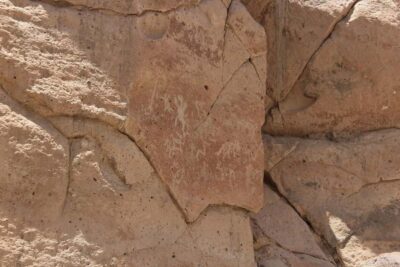
Route of the Sillar | Quarries of Añashuaycos | Half day
Read our review →
4-hour excursion: Sillar Route with Hiking in Culebrillas
Read our review →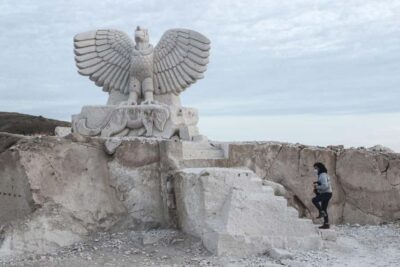
Trek to the Route of the Sillar and Culebrillas in Arequipa
Read our review →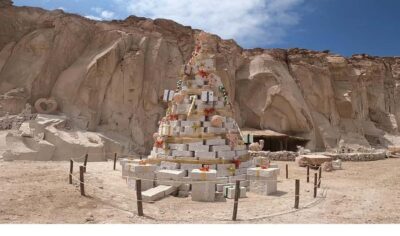
Arequipa | Tour of the Sillar Route + Culebrillas Canyon
Read our review →Browse the lists this tour appears in