
Reviewed · SILLAR ROUTE TOURS
4-hour excursion: Sillar Route with Hiking in Culebrillas
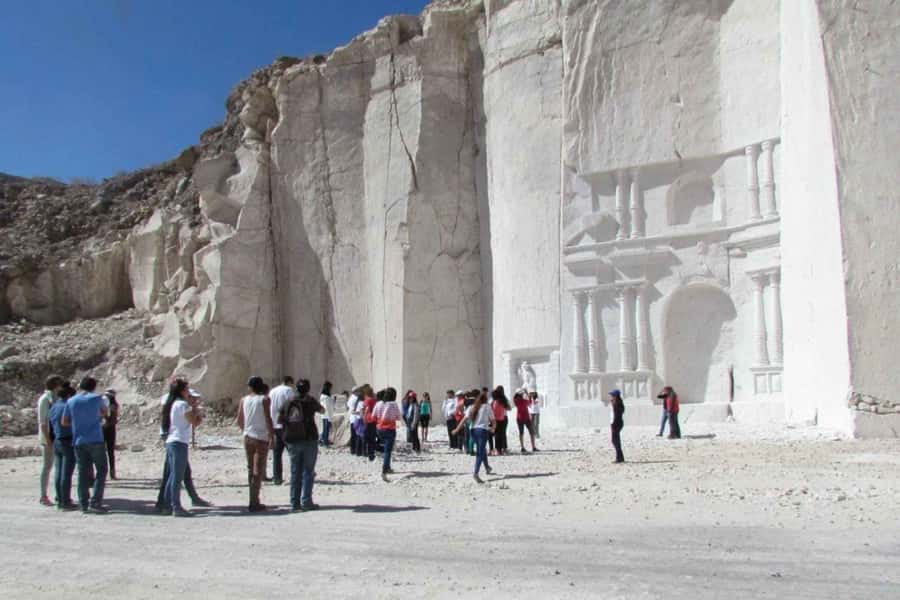
The most striking part of this Arequipa outing is the stone itself. In the Añashuayco quarries, workers cut pale volcanic ignimbrite into the blocks known as sillar, the stone used throughout the city. You can see towering quarry walls, watch a stonemason at work, and try cutting a block yourself.
I like the combination of a working quarry and Culebrillas Canyon, where a 20-minute walk leads to Wari petroglyphs more than a thousand years old. I also like the low price: $20 covers transport and a guide, with only a 10-sol entrance fee added. The main drawback is that this is more of a scenic culture trip than a serious hike, and one booking was reported as not taking place at all.
Key points to know before booking
- The Añashuayco Quarry is an active stone-working site, not just an old ruin.
- The Megacavado is a large carving of the Church of the Company of Jesus, made by local stonemasons.
- Culebrillas Canyon offers the best short walk, with walls reaching 15 to 20 meters and old Wari petroglyphs.
- The tour includes volcano and Chilina Valley viewpoints, though the stop may change with the season.
- The advertised hiking is gentle, with about 20 minutes of walking inside the canyon.
- The $20 price is good value, but you pay 10 soles separately for entrance tickets.
Why the Sillar Route matters in Arequipa
Arequipa is known for its pale stone buildings, and this tour shows you where that material comes from. Sillar is not simply a decorative rock. It is part of the city’s identity, and the route connects the finished buildings in Arequipa with the quarries where the stone is still cut by hand.
That connection gives the outing more purpose than a quick photo stop. You see the rough walls left by extraction, the blocks being prepared, and the large pieces used for artistic carving. I find that this makes the stonework in central Arequipa easier to understand when you return to the city.
The route also brings you outside the urban center without taking a full day. The schedule begins at about 9:15 in the morning and returns to Arequipa around 1:30 in the stated timetable. The advertised duration is four hours, although the listed times add up to a little more depending on departure and return timing.
More Hiking Tours in Arequipa
- From Arequipa: Sillar Route Trek
★ 4.2 · 461 reviews - From Arequipa: 2-Day Colca Canyon Trekking Tour
★ 4.8 · 243 reviews - 2 Day 1 Night Trek / Colca Canyon
★ 4.5 · 92 reviews
The first viewpoint, volcanoes and the Chilina Valley
The first stop is a strategic viewpoint with views toward the volcanoes and the Chilina Valley. Depending on the season, the guide may use another traditional viewpoint instead. That flexibility is practical, since visibility and road conditions can affect which lookout works best.
This is a short orientation stop rather than the main event. You get a broad view of the area before the quarry visit, and it helps place Arequipa within its volcanic setting. Bring a camera, but do not expect a long walk or an extended stay here.
The viewpoint is also a useful reason to choose a morning departure. The tour reaches the first major quarry after about 45 minutes, so you have time to see the surrounding countryside before the day becomes too hot. Exact conditions can vary, and the supplied details do not promise clear volcano views every time.
Inside the working Añashuayco Quarry
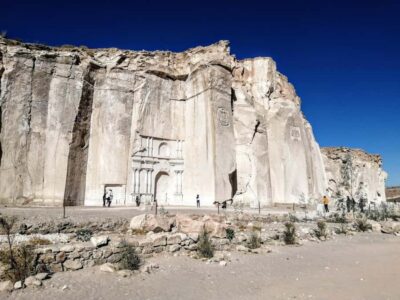
After roughly 45 minutes, you reach Añashuayco Quarry. This is an active site where stonemasons begin their work early. The quarry is marked by tall ignimbrite walls formed as workers remove material for sillar blocks.
The scale is the surprise. Instead of seeing a few loose stones, you look at an immense cut through the volcanic rock. The cliffs rise several meters, and the marks of extraction explain how much labor goes into producing the neat blocks used in Arequipa’s buildings.
Your guide explains how sillar is produced and how it has been used over time. The quality of this explanation matters. One person rated the guide’s delivery poorly because a heavy accent and nervous speaking made it hard to understand announcements through the microphone. If clear spoken English is important to you, keep that possibility in mind when choosing a group tour.
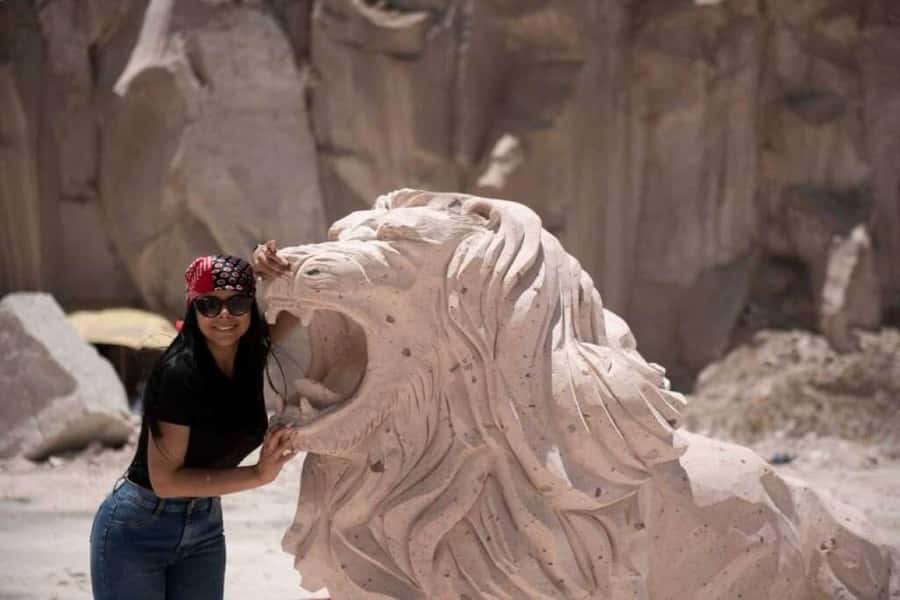
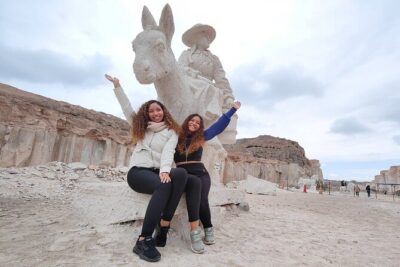
The quarry also gives you a more honest view of the local craft. This is not presented as a silent archaeological site. It is still a place of work, and the stonecutters’ daily routine is part of what you are seeing. You may visit one of the stonemasons, hear about the job, and try cutting one of the stone blocks yourself.
That hands-on moment is a strong feature for anyone who wants more than photographs. It helps you understand that the smooth white stone in Arequipa’s churches and houses begins as a heavy, rough block. The exact amount of time with a worker is not specified, so you should think of it as a short demonstration rather than a full workshop.
The Megacavado and the commercial side of the route
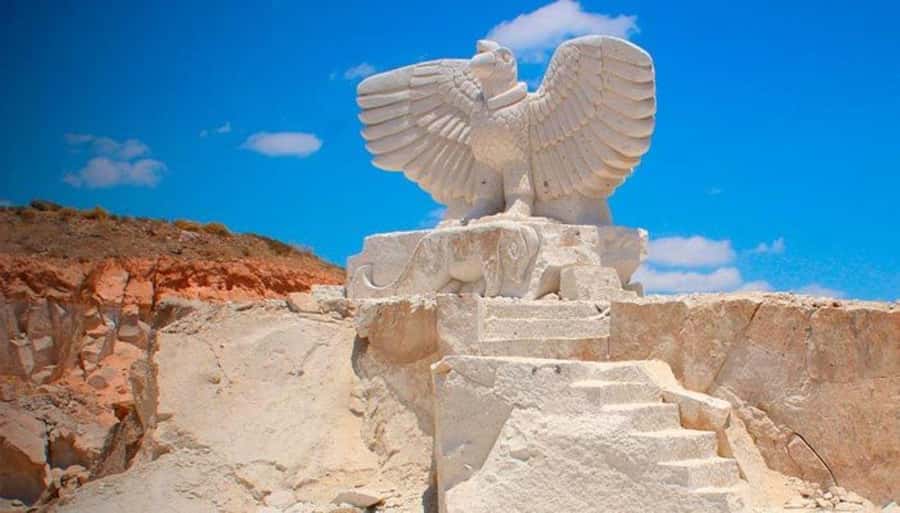
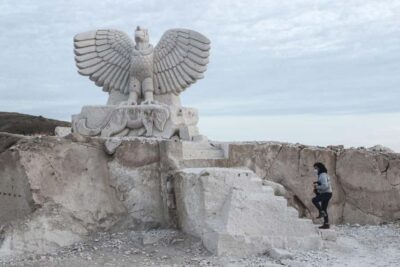
One of the quarry’s main attractions is the Megacavado, a large carving of the Church of the Company of Jesus. Local stonemasons made it directly in the quarry, using the same material that gives Arequipa much of its pale architectural character.
The carving is a good visual link between raw material and finished architecture. You can compare the volcanic walls around you with the shapes of a famous church facade. It also makes a memorable photo stop, which is part of the appeal of the route.
At the same time, you should set the right expectations. The quarry is a developed tourist stop, and the experience has a commercial feel. If you expect an ancient ceremonial place or a quiet spiritual site, you may find the setting less atmospheric than imagined.
I would frame it this way: the Sillar Route is about living craft, local industry, and presentation for visitors. It is not an untouched ancient site. That does not make it unworthy. It simply means the value comes from seeing the work and understanding the material, not from pretending the quarry has been frozen in the past.
more sillar route mornings
- Sillar Route and Culebrillas Petroglyphs
★ 4.5 · 89 reviews - Sillar Route in Arequipa and viewpoint of the Volcanoes
★ 4.0 · 71 reviews - 4 hours Tour: Route of Sillar with Trek in Culebrillas
★ 4.2 · 69 reviews - Route of the Sillar | Quarries of Añashuaycos | Half day
★ 4.2 · 35 reviews
A short transfer to Culebrillas Canyon
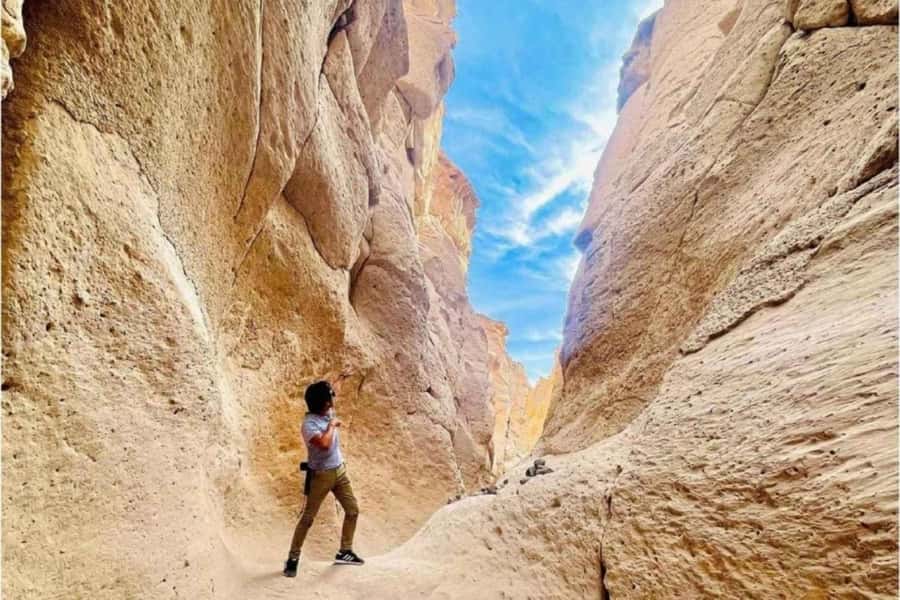
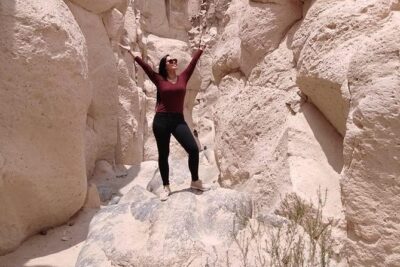
From Añashuayco, the vehicle continues for about 30 minutes to Quebrada de Culebrillas. The change in mood is noticeable. The quarry is broad and shaped by extraction, while Culebrillas is a narrow canyon formed by the passage of water.
The walk inside the canyon lasts about 20 minutes. Its walls begin at around 15 to 20 meters and grow taller as you go farther in. This is the closest thing to a hike on the outing, but it remains a short walk rather than a demanding trek.
That distinction is important when you book. The excursion title uses the word hiking, yet the provided route describes only about 20 minutes on foot. You do not need to treat this as a half-day mountain walk. It suits you if you want some movement and a closer look at the rock formations, but not if you are searching for a serious outdoor challenge.
Culebrillas is also the part most likely to satisfy anyone hoping for a quieter historical encounter. At the end of the walk, you can see petroglyphs attributed to the Wari culture and dated to more than a thousand years ago. The canyon gives these markings a stronger sense of place than a display behind glass.
Your experience here can depend on the group. The route is attractive for photos, and some people may focus more on taking pictures than on listening to the historical explanation. I would stay close to the guide during the walk and ask for the interpretation of the petroglyphs before the group moves on.
Wari petroglyphs and apachetas
The petroglyphs are the clearest ancient element on the excursion. Their age and location add depth to a route otherwise centered on modern quarry work. You are not visiting a large archaeological complex, and the supplied information does not give further details about the designs, but the markings provide a direct link to an earlier culture.
On the way back, the group observes apachetas. These are small stone formations made by placing stones one on top of another. Here they are described as a sign of gratitude toward nature and as a good-luck attraction.
Apachetas give the final section a more reflective feel, though you should not expect a formal ceremony. They are an observation point and cultural detail within the route. The appeal is in seeing how simple stone arrangements can carry meaning for people who pass through the area.
What the $20 price really covers
At $20 per person, this is one of the easier Arequipa excursions to justify financially. The price includes tourist transport and a professional guide. For a four-hour outing that reaches several sites outside the city, that is solid value, especially if you want to avoid arranging transport on your own.
You must add a 10-sol entrance fee for the places visited. Since the price is quoted in dollars and the admission is charged separately in soles, carry local currency or confirm the payment method before setting out. The details do not give a separate breakdown for each site.
The value depends on what you want from the day. If you care about local stonework, broad views, and a short canyon walk, the tour packs a lot into a morning. If you want long time at each site, a private conversation with a craft worker, or a demanding hike, the low price also signals a more basic group format.
Transport is a practical benefit. The itinerary involves a 45-minute ride to the quarry, another 30 minutes to Culebrillas, and a return to Arequipa. Having that route handled makes the experience simple, though it also means your timing at each stop is fixed.
Guide quality and language choice
The tour operates with a live guide in English or Spanish. That is useful if you want context at the quarry and canyon rather than simply being dropped at scenic spots.
Guide quality can shape the day. The overall rating is 4 out of 5 from 21 reviews, but one English-speaking participant found the guide’s accent and microphone delivery difficult to follow. I would treat this as a communication caution, not proof that every departure has the same issue.
If your Spanish is stronger than your English, choosing Spanish may give you a smoother explanation. If you need English, position yourself near the guide and ask questions at the stops rather than relying only on announcements in the vehicle. No guide names are provided, so you cannot select a particular guide in advance.
There is also one serious reliability warning: a verified booking dated October 12, 2025 was reported as not taking place. The information does not explain why, and it should not outweigh the positive overall rating, but I would keep confirmation details and the provider’s contact information handy before departure.
Who should book this Arequipa excursion?
I would recommend it to you if this is your first time in Arequipa and you want a quick look beyond the city center. The combination of volcano viewpoints, quarry work, a carved church facade, canyon walls, petroglyphs, and apachetas gives you several different subjects in one morning.
It also fits a short Peru itinerary. You do not need to surrender a full day, and the walking is limited. Families and people who prefer gentle outings may appreciate that the canyon section is only about 20 minutes, though the tour details do not provide specific accessibility information.
Photography is another good reason to choose it. The pale quarry walls, large carving, narrow canyon, and volcano views all offer distinct settings. Just remember that a photo-focused trip may leave less time for listening, so make the historical explanation a priority if that is what interests you.
I would hesitate if you are looking for untouched ruins, a spiritual pilgrimage, or a strenuous hike. The Sillar Route is tourist-oriented, and the quarry is an active commercial site. Culebrillas delivers the more natural and ancient-feeling portion of the trip, but it is brief.
Booking flexibility and timing
The tour offers free cancellation up to 24 hours before departure for a full refund. You can also reserve and pay later, which helps if your Arequipa schedule may change.
The stated departure is 9:15 in the morning. The planned return from the sites begins at about 12:30, with arrival in Arequipa listed around 1:30. Because the full schedule can run slightly beyond four hours, avoid booking a tight afternoon connection or fixed appointment immediately afterward.
The itinerary allows about 45 minutes to reach Añashuayco and 30 minutes from there to Culebrillas. Those drives are part of the outing, not wasted time, since the sites lie outside central Arequipa. Still, you should book this for the complete route, not just for the 20-minute canyon walk.
My recommendation for the Sillar Route
You should book this tour if you want an inexpensive, efficient introduction to the stone, scenery, and nearby cultural sites around Arequipa. The Añashuayco quarry and Megacavado are the strongest reasons to go, while Culebrillas adds the best short walk and the most compelling ancient detail.
Go in with realistic expectations. This is not an intense hike and not an untouched archaeological journey. It is a compact group excursion with some commercial presentation, possible variation in guide clarity, and one reported canceled or missed departure.
For $20 plus 10 soles in entrance fees, I consider it a good choice for first-time visitors, photographers, and anyone curious about how Arequipa’s famous pale stone is made. If your priority is solitude or a long walk, spend your time elsewhere. If you want a practical morning that connects working craft with canyon scenery and old petroglyphs, this route earns its place.
FAQ
How long does the Sillar Route and Culebrillas excursion last?
The activity is advertised as four hours. The stated schedule begins at 9:15 and lists arrival back in Arequipa around 1:30, so the actual timing may be slightly longer depending on the departure and return schedule.
What is included in the $20 price?
The price includes tourist transport and a professional guide. Entrance tickets are not included and cost 10 soles for the places visited.
Is the tour available in English?
Yes. The live guide operates in English or Spanish. No specific guide names are provided.
How much walking is involved?
The planned walk inside Culebrillas Canyon takes about 20 minutes. The activity is described as hiking, but the available itinerary indicates a short, manageable walk rather than a strenuous hike.
What can I see at Añashuayco Quarry?
You can see an active quarry with tall ignimbrite walls, learn how sillar is produced and used, visit the Megacavado carving of the Church of the Company of Jesus, and possibly try cutting a stone block with a stonemason.
What can I see in Culebrillas Canyon?
The canyon has walls about 15 to 20 meters high that become taller farther inside. At the end of the walk, you can see petroglyphs attributed to the Wari culture and dated to more than a thousand years ago.
Can I cancel the booking?
You can cancel up to 24 hours in advance for a full refund. The activity also offers a reserve-now, pay-later option.
More Hiking & Trekking in Arequipa
- Private 3 Day Colca Canyon Trekking tour (superior Service)
★ 5.0 · 58 reviews - Trekking, Waterfalls and Thermal Baths
★ 4.5 · 47 reviews - 3-Day Colca Canyon trek with Professional Guide
★ 5.0 · 40 reviews - 2 Day Trek Including Transfer to Puno / Colca Canyon
★ 4.5 · 38 reviews
Recently added around Arequipa
- From Arequipa: 1 Day Tour to the Colca Canyon + Buffet lunch★ 4.2 · 3 reviews
- Arequipa: Colca Canyon Trekking 2 days and 1 night + food★ 4.8 · 3 reviews
- Arequipa: Catarata de Pillones and Bosque de Piedras Tour★ 4.3 · 3 reviews
- 2-Day Colca Canyon Tour to Puno with accommodation★ 3.9 · 3 reviews
- From Arequipa: Full Day Colca Canyon Tour★ 4.5 · 3 reviews
- From Arequipa: Colca Canyon and Condor Watching Day Trip★ 3.7 · 3 reviews
- Cooking Class Typical Food in Arequipa★ 3.9 · 3 reviews
- Colca Canyon Day Trip: From Arequipa to Puno★ 3.5 · 3 reviews
Sillar Route Tours, compared.
Sillar Route in Arequipa and viewpoint of the Volcanoes
Read our review →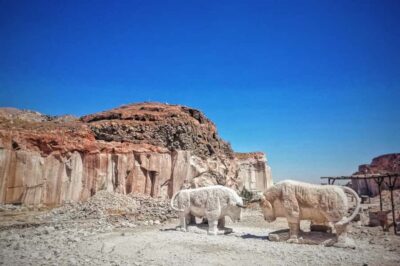
4 hours Tour: Route of Sillar with Trek in Culebrillas
Read our review →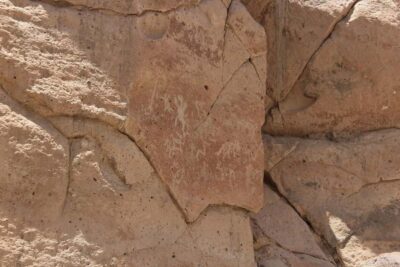
Route of the Sillar | Quarries of Añashuaycos | Half day
Read our review →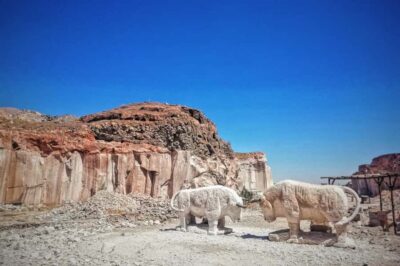
Trek to the Route of the Sillar and Culebrillas in Arequipa
Read our review →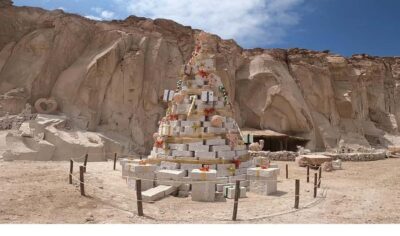
Arequipa | Tour of the Sillar Route + Culebrillas Canyon
Read our review →Browse the lists this tour appears in