
Reviewed · LIMA TOURS
Lima: Market Tour, 35 Fruits Tasting & Cooking Class
The most unusual part of this Lima food experience comes before the cooking: you taste more than 35 exotic fruits after exploring Surquillo Market. Then you turn local ingredients into a four-course Peruvian meal, eating each dish as soon as it is ready.
I like the direct contact with the market and the chance to see fruits, roots, seeds, seafood, quinoa, and herbs before using them in the kitchen. I also like the steady rhythm of the class, with a dish prepared, eaten, and discussed before the next one begins.
The main consideration is time. At 330 minutes, this is a full half-day, not a quick cooking demonstration. You also need to meet at the correct Surquillo market, since several markets in the area share similar names.
Key points to know before booking
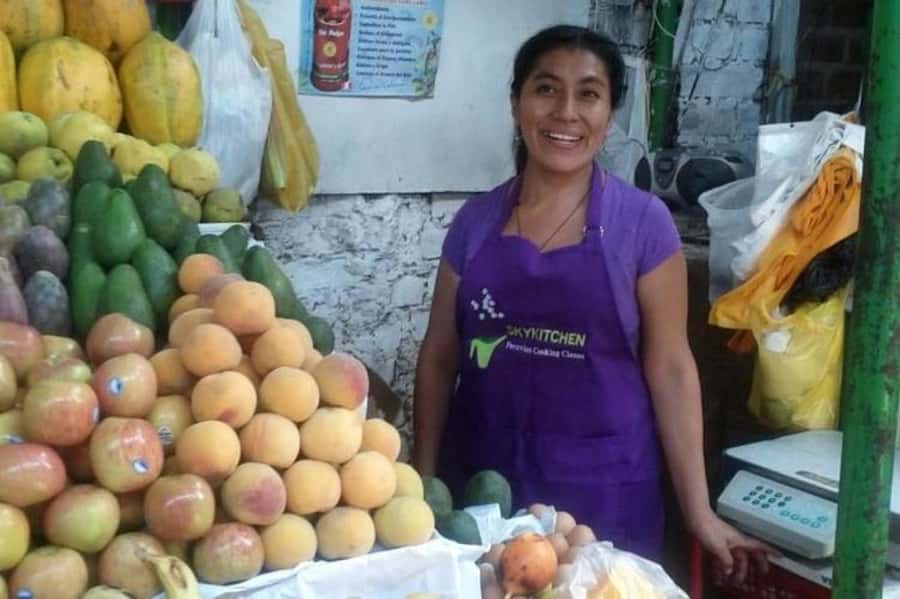
- More than 35 fruits: The fruit tasting gives you a broad introduction to Peru’s less familiar produce before the cooking begins.
- Surquillo Market Nro 1: Meet at the main entrance below the large Mercado 1 sign, not at one of the nearby Surquillo markets.
- Four-course lunch: You prepare the food yourself and eat each course immediately after it is finished.
- Pisco sour included: The class begins with an introduction to Peruvian cuisine and includes one pisco sour.
- Small-group format: The setting is designed for personal instruction, conversation, and hands-on work.
- Dietary requests accepted: Vegetarian, vegan, lactose-free, and gluten-free needs can be accommodated if you contact the provider in advance.
Starting at Surquillo Market Nro 1
Your meeting point is the main entrance of Mercado 1 de Surquillo, directly below the large sign marked Mercado 1. This detail matters. Surquillo has markets numbered 1 through 7, so entering the wrong one could start your day with an unnecessary hunt.
The market is on block 53 of Paseo de la República, beside Ricardo Palma Station. From the center of Miraflores, it is about a 10-minute walk from the Ovalo de Miraflores, or roughly a seven-minute taxi ride to the cooking location. A ride-sharing app can find Mercado 1 de Surquillo by name. For a regular taxi, use Estación Ricardo Palma as your reference.
Once you meet the guide and the rest of the group, allow about 50 minutes for the market visit. This is not simply a fast walk past stalls. The guide explains the ingredients and introduces you to local vendors, giving you a useful picture of how Peruvian cooking begins with shopping.
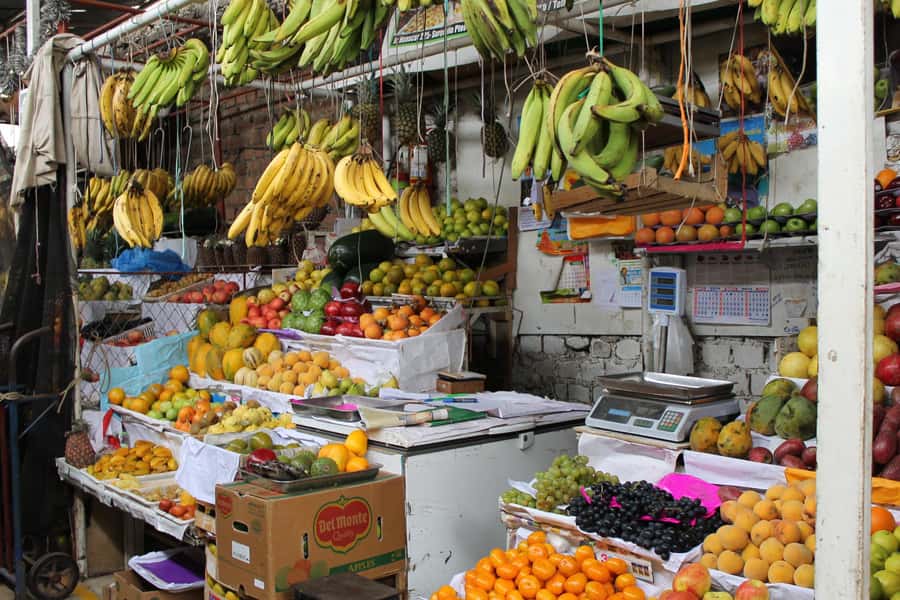
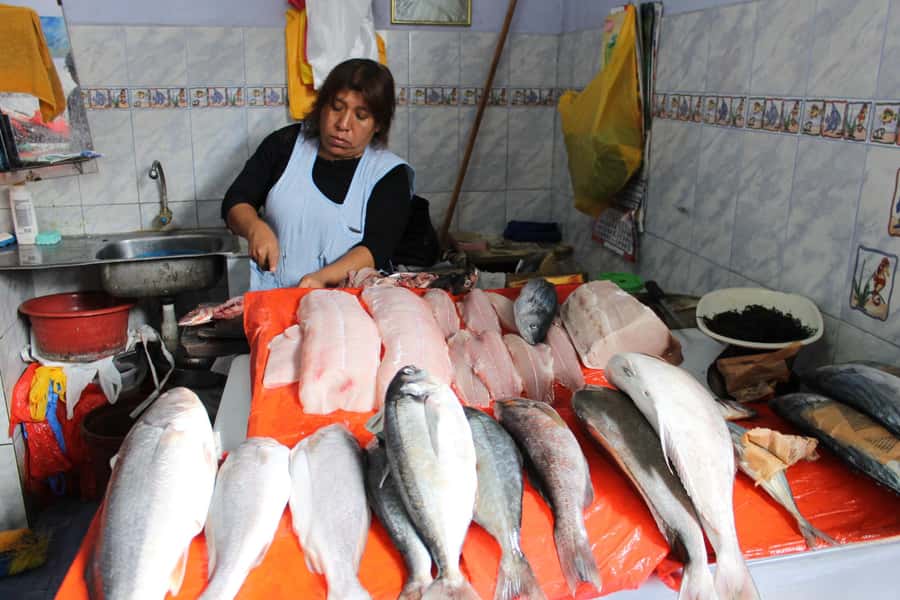
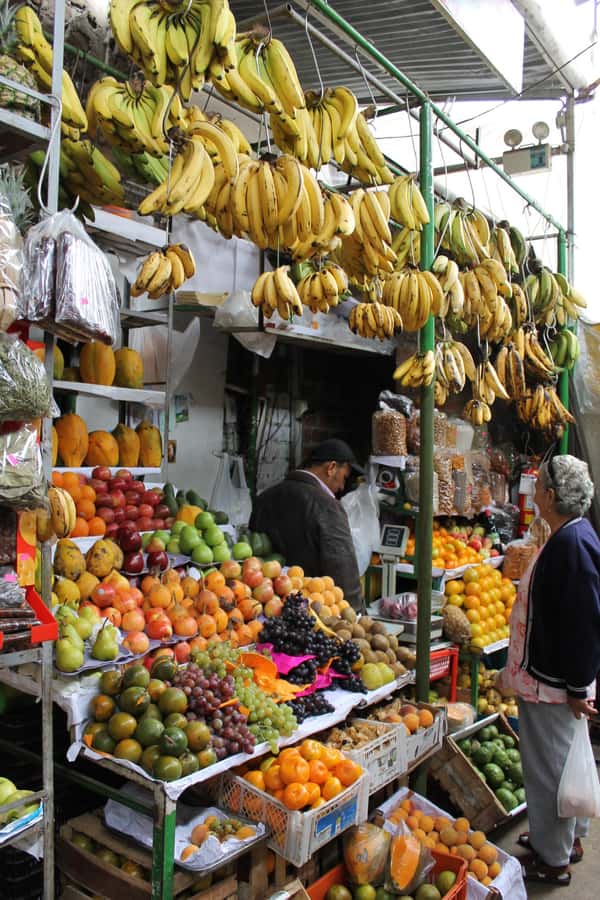
You will see produce in several categories: fruits and vegetables, legumes, herbs, meats, fish, seafood, quinoa varieties, and lesser-known plants, roots, and seeds from the Andes. The value here is context. A cooking class can teach you how to combine ingredients, but the market explains what those ingredients look like before they reach a cutting board.
The market portion also helps you pay attention to texture and appearance. You may find unfamiliar items that are hard to identify from a recipe alone. Seeing them in their everyday setting gives the later kitchen work more meaning, even if you do not remember every name.
A market is also less controlled than a classroom. It can be crowded and noisy, and the pace may depend on the guide, vendors, and group. That is part of the appeal, but you should not expect a quiet, polished food tour. Wear comfortable shoes and keep your meeting instructions handy.
More Cooking Classes in Lima
- Market Tour, Tasting of 35 Fruits, and 4-Course Peruvian Cooking Class in Lima
★ 5.0 · 86 reviews - #1 Rated Cooking Classes with Local Market Tour & Pickup
★ 5.0 · 69 reviews - Miraflores: Amazing Peruvian Cooking Class Ceviche Seafood and Pisco Sour
★ 4.9 · 57 reviews
The 35-fruit tasting
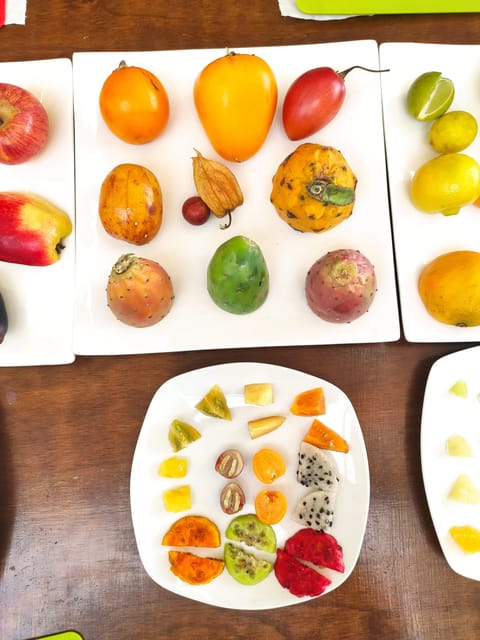
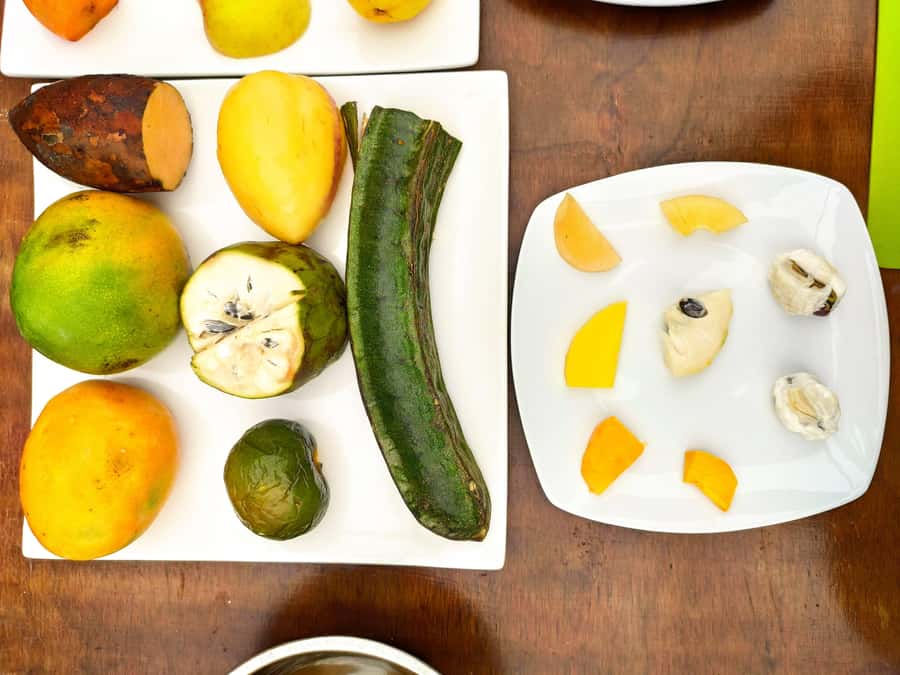
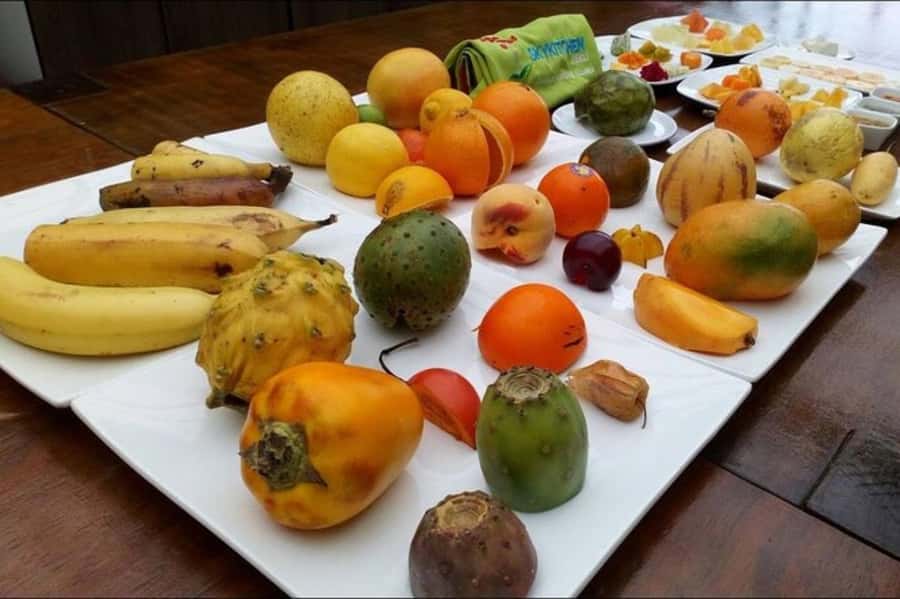
After the market, transportation takes you from the market to the cooking class. The next stage is a tasting of more than 35 different exotic fruits. This is a major part of the day, not a small garnish before lunch.
The tasting gives you a quick lesson in Peru’s produce. You can compare flavors, textures, and levels of sweetness across fruits that you may not have encountered at home. Since the samples come before the meal, the experience works as a bridge between the market tour and the kitchen.
I like this format because it makes the class broader than a standard recipe lesson. You are not only learning a few dishes. You are getting a sense of how much local produce is available and how fruit fits into Peruvian food culture.
The provider does not specify the names of all 35 fruits, so you should not book this expecting a fixed fruit menu. The useful point is the range. Availability can affect market produce, and the tasting is best approached as a chance to try unfamiliar samples rather than a guaranteed list of particular fruits.
If you are cautious about new foods, the large number of samples may feel like a lot. You are given many small tastes rather than a single serving, but the afternoon still has a strong food focus. Anyone with allergies should communicate clearly before the activity.
Learning Peruvian cooking one course at a time
The cooking class follows the fruit tasting and begins with an introduction to Peruvian cuisine. You will prepare a four-course meal under the direction of the instructor, using ingredients supplied for the class and kitchen tools provided on site.
The exact dishes are not specified, so it would be wrong to promise particular recipes. What is clear is the method: you chop, mix, and cook as part of the group, then eat a dish once it is ready. The instructor sets up ingredients for the next course while you enjoy what you have just prepared.
That sequence is one of the strongest features of the experience. In many cooking classes, all the food is served at the end, which can leave you standing around hungry or trying to remember several techniques at once. Here, you get a natural pause after each course. You eat, talk, and absorb the lesson before moving on.
The pace should also suit people with different cooking backgrounds. Beginners can follow the instructor step by step, while more confident cooks can focus on Peruvian ingredients and methods. Since the group is described as small, you should have more opportunity for guidance than in a large demonstration class.
The atmosphere is intended to be welcoming and social. You cook with fellow participants, share the meal, and speak with the instructor between courses. A verified booking from the United States described the day as a complete cycle of tasting, learning, cooking, and eating, with quality ingredients and authentic results. That assessment fits the structure: the food is not only explained, it is made and consumed as part of the lesson.
The class is taught in English, Spanish, or German. Confirm your preferred language when booking, especially if several sessions are available. The provider lists an instructor and a guide, but no individual guide names are supplied, so you should not expect a particular named teacher unless the company confirms one directly.
One pisco sour and drinks during lunch
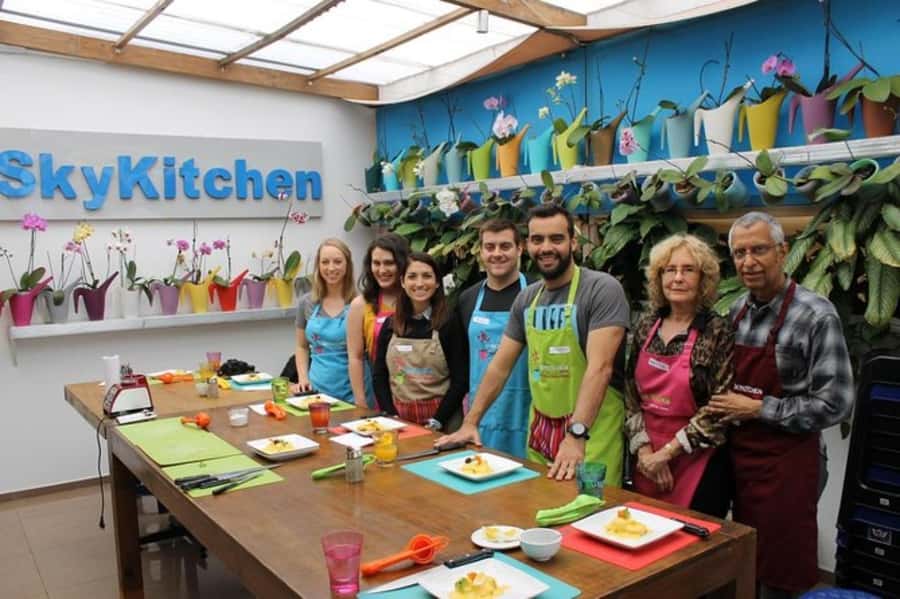
One pisco sour is included in the class. It is served while you receive an introduction to Peruvian cuisine and begin the cooking portion, making it a fitting addition to a food-focused afternoon.
Water is available without limit throughout the class. A homemade fruit drink is served with the food. Beer and wine are not included, but they can be purchased if available at the class location.
The drink policy is simple, but it is worth noting if you are planning around alcohol. You receive one pisco sour, not an open bar. If you do not drink alcohol, the rest of the meal still includes water and fruit drink.
More Market Tours in Lima
- Lima: Historic Center Street Food, Market, and Eateries Tour
★ 4.9 · 216 reviews - Private Cooking + Market with Maido’s Former Creative Chef (+trasportation)
★ 5.0 · 49 reviews - Lima: Food Tour on Local Market
★ 5.0 · 8 reviews - Lima: Market Tour and Cooking Class with Pisco Sour
★ 5.0 · 3 reviews
What the $120 price includes
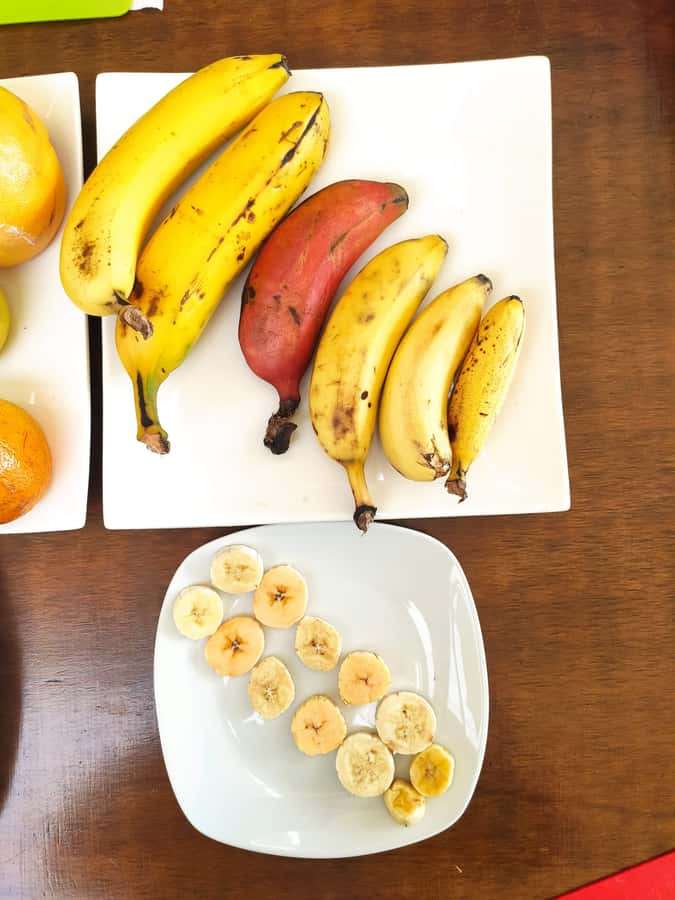
At $120 per person, this is not the cheapest way to eat lunch in Lima. It is also more than the price of a market walk or a basic cooking lesson on its own. The value comes from combining several elements into one five-and-a-half-hour program.
The price includes:
- A guided market tour
- Transportation from the market to the cooking class
- More than 35 fruit samples
- A cooking instructor
- All ingredients for the four-course meal
- The four-course lunch you prepare
- Water and homemade fruit drink
- One pisco sour
- Aprons and kitchen tools during the class
I see the strongest value for people who want an active food experience rather than a meal at a restaurant. You are paying for instruction, ingredients, a market visit, tastings, drinks, and lunch. You also avoid the need to arrange separate transportation between the market and kitchen.
There are two small extra-cost details. Beer and wine are available for purchase, and aprons and kitchen tools are not included as take-home gifts. You can buy those items if you want souvenirs or equipment for your own kitchen.
The four-course meal helps justify the price, but expectations matter. You are not simply being served four restaurant courses. You are doing the preparation yourself, which is the point of the activity. If you prefer a relaxed meal with no work, a restaurant will suit you better.
Dietary needs and practical planning
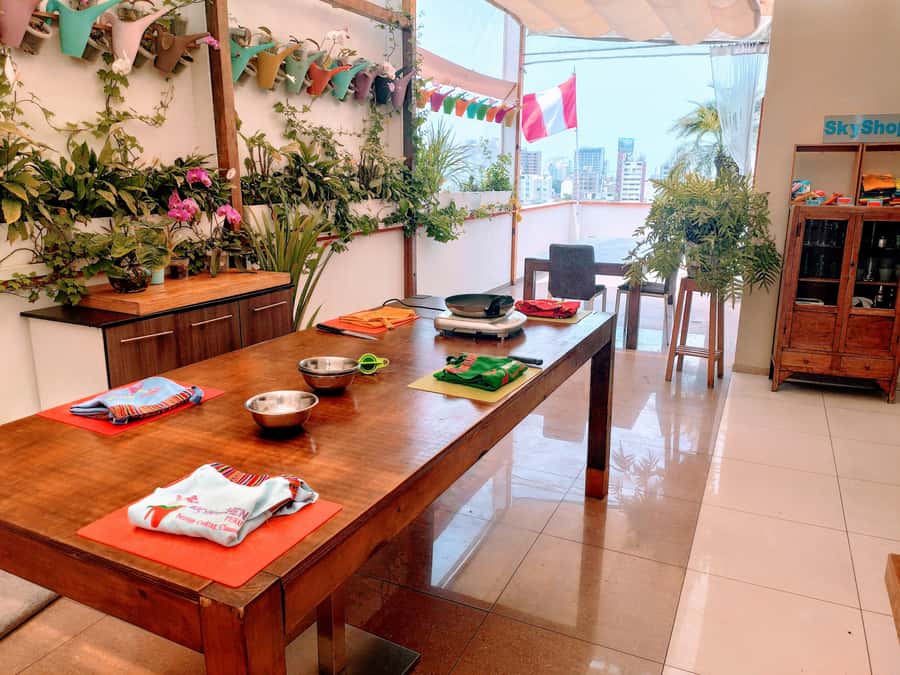
The class can accommodate the most common food restrictions, including vegetarian, vegan, lactose-free, and gluten-free diets. You must contact the provider ahead of time. Do not wait until you arrive at the market, since the kitchen needs advance notice to plan the ingredients.
The same advice applies to allergies. The supplied information confirms common dietary adjustments, but it does not describe allergy procedures or cross-contact policies. Ask the provider specific questions if your allergy is serious.
Plan on giving the activity most of your day. The stated duration is 330 minutes, or five and a half hours. That includes the market visit, the transfer, fruit tasting, cooking, and lunch. It is a good fit on a day when you want one substantial activity, but it may be too long if you are trying to squeeze in several Lima sights.
Wear clothes suitable for cooking and shoes that are comfortable for the market walk. Aprons and tools are provided during the class, but you do not take them home unless you purchase them.
Cancellation is free up to 24 hours before the activity for a full refund. Starting times depend on availability, and booking confirmation is sent by the provider within 48 hours of purchase. Since the confirmation timing is not instant, make sure the reservation is settled before building a tight same-day plan around it.
Who will enjoy this Lima food class?
I would choose this for people who want to understand Peruvian food through ingredients and preparation. It suits curious eaters, home cooks, couples, families with older children, and anyone who prefers a social activity with a clear result at the end.
It is especially useful if you are staying in Miraflores. The meeting point is close enough to reach on foot from the Ovalo de Miraflores, and the market location is easy to identify if you follow the Ricardo Palma Station reference.
It also works well for visitors who want more than familiar Peruvian restaurant dishes. The market tour and fruit tasting widen the focus to Andean roots, seeds, quinoa, plants, seafood, and produce that may not appear on a standard menu.
I would hesitate to recommend it to someone who dislikes group cooking, unfamiliar foods, or a long schedule. The day asks you to walk through a working market, taste many samples, prepare several courses, and stay engaged for hours. It is hands-on rather than passive.
The language options make it more flexible for international visitors. English, Spanish, and German are available, but you should confirm the language you need at booking. The small-group setup is another advantage for anyone who wants to ask questions instead of watching from the back of a large class.
Should you book it?
Book this experience if you want a full introduction to Peruvian food in one well-packed day. The combination of Surquillo Market, 35-plus fruit samples, a pisco sour, and a four-course meal gives you more substance than a cooking class alone.
The best reason to choose it is the way the day connects shopping, tasting, cooking, and eating. You see ingredients at the market, try fruit on its own, use supplied ingredients in the kitchen, and eat each course while the lesson is still fresh.
Skip it if you want a short activity or a quiet lunch. At $120, the value depends on your interest in participation. For a food-minded visitor who wants direct contact with Lima’s ingredients and cooking traditions, the long format and broad selection make the price reasonable.
FAQ
Where does the market tour begin?
Meet at the main entrance of Mercado 1 de Surquillo, below the large sign saying Mercado 1.
How do I find the correct Surquillo market?
Use Mercado 1 de Surquillo in Uber, Didi, Cabify, or Beat. For a traditional taxi, give Estación Ricardo Palma as the reference point. Be sure to go to market number 1, since Surquillo has several numbered markets.
How long is the activity?
The activity lasts 330 minutes, which is five and a half hours.
How many fruits will I taste?
The experience includes samples of more than 35 different exotic fruits.
What food will I prepare?
You will prepare a four-course Peruvian meal. The specific dishes are not stated in the available activity details.
Is a pisco sour included?
Yes. The class includes one pisco sour.
Are drinks included with the meal?
Unlimited water and a homemade fruit drink are included. Beer and wine are available for purchase but are not included.
Can dietary restrictions be accommodated?
The provider can accommodate common vegetarian, vegan, lactose-free, and gluten-free diets if you contact them ahead of time.
What languages are available?
The guide and instructor services are available in English, Spanish, and German.
More Markets in Lima
- Full Day Lima: Local Market+ CityTour+ Barranco & Miraflores
★ 5.0 · 3 reviews - Cusco: Peruvian Cooking Class, Cocktails & Local Market Tour
★ 4.9 · 512 reviews - Pisac Indian Market and Ollantaytambo Fortress with Lunch
★ 4.5 · 395 reviews - Cooking class and market tour with a local chef
★ 5.0 · 186 reviews
More Food & Drink in Lima
- Lima: Ultimate Peruvian Food Tour
★ 4.9 · 700 reviews - Lima Street Food Tour Beyond Netflix
★ 5.0 · 117 reviews - The 10 Tastings of Lima With Locals: Private Street Food Tour
★ 5.0 · 92 reviews - Trending Flavors: Miraflores Walking Tour Including Food and Drinks Tasting
★ 5.0 · 63 reviews
Recently added around Lima
- Enjoy Lima Walking Historic Center, Plaza San Martin and Plaza de Armas★ 5.0 · 3 reviews
- From Lima: City tour Prehispanic + Colonial & Modern Lima★ 5.0 · 3 reviews
- Lima: City Sightseeing Panoramic Bus Tour★ 3.3 · 3 reviews
- City Tour Colonial and Modern Lima for 5 Hours★ 3.2 · 3 reviews
- Lima: Lunuhuaná Extreme All In + Cerro Azul + Rafting + ATV + Canopy★ 4.4 · 3 reviews
- Lima: Shanty Town Exploration★ 5.0 · 3 reviews
- Lima: Tour to Huaca Pucllana and Huaca Mateo Salado★ 5.0 · 3 reviews
- Lima: Historic Center Walking Tour with Pisco Sour Tasting★ 5.0 · 3 reviews
Lima Tours, compared.

Full Day Paracas Ica and Huacachina from Lima All Included
Read our review →
Lima’s Vibrant Heritage: Exploring the City’s Landmarks Half-day
Read our review →

Paracas and the Huacachina Oasis Guided Day Tour
Read our review →
The Charm of Barranco & Pre Inca Pyramid in Miraflores
Read our review →
Full Day to Paracas and Huacachina Desert Oasis
Read our review →
Pachacamac Ruins & Barranco Half-Day Guided Tour
Read our review →Browse the lists this tour appears in