
Reviewed · LIMA TOURS
Lima: Historic Center Street Food, Market, and Eateries Tour
Lima’s historic center is best understood with something to eat in your hand. This four-hour walk links colonial plazas and churches with market stalls, old eateries, street carts, and an old casona where you try chilcanos. It gives you a taste of daily Lima, not just the grand buildings.
I like the mix of local street food and city history, and I like that the route includes places you might easily miss on your own, from Mercado Central to Barrio Chino. Guides such as Marcos, Aura, Valeria, and Sheyla have earned especially warm praise for their food knowledge, stories, humor, and careful pacing. The main drawback is the menu: it is heavy on meat and sweets, with no alternatives for vegetarians, vegans, or pescatarians, and serious gluten or nut allergies are a concern.
Key points to know before booking
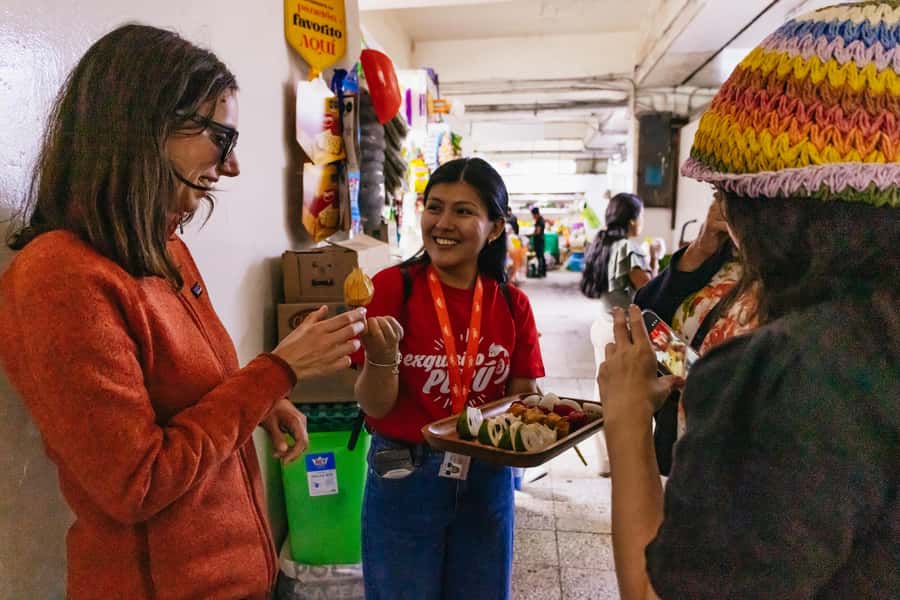
- Eight or more food and drink tastings: Expect a generous spread of savory snacks, sweets, fruit, and drinks rather than one large restaurant meal.
- A walking tour with real context: The guide explains Lima’s buildings, food traditions, economy, and everyday eating habits as you move through the center.
- Mercado Central and Chinatown included: You see fresh produce and local specialties, then sample the Peruvian-Chinese cooking known as chifa.
- Major sights are viewed from outside: The route passes the Cathedral, Government Palace, San Francisco Basilica, Plaza Mayor, and Iglesia de La Merced, but it is not an interior museum tour.
- Four hours for $69: The price makes sense if you value several tastings, a local guide, and a structured introduction to central Lima.
- English only: The shared tour is conducted exclusively in English. Non-English speakers need to arrange a private tour.
Why food is the right way into central Lima
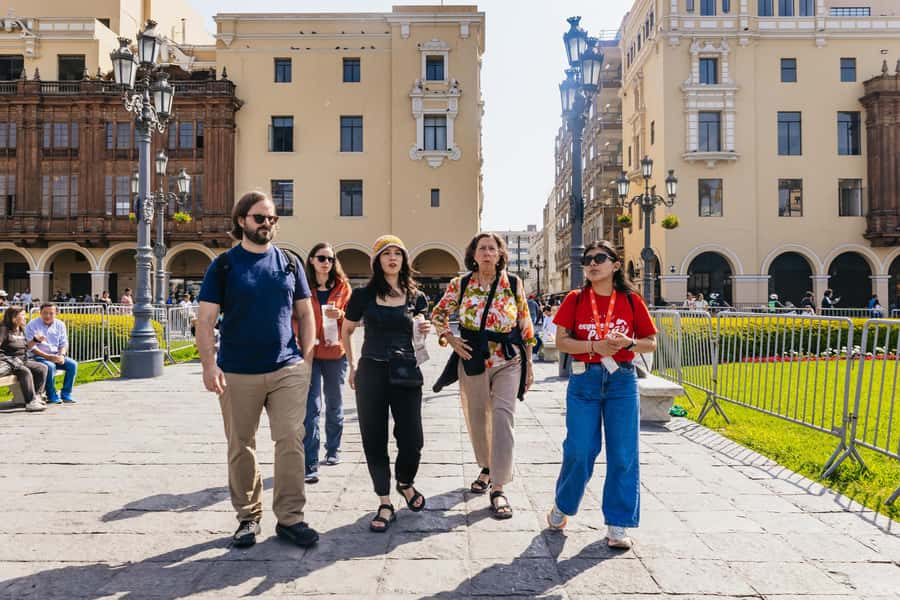
A standard sightseeing walk can leave you admiring Lima’s facades without understanding how people eat, work, and move through the city. This experience connects the two. You may be looking at a colonial church one moment and watching a vendor prepare a quick local snack the next.
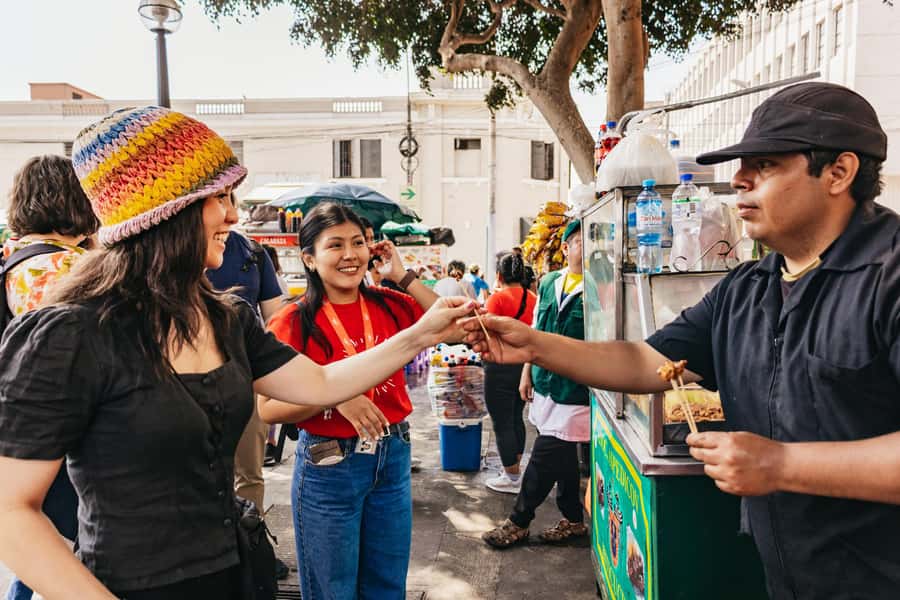
The food is served in small stops rather than as a formal tasting menu. That format lets you try several styles of comida al paso, the quick food people eat while going about their day. It also removes some of the guesswork. You can sample dishes that you might not feel ready to order alone, with the guide explaining what they are and how they fit into Peruvian life.
The tour has a strong local flavor. It uses small restaurants, food carts, the central market, Chinatown, a dessert stop, and a local bar. This is useful on your first day in Lima because you leave with both a better sense of the center and a list of foods you can recognize later.
You should arrive hungry, but not empty. The portions vary, and the total can be substantial. Several people finished full enough to skip dinner, while one person felt the savory portions were smaller than expected compared with the large churro and full picarón. In other words, you get plenty of food, but the balance may lean more toward sweets than you prefer.
More Food Tours in Lima
- Lima: Ultimate Peruvian Food Tour
★ 4.9 · 700 reviews - Lima Street Food Tour Beyond Netflix
★ 5.0 · 117 reviews - The 10 Tastings of Lima With Locals: Private Street Food Tour
★ 5.0 · 92 reviews
Starting at Plaza San Martín
The meeting point is the main door of the Gran Hotel Bolivar, at Jirón de la Unión 958 in Plaza San Martín. This is a practical place to begin because the hotel and square are easy reference points in the historic center.
The first photo stop is Plaza San Martín, followed by a short visit to a local restaurant. Here the tour settles into its main rhythm: walk, hear a bit of background, sit or pause for a tasting, then continue. Guides have been praised for keeping the group on schedule without making the experience feel hurried.
You should not expect a long lecture at each landmark. The sightseeing portions are short, often five to fifteen minutes, and are designed to support the food route. That works well for anyone who wants culture without spending four hours inside churches or museums.
Small eateries and Peruvian favorites
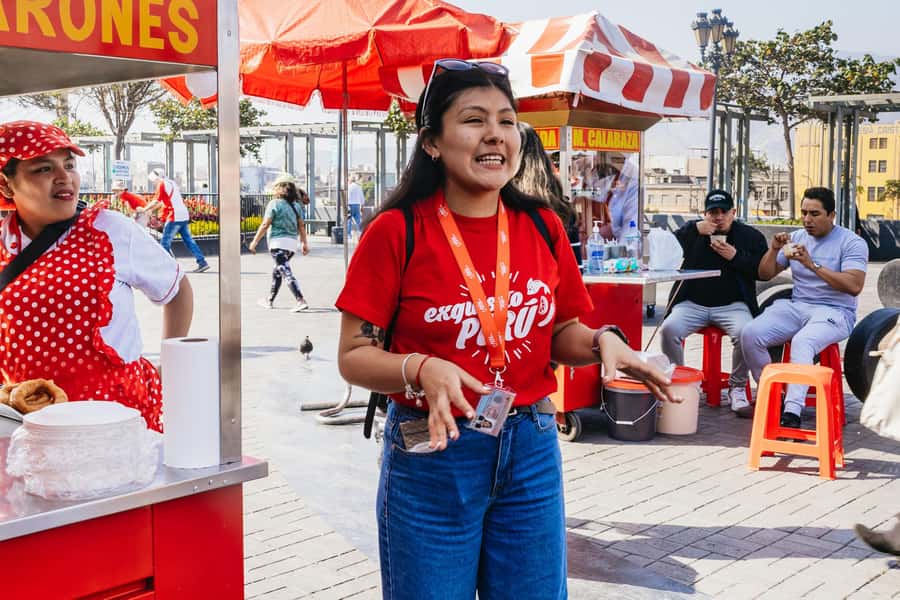
The early restaurant stops introduce regional food and spirits. Specific tastings can vary, but the experience includes well-known Lima favorites such as anticuchos, tamal, and the sandwich de chicharrón associated with El Chinito. Anticuchos were a particular highlight for several people because of their strong seasoning and grill flavor.
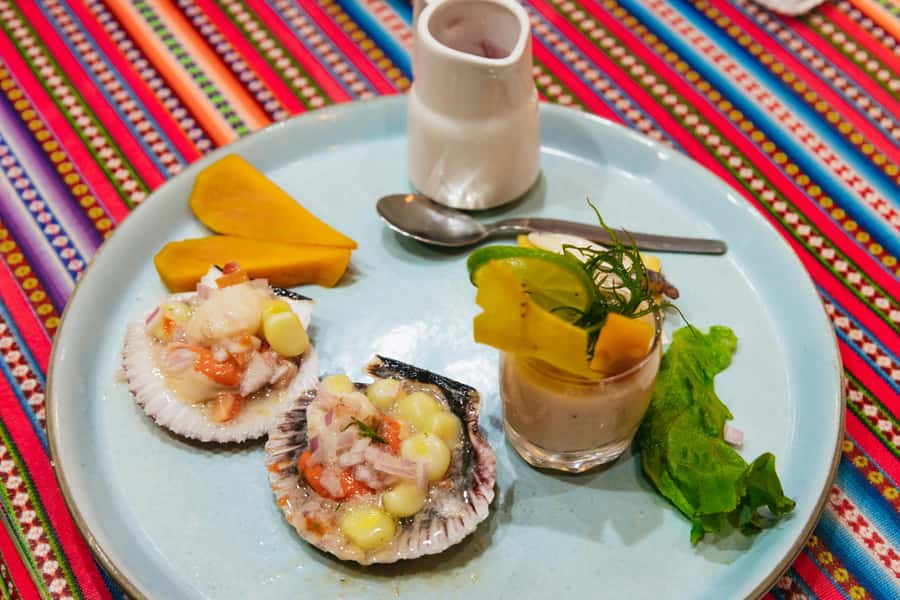
This is one of the most useful parts of the tour for first-time visitors. A menu in Peru can include names you recognize only vaguely, and a street vendor may not have a long explanation ready. Your guide bridges that gap and gives you a reason to try something beyond ceviche, Peru’s most famous export.
The meal is not designed for vegetarians. The operator specifically says that vegetarian, vegan, and pescatarian alternatives cannot be provided. If you eat meat and want to understand the everyday side of Peruvian food, the range is a strong point. If you do not, choose another food tour.
Portions are generally described as generous overall, though not every individual serving is large. The tour may include several savory bites followed by desserts and drinks. It is better to think of it as a series of samples that add up to a full meal, not as eight equal courses.
Iglesia de La Merced and Lima’s central plazas
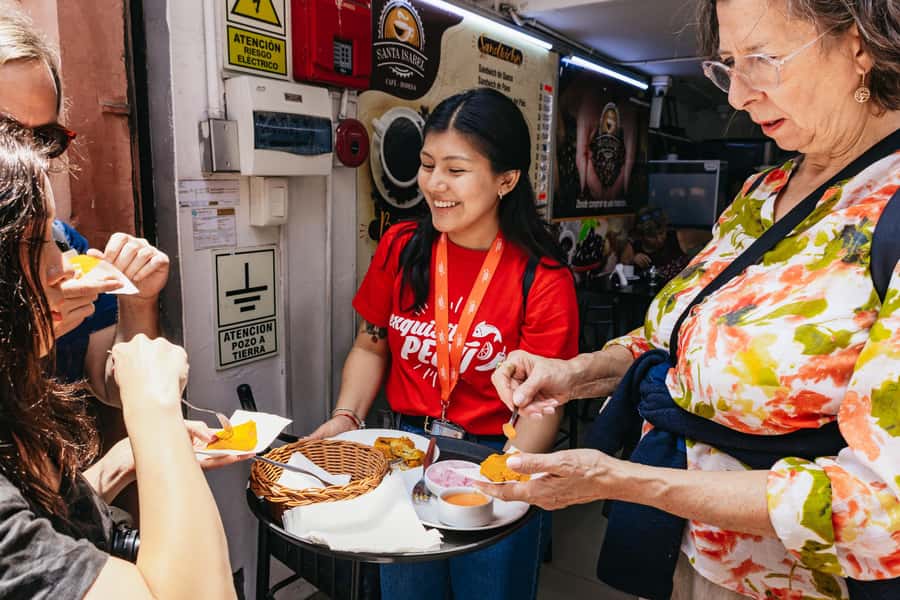
The route pauses outside Iglesia de La Merced, then continues through Lima’s central streets toward Plaza Mayor, also called Plaza de Armas. You see the architecture as part of the city around it, rather than as isolated postcard stops.
At Plaza Mayor, the Cathedral of Lima and Government Palace provide some of the most important exterior views. The schedule allows only a short photo stop, so plan your expectations accordingly. You will see and discuss these landmarks, but you are not promised entry or an extended architectural tour.
That limitation is also a benefit. The route covers a lot of ground and keeps the food stops coming. Guides have been praised for explaining the history of Lima and Peru in a way that stays connected to daily life, local ingredients, and the city’s changing neighborhoods.
The walk gives you a useful first map of the center. You move between major squares, churches, markets, and commercial streets, with food acting as the thread. I would book this near the beginning of a Lima stay if you want the guide’s suggestions to shape your later meals.
More Historical Tours in Lima
- Lima’s Vibrant Heritage: Exploring the City’s Landmarks Half-day
★ 4.5 · 581 reviews - Historic Downtown, Miraflores & Catacombs Private Tour
★ 5.0 · 100 reviews - Lima Peru Sea Lions, History and Palomino Callao Islands
★ 5.0 · 56 reviews - Lima´s Vibrant Heritage & Larco Museum of Cultures Half Day Tour
★ 5.0 · 48 reviews
Mercado Central: fruit, spices, and local shopping life
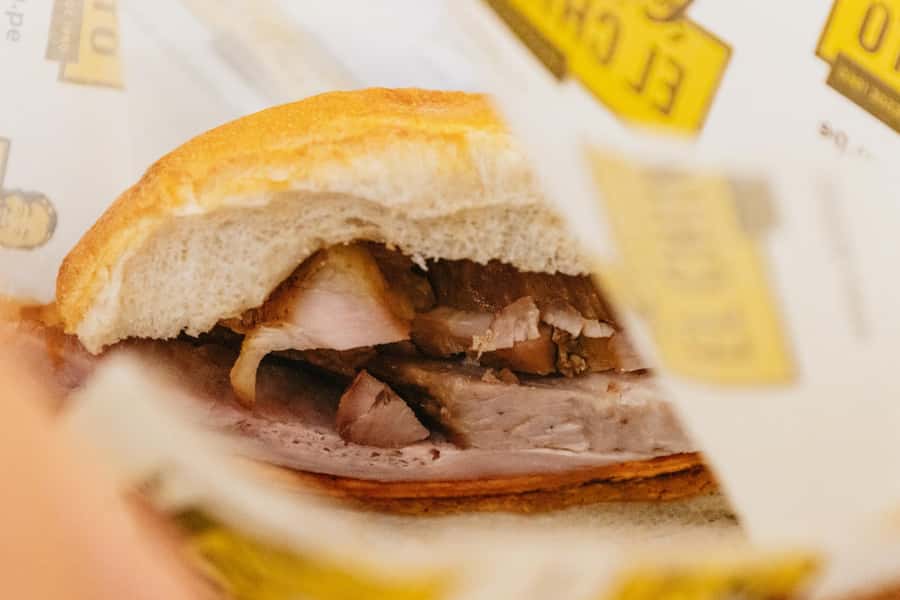
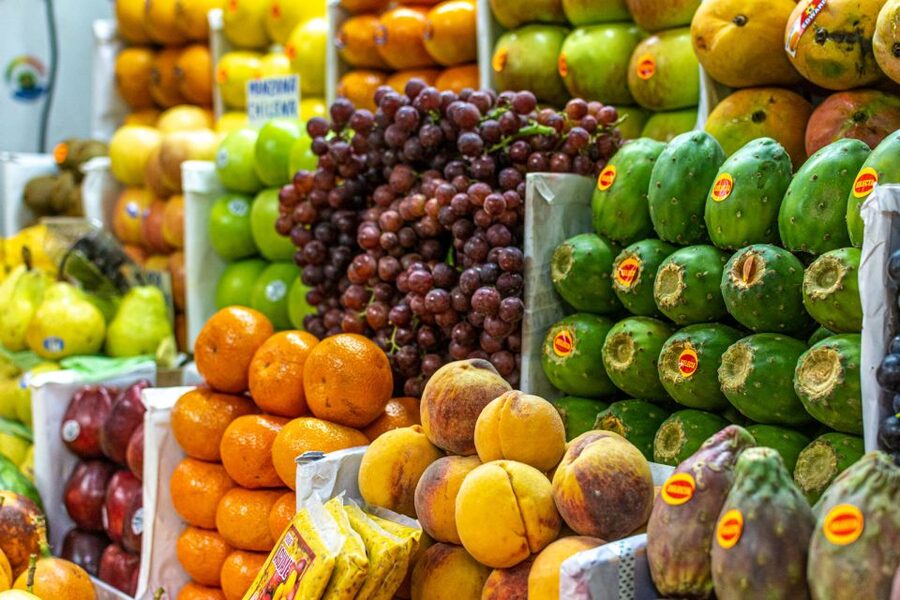
Mercado Central is one of the tour’s strongest stops. You spend about twenty-five minutes in Lima’s largest market, looking at fresh produce, spices, and local specialties before tasting market food and fruit.
Markets can be hard to read on your own. You may recognize bananas or peppers but miss the ingredients that matter most to local cooking. A guide can point out what people buy, what is seasonal, and which items are worth tasting. The point is not simply to walk through rows of food. It is to see the working side of Lima’s food culture.
This stop also adds welcome contrast to the historic buildings. The Cathedral and San Francisco Basilica tell one story about the city, while the market shows how people shop and eat now. You should keep your bag small, since luggage and large bags are not allowed on the tour.
Barrio Chino and Peru’s chifa tradition
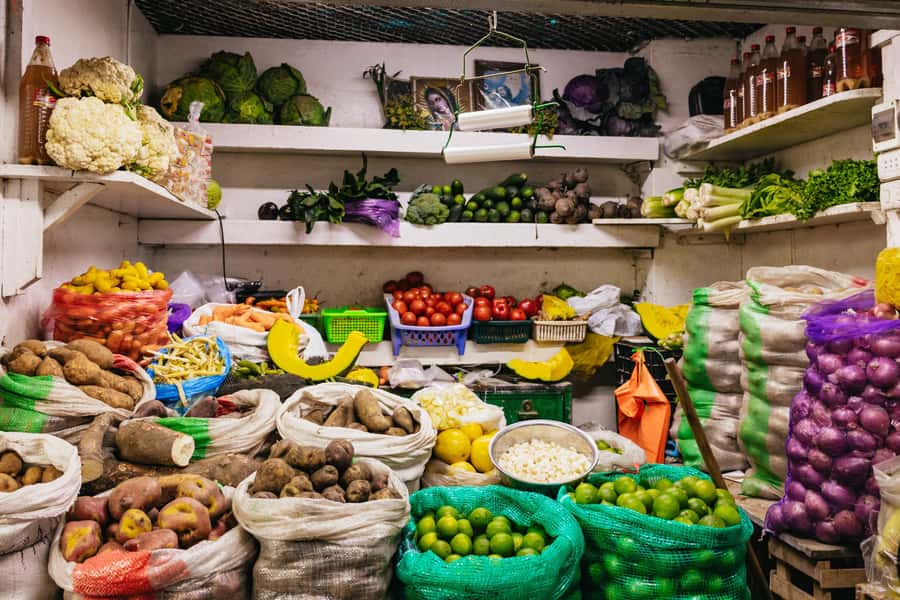
The route then enters Barrio Chino, where Peruvian and Chinese cooking meet in chifa cuisine. The Chinatown section is brief, about fifteen minutes, but it brings a different cultural thread into the afternoon or evening.
This is a good example of the tour’s wider aim. Peruvian food is not one fixed style. It reflects different communities and ingredients, and chifa is one of the clearest examples of that exchange. You get a street food tasting and a short walk through the neighborhood rather than a full restaurant meal.
The tasting sequence continues through central Lima with more comida al paso. You may try foods that are familiar to locals but less visible in a typical visitor itinerary. That is where a guide adds real value: you are not just eating, you are learning what people choose for a quick bite and why.
Churros, picarones, and the sweet side of the tour
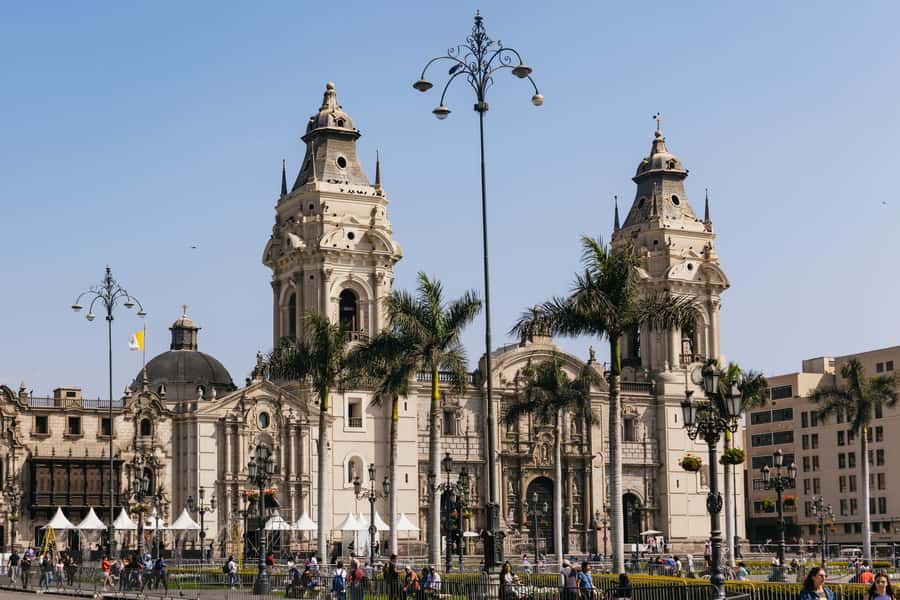
Dessert is a major part of the experience. You can expect creole churros and picarones, along with other sweet tastings. The churros have drawn especially strong praise, and one person called them the best they had ever had.
This is good news if you plan trips around pastry. The tour does not treat dessert as a token bite at the end. A full churro and a full picarón may arrive after several savory foods, so pace yourself. If you prefer a more even sweet-to-savory balance, tell the guide early and ask how the portions will be handled.
The dessert stops also show another side of street food. Quick eating is not only about grilled meat or sandwiches. Fried dough, syrup, and market fruit are part of the rhythm of the city. You get a broader picture of local snacks than you would from a restaurant-only tour.
Chilcanos in an old Lima casona
Near the end, the group spends around thirty minutes at a local bar for spirits, including chilcanos in one of Lima’s oldest casonas. This is the tour’s most relaxed pause and a chance to sit down after walking through the center.
The drink stop gives the experience a social finish. Instead of ending as soon as the last food sample is served, you have time to ask questions and talk with the guide. Several guides, including Marcos and Aura, have been praised for their warmth, humor, and ability to connect food with Peruvian culture.
Alcohol is included, so this matters if you do not drink. The supplied information does not promise a nonalcoholic replacement, and dietary or drink preferences should be raised at booking. The operator asks for dietary restrictions at least twenty-four hours before the start, but it does not accept vegetarian, vegan, or pescatarian bookings for this shared tour.
San Francisco Basilica and the final walk
The final sightseeing portion includes an exterior stop at the Basílica y Convento de San Francisco de Lima and a photo stop at Lima Cathedral. These are quick visits, not interior tours.
San Francisco is an especially useful architectural pause because it gives the route another major colonial facade before the finish. The guide can place the buildings in the larger story of central Lima, while the food stops keep the walk grounded in the city’s present-day life.
The tour finishes at Alameda Chabuca Granda. Since there is no hotel pickup or drop-off, you need to arrange your own way to the starting point and onward from the finish. The route itself is on foot, with repeated sitting and tasting stops. People who worry about four hours of walking should know that the pace includes rests, but comfortable shoes are still sensible.
Is $69 a fair price?
At $69 per person, this is not a cheap way to buy lunch. It is a fair price if you would otherwise pay for several snacks, drinks, and desserts while also hiring a guide to explain the city.
The value comes from the combination. You receive food tastings, a drink, and a local English-speaking guide, plus a planned route through restaurants, carts, Mercado Central, Chinatown, and the main historic sights. You also avoid the problem of ordering too much of one unfamiliar dish.
The price is less attractive if you mainly want a formal history tour or an inexpensive meal. The landmarks are viewed from outside, and the itinerary moves quickly between short stops. You are paying for access, interpretation, variety, and convenience.
Group size can affect the feel. The tour is shared, but some departures may be very small. A few people had only one other participant, which allowed for personal attention. You cannot count on that, but the guide names repeatedly associated with strong feedback include Marcos, Aura, Valeria, David, Manuel, and Sheyla.
Who should book this experience?
I would recommend it to first-time visitors who want a practical introduction to central Lima and are comfortable eating meat, fried foods, sweets, and drinking alcohol. It is also a good fit if you like learning the story behind a dish rather than simply photographing a monument.
Food-focused couples, small groups, and solo visitors should find the structure easy to join. The English-only format is clear, and the guides have been praised for answering questions, managing time, and adjusting the conversation to the group’s interests.
I would not choose it for a vegetarian, vegan, pescatarian, or anyone with a severe gluten or nut allergy. Certain foods may contain traces, and the operator says alternatives cannot be assured. It is also not the right choice if you want long interior visits to the Cathedral, San Francisco, or other historic buildings.
Book with an appetite, a small bag, and realistic expectations about walking. If possible, take this tour early in your Lima stay. It can give you useful food vocabulary, neighborhood orientation, and ideas for what to order later.
Should you book the Lima street food tour?
Book it if you want a full introduction to Lima through food, markets, and architecture rather than a simple tasting session. The strongest parts are the local eateries, Mercado Central, Chinatown, anticuchos, churros, picarones, and the chance to hear the city explained by guides such as Marcos or Aura.
Skip it if the meat-heavy menu or dessert-heavy finish does not suit you. For everyone else, $69 buys four well-filled hours and a route that would be difficult to assemble on your own. The tour is especially useful at the start of a Peru trip, when a plate of street food can teach you as much about Lima as a grand plaza.
FAQ
How long does the Lima street food tour last?
The tour lasts four hours and includes walking, sightseeing, restaurant stops, market visits, street food, desserts, and drinks.
Where does the tour start?
It starts at the main door of the Gran Hotel Bolivar at Jirón de la Unión 958, in Plaza San Martín, Cercado de Lima.
Where does the tour finish?
The tour finishes at Alameda Chabuca Granda.
Is the tour offered in languages other than English?
No. The shared tour is conducted in English only. Non-English speakers should book a private tour.
Can vegetarians, vegans, or pescatarians join?
No. The operator says it cannot provide alternatives for vegetarians, vegans, or pescatarians.
Are hotel pickup and drop-off included?
No. You must make your own way to the meeting point and arrange transportation after the tour.
More Food & Drink in Lima
- Trending Flavors: Miraflores Walking Tour Including Food and Drinks Tasting
★ 5.0 · 63 reviews - 5 iconic restaurants of Lima a 3-hour guided food tour in Barranco
★ 4.5 · 48 reviews - Lima Street Food: A gastronomic adventure through the city.
★ 4.5 · 42 reviews - Lima: Flavors and Tradition Walking Tour with Food Tasting
★ 4.6 · 40 reviews
More Market Tours in Lima
- Market Tour, Tasting of 35 Fruits, and 4-Course Peruvian Cooking Class in Lima
★ 5.0 · 86 reviews - #1 Rated Cooking Classes with Local Market Tour & Pickup
★ 5.0 · 69 reviews - Private Cooking + Market with Maido’s Former Creative Chef (+trasportation)
★ 5.0 · 49 reviews - Lima: Food Tour on Local Market
★ 5.0 · 8 reviews
Recently added around Lima
- Enjoy Lima Walking Historic Center, Plaza San Martin and Plaza de Armas★ 5.0 · 3 reviews
- From Lima: City tour Prehispanic + Colonial & Modern Lima★ 5.0 · 3 reviews
- Lima: City Sightseeing Panoramic Bus Tour★ 3.3 · 3 reviews
- City Tour Colonial and Modern Lima for 5 Hours★ 3.2 · 3 reviews
- Lima: Lunuhuaná Extreme All In + Cerro Azul + Rafting + ATV + Canopy★ 4.4 · 3 reviews
- Lima: Shanty Town Exploration★ 5.0 · 3 reviews
- Lima: Tour to Huaca Pucllana and Huaca Mateo Salado★ 5.0 · 3 reviews
- Lima: Historic Center Walking Tour with Pisco Sour Tasting★ 5.0 · 3 reviews
Lima Tours, compared.

Full Day Paracas Ica and Huacachina from Lima All Included
Read our review →
Lima’s Vibrant Heritage: Exploring the City’s Landmarks Half-day
Read our review →

Paracas and the Huacachina Oasis Guided Day Tour
Read our review →
The Charm of Barranco & Pre Inca Pyramid in Miraflores
Read our review →
Full Day to Paracas and Huacachina Desert Oasis
Read our review →
Pachacamac Ruins & Barranco Half-Day Guided Tour
Read our review →Browse the lists this tour appears in