
Reviewed · AREQUIPA TOURS
Walking tour in the Historic Center of Arequipa
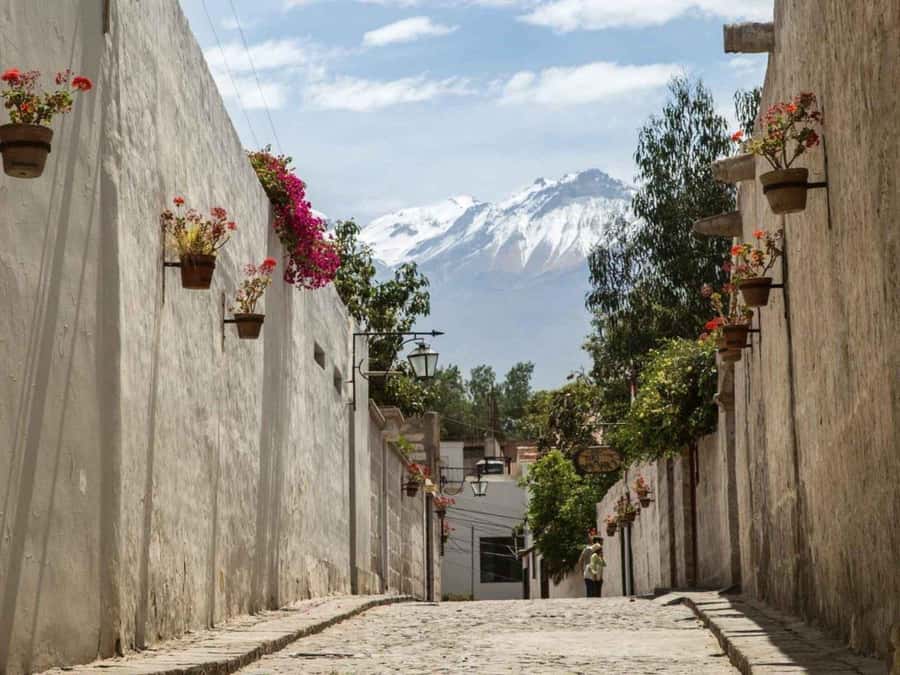
Arequipa’s best surprise may be how much this two-hour walking tour fits into a short route. You move from the grand Plaza de Armas to ornate cloisters, a volcano viewpoint, a camelid farm, and San Lazaro, the city’s first settlement. It gives you a useful first look at the White City without putting you on a bus.
I like the mix of colonial architecture and everyday city life, especially the contrast between church courtyards, old mansions, city gardens, and the line of residents renewing national identity cards. I also like the stop at Mundo Alpaca, where llamas, alpacas, Suri alpacas, and vicuñas make this feel more local and less like a standard plaza-to-church walk.
The main catch is the payment arrangement. The reservation costs $10, but you are expected to leave a voluntary tip afterward, with one guest reporting an expected range of 30 to 50 soles per person. The route can also feel rushed if you want long photo stops, and some indoor attractions require extra payment.
Key points to know before booking
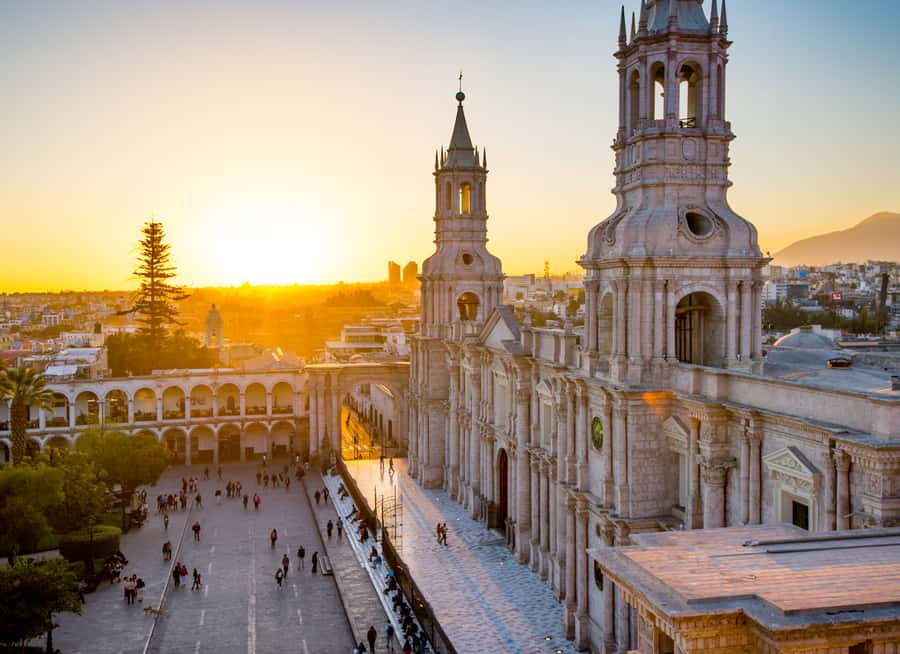
- The route covers more than the main square: You see the Plaza de Armas, Compañía cloisters, old mansions, gardens, Puente Grau, Mundo Alpaca, and San Lazaro.
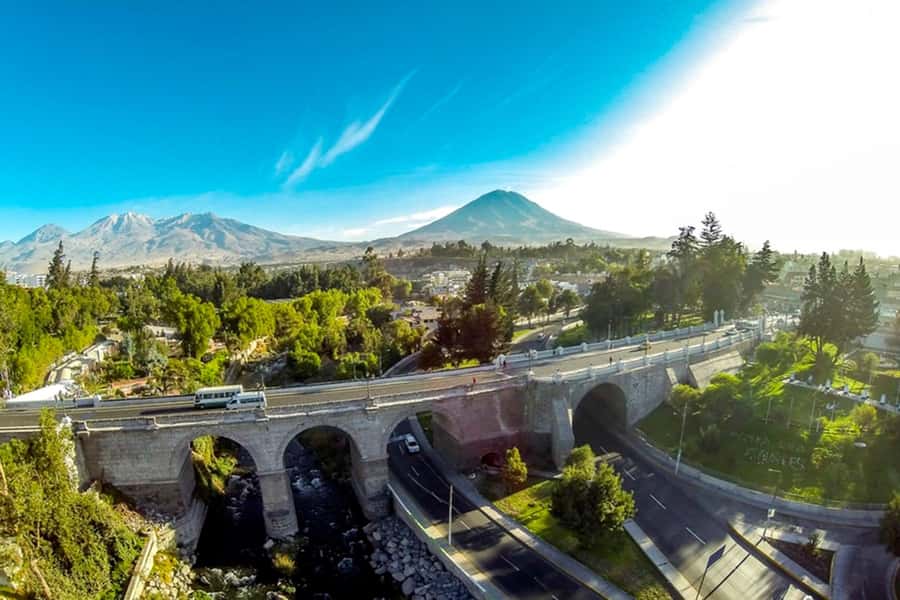
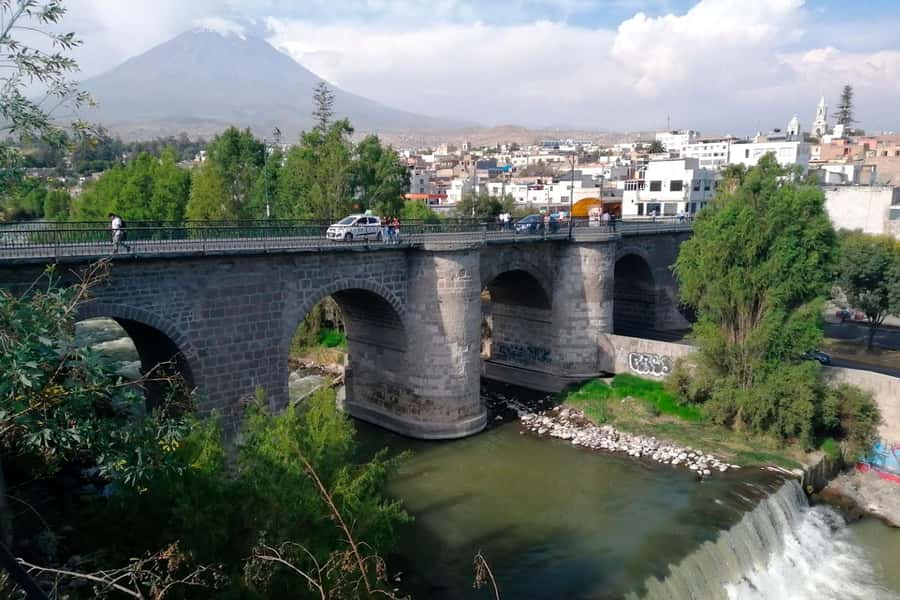
- The volcano viewpoint is a real highlight: From El Puente Grau, you may see Misti, Chachani, and Pichu Pichu.
- Mundo Alpaca adds a pleasant change of pace: You can see camelids including llamas, alpacas, Suri alpacas, and vicuñas.
- Guides make much of the difference: Edgar, Jorge Echeandia, Beatriz, Johan, Francisco, and others have been praised for humor, local stories, and clear explanations.
- The $10 price is not the full expected cost: You pay the reservation fee, then tip the guide at the end.
- It is a walking introduction, not a full museum tour: Santa Catalina Convent and the Juanita mummy museum can be added only with extra payment and internal guides.
Starting beside the Plaza de Armas
Meet at Santa Catalina Street 204, just one block from Arequipa’s Plaza de Armas. The guide carries an umbrella, which is the main way to identify the meeting point. The stated coordinates are -16.3967191, -71.53667879999999.
I would arrive a few minutes early. One booking had a rocky start because the guide was not immediately at the meeting point and the organizer did not answer the phone at first. The group eventually connected with Beatrice and began the walk, but this is a good reason to keep the confirmation details handy and avoid arriving at the last second.
The tour is offered in English or Spanish. The route returns to Santa Catalina 204, so you finish near the center rather than at an inconvenient edge of town. That makes it easy to continue exploring, find lunch, or return to your hotel.
more ancient sites near Arequipa
- Arequipa: Walk through the Historic Center of the City
★ 4.9 · 87 reviews - Arequipa, Historic and Colonial City and Santa Catalina Monastery
★ 4.5 · 42 reviews - Walking tour through the Historic Center of Arequipa
★ 4.0 · 3 reviews
Reading the Plaza de Armas
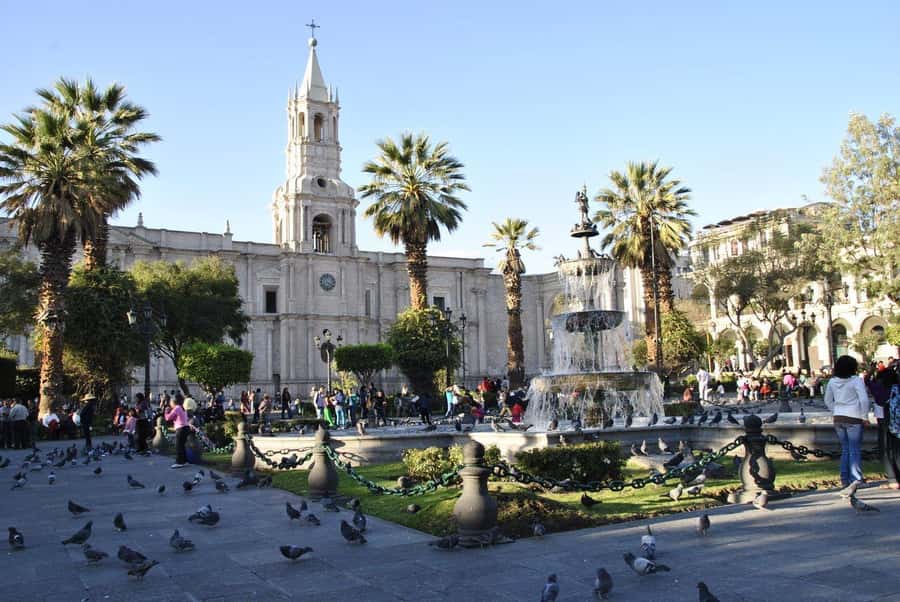
The Plaza de Armas is the natural opening chapter. The guide explains the square’s history, its traditional arches, and the portals that frame it. This is useful early in your stay because the plaza is Arequipa’s main reference point, and understanding its layout helps you make sense of the streets around it.
The square is also where the city’s public face comes together. You get the formal architecture, the religious background, and a sense of how Arequipa functions today. One guide, Edgar, went beyond the usual dates and monuments by pointing out present-day details, including a long line of people waiting to renew their national identity cards.
That kind of observation is one reason I like a walking tour at the start of a visit. You are not just looking at decorated stone. You are learning how the historic center is still used.
The drawback is time. With several stops ahead, the guide cannot spend an hour unpacking every arch and portal. If the square interests you most, take note of places you want to revisit on your own.
The Compañía cloisters and old city details
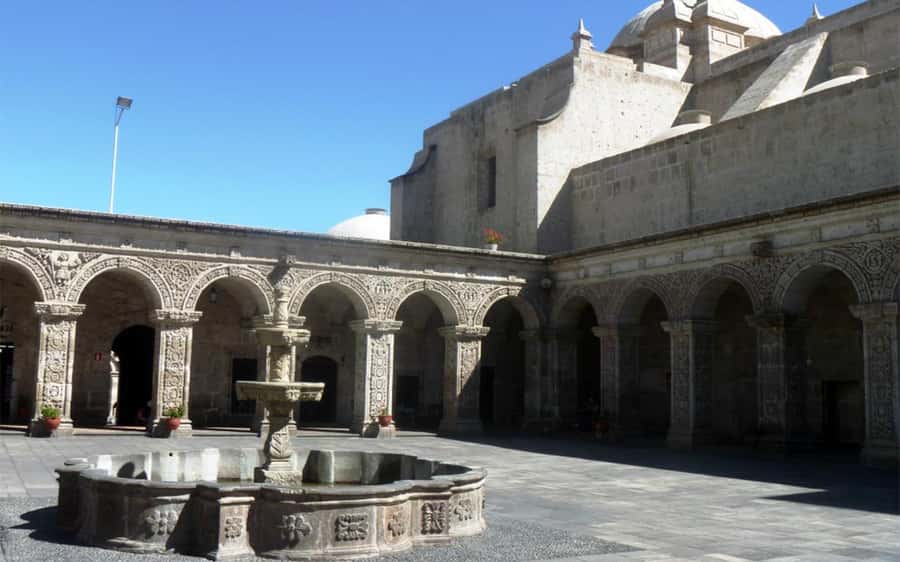
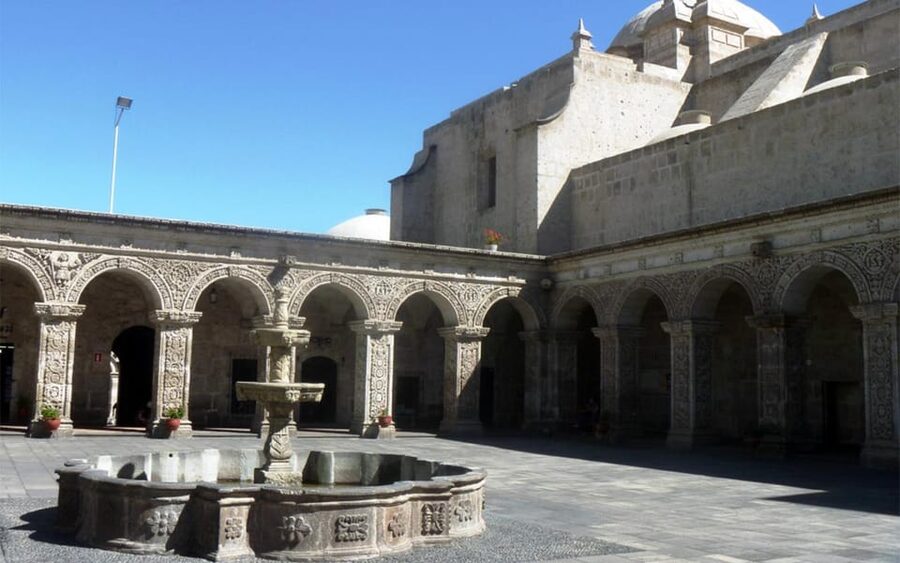
The cloisters of the Compañía are one of the architectural highlights. Their carved stonework and enclosed courtyards show the decorative side of Arequipa’s colonial design. The guide helps explain the religious art and architecture, which gives the details more meaning than a quick photograph would.
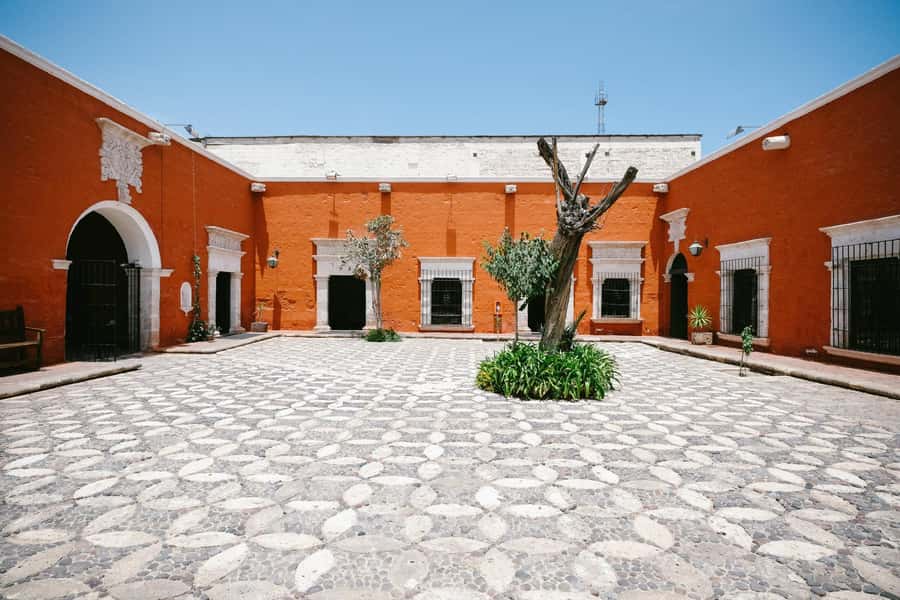
The route also includes old mansions, city gardens, and attractive courtyards near the center. These smaller spaces are important because Arequipa is not only about its most famous buildings. The walk lets you see how the city’s older residential architecture fits around the major churches and public squares.
Beatrice was praised for explaining the meaning behind the religious architecture and art. That is exactly the sort of help you want in a place where carved symbols and church facades can otherwise blur together.
You should not expect entry to every major building. The description specifically allows for Santa Catalina Convent or museums such as the Juanita mummy collection, but these visits cost extra and involve hiring internal guides. Think of this tour as an orientation around the sights, with optional add-ons rather than a complete museum package.
Puente Grau and the three volcanoes
The walk reaches a strategic viewpoint at El Puente Grau. From here, the route may offer views toward Misti, Chachani, and Pichu Pichu. The volcanoes give Arequipa its powerful setting, and seeing them from within the city helps explain why the surrounding region feels so distinctive.
This is a good photo stop, but do not assume you will have unlimited time. One booking described the tour as rushed in places, with little time for photographs. If the sky is clear, have your camera ready before the group reaches the viewpoint.
The route is still a city walk, not a mountain excursion. The volcanoes are viewed from town, and the experience depends on conditions at the time. Even so, this stop breaks up the building-by-building sightseeing and gives you a broader sense of Arequipa’s location.
more walking tours in Arequipa
- Arequipa Walking Tour city center and drinks experience
★ 5.0 · 72 reviews - Arequipa: Walking Tour and Santa Catalina Monastery
★ 4.4 · 7 reviews - Arequipa Walking Tour and Santa Catalina Monastery
★ 5.0 · 4 reviews - Lima: Miraflores Trending Flavors Half-Day Walking Tour
★ 4.9 · 98 reviews
Meeting llamas and alpacas at Mundo Alpaca
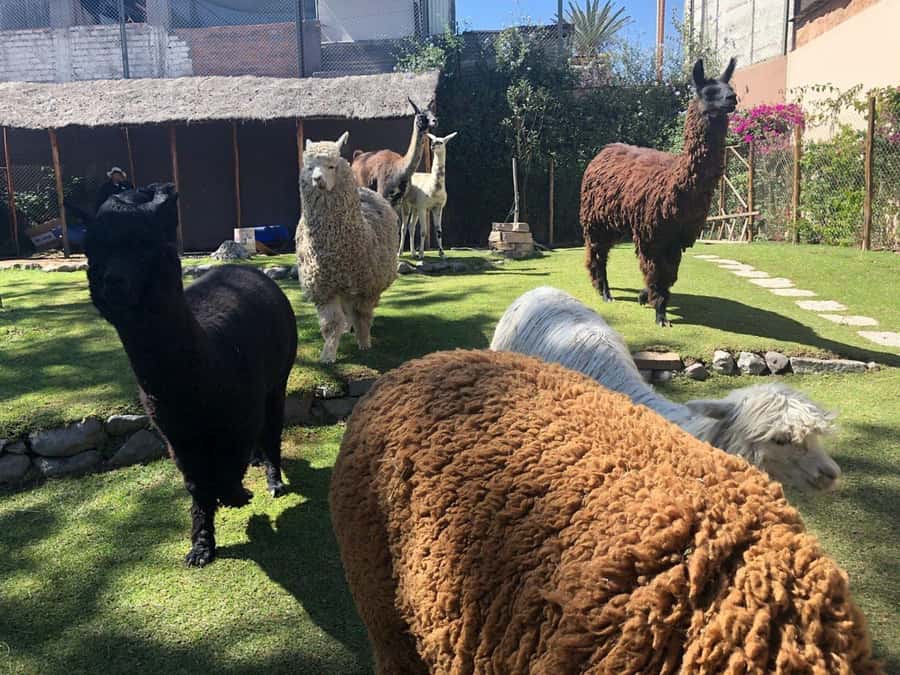
Mundo Alpaca gives the tour its most unexpected change of rhythm. Instead of another church or mansion, you visit an old breeding farm for camelids. The animals include llamas, alpacas, Suri alpacas, and vicuñas.
You may also see young animals, including a baby llama and alpaca. Feeding llamas and alpacas was a particular highlight for one booking, and this stop works well for families or anyone who wants a more direct connection with Peru’s textile traditions.
The visit also introduces the fibers used in local fabrics. You can optionally buy textiles made from the same type of fiber. I would treat shopping as optional, not as the main reason to book, but it can be a useful chance to compare the materials after seeing the animals that produce them.
There is a practical point here: Mundo Alpaca is not simply a photo stop. It connects the animals with an important craft tradition. You see the source of the fiber, then have the chance to examine finished products. The experience may feel more commercial than the plaza portion, so keep your expectations balanced.
Some versions of the walk have included small food and drink moments, such as cocktails, frozen cheese, or a look at Peruvian food. These details may vary by guide and day, so I would not book solely for a tasting. The consistent feature is the camelid visit.
San Lazaro, the city’s first settlement
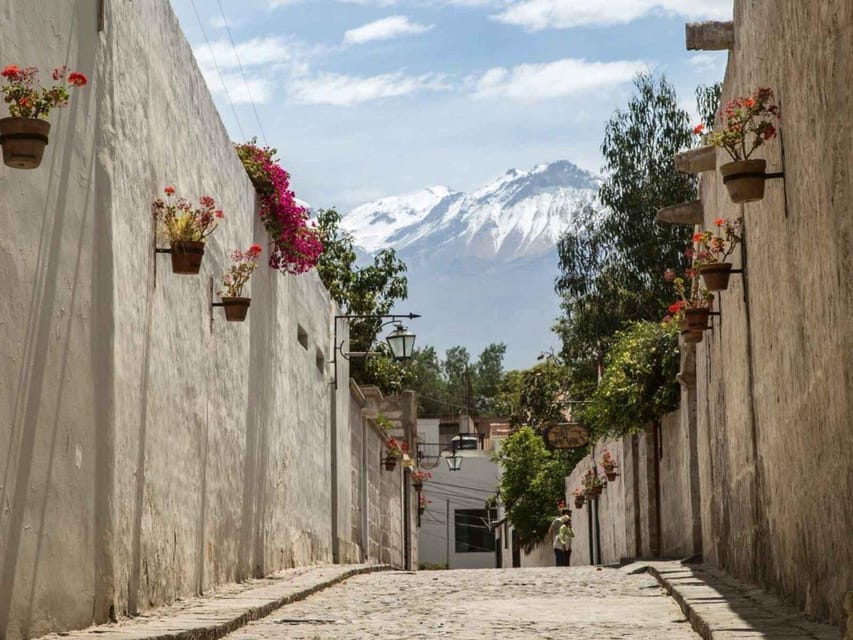
The final major neighborhood stop is San Lazaro, described as the first town founded where the White City began. Its smaller streets and older character offer a different feel from the formal Plaza de Armas.
This part of the route matters because city history becomes easier to understand when you leave the central monuments. You see a district tied to Arequipa’s beginnings, then walk back toward the center rather than ending far away.
The San Lazaro visit also keeps the tour from becoming a simple list of famous buildings. You get a sense of how the historic center spreads into older residential areas. The route ends near Santa Catalina Street 204 and the Plaza de Armas.
The guides and the tone of the walk
The guide can shape the whole experience. Edgar has been praised for strong historical explanations, humor, restaurant suggestions, and a useful overview of the city. Jorge Echeandia was described as friendly, helpful, and able to cover a great deal in a short time.
Johan was praised for being funny, engaging, and informative. Beatriz has explained religious art and architecture clearly, while Francisco made the city easy to explore through his familiarity with Arequipa. Other guides may lead the route, so you should not assume one particular person is guaranteed.
The strongest pattern is the combination of history and personality. You are likely to get stories, answers to questions, and practical tips for the rest of your stay. Several bookings describe the guides as entertaining, not merely fact-focused.
Still, guide style can vary. One person may spend more time on history, while another may emphasize food, city life, or jokes. If you prefer a slow, highly detailed architectural tour, the short format may not satisfy you. If you want a lively introduction that covers many sights, it is a better match.
What $10 really buys you
The listed reservation price is $10 per person. That is low for a two-hour guided walk covering several parts of central Arequipa, but it does not tell the whole cost.
The arrangement expects you to give the guide a voluntary tip at the end. The stated reason is to cover operating costs, including guide service and maintenance payments connected with places visited. One booking reported that guests were expected to tip 30 to 50 soles per person, and felt that amount was high.
I would budget for the tip before booking. If you are comfortable with a tip-based walking tour, the total can still be good value for the amount of ground covered and the access to a local guide. If you want one fixed price with no uncertainty, this payment model may bother you.
The value is strongest when you use the tour as a first-day orientation. You learn the layout, identify places to return to, see several major sights, and receive restaurant or city suggestions. It is less compelling if you already know the center well or plan to visit every site with a separate specialist guide.
The description says entrance to the places of visit is included, but it also states that Santa Catalina Convent and museums such as the Juanita mummy collection require extra payment and internal guides. Ask before the walk begins which stops are included on that day and which are only optional additions.
Timing, pace, and practical comfort
The stated duration is about two hours, though one booking described a two-and-a-half-hour walk. Plan for some variation, especially if the guide answers many questions or the group pauses at viewpoints.
You walk the entire route. There is no transport between stops, so comfortable shoes matter. The route covers streets, courtyards, neighborhoods, and viewpoints, and the pace may feel brisk when the guide is trying to fit everything into two hours.
Photo lovers should speak up early. The route includes excellent places for pictures, especially the Plaza de Armas, Compañía cloisters, Puente Grau, camelids, and San Lazaro. But you may not get long pauses at each one.
The tour is offered with free cancellation up to 24 hours before the start time. You can also reserve and pay later, which helps if your plans around Arequipa are still shifting. Starting times depend on availability.
Who should book this Arequipa walk?
I would choose this tour if you have just arrived in Arequipa and want to get your bearings fast. It covers the center, explains the city’s past, points out the volcanoes, and ends close to the main square.
It also suits you if you like variety. The route shifts from arches and portals to cloisters, old gardens, volcano views, camelids, and a historic neighborhood. Families may especially enjoy Mundo Alpaca, while food-minded visitors may appreciate any local suggestions or tastings offered by the guide.
You may want another option if your main goal is an in-depth visit to Santa Catalina Convent, the Juanita mummy museum, or another interior collection. Those places require separate entrance arrangements and internal guides, and two hours is not enough for a full treatment of them all.
I would also pause if you dislike tip-based pricing. The $10 reservation is only part of the expected payment, so decide in advance what the walk is worth to you.
Should you book the Historic Center of Arequipa walking tour?
Yes, if you want a lively first look at Arequipa and accept the tip arrangement. The strongest parts are the broad route, the engaging guides, the Puente Grau volcano views, and the unusual Mundo Alpaca stop.
Book it early in your stay, bring comfortable shoes, and allow more than two hours in case the group moves slowly. Keep your photo expectations realistic, and confirm which entrances are included before you begin.
Skip it if you already have a private architectural tour planned or want long, quiet visits inside museums. For most first-time visitors, though, this is a useful and unusually varied introduction to Arequipa for a modest starting price.
FAQ
Where does the walking tour begin?
The meeting point is Santa Catalina Street 204, one block from Arequipa’s Plaza de Armas.
How do I identify the guide?
The guide is expected to carry an umbrella in their hand.
How long does the tour last?
The stated duration is about two hours. One booking described the walk as lasting two and a half hours.
What languages are available?
The live tour guide is available in English or Spanish.
Does the tour return to the starting point?
Yes. The walk finishes at Santa Catalina 204, near the Plaza de Armas.
What places are covered?
The route includes the Plaza de Armas, Compañía cloisters, old mansions and gardens, El Puente Grau, Mundo Alpaca, and the San Lazaro neighborhood.
Which volcanoes might I see?
From El Puente Grau, the route may provide views of Misti, Chachani, and Pichu Pichu.
Are entrance fees included?
The activity information says entrance to the places visited is included, but Santa Catalina Convent and museums such as the Juanita mummy collection require extra payment and internal guides. Confirm the day’s arrangements with the guide.
Is the $10 reservation the complete cost?
No. You pay $10 per person for the reservation and are expected to leave a voluntary tip to the guide afterward. A reported suggested range is 30 to 50 soles per person.
Can I cancel or pay later?
You can cancel up to 24 hours in advance for a full refund. The reserve-now, pay-later option lets you book without paying immediately.
Recently added around Arequipa
- From Arequipa: 1 Day Tour to the Colca Canyon + Buffet lunch★ 4.2 · 3 reviews
- Arequipa: Colca Canyon Trekking 2 days and 1 night + food★ 4.8 · 3 reviews
- Arequipa: Catarata de Pillones and Bosque de Piedras Tour★ 4.3 · 3 reviews
- From Arequipa: Full Day Colca Canyon Tour★ 4.5 · 3 reviews
- 2-Day Colca Canyon Tour to Puno with accommodation★ 3.9 · 3 reviews
- From Arequipa: Colca Canyon and Condor Watching Day Trip★ 3.7 · 3 reviews
- Cooking Class Typical Food in Arequipa★ 3.9 · 3 reviews
- Colca Canyon Day Trip: From Arequipa to Puno★ 3.5 · 3 reviews
Arequipa Tours, compared.

Tour to the Salinas Lagoon and National Reserve in Arequipa
Read our review →
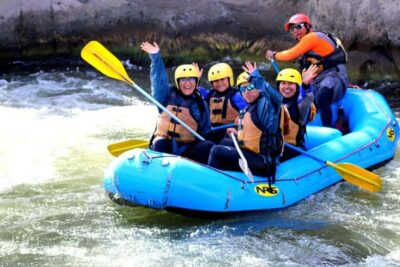
Chili River White Water Rafting with Hotel Pickup
Read our review →
2-Day Tour Colca Canyon in Arequipa with end in Puno
Read our review →
Browse the lists this tour appears in