
Reviewed · SALKANTAY TREKS
Salkantay Trek Challenge – 3 Days / 2 Nights
The Salkantay Trek Challenge packs a classic mountain-to-jungle journey into three hard-charging days. You leave Cusco at about 2:30 or 3 a.m., climb to the 4,630-meter Salkantay Pass, sleep in an Andean camp, walk through coffee country, and reach Machu Picchu by the third morning. It is a fast, demanding way to connect the high Andes with the Inca citadel.
I like two things right away: your duffel, up to 5 kilograms, goes by horse, and the trip includes the big practical pieces, from meals and camping gear to transport and the Machu Picchu entrance. I also like the sharp change in scenery, from glaciers and thin air to waterfalls, orchids, coffee plantations, and tropical forest.
The catch is simple: day one is very strenuous, with altitude, a long ascent, and a long descent packed into roughly 10 hours. You need to arrive in Cusco at least two days early, and this is not a good choice if your normal routine is mostly sedentary.
Key points at a glance
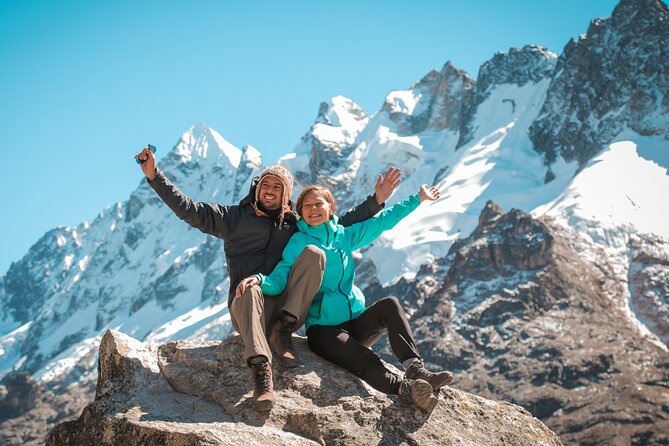
- 4,630-meter Salkantay Pass: The hardest section brings huge mountain and glacier views, but altitude makes the climb serious.
- Three days to Machu Picchu: You get the famous Salkantay route in a shortened format, with little spare time.
- Two different nights: Sleep at Mountain Sky View in Collpapampa, then in a hotel in Aguas Calientes.
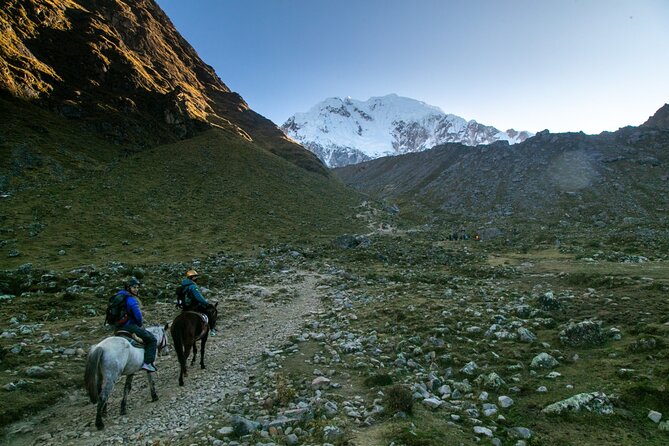
- Helpful load support: Horses carry a duffel of up to 5 kilograms, while porters and cooks support the camp.
- Strong guide support: Guides including Marco, Guido, and Cesar Quispe have been especially praised for care, organization, encouragement, and cultural explanation.
- Good advance planning matters: Machu Picchu spaces can sell out, so booking at least three months ahead is advised.
What this three-day Salkantay route really asks of you
At $680 per person, this is not a cheap day trip. It is a packaged mountain expedition with private transfers, meals, camping equipment, a sleeping bag, trekking poles, safety supplies, a horse for your main duffel, a hotel, Machu Picchu admission, the entrance bus, and a tourist-class train to Ollantaytambo.
That package matters because arranging the same pieces independently can be a chore. You would need to coordinate the early Cusco pickup, mountain transport, camp support, food, luggage carrying, Machu Picchu entry, bus, train, and the final road transfer. Here, most of that is handled for you.
The price still does not cover everything. You pay for your own hiking clothes and personal gear, travel insurance, tips, lunch and dinner on the final day, and optional transport choices. The train from Hidroeléctrica to Aguas Calientes is extra if you do not want to walk that section. The return bus from Machu Picchu to Aguas Calientes is also extra, although you can choose to walk down.
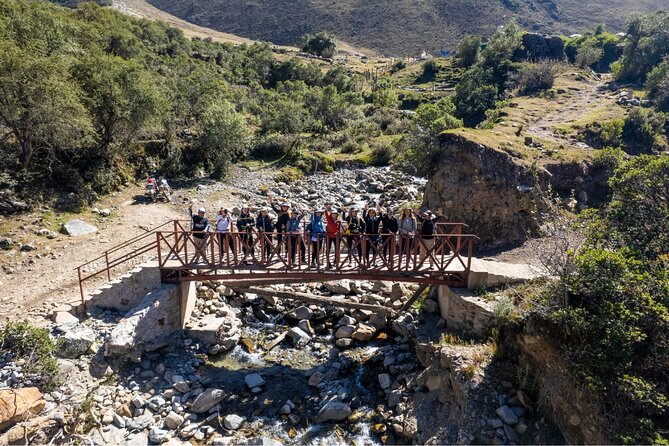
The group limit is 12 people. That is small enough for a more personal trek, and it matters when the group is moving over difficult ground. The guide can keep an eye on pace, water, and altitude problems more easily than on a large coach-style outing.
More Hiking Tours in Cusco
- From Cusco: 7 Lakes Ausangate Trek with Breakfast and Lunch
★ 4.8 · 360 reviews - Cusco: Rainbow Mountain Tour and Red Valley Hike (Optional)
★ 4.7 · 149 reviews - Cusco: Full-Day Rainbow Mountain & Red Valley Trekking Tour
★ 4.5 · 121 reviews
Day one: from Cusco to the 4,630-meter pass
Your morning begins before dawn. Pickup is scheduled around 2:30 a.m., with the official start time listed as 3 a.m. The transfer takes you from Cusco to Soraypampa at 3,900 meters, where the real physical work begins.
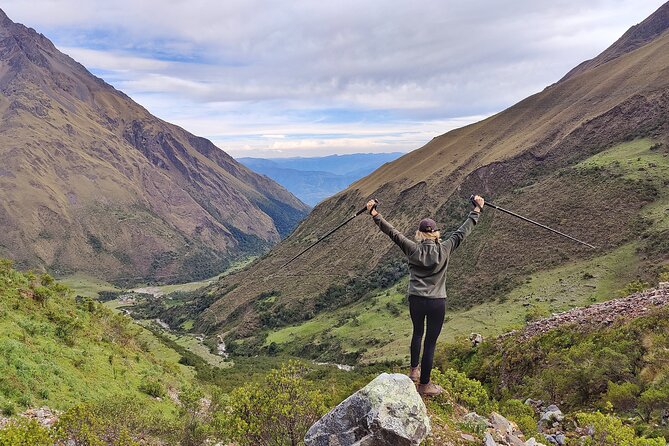
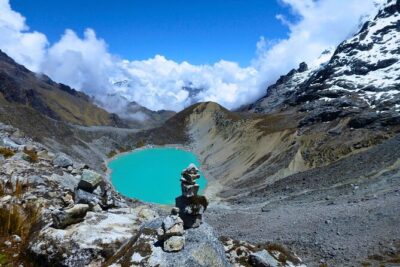
An early breakfast gives you fuel before the climb. The ascent follows the 7 Serpents Trail toward Abra Salkantay, or Salkantay Pass. At 4,630 meters, this is the highest point of the trip and the moment that defines the challenge.
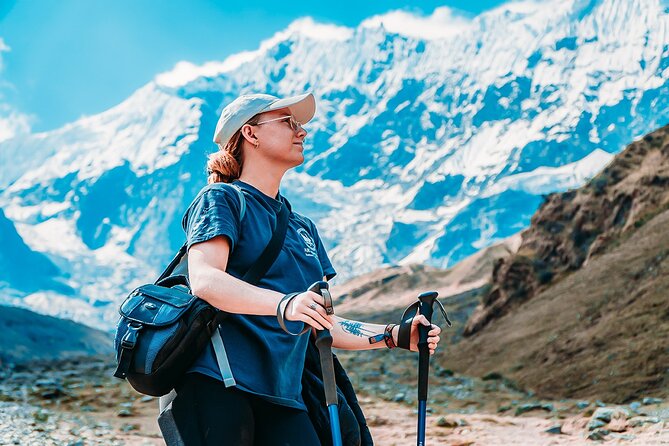
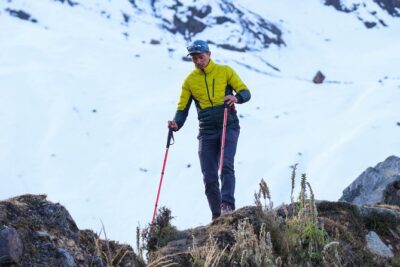
You get imposing mountain views, glaciers, and the stark open scenery of the high Andes. You also get thin air. Even a fit person can feel the altitude, and the climb is harder if you have not allowed time to adjust in Cusco. Bring water, snacks, warm layers, and rain protection. The tour provides water, tea time, trail snacks, a rain poncho, and a backpack cover, but your own clothing still needs to be suited to cold and changing weather.
The descent begins after lunch at Wayracmachay. This is where the day changes character. You leave the cold upper zone and move toward the high Amazon forest, with warmer air and a more forgiving feel underfoot in places.
The full first day lasts about 10 hours. That figure includes the approach, the pass, lunch, and the long descent. It is not merely a scenic walk with a difficult patch in the middle. You should expect a full physical test.
One account described the first two days as roughly 32 miles of hiking, which gives you a useful sense of scale, even though daily distance can vary with the exact route and group pace. The key point is that the three-day version saves time by compressing the walking.
Mountain Sky View: a practical first night
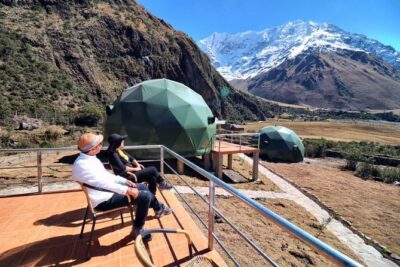
You finish day one at Mountain Sky View in Collpapampa, at about 2,950 meters. The setting shifts from high mountain exposure to forest sounds and warmer conditions.
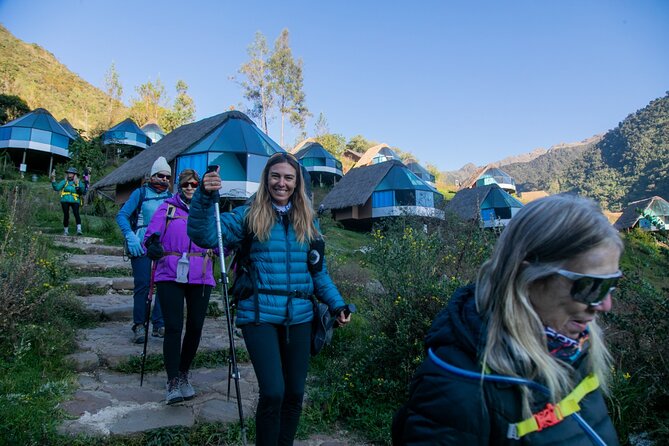
The camp has private facilities, including a dining room, kitchen, tables, and chairs. You sleep in an Andean hut rather than a standard hotel room, and a sleeping bag is supplied. Dinner is included, as are the work of the cooks, horsemen, and porters who keep the camp functioning.
This night is valuable because it gives you a proper meal and a place to recover after the pass. Do not expect a long, leisurely evening. The early start and hard day mean you will likely want to eat, prepare your gear, and sleep.
The safety setup is reassuring for a demanding route. The team carries a first aid kit, oxygen, walkie-talkies, and emergency satellite phones. Those supplies do not remove the risks of altitude or exhaustion, but they show that the trek is organized around real mountain conditions rather than a casual walk.
Day two: coffee, waterfalls, and the Urubamba River
Day two starts with breakfast at Mountain Sky View and a gentler walk through the Santa Teresa Valley. The climate is warmer, and the route moves through scenery shaped by water and agriculture.
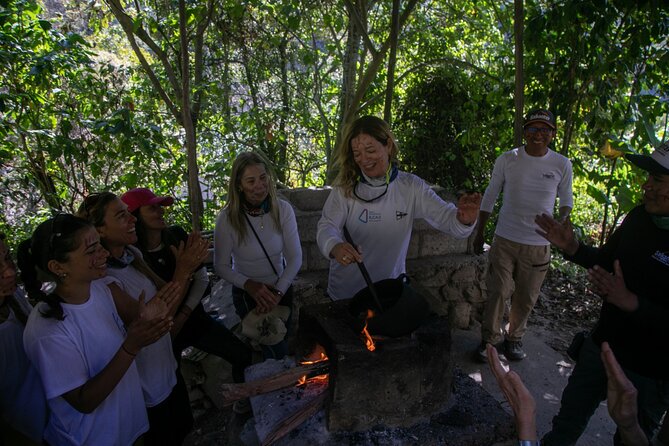
You pass waterfalls, orchids, and coffee plantations before reaching La Playa. At Lucmabamba, the coffee experience adds a useful local touch to the trek. You see how artisanal coffee is prepared and eat lunch made with local products.
This part gives the journey more variety than a simple mountain crossing. You are not only walking from point A to point B. You are moving through different growing zones, with coffee and tropical plants replacing the bare high-altitude terrain.
The coffee stop also gives you a cultural and practical break in the middle of the route. Still, do not expect a long workshop or a full farm visit. The supplied schedule allows about five hours for this section, including the walk and lunch experience.
From there, you travel to Hidroeléctrica. The route then continues on foot along the Urubamba River through tropical forest. This section takes about three hours and is much lower than the pass, so the air feels easier, even though tired legs can make the walk seem longer.
You may pay directly to the train operator for an optional train from Hidroeléctrica to Aguas Calientes. If you stay on foot, you get the full river route. If you choose the train, you save energy for Machu Picchu, but add another expense. The choice depends on your priorities, not on a single correct answer.
more salkantay treks
- Small Group 5 Days Salkantay and Machu Picchu by Llactapata Tour
★ 5.0 · 88 reviews - Machu Picchu: 5-Day Salkantay Trek with Panoramic Train
★ 5.0 · 79 reviews - Salkantay Trek 4 Days to Machu Picchu by Glamping Sky Lodge Dome
★ 5.0 · 68 reviews - Salkantay Trek to Machu Picchu in 4 days
★ 4.5 · 50 reviews
Aguas Calientes: hotel comfort before Machu Picchu
By the end of day two, you reach Aguas Calientes and check into a hotel. This is a welcome change after the hut, especially because the next morning starts early.
Dinner is included, and the group prepares for Machu Picchu together. The schedule is still tight. You have completed two long trekking days, and there is no spare rest day built into the program.
Aguas Calientes is the useful staging point for the citadel. The included one-way bus takes you up to Machu Picchu in the morning, sparing you the steep walk before the guided visit. The return bus is not included, so budget for it if you prefer not to walk back down.
Day three: Machu Picchu with a guided two-hour visit
The final morning begins with a light breakfast and the bus ride up through the cloud forest. The journey takes about two hours in the stated schedule, including the early morning movement and arrival process.
Inside the Historic Sanctuary of Machu Picchu, you receive a two-hour guided tour. The visit covers temples, terraces, and sacred sites, giving you structure instead of leaving you to wander without context.
The entry ticket is included, but the circuit depends on availability. For bookings made three months ahead, Circuit 2 is listed as the planned option. If that is unavailable, the reservation may use Circuit 3, followed by Circuit 1 if needed. This is worth checking before you pay, because the circuit determines the walking route and the parts of the site you see.
After the visit, you return to Aguas Calientes for lunch. The final day’s lunch and dinner are not included, despite lunch being part of the day’s plan, so keep money available. In the afternoon, you board a tourist-class train, either the Voyager or Expedition service, to Ollantaytambo.
From Ollantaytambo, private transport takes you back to Cusco. This makes the final day long, but it also means you do not need to arrange a separate return journey from the Sacred Valley.
The guides can make or break the challenge
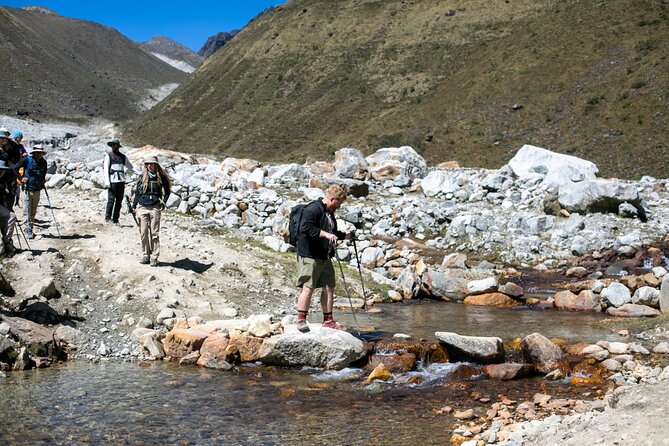
The guide is central to this trip. On a route this compressed, you need clear pacing, calm decisions, and encouragement when the pass begins to feel far away.
Marco is named as a particularly supportive and organized guide who kept the group moving with energy. Guido is praised for patience, kindness, and careful support at the pass, especially when altitude made the climb harder. Cesar Quispe is described as encouraging during the toughest sections and strong at explaining the historical, cultural, and spiritual meaning of the route.
Guide assignments are not guaranteed, so you should not book solely for one person. Still, the company’s guide standards are important. The best version of this trek is not just about reaching Machu Picchu. It is about having someone notice when you need to slow down, explain what you are seeing, and keep the group together.
Cultural explanation may vary by guide. The route itself provides dramatic scenery, but the historical and cultural side benefits greatly from an engaged leader. If that matters to you, ask about the guide and the planned circuit during your pre-departure briefing.
Food, luggage, and safety on the trail
Three breakfasts, two lunches, and two dinners are included, along with water, tea time, and snacks on the trail. Vegetarian and vegan meals are available if you request them at booking.
The food arrangements remove one major worry from a hard trek. You do not need to carry three days of meals, and the cooks handle the camp kitchen. You should still bring extra personal snacks because the first day is long and your appetite may be higher than usual.
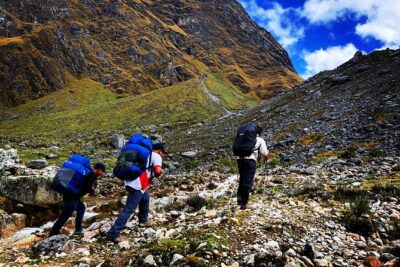
Your duffel can weigh up to 5 kilograms, or 11 pounds, and horses carry it. You still need a daypack with water, rain protection, warm layers, personal medication, sunscreen, and anything you need during the day.
Trekking poles and a sleeping bag are included. A rain poncho and backpack cover are also provided. Personal hiking clothing is not, so pack for cold at the pass, rain, and warmer jungle conditions.
How hard is the Salkantay Challenge?
The company requires a strong fitness level, and that is fair. The pass reaches 4,630 meters, day one lasts about 10 hours, and the route continues through day two before the Machu Picchu visit.
You do not need to be an elite mountaineer. One first-time trekker described completing it with the support of the guide, meals, luggage service, and organized logistics. But another account advised the route mainly for experienced hikers because altitude can be hard on the body.
Both points can be true. The trek is doable for someone with limited trekking experience who trains, acclimatizes, and understands the effort involved. It is a poor fit if you rarely exercise, dislike early starts, or want relaxed sightseeing with occasional walking.
Arrive in Cusco at least two days before pickup. This is one of the most useful pieces of advice attached to the tour. Give your body time to adjust before you add a pre-dawn start and a climb above 4,600 meters.
Booking, timing, and cancellation details
The experience is often reserved about 69 days ahead, and booking at least three months in advance is recommended because Machu Picchu entry spaces sell quickly. You need to provide each participant’s passport name, number, expiry date, and country when booking. Your passport must be current and ready for use on the travel date.
The tour requires a minimum number of people. If that minimum is not reached, or if poor weather forces cancellation, you are offered another date, another experience, or a full refund.
For your own cancellation, the terms are strict. The experience is non-refundable and cannot be changed for any reason. Travel insurance is recommended.
Who should book this route?
I would choose this trip if you have limited time in Peru but want a real trek rather than a direct train ride to Machu Picchu. It suits active visitors who enjoy changing scenery, group camaraderie, and a clear physical goal.
It is also a good fit if you value support. The horse-carried duffel, cooks, private transfers, safety equipment, guide, hotel, bus, and train make the route much easier to manage than a self-organized trek.
I would hesitate if you want quiet mornings, short walking days, or several hours to explore each village. The three-day format is efficient, but efficiency here means long days and little margin for fatigue.
Should you book the three-day Salkantay Challenge?
Book it if you want the high point of a mountain trek, the warmth of coffee country, and Machu Picchu in one compact trip. The strongest reasons are the impressive route variety, solid logistical support, and guides such as Marco, Guido, and Cesar Quispe, whose care can matter greatly on the pass.
Skip it if you are not prepared to train or acclimatize. For a fit person with three days available, the $680 price represents a practical bundle of transport, food, equipment, accommodations, and entry tickets. Just understand what you are buying: not an easy shortcut, but a serious mountain challenge with a very rewarding finish.
FAQ
How long is the Salkantay Trek Challenge?
The experience lasts three days and two nights. The first night is at Mountain Sky View, and the second night is in a hotel in Aguas Calientes.
What time does the tour start?
Pickup begins in Cusco at about 2:30 a.m., with the listed start time at 3 a.m.
How high is the Salkantay Pass?
The pass reaches 4,630 meters, or 15,190 feet, above sea level.
How far in advance should I book?
Booking at least three months ahead is recommended because Machu Picchu entry spaces sell out quickly. The experience is often booked about 69 days in advance.
Is Machu Picchu admission included?
Yes. The entrance is included. Circuit 2 is planned for bookings made three months ahead when available, followed by Circuit 3 and then Circuit 1 if necessary.
What accommodation is included?
You spend one night at Mountain Sky View in Collpapampa and one night at a hotel in Aguas Calientes.
Is luggage carried during the trek?
A horse carries a duffel bag with up to 5 kilograms, or 11 pounds, of your personal gear.
Is the return bus from Machu Picchu included?
The one-way bus from Aguas Calientes to Machu Picchu is included. The optional return bus from Machu Picchu to Aguas Calientes is paid for directly on site.
What is not included in the price?
Personal hiking clothing and gear, travel insurance, tips, lunch and dinner on the final day, the optional train from Hidroeléctrica to Aguas Calientes, and the optional return bus from Machu Picchu to Aguas Calientes are not included.
More 3-Day Experiences in Cusco
- Cusco : Sacred Valley & Inca Trail to Machu Picchu 3 days
★ 5.0 · 57 reviews - 3-Day Eco-Sustainable Private Tour Manu National Park
★ 4.5 · 41 reviews - Ausangate and Rainbow Mountain Trek – 3 Days / 2 Nights
★ 5.0 · 35 reviews - Living Nature from Cusco: 3 Days Manu Jungle all inclusive
★ 4.9 · 12 reviews
More Hiking & Trekking in Cusco
- From Cusco: Rainbow Mountain Trek
★ 4.5 · 98 reviews - Private Palccoyo Rainbow Hike Without the Crowds
★ 5.0 · 86 reviews - Choquequirao Trek 4 days and 3 nights
★ 5.0 · 81 reviews - Ancascocha Trek To Machu Picchu 4 Days And 3 Nights
★ 5.0 · 77 reviews
Recently added around Cusco
- Palcoyo colored mountain hike + stone forests★ 4.6 · 3 reviews
- Maras Moray★ 5.0 · 3 reviews
- Full-Day Condor Viewpoint & Inca Sites Tour★ 5.0 · 3 reviews
- From Cusco: Vinicunca Mountain of Colors Excursion + Ticket★ 5.0 · 3 reviews
- Excursion Cusco – Puno – Titicaca Observatory Train★ 5.0 · 3 reviews
- Machu Picchu: Private Tour Guide Service for up to 15 people★ 4.5 · 3 reviews
- Cusco: Chonta Canyon and Condor Flight Tour with Lunch★ 5.0 · 3 reviews
- Machu Picchu: 1-day tour by Vistadome Observatory train★ 5.0 · 3 reviews
Salkantay Treks, compared.
Small Group 5 Days Salkantay and Machu Picchu by Llactapata Tour
Read our review →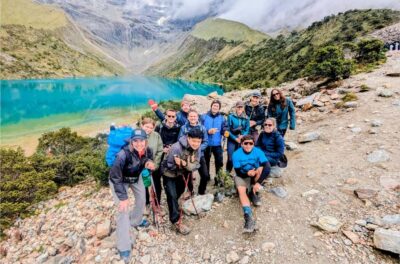
Salkantay Trek 4 Days to Machu Picchu by Glamping Sky Lodge Dome
Read our review →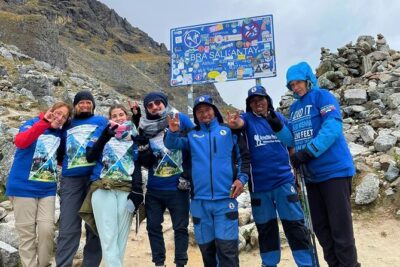
Salkantay Trek To Machu Picchu 5 Days And 4 Nights
Read our review →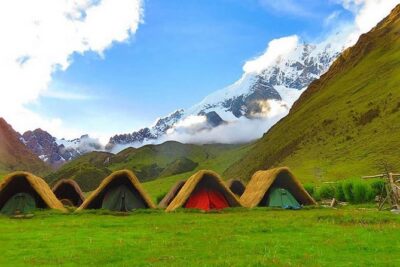
5-Day: Salkantay Trek to Machupicchu and Humantay Lake
Read our review →
Browse the lists this tour appears in