
Reviewed · CUSCO TOURS
Private Andean Cooking Class, Pachamanca
The most interesting part of this Cusco cooking class is its link to Andean cooking traditions, not just its recipes. You work with corn, local grains, peppers, meats, and ingredients cooked in clay pots, then taste chicha, the old Andean fermented drink. It gives you a useful break from ruins and altitude walks while still teaching you about Peru.
I like the private format, since your chef can adjust the pace and explain unfamiliar ingredients without rushing through a large group. I also like the range: Andean tamales, uchucuta pepper sauce, a private market visit, drinks, and a final meal all fit into about three hours.
The main consideration is that the exact food may vary from the advertised Pachamanca focus. Past classes have included ceviche, lomo saltado, alpaca lomo saltado, Chilcanos, and pisco sours, so confirm the planned menu if one dish matters to you. At $150 per person, this is a premium class, but the private chef, lunch, drinks, and cultural instruction make it more than a simple cooking lesson.
Key points to know before booking
- Clay-pot cooking connects the meal to the Andes: The final tasting centers on ingredients prepared in clay pots, adding a traditional element beyond standard restaurant cooking.
- The menu can cover far more than one dish: The planned experience includes Andean tamales and uchucuta, while classes have also featured ceviche, lomo saltado, pisco cocktails, and local fruits.
- You get a private chef for your own group: Only your party takes part, with instruction in English or Spanish if requested.
- The class begins at 9:00 a.m. in central Cusco: It starts at C. Palacio 135 and finishes at the same meeting point, making it easy to pair with an afternoon plan.
- Families and beginners fit well: The class is designed for all skill levels, and the chefs can provide mocktails and kid-friendly help when requested.
- Bring your original passport: It is required at the beginning for tax purposes, a small but important detail.
Why this class adds something different to a Cusco itinerary
Cusco can fill up quickly with churches, archaeological sites, and long day trips. A cooking class changes the pace. Instead of looking at Andean culture from the outside, you handle its ingredients and learn how food connects corn, potatoes, peppers, grains, meat, and fermentation.
This is especially useful early in a trip. You can learn what uchucuta tastes like, see the variety of Peruvian produce, and gain a better sense of how local ingredients appear on menus. The class also gives you a sit-down lunch, drinks, and a warm indoor activity after several days of walking.
You should not think of this as a formal culinary school session. The emphasis is on participation, tasting, and conversation. You will likely get demonstrations from the chef, then prepare parts of the meal yourself with guidance. That makes it suitable if you enjoy food but do not spend much time cooking at home.
The class is private, so you avoid the awkwardness of sharing a workstation with strangers. It also gives the chef room to respond to your interests. If you are curious about potatoes, corn, local fruits, or pisco, ask questions as you go.
More Cooking Classes in Cusco
- Cusco: Peruvian Cooking Class, Cocktails & Local Market Tour
★ 4.9 · 512 reviews - Cooking class and market tour with a local chef
★ 5.0 · 186 reviews - Vegan Peruvian Cooking Class Cocktails and Local Market in Cusco
★ 5.0 · 46 reviews
Starting with marinades and Andean ingredients
The opening lesson focuses on marination. You prepare meat and other ingredients in a special sauce before cooking, learning how seasoning affects flavor and texture. This is a practical beginning because it gives the meal time to develop while the class moves to other tasks.
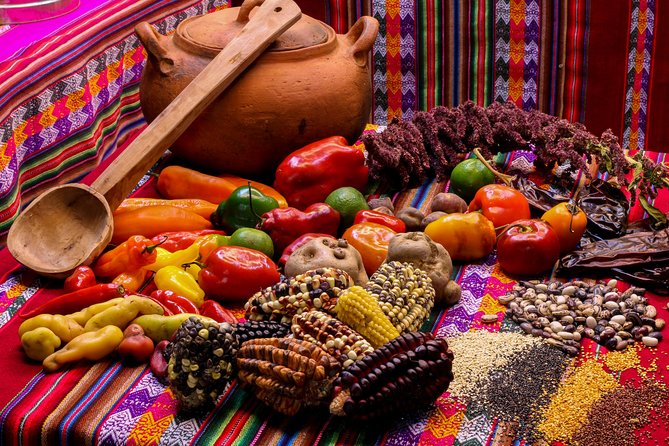
The first ingredient discussion can be broad. The class introduces local fruits, vegetables, herbs, condiments, grains, and peppers, with tastings built into the lesson. You may also learn about different potatoes and Andean products often described as superfoods.
That tasting matters more than it may sound. Peruvian cooking depends on contrasts: sharp citrus, hot peppers, fresh herbs, earthy grains, sweet fruit, and savory meat. Tasting ingredients on their own helps you understand what they contribute when combined.
Chef Alejandro has been praised for explaining the development of Peruvian cooking and the health qualities of local produce. Chef Fernando has also taught families about Peruvian agriculture and food in a way that works for children. Other possible instructors include José, José Luis, and Christina, depending on the booking and schedule.
Since the class may operate in English or Spanish, request your preferred language when you book. Do not assume the language will change on the day.
Making Andean tamales from corn
The tamale portion brings you closer to older Andean methods. You work with corn and learn how the dish is assembled using a technique passed through generations.
The appeal here is not just the finished tamale. It is the chance to see how a staple crop becomes a portable, filling dish through simple ingredients and careful preparation. Corn has a central place in Andean food, so this step gives the class a clear link to the region.
This may be the least familiar part of the menu for visitors who know Peruvian food mainly through ceviche and lomo saltado. That is a good reason to pay attention. You are learning about a home-style and ceremonial side of Peruvian cooking, rather than only the dishes most often served in international restaurants.
If your interest is specifically in Pachamanca, ask how the tamales and clay-pot cooking will fit into your session. The title points toward Pachamanca, while the listed activities also include several other preparations. The private setting should make that request easier to discuss.
The private market and Peru’s useful pantry
A private market visit gives the class a tasting and teaching stop before the cooking is finished. You explore Andean products ranging from ancient grains to local superfoods and hear how they fit into the diet and culture of the region.
The word market can suggest a public market tour, but this activity describes a private market within the cooking experience. Do not book it expecting a long city walk or a full market excursion. Its purpose is to introduce ingredients you can then recognize in dishes and shops around Peru.
This section is valuable if you plan to spend more time in the country. It can help you understand the difference between a local grain used for daily food and an ingredient marketed mainly to visitors. It also gives you a chance to ask the chef where certain products appear in Peruvian meals.
Past classes have included tastings of fruits, vegetables, condiments, potatoes, peppers, and grains. That broad sampling is one of the strongest reasons to choose this experience over a short lesson focused on one recipe.
Somewhere else entirely, still within reach of Cusco:
- Cusco: Humantay Lake Tour with Breakfast and Buffet Lunch
★ 4.9 · 2,976 reviews - From Cusco: Sacred Valley & Maras Salt Mines Tour with Lunch
★ 4.8 · 2,227 reviews - From Cusco: Moray, Maras Salt Mines & Chinchero Weavers Tour
★ 4.8 · 1,925 reviews - From Cusco: Full-Day Group Tour of Machu Picchu
★ 4.7 · 1,767 reviews
Grinding uchucuta, an Inca-era pepper sauce
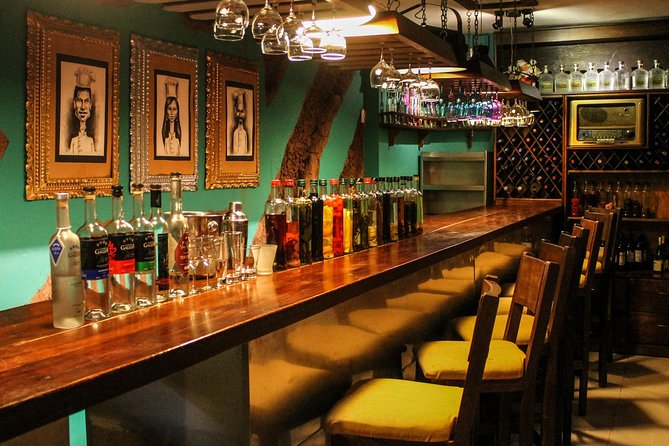
Uchucuta is a spicy sauce associated with Inca-era cooking. In the class, you prepare it with traditional methods passed down through generations.
For you, the important question is how much heat you enjoy. The sauce is described as spicy, so tell the chef about your preference. The class can still be worthwhile if you do not handle strong peppers well, since you will be learning the method and tasting the ingredients rather than simply eating a large serving.
Uchucuta also shows how sauces can define a meal. Peruvian cooking is not only about the main meat or grain. A pepper sauce can add heat, herbs, acidity, and a distinct local identity to otherwise simple food.
I would treat this as one of the class’s most useful takeaways. Tamales may be difficult to reproduce at home if you lack the right ingredients, but a sauce gives you a practical way to bring a taste of Peru back to your own kitchen.
Chicha tasting and the place of fermentation
The chicha tasting introduces the traditional fermented drink associated with the Incas. You explore its flavor and place in Andean food culture as part of the class.
This is a tasting, not a cocktail-making lesson, so it offers a different kind of drink experience from the pisco sessions described by past participants. Chicha connects the meal to older agricultural traditions, while pisco cocktails show the modern, social side of Peruvian drinking culture.
Some classes have included pisco tastings, Chilcanos, and pisco sours. The experience description promises beverages, but it does not guarantee every particular cocktail. If cocktails are a major reason for booking, ask the provider to confirm the drink menu.
The class can also accommodate children with mocktails when requested. That makes the drink segment more flexible for families, but you should state this need in advance along with any dietary request.
Clay pots, Pachamanca, and the final meal
The closing tasting is built around ingredients cooked in clay pots. This is the part that gives the experience its strongest connection to the earth and to Andean cooking customs.
Pachamanca traditionally refers to food cooked with heated stones in an earth oven, but the supplied experience details specifically mention clay pots rather than promising a full outdoor earth-oven setup. Keep that distinction in mind. You can expect a traditional cooking reference and clay-pot preparation, but you should confirm the precise Pachamanca method if that is your main goal.
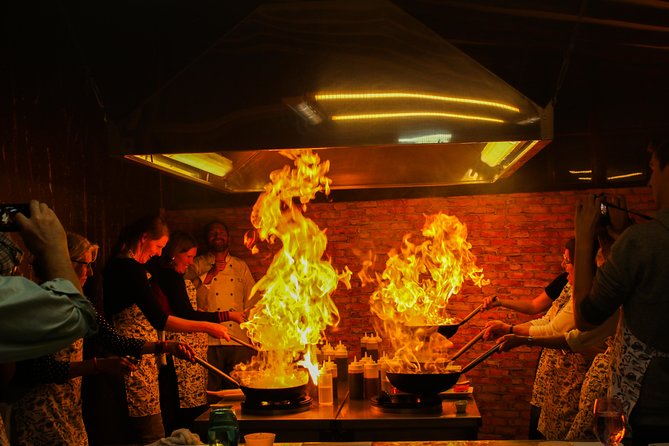
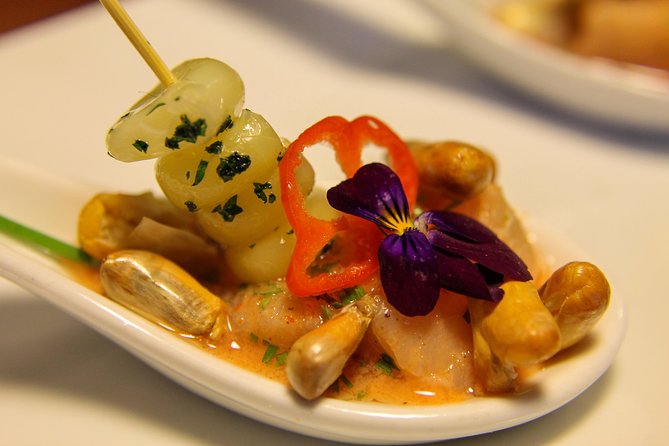
The meal includes one appetizer and one main course, along with beverages and bottled water. Past menus have included ceviche as an appetizer and lomo saltado as a main, sometimes using alpaca. These dishes give you very different lessons: ceviche depends on freshness, acidity, and timing, while lomo saltado relies on high heat, quick movement, and a hot wok.
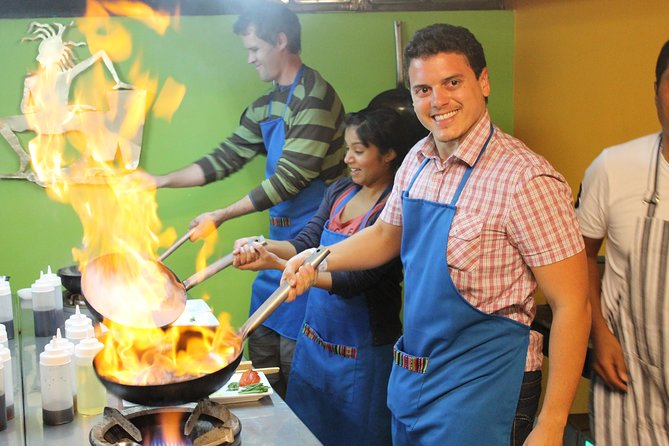
The flambé demonstration has been a memorable feature for some sessions. It adds theater, but it is not just a show. It demonstrates the high heat and fast cooking that help keep meat, vegetables, and sauce from becoming heavy.
At the end, you eat what you helped prepare. That makes lunch feel earned, and it also lets you judge the balance of flavors while the instruction is still fresh.
How the chefs shape the experience
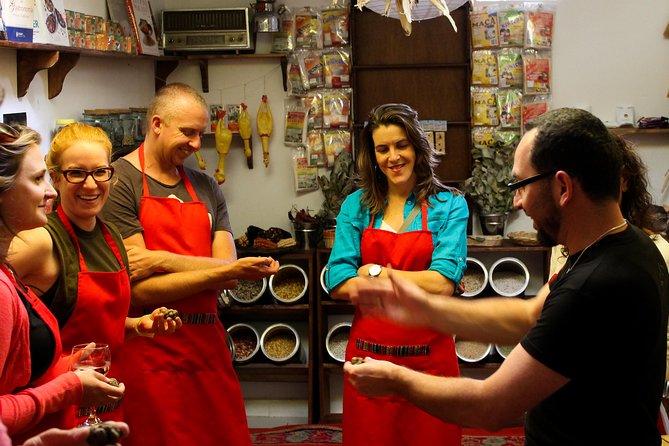
The instructor matters a great deal in a private class. Chef Alejandro has been praised for combining food history, ingredient tasting, and hands-on coaching. Chef Fernando has worked well with children, using music and mocktails to keep younger participants involved.
Christina has taught local fruits, pisco, ceviche, and lomo saltado, and has sent recipes afterward so the dishes can be made at home. José has been described as funny and personable, while José Luis and Christina have hosted sessions with a warm, family-style approach.
Those details point to a class where personality is part of the value. You are not simply following a printed recipe. You are spending several hours with a chef who explains the food and helps you manage each step.
Still, instructor assignments can change. Book with an open mind, and do not assume that a particular chef is guaranteed unless the provider confirms it directly.
Price, timing, and practical value
The price is $150 per person for about three hours. That is not a budget lunch in Cusco, especially if you are comparing it with a standard restaurant meal or a group cooking class.
The value improves if you want several experiences in one booking: a professional chef, a private class, ingredient tastings, cultural explanation, lunch, beverages, bottled water, and a hands-on meal. The private format is also more useful for couples, families, and small groups with different food preferences.
The 9:00 a.m. start works well if you want lunch afterward and an afternoon free. The meeting point is C. Palacio 135 in Cusco, and the activity returns there. Since the class lasts roughly three hours, allow extra time around the stated duration rather than scheduling a tight transfer immediately afterward.
Vegetarian options are available, but you must request one when booking. The same applies to allergies and other dietary needs. An original passport is required at the start for tax purposes, so keep it accessible.
Cancellation is free if you cancel at least 24 hours before the start time. Changes or cancellations inside that window are not refunded, and the activity can be moved or refunded if the minimum number of participants is not reached.
Who will get the most from this cooking class
I would recommend this for people who want an active cultural experience without giving up comfort. You cook, taste, and ask questions, but you also sit down to a prepared lunch and do not need to organize ingredients or transport around Cusco.
It suits:
- Couples looking for a relaxed break between major sights
- Families, especially when mocktails and child-friendly instruction are requested
- Beginners who want a chef to guide every stage
- Food lovers interested in corn, potatoes, peppers, grains, chicha, and pisco
- Small private groups with vegetarian or other dietary needs
- Visitors who want recipes they can try at home
It may not suit you if you want a full public market tour, a long outdoor Pachamanca cookout, or advanced professional training. The class is social and practical, but the precise menu and cooking method should be confirmed before booking.
Should you book the Marcelo Batata cooking class?
Book it if you want to understand Peru through its food rather than simply order it. The strongest parts are the private chef instruction, local ingredient tasting, Andean tamales, uchucuta, chicha, and the clay-pot finale. The possibility of ceviche, lomo saltado, pisco cocktails, and flambé makes the session even more appealing, but those details may depend on the chef and menu.
At $150 per person, I would choose it for a special afternoon or a honeymoon-style trip, not as a casual replacement for lunch. Confirm the exact Pachamanca setup, menu, language, chef, and dietary arrangements before paying. If those match your interests, this is a smart way to add a hands-on Andean experience between Cusco’s major adventures.
FAQ
How long does the private Andean cooking class last?
The class lasts approximately three hours.
Where does the activity begin and end?
It begins at C. Palacio 135, Cusco 08002, Peru, at 9:00 a.m., and ends back at the same meeting point.
Is the class private?
Yes. Only your group participates in the activity.
Can I request the class in English?
Yes. The class operates in English or Spanish depending on your request. State your preferred language when booking.
Is a vegetarian option available?
Yes. A vegetarian option is available, but you must request it when booking.
What food and drink are included?
The experience includes beverages, bottled water, one appetizer, one main course, and the cooking lesson. The planned activities include Andean tamales, uchucuta, chicha tasting, and clay-pot cooking. Some sessions have also included ceviche, lomo saltado, alpaca, pisco sours, or Chilcanos.
Do I need to bring my passport?
Yes. You must provide your original passport at the beginning of the course for tax purposes.
More Workshops in Cusco
- The First Class Machu Picchu Train by Inca Rail
★ 4.0 · 182 reviews - The Textile Workshop Experience in Cusco Region
★ 5.0 · 118 reviews - Sacred Valley Textile Workshop – Dyeing & Weaving in Cusco
★ 5.0 · 92 reviews - Chocolate Workshop in Cusco with Premium Organic Cacao
★ 5.0 · 75 reviews
Recently added around Cusco
- Palcoyo colored mountain hike + stone forests★ 4.6 · 3 reviews
- Maras Moray★ 5.0 · 3 reviews
- Full-Day Condor Viewpoint & Inca Sites Tour★ 5.0 · 3 reviews
- From Cusco: Vinicunca Mountain of Colors Excursion + Ticket★ 5.0 · 3 reviews
- Excursion Cusco – Puno – Titicaca Observatory Train★ 5.0 · 3 reviews
- Machu Picchu: Private Tour Guide Service for up to 15 people★ 4.5 · 3 reviews
- Machu Picchu: 1-day tour by Vistadome Observatory train★ 5.0 · 3 reviews
- Cusco: Chonta Canyon and Condor Flight Tour with Lunch★ 5.0 · 3 reviews
Cusco Tours, compared.
Humantay Lake Tour with Breakfast and Buffet Lunch
Read our review →
Sacred Valley & Maras Salt Mines Tour with Lunch
Read our review →
Moray, Maras Salt Mines & Chinchero Weavers Tour
Read our review →
Half-Day City Tour with Sacsayhuaman and Q’enco
Read our review →
Sacred Valley, Pisac, Ollantaytambo, Salt Mines Moray
Read our review →
Browse the lists this tour appears in