
Reviewed · MACHU PICCHU TOURS
Small Group 5 Days Salkantay and Machu Picchu by Llactapata Tour
Salkantay is the less polished, more demanding road to Machu Picchu, and this route gives you a fine mix of high Andes, tropical forest, local farms, and Inca ruins. The big rewards are Humantay Lake on the first day and the view of Machu Picchu from Llactapata before you reach the town below the citadel.
I like the small group limit of nine, which makes it easier for a guide to adjust the pace. I also like the local coffee stop in Lucmabamba, where you see beans being grown, dried, roasted, and brewed. The catch is the altitude and uneven workload: the first two days are the hardest, and the long final day includes the Machu Picchu visit, train, and return to Cusco.
Key points to know before booking
- High point: Salkantay Pass reaches 4,600 meters, or 15,092 feet.
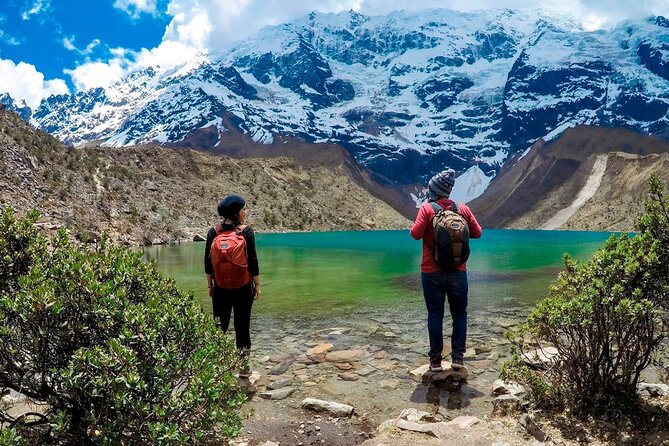
- Best side trip: Humantay Lake adds a steep but worthwhile climb above Soraypampa.
- Local connection: Lucmabamba includes a family visit focused on coffee cultivation.
- Historic viewpoint: Llactapata offers views toward Machu Picchu Mountain and the Vilcanota Canyon.
- Small group format: The maximum group size is nine people.
- Good support system: Horses carry up to 7 kilograms of personal gear, and an emergency horse is available between Marcoccasa and Chaullay.
What the $593 price really covers
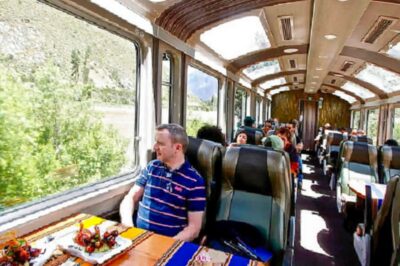
At $593 per person, this is not simply a guided walk with a Machu Picchu ticket attached. The fee covers transportation from Cusco to Challacancha, camping equipment, three breakfasts, three lunches, three dinners, daily tea and snacks, a bilingual guide, horsemen and mules, entrance tickets, a private room in Aguas Calientes, and the tourist train from Machu Picchu to Ollantaytambo.
That package has real value. You do not need to arrange the Salkantay entrance, Machu Picchu admission, mountain camps, cooking setup, or the train home on your own. The horse support also matters. You can hand over up to 7 kilograms of personal equipment, so you are not forced to carry a full pack over the pass.
There are extra costs. Breakfast on the first morning and lunch on the final day are not included, and each is listed at $30. The bus from Machu Picchu to Aguas Calientes costs $12, although walking back is an option if you prefer not to pay. A sleeping bag costs $5 per day. You should also ask clearly about tipping expectations for cooks and porters before departure. The service team deserves recognition, but unclear expectations can cause awkwardness at the end.
more ways to reach machu picchu
- From Cusco: Full-Day Group Tour of Machu Picchu
★ 4.7 · 1,767 reviews - Machu Picchu Day Trip from Cusco
★ 4.5 · 1,644 reviews - Machu Picchu: Full-Day Tour from Cusco with Optional Lunch
★ 4.6 · 927 reviews
Day one: Cusco to Soraypampa and Humantay Lake
The day begins at 4:00 am at Plaza de Armas in Cusco. Private transportation takes you toward Mollepata and then Challacancha. Mollepata, at about 3,000 meters, is a useful early stop to stretch your legs and see the countryside before the trail begins.
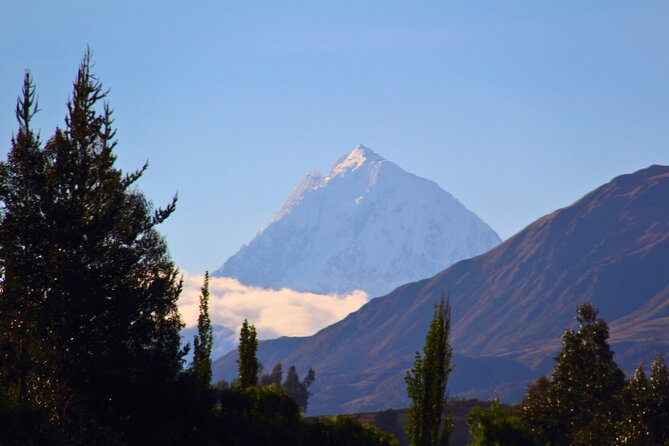
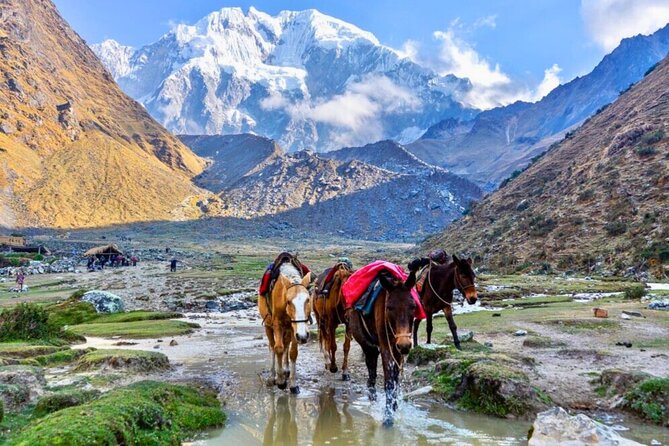
At Challacancha, you meet the horsemen and the rest of the group. The first walking section leads through a broad mountain valley with views of Humantay, at 5,217 meters, and Salkantay, at 6,264 meters. This is a dramatic opening, but do not mistake the early scenery for an easy day. You are already gaining altitude, and the day starts before sunrise.
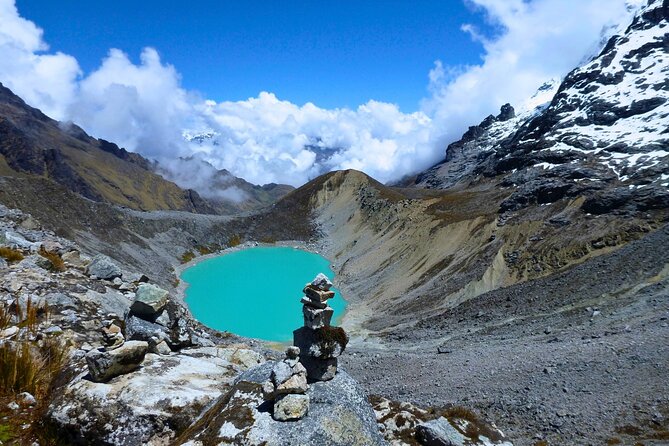
Soraypampa, at 3,700 meters, is the first camp. The setting gives you wide views of the mountains and valleys, and it is also the base for the optional walk to Humantay Lake. The lake is a turquoise pool high in the mountains, reached by a climb that usually feels harder than its distance suggests because of the altitude.
I would treat Humantay Lake as a major part of the day, not a casual stroll. Walk slowly, use the time to acclimatize, and do not feel pressured to race uphill. The tour includes an emergency horse between Marcoccasa and Chaullay, but the information does not promise horse transport for every section, so ask the guide what assistance is available if you struggle.
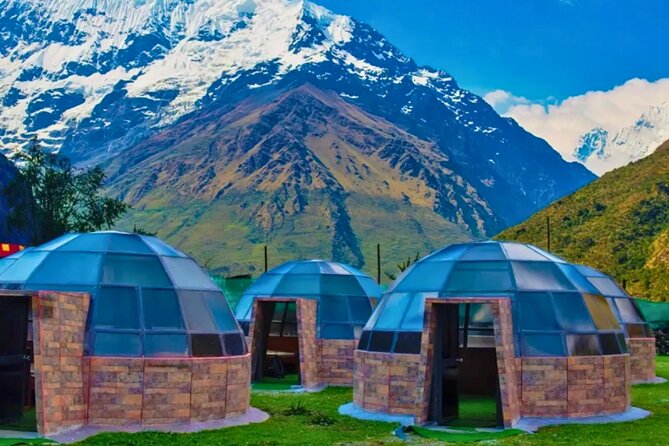
The first night is in a tent at Soraypampa. Camping equipment includes a dining tent with tables and chairs, plus cooking support. Vegetarian meals are available, and tea and snacks are provided each day. Breakfast on this first morning is not included, so you need to budget for it before the trail starts.
Day two: Salkantay Pass and the change to warm forest
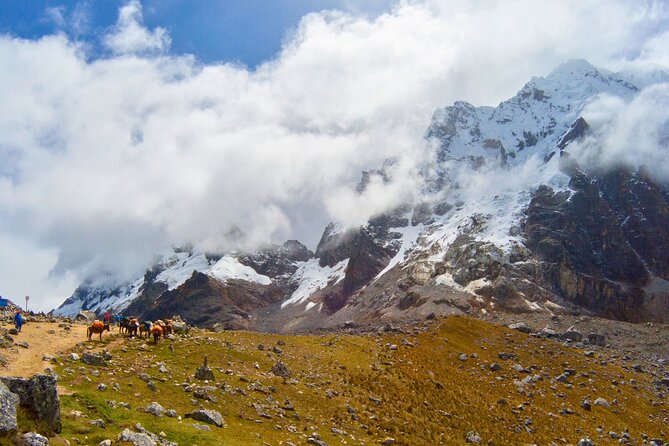
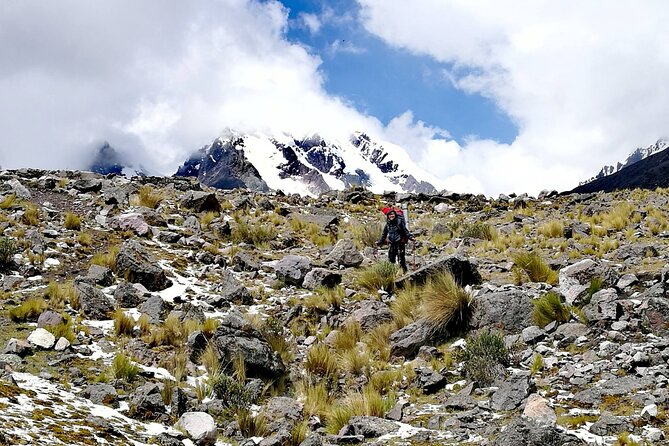
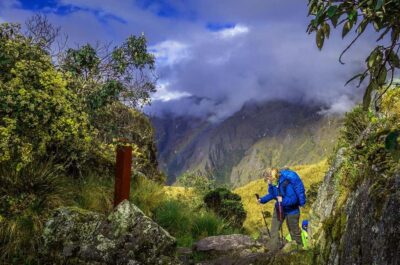
Day two is the physical test. From Soraypampa, you climb toward Salkantay Pass at 4,600 meters. The view toward the snow-covered Salkantay peak is the reward, but the thin air is serious. You need strong physical fitness for this trip, and the altitude can affect even people who exercise regularly at home.
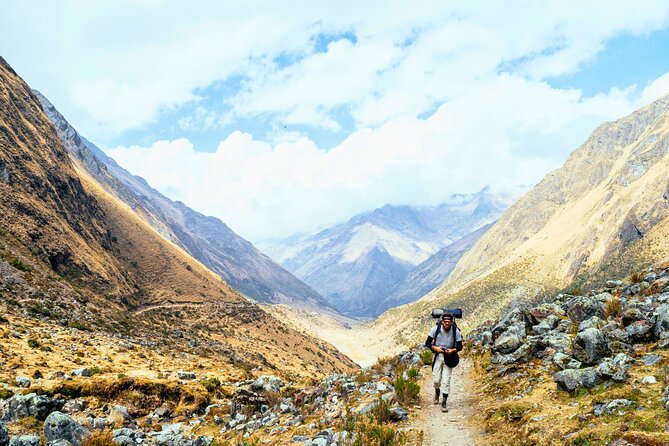
At the pass, you get time to pause and take in the high mountain setting before beginning a long descent. The change is striking. Cold, open terrain gives way to warmer conditions, more plant life, and eventually tropical forest.
The night is spent near Collpapampa at about 3,000 meters. This is a warmer, more humid camp, and mosquitoes are part of the deal. Bring insect repellent and clothing that covers your arms and legs. That small bit of preparation can make the evening much more comfortable.
This day is also why pacing matters. One account of the trek described the first two days as very intense, with the effort affecting the rest of the route. I would not plan this as a test of speed. Keep your own pace, drink regularly, and tell the guide early if you are feeling unwell. The compact group gives the guide a better chance to monitor different fitness levels, but no small group can remove the demands of altitude.
Day three: orchids, coffee, cacao, and Lucmabamba
Day three changes the character of the trip. You leave the high mountain conditions and descend through forest, where orchids, bromeliads, and other tropical plants grow along the route. This section is less about one famous viewpoint and more about noticing how quickly the climate and vegetation change.
The trail continues past coffee, cacao, and fruit plantations. These farms show how local communities use the land and offer a more grounded experience than simply moving from one famous site to another. You get a look at cultivation and harvesting practices, along with a sense of the work behind products that may seem ordinary once they reach a café or shop.
The route passes through Wiñaypoco and Granadilla before reaching Lucmabamba, around 2,000 meters. Lucmabamba is the most culturally focused stop on the trip. You visit a local rural family and see coffee production from planting and care through drying, roasting, and brewing.
I especially like this part because it gives the trek a human scale. The mountains are spectacular, but a family coffee operation helps you understand how communities here make a living. You also get a practical lesson in why coffee is a valuable local product, rather than just a souvenir to buy later.
The third night is at Lucmabamba Lodge or the local camping area. One practical weakness is the toilet situation, which may be less comfortable here than in a hotel. Expect simple conditions and keep your standards realistic. This is a walking trip through remote areas, not a series of resort stays.
more salkantay treks
- Salkantay Trek Challenge – 3 Days / 2 Nights
★ 5.0 · 101 reviews - Machu Picchu: 5-Day Salkantay Trek with Panoramic Train
★ 5.0 · 79 reviews - Salkantay Trek 4 Days to Machu Picchu by Glamping Sky Lodge Dome
★ 5.0 · 68 reviews - Salkantay Trek to Machu Picchu in 4 days
★ 4.5 · 50 reviews
Day four: the Inca trail to Llactapata
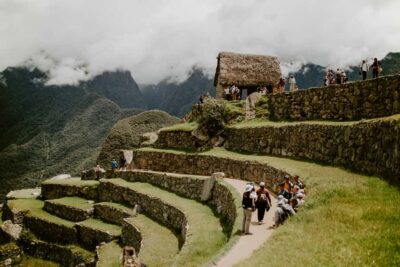
After breakfast, you climb toward Llactapata on an old Inca route. The archaeological site sits at about 2,650 meters and includes terraces and structures that once formed part of the Inca road system.
The site itself is smaller and quieter than Machu Picchu, but that is part of its appeal. Your guide explains the role of the ruins and points out local plant and animal life along the route. The setting is the main prize: from Llactapata, you can look toward Machu Picchu Mountain and across the Vilcanota Canyon.
This viewpoint gives you a different way to approach Machu Picchu. Instead of arriving by train and seeing the citadel as an isolated monument, you spend days walking toward it through connected valleys and old routes. Llactapata helps you understand the wider setting.
From Llactapata, the trail descends to the Hydroelectric train station at about 1,950 meters. Equipment and bags are transported from Lucmabamba to the station, so you can walk this section without carrying everything you brought from Cusco.
The route then continues toward Machu Picchu town, also called Aguas Calientes. You spend the night in a private room with a private bathroom, and breakfast is included. That hotel night is welcome after several nights outdoors. You have time to eat, explore the town, and prepare for the early visit to Machu Picchu.
Day five: Machu Picchu at first light
The final morning starts at 5:30 am after breakfast. A tourist bus takes you up to Machu Picchu, arriving around 6:00 am. The early timing is useful because it places you at the sanctuary near the start of the day, when the first light reaches the stonework.
The guided visit lasts about three hours. A good guide makes a real difference here, since Machu Picchu is easier to appreciate when you understand the purpose of its terraces, structures, and ceremonial spaces. The tour is offered with a professional bilingual guide, and several guides have earned especially warm praise for their patience and clear explanations.
If you can request a guide, names associated with particularly strong trips include Jainor, Carlos, Dario, Henry, and Rolando. Availability is not guaranteed, but asking during the pre-trip briefing is sensible. Jainor is noted for detailed explanations in both English and Spanish, while Rolando is praised for his energy, answers, and ability to keep the group in good spirits. The food team also receives strong praise, especially cook Alejandro, whose meals were remembered as a major part of the experience.
After the guided visit, you return to Aguas Calientes. Lunch is not included, and you need to pay for it yourself. The train leaves in the afternoon for Ollantaytambo, where a vehicle takes you back to Cusco and the original meeting point.
This is a long finish. You have an early start, several hours at Machu Picchu, a return to town, a train, and a road transfer. Plan to be tired. The advantage is that the whole trip ends with the main attraction rather than asking you to visit Machu Picchu halfway through the trek.
Food, camping, and the people who make it work
The package includes three breakfasts, three lunches, and three dinners, along with tea and snacks each day. Vegetarian meals are available. The food is not a minor detail on a five-day trek, since you need steady fuel for the pass and the long walking days.
The cook and horseman are central to the experience. Alejandro is specifically associated with imaginative meals made with limited equipment, and one group even received a birthday cake prepared by the team. José, a horseman, is remembered for practical help and early coca tea.
These personal touches matter, but you should still ask about the tipping system at the briefing. Make sure you understand what is expected for cooks, horsemen, and porters. The service team works hard, and a clear plan avoids confusion in the group.
Safety support includes a first aid kit, an oxygen bottle, and an emergency horse on part of the route. These are useful safeguards, not a replacement for preparation. You should arrive ready for altitude, cold nights, steep climbs, and changing weather.
Who should book this Salkantay route?
I would recommend this trek to you if you want more than a quick Machu Picchu visit. It suits someone who values mountain scenery, local agriculture, small archaeological sites, and the feeling of reaching the citadel under your own power.
It is also a good choice if you prefer a small group. A maximum of nine people allows more room for questions and makes it easier to form a friendly group. Guides such as Jainor, Henry, Dario, Carlos, and Rolando are known for strong communication and a warm approach, though the assigned guide can vary.
I would hesitate if you dislike camping, mosquitoes, early starts, or steep altitude climbs. The first two days are demanding, and the final day is packed with activity. This is not the easiest route to Machu Picchu, but it offers more variety than a direct train trip.
The tour is non-refundable and cannot be changed after booking, so only commit once your dates and fitness level are clear.
Should you book it?
Book this five-day Salkantay and Llactapata route if you want a demanding but well-supported path to Machu Picchu, with meals, gear transport, a private Aguas Calientes room, and a group capped at nine.
Choose another plan if your priority is comfort or a light walking schedule. For everyone else, the combination of Salkantay Pass, Humantay Lake, tropical farms, local coffee, Llactapata, and Machu Picchu gives you a full sense of the region rather than one isolated sight.
FAQ
Where does the tour start?
The tour starts at Plaza de Armas de Cusco, at Del Medio 123, Cusco 08000, Peru. Departure is scheduled for 4:00 am.
How long is the trek?
The experience lasts approximately five days. It includes the trek from Challacancha to Machu Picchu town, the Machu Picchu visit, and transport back to Cusco.
What is the highest point?
The highest point is Salkantay Pass, at 4,600 meters, or 15,092 feet above sea level.
Is Humantay Lake included?
The itinerary includes an optional afternoon hike to Humantay Lake from the Soraypampa camp. The walk takes about three hours.
How large is the group?
The group can include a maximum of nine people.
Are meals included?
Three breakfasts, three lunches, and three dinners are included. Tea and snacks are provided daily, and vegetarian meals are available. Breakfast on the first day and lunch on the final day are not included.
Is accommodation included?
Camping equipment is included for the trekking nights. In Aguas Calientes, you receive a private room with a private bathroom and breakfast.
Is luggage support provided?
Horsemen and mules carry up to 7 kilograms of each customer’s personal equipment. Transportation from Lucmabamba to the Hydroelectric station is provided for equipment and everyone’s bags.
Is transport back to Cusco included?
A tourist train from Machu Picchu to Ollantaytambo and a bus to Cusco’s historic center are included. The bus from Machu Picchu to Aguas Calientes costs $12 and is not included.
More 5-Day Experiences in Cusco
- Ausangate Trek 5 Days
★ 5.0 · 74 reviews - Classic Choquequirao Trek – 5 Days / 4 Nights
★ 5.0 · 52 reviews - Ultimate Lares Trek & Inca Trail 5 days
★ 5.0 · 47 reviews - Wonderful Cusco 5-Day Tour with Entrance to Machupicchu
★ 5.0 · 46 reviews
Recently added around Cusco
- Palcoyo colored mountain hike + stone forests★ 4.6 · 3 reviews
- Maras Moray★ 5.0 · 3 reviews
- Full-Day Condor Viewpoint & Inca Sites Tour★ 5.0 · 3 reviews
- From Cusco: Vinicunca Mountain of Colors Excursion + Ticket★ 5.0 · 3 reviews
- Excursion Cusco – Puno – Titicaca Observatory Train★ 5.0 · 3 reviews
- Machu Picchu: Private Tour Guide Service for up to 15 people★ 4.5 · 3 reviews
- Machu Picchu: 1-day tour by Vistadome Observatory train★ 5.0 · 3 reviews
- Cusco: Chonta Canyon and Condor Flight Tour with Lunch★ 5.0 · 3 reviews
Machu Picchu Tours, compared.
4-Day Inca Trail to Machu Picchu with Accommodation
Read our review →
2-Day Trip to the Sacred Valley and Machu Picchu
Read our review →
Machu Picchu 2-Day Inca Trail with Panoramic Train
Read our review →
Browse the lists this tour appears in