
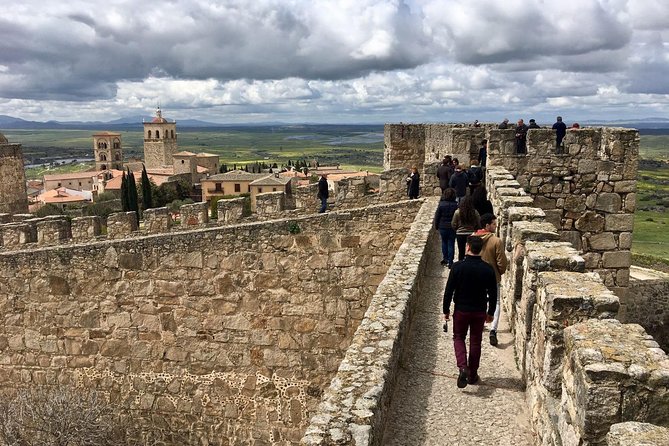
Reviewed · TRUJILLO TOURS
Visit Trujillo Medieval Scene and Route of the Discoverers
Trujillo’s stone-paved old town feels like a ready-made film set, but its castles, churches, towers, and palaces tell a much larger story. This walking tour begins in Plaza Mayor and leads uphill into the medieval quarter, connecting the city’s royal past with the conquistadors who shaped Spain and the Americas.
I like the way the route combines major sights with small details, including family coats of arms, balconies, religious images, and the stories behind the manor houses. I also like that the guides, including Alicia, Ana, José, and Esmeralda, are praised for making the past lively rather than simply reciting dates. The main drawback is the amount of walking on uneven streets and the confusing timing: the overall tour is listed at about 2 hours 30 minutes, while some stop estimates add up to longer.
Key points to know before booking
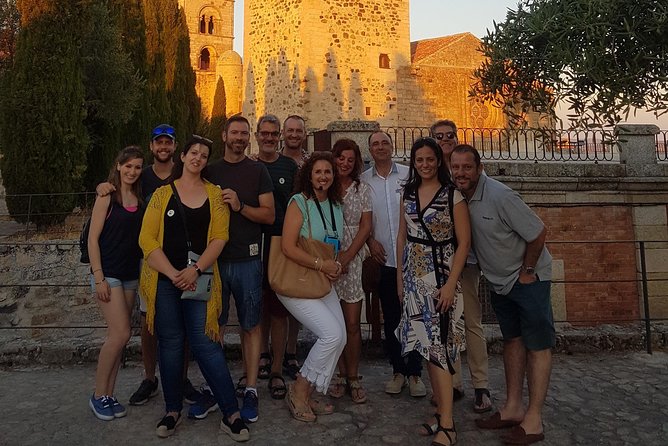
- Castle and cisterns included: Daytime visits include entry to Trujillo’s Alcazaba and its old water cisterns.
- Santa María la Mayor included: The tour visits one of Cáceres province’s most important churches.
- A guide-led walk through several centuries: Medieval, Renaissance, royal, religious, and conquistador stories are tied together on foot.
- Strong guide reputation: Alicia, Ana, José, and Esmeralda are each praised for warmth, clear explanations, and energetic storytelling.
- Small enough to remain manageable: The group limit is 35 people, though that can still feel fairly busy in narrow streets.
- Good value at $18.54: The price includes several monument admissions during daytime tours, not just the guiding.
Why Trujillo works so well as a walking tour
Trujillo is one of those Spanish towns where the setting does much of the teaching. You move from a broad Renaissance square into a tighter medieval maze, then climb toward the castle and look back across the town and surrounding Extremadura countryside.
The route is not limited to one era. You hear about the medieval town, the Catholic Monarchs, Emperor Charles V, the families who gained wealth overseas, and the role of Trujillo in the age of exploration. That mix gives you a more honest picture than a simple castle tour. Trujillo was shaped by military power, religious life, aristocratic families, and the ambitions of men who left for the Americas.
The guides are an important part of the experience. Alicia is repeatedly praised for explaining not only buildings but also shields, balconies, images, local customs, and the region’s biodiversity. Ana is described as warm and very clear, with a talent for answering questions. José brings energy and passion to the story of Trujillo, while Esmeralda is praised for matching the place with an enjoyable presentation.
You should not expect a quiet, private walk. The maximum group size is 35, and the old center has narrow lanes where the group may gather closely around the guide. Still, the route is structured around plenty of visual details, so you can usually follow along even when you are not standing at the front.
Other Trujillo days that pair with this one:
- Guided Tour of Historic and Monumental Trujillo
★ 5.0 · 930 reviews - Guided tour in Trujillo at Sunset “El Collector de Atardeceres”
★ 5.0 · 88 reviews - Full Day Tour Huacas, Chan Chan & Huanchaco – Trujillo
★ 4.5 · 64 reviews
Starting in Plaza Mayor and Plaza de la Hispanidad
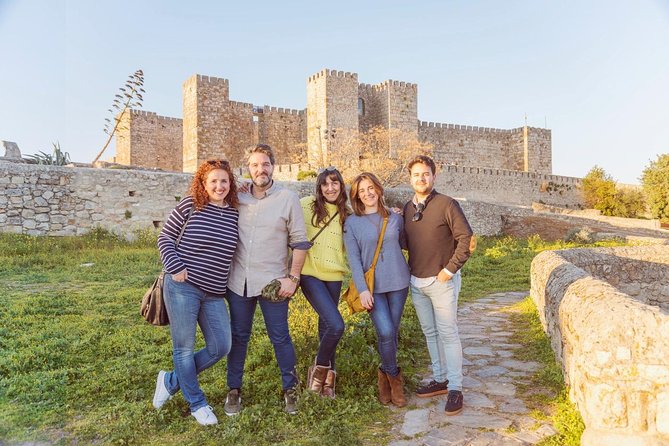
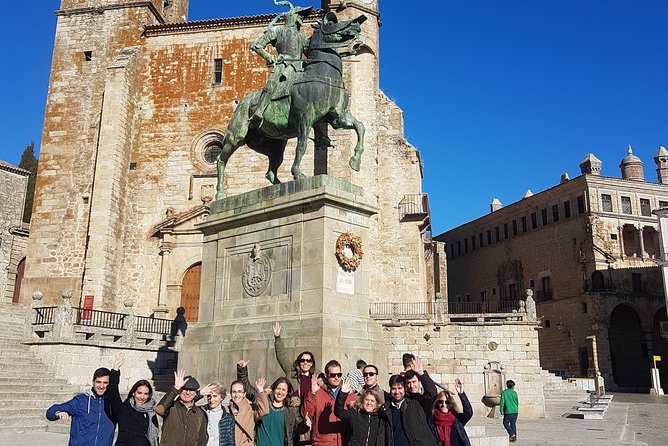
The tour begins in Plaza Mayor de Trujillo, the natural stage for the city. Its open space is framed by grand Renaissance buildings, and the square is also called Plaza de la Hispanidad. It gives you a useful first lesson: Trujillo’s power was not confined to its hilltop fortress. Wealthy families built impressive homes around the square, displaying status through stonework, coats of arms, balconies, and carefully designed facades.
This is also one of the best places to get your bearings. The square helps you understand the relationship between the lower town and the fortified upper area. From here, the route moves into the historic center, where streets become older, narrower, and more irregular.
The square is included in the guided visit, and the tour highlights photographic corners along the way. Bring a phone or camera, but listen before rushing off for pictures. The value of a guide here is not only identifying a building. It is explaining why the building looks the way it does and who had enough influence to construct it.
Climbing toward Trujillo Castle and the old cisterns
The Castillo de Trujillo is the physical high point of the route. The fortress occupies the site of the old Alcazaba, and the walk toward it shifts the mood from palatial Renaissance town to defensive medieval stronghold.
Entry to the castle and cisterns is included for daytime tours. The cisterns are especially worthwhile because they add practical depth to the military story. A fortress needed water to survive a siege, so these underground structures show how ordinary needs shaped medieval defense.
The listed castle stop is only 15 minutes, but that should be read as a compact part of a longer walking route rather than a full independent castle visit. You will get the main context and access included in the tour, but anyone who wants to examine every wall, viewpoint, and stone detail may want extra time afterward.
The climb also matters. The route is on foot, and one of the strongest practical comments about the experience is that you need to walk a little, with the effort rewarded by impressive views. Wear shoes with a firm sole. The old streets and slopes are part of Trujillo’s appeal, but they are not the place for delicate footwear.
Santa María la Mayor and the city’s religious center
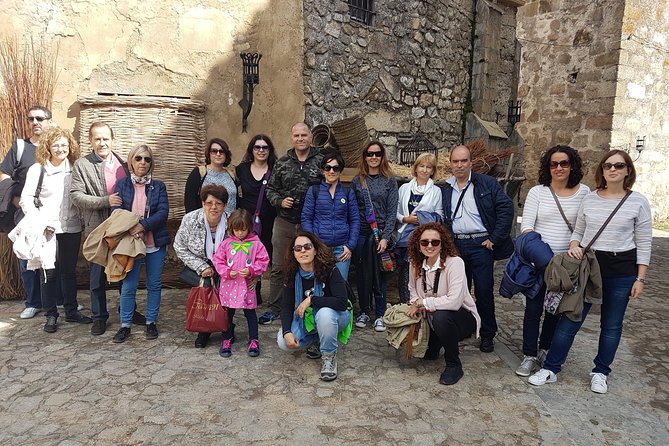
The Church of Santa María la Mayor is presented as a National Interest Monument and one of the most important churches in Cáceres province. Its inclusion gives the tour a welcome change of pace after the military setting of the castle.
The church helps explain how religion shaped daily life and public identity in medieval and Renaissance Trujillo. Its importance also reflects the city’s former status. This was not simply a rural settlement with a defensive wall. It was a place of influence, wealth, and ambitious families.
The church visit is listed as about 15 minutes. That is enough for an introduction and the main points, but not necessarily enough for a slow architectural study. If church interiors matter greatly to you, pay attention to the guide’s advice about return visits and opening arrangements.
There is one important timing detail. Monument tickets are included for daytime visits, but the description says tickets are not included for visits beginning at 8 p.m. The advertised start time is 10:30 a.m., so the standard morning experience should include the listed admissions. If you are considering another departure time, check the ticket terms carefully.
Somewhere else entirely, still within reach of Trujillo:
- Piramids of Tucume Tour, Sican Museum and Lambayeque city tour
★ 5.0 · 30 reviews - Pyramids of the Sun and the Moon, Huanchaco and Chan Chan
★ 4.8 · 11 reviews - Trujillo Shore Excursion from Salaverry Port
★ 5.0 · 9 reviews - Pyramids of the Sun and the Moon, Huanchaco and Chan Chan
★ 4.1 · 9 reviews
Plaza Mayor’s palaces and Trujillo’s powerful families
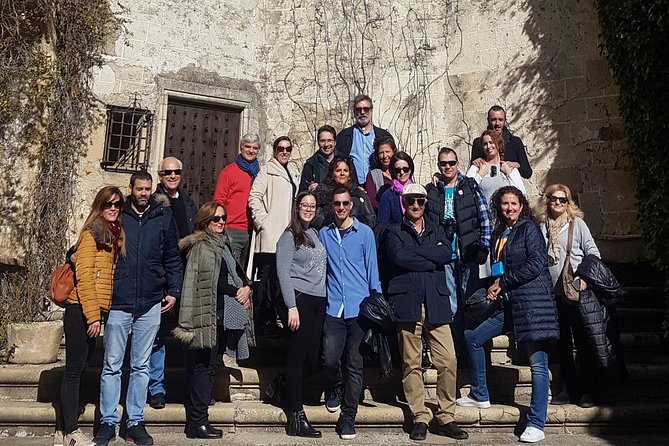
Back in the square, the route introduces a set of palaces that reveal how local families turned success into architecture.
The Palacio del Marqués de la Conquista is a Plateresque palace on Plaza Mayor. The style is ornate and detailed, and the building helps you read the square as a collection of family statements. Its name points toward the conquistador era, when Trujillo families gained status through campaigns and administration overseas.
The Palacio de San Carlos brings a later architectural note, with a classicist design dating from the 16th and 17th centuries. Seeing it alongside more decorative buildings makes the development of taste easier to follow. You are not just looking at isolated monuments. You are watching the town change as its fortunes and social ideals changed.
The Palacio de Orellanas-Pizarro is identified as the Plateresque palace of the first corregidor of Cuzco. That connection to Cuzco gives the route a direct link between Trujillo and the Americas. The tour’s Route of the Discoverers theme works best here, where a local facade opens onto a much wider political story.
These palace stops are brief, generally around 10 minutes each. That is useful if you want a broad introduction to Trujillo without spending a full morning inside one building. The tradeoff is that you may leave with questions. Write down the names of the places that interest you and return later if time allows.
Pizarro House Museum and the human side of conquest
The Pizarro House Museum recreates a late 15th-century hidalgo manor house. The word hidalgo refers to the lower nobility, a social group whose identity helps explain the people behind Trujillo’s overseas ambitions.
This stop gives the route a more domestic setting. Instead of only seeing grand public facades, you get a sense of how a manor house might have been arranged and how a prosperous but not royal family presented itself. It also helps put conquistador stories into a local context. These were not abstract figures from a distant textbook. They came from households, streets, and families visible in the town around you.
The visit is listed at about 15 minutes and admission is included. I would treat it as a focused introduction rather than a large museum visit. Its greatest value is the link between architecture and biography. The house makes the people of the discoverer routes easier to picture.
The tour also includes themes connected with Isabel la Católica, Carlos V, and cinema locations. These threads broaden the experience beyond the usual conquistador narrative. You can expect the guide to connect Trujillo’s buildings to royal history, major personalities, and its use as a filming location, although the precise balance may depend on the guide and the group.
What the guides add to the buildings
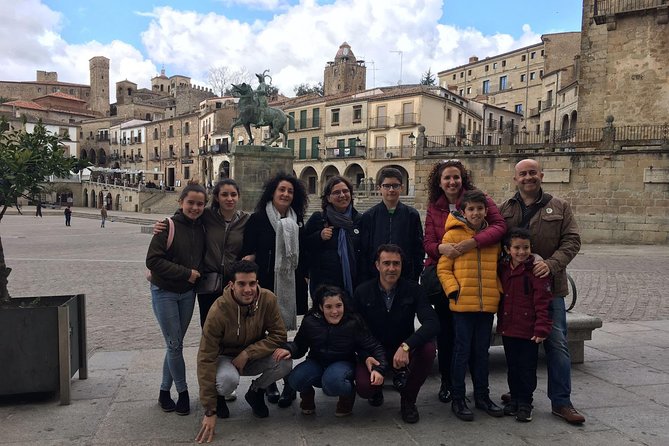
A walking tour of Trujillo can easily become a parade of names and dates. The best part of this experience is the human delivery.
Alicia Ruiz is praised for spending extra time on explanations and for making details such as family shields, balconies, and religious images meaningful. Her approach also includes local knowledge about Extremadura’s natural life, which gives the town a wider setting than architecture alone.
Ana is praised for making the visit pleasant and answering questions without fuss. That matters if you prefer an interactive tour rather than a one-way lecture. José is described as dynamic and passionate, especially when explaining the city’s history and the families connected with the conquistadors. Esmeralda is praised for making the setting enjoyable while keeping the focus on the place.
You cannot select a particular guide from the information provided, so book this for the route and format rather than for a guaranteed individual. Still, the repeated praise for several guides is a strong sign that the operator has more than one effective storyteller.
Timing, group size, and practical comfort
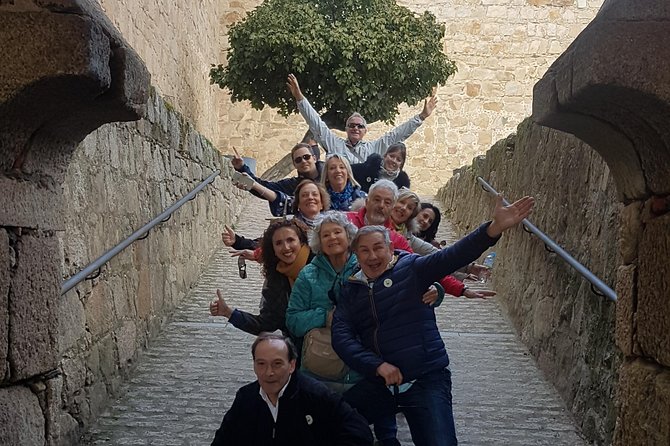
The meeting time is 10:30 a.m., and the tour returns to the same meeting point. That makes it easy to build into a day in Trujillo, especially if you want a guided introduction before exploring independently.
The duration is listed as approximately 2 hours 30 minutes. The stop descriptions include a three-hour estimate for the main guided visit and separate times for the castle, church, square, and palaces, so the figures do not line up perfectly. Plan for a substantial morning rather than treating 2 hours 30 minutes as a precise finish time.
The route is primarily on foot, and the historic center includes slopes and uneven paving. Most people can participate, and service animals are allowed. The meeting point is near public transportation, which helps if you are arriving without a car.
The group limit is 35. That is not an intimate private walk, but it is more controlled than an unlimited public gathering. If your visit falls on a busy date, narrow streets and church interiors may make the group feel larger than it does in the square.
Is $18.54 a fair price?
At $18.54 per person, the tour offers good value if you want both guiding and monument entry. You are paying for a structured walk through the castle, cisterns, Santa María la Mayor, the major squares, several palaces, and the Pizarro House Museum.
The value is strongest for a first visit. Trujillo’s buildings are attractive enough to photograph without help, but the connections between them are less obvious. A guide explains why the palace families mattered, how the medieval fortress fits into the town, and how the discoverer routes connect Trujillo with Spain’s wider imperial story.
The price is less compelling if you prefer to move at your own pace or spend long periods inside each monument. Several stops are short, and the route covers many sites. You are buying breadth and interpretation, not a slow architectural seminar.
With a 100 percent recommendation rate and a five-star rating based on 204 reviews, the experience has an unusually strong record. The most consistent praise focuses on the guides’ warmth, clear explanations, and willingness to run beyond the stated time when a subject deserves more attention.
Who should book this Trujillo walk?
I would choose this tour if you are visiting Trujillo for the first time, enjoy Spanish history, or want a clear route through a town that can otherwise feel like a maze. It is especially useful if the stories of Isabel la Católica, Carlos V, the conquistadors, and Pizarro interest you.
Families and mixed-age groups may also like it because the guides use stories, curiosities, architecture, and local details rather than relying only on formal history. The walk has enough variety to keep the experience moving.
You should think twice if steep or uneven walking is difficult for you, if you want a private guide, or if you dislike a fairly full itinerary. The group can reach 35 people, and the route covers a lot in one session.
Should you book it?
Yes, I would book this as an introduction to Trujillo. The price is modest, the major daytime admissions are included, and the route covers the castle, cisterns, church, squares, palaces, and Pizarro House Museum in one coherent walk.
Book it for the guides’ storytelling and for the connections between local buildings and the wider Spanish world. Just allow extra time beyond the stated 2 hours 30 minutes, wear practical shoes, and plan to revisit any monument that deserves a slower look. If you want to understand why Trujillo matters, rather than simply photograph its handsome stones, this is a sensible choice.
FAQ
Where does the tour begin?
It begins in Trujillo, Cáceres, Spain, at the meeting point in Plaza Mayor.
What time does the tour start?
The stated start time is 10:30 a.m.
Where does the tour end?
The activity ends back at the meeting point.
How long does the tour last?
The advertised duration is approximately 2 hours 30 minutes. Individual stop estimates vary, so allow flexibility.
Is the castle admission included?
Yes. Daytime tours include entry to the Alcazaba or Castle of Trujillo and its cisterns.
Is Santa María la Mayor included?
Yes. The church is included in the guided tour, with daytime admission listed as included.
Is every monument ticket included?
Daytime admissions listed for the castle and cisterns, Santa María la Mayor, the palaces, and Pizarro House Museum are included. Tickets are not included for visits from 8 p.m.
How large can the group be?
The maximum group size is 35 people.
Can I cancel for a full refund?
Yes, if you cancel at least 24 hours before the experience start time. Cancellations or changes made less than 24 hours in advance are not accepted for a refund.
Recently added around Trujillo
- Trujillo: El Brujo Complex Archaeological Tour with Tickets★ 4.6 · 3 reviews
- Chiclayo: Chaparri Ecological Reserve Tour★ 4.8 · 4 reviews
- Guided Tours Trujillo Essential★ 5.0 · 5 reviews
- From Trujillo: Temple of the Moon and Sun and Chan Chan★ 3.3 · 5 reviews
- From Trujillo: Complete full day tour with museums★ 5.0 · 5 reviews
- Guided Walking Tour in Trujillo Through the Centuries★ 4.5 · 8 reviews
- Shore Excursion from Salaverry port★ 4.5 · 8 reviews
- Trujillo Shore Excursion from Salaverry Port★ 5.0 · 9 reviews
Trujillo Tours, compared.
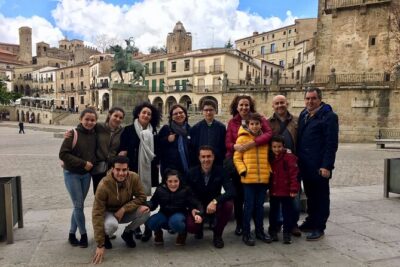
Guided Tour of Historic and Monumental Trujillo
Read our review →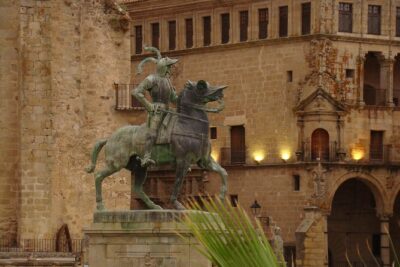
Guided tour in Trujillo at Sunset “El Collector de Atardeceres”
Read our review →
Full Day Tour Huacas, Chan Chan & Huanchaco – Trujillo
Read our review →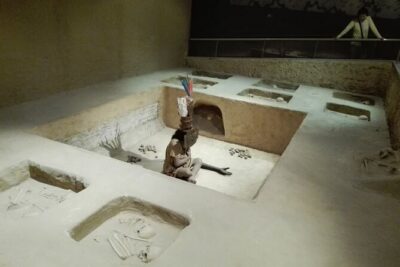
Piramids of Tucume Tour, Sican Museum and Lambayeque city tour
Read our review →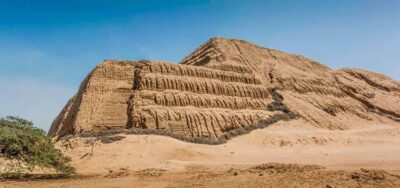
Pyramids of the Sun and the Moon, Huanchaco and Chan Chan
Read our review →Pyramids of the Sun and the Moon, Huanchaco and Chan Chan
Read our review →
Browse the lists this tour appears in