
Reviewed · MACHU PICCHU TOURS
Huchuy Qosqo Trek To Machu Picchu
The best part of this trip is the change of pace. You leave Cusco by road, walk past Qoricocha Lake and Andean villages, spend an evening with residents in Patabamba, then reach the quieter Inca site of Huchuy Qosqo before your Machu Picchu visit.
I like the local welcome in Patabamba and the way this route puts Huchuy Qosqo before Machu Picchu, rather than treating Machu Picchu as the only attraction. The main drawback is physical effort: this is a proper hike, with long uphill and downhill sections, not a gentle sightseeing tour.
Key points
- A 3-day route with two very different nights: one lodge stay in Patabamba and one hotel night in Aguas Calientes.
- Qoricocha Lake provides the day-one lunch stop after the first climb from Tambomachay.
- Patabamba adds a real community visit, with local customs, dinner, and a night outdoors under the stars.
- Huchuy Qosqo rewards the climb with Inca terraces, sacred temples, and an old hydraulic system.
- Machu Picchu is visited with a guide, including the Temple of the Sun, Intiwatana, Sacred Plaza, Temple of the Three Windows, and Temple of the Condor.
- The $490 price includes major transport and entrance costs, but not your first breakfast, third-day lunch, sleeping bag, or trekking poles.
Why this route feels different from a standard Machu Picchu trip
Many short Machu Picchu programs focus on transport and the final citadel. This one gives you a two-day approach through the Cusco highlands, with Huchuy Qosqo as the main cultural stop before the famous sanctuary.
That matters because the walk is not just a way to fill time before Machu Picchu. You see terraces, mountain scenery, a lake, small towns, and the daily setting of Andean communities. I like that the route gives you space to notice the countryside instead of rushing from one major site to the next.
The program costs $490 per person. That is not a small price for three days, but it covers the guide, hotel pickup, archaeological entrance fees, meals listed in the program, two nights of lodging, the train, buses to Machu Picchu, and transfers back to Cusco. The value is strongest if you want one booking to handle the moving parts.
You should still check exactly what kind of lodge is used in Patabamba and what train schedule you receive. The description confirms one night in a lodge and one night in Aguas Calientes, but it does not give room standards or a specific hotel name.
More Hiking Tours in Cusco
- Salkantay Trek to Machu Picchu 5 Days with Sky Lodge Domes
★ 5.0 · 5 reviews - Inka Jungle trek to Machu Picchu 3 D/ 2 N
★ 4.8 · 4 reviews - From Cusco: 7 Lakes Ausangate Trek with Breakfast and Lunch
★ 4.8 · 360 reviews
Day one: Tambomachay, Qoricocha Lake, and Patabamba
Pickup from your Cusco hotel is scheduled for 7:00 in the morning. Be ready at reception a few minutes early, since the guide calls you by name when arriving. The drive takes you to Tambomachay, an archaeological center and the starting point for the trek.
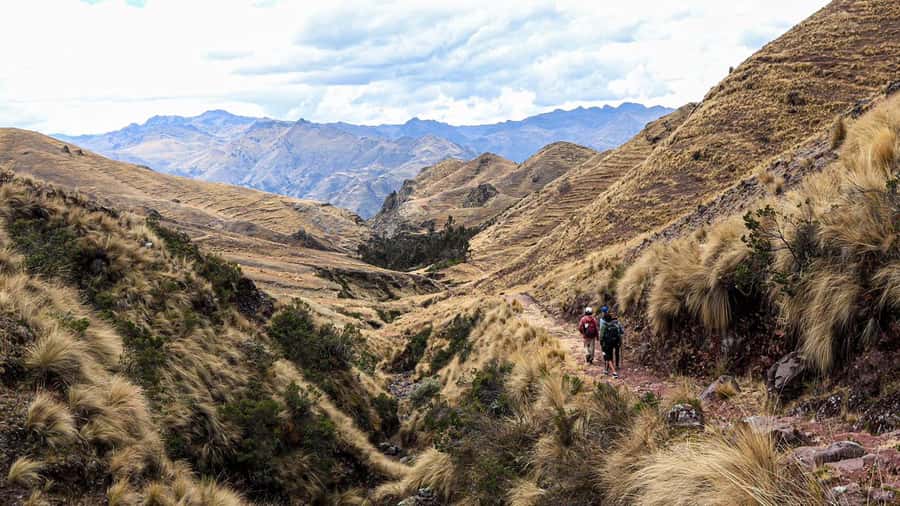
From Tambomachay, you climb for about two hours. The first section is important to understand before booking: the route gains height early, and the effort comes before lunch. At the first high point, you have free time to look back toward Cusco.
This is a useful moment to slow down. The view gives you a sense of how quickly the city gives way to open highland country. You will want sunglasses, sunscreen, water, and hiking shoes here, since the sun can feel strong even when the air is cool.
The trail then drops into the valley toward the small town of Quesser Grande. That change from climb to descent helps break up the day, but downhill walking can still be hard on knees. Good hiking shoes matter more than fashionable gear.
You continue to Qoricocha Lake, where lunch is served. The lake is a natural pause in a demanding day, and the setting gives you time to eat before the next section. Lunch and dinner are included, and a vegetarian option is available without an extra fee.
After passing along the lake shore, you walk for about two more hours to Patabamba. This makes day one a serious hiking day, even though the program does not provide a total distance. If you are not used to sustained uphill and downhill walking, you should treat the physical requirement seriously.
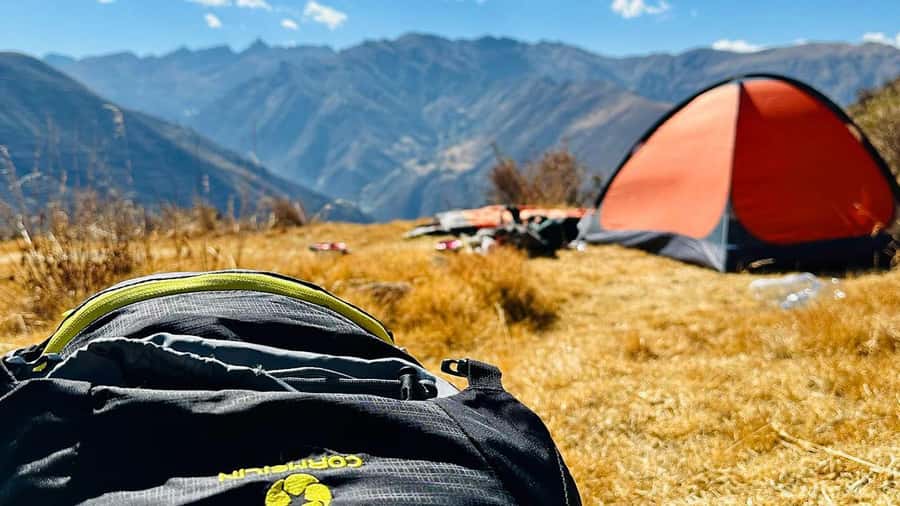
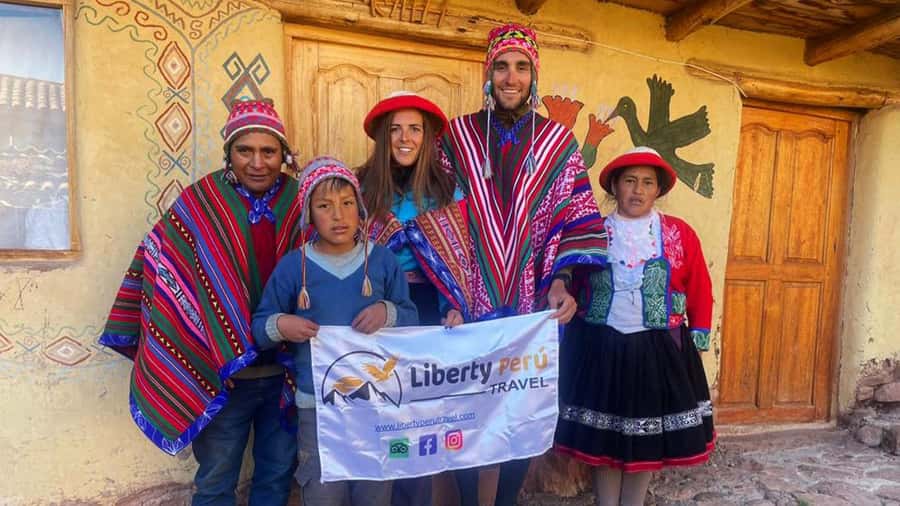
Patabamba is one of the most distinctive parts of the trip. Local residents welcome you, share customs, and prepare dinner. You spend the night in a cozy local setting under the stars, an experience that offers a sharper sense of place than another standard hotel night in Cusco.
The tradeoff is comfort. A community lodge is unlikely to feel like a conventional city hotel, and the description does not promise private facilities or a particular room setup. Bring personal medication and any small item you need for sleeping well.
Day two: Pukamarca, Puma Punku, and Huchuy Qosqo
After breakfast in Patabamba, you return to the trail. The route passes through small towns and different sections of the highlands before reaching Pukamarca, where lunch is served.
This portion gives you more time to observe local life and the plant and animal life of the Andes. The program is aimed at people who want the flora and fauna of the region, but it does not promise a wildlife count or particular species. Bring a camera if that part of the walk interests you.
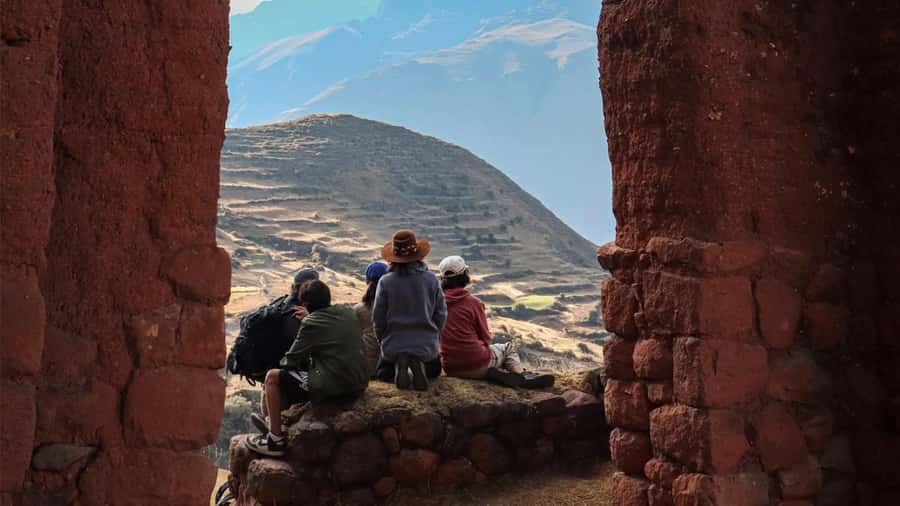
From Pukamarca, the route continues toward the Puma Punku canyon. The Quechua name means the door of the puma, which gives the place a memorable link to the local language and the old trail system. The canyon section leads you onto an Inca trail toward Huchuy Qosqo.
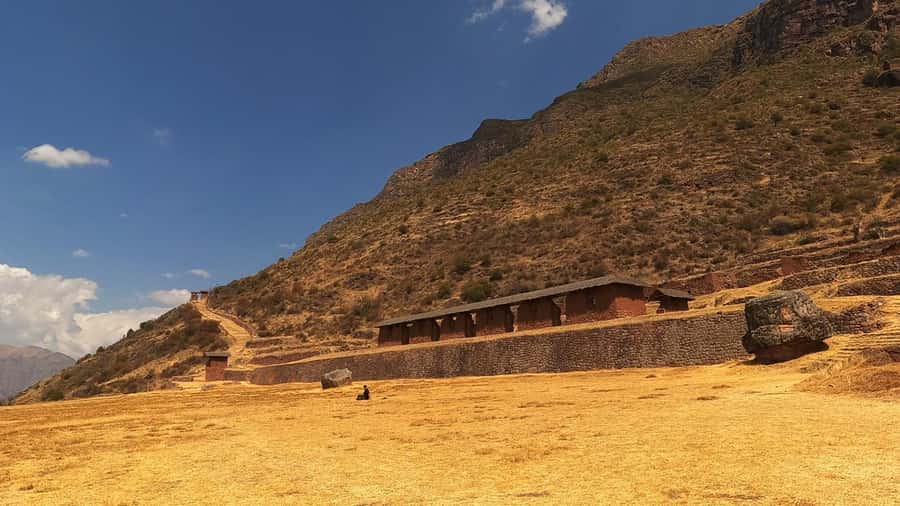
Huchuy Qosqo means Little Cusco. It is smaller and less famous than Machu Picchu, but that is part of its appeal. The site gives your guide room to explain how Inca construction, farming, religion, and water management worked together.
You explore sacred temples and agricultural terraces. The hydraulic system is another key feature, showing that the site was designed with water in mind rather than placed at random on the mountainside.
I especially like the terraces because they make the site easier to understand. Instead of seeing only walls and foundations, you can connect the buildings to food production and the practical work of maintaining a settlement. The guide is important here, since the meaning of the remains is not always obvious from the stones alone.
After the visit, you hike downhill for about two hours to Lamay. Again, this is not a soft finish. The descent comes after a full day on foot, so trekking poles may be worth renting from the agency office, especially if you are cautious on uneven ground.
In Lamay, tourist transport takes you to Ollantaytambo train station. You then board a train to Aguas Calientes, with the listed journey taking about two hours. The train ride changes the rhythm of the trip nicely, but it also means day two combines hiking, road transport, and rail travel.
You spend the night at a hotel in Aguas Calientes. Having a hotel night before Machu Picchu is practical. You can shower, sleep in a regular room, and prepare for the early start without needing to return to Cusco first.
Day three: a guided morning at Machu Picchu
The final day begins with a transfer to the bus station at the time arranged with your guide. The bus ride to the Machu Picchu Sanctuary takes about 30 minutes, and the bus ticket up and down is included.
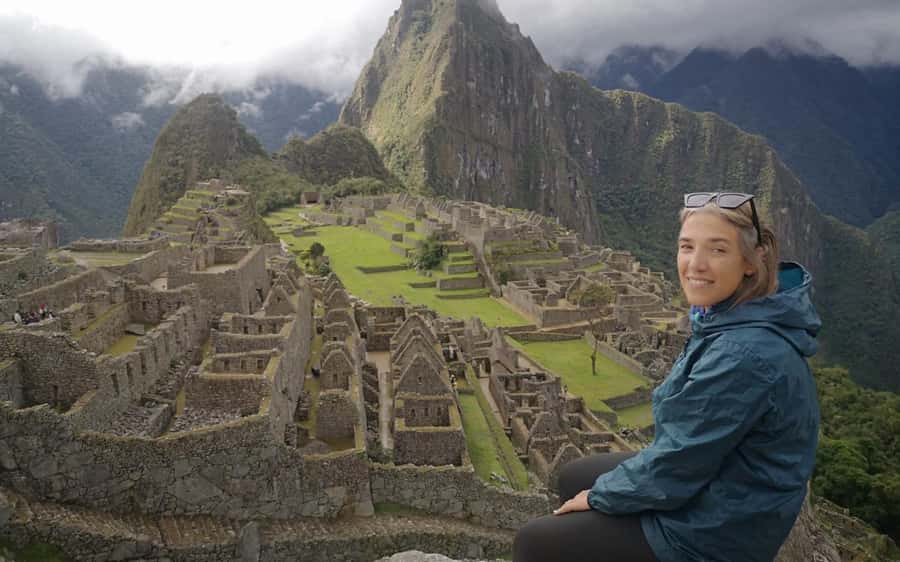
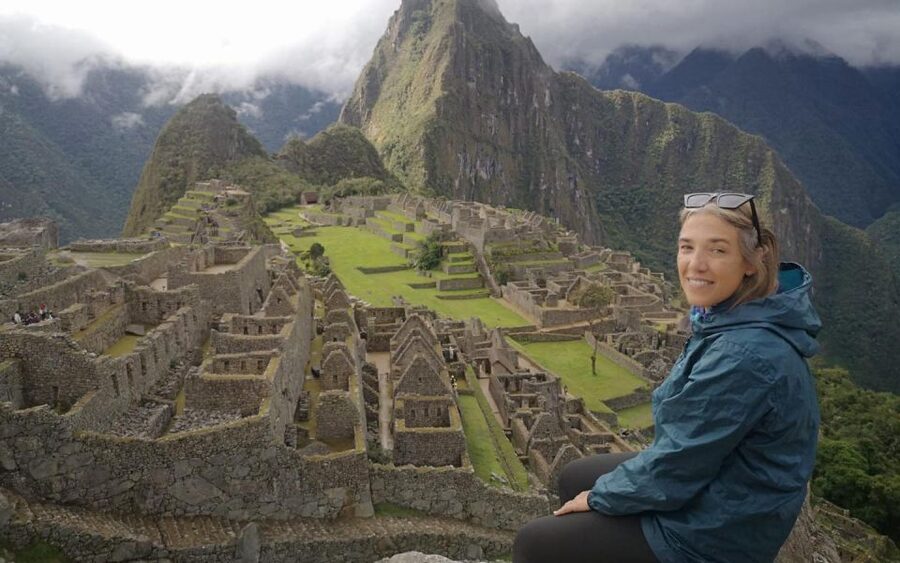
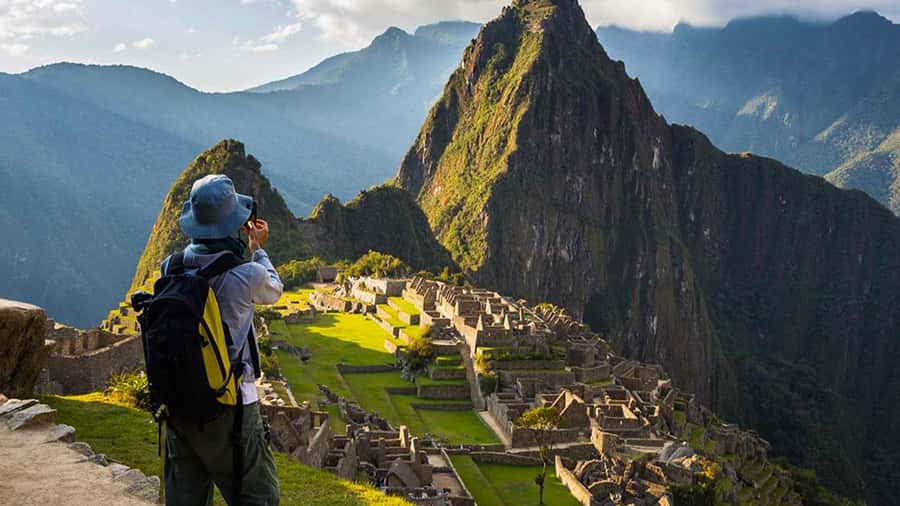
At the citadel, your guide leads the visit and explains the Temple of the Sun, Intiwatana, the Sacred Plaza, the Temple of the Three Windows, and the Temple of the Condor. This is a major advantage over simply arriving with an entrance ticket. The stones are impressive on their own, but the guide helps connect the rooms and structures to the wider purpose of the site.
The exact order of the visit is set by the guide and the entrance arrangements. The program does not specify the circuit, start time, or total hours inside the sanctuary, so confirm those details before departure if they matter to you.
After the visit, you take the bus back to Aguas Calientes. You have free time there before boarding the train to Ollantaytambo. Lunch on this day is not included, so budget for it yourself.
At Ollantaytambo, agency staff meet you and arrange tourist transport back to Cusco. The return is useful because you do not have to organize a separate taxi or shared transfer after the train.
One detail deserves a quick check before you pay: the inclusions describe train tickets from Ollantaytambo to Cusco, while the daily plan describes a train from Ollantaytambo to Aguas Calientes and a return train to Ollantaytambo, followed by road transport to Cusco. The daily schedule is clear about the final road transfer, but ask the agency to confirm the exact train and transfer combination.
more ways to reach machu picchu
- From Aguas Calientes: Machu Picchu guided tour with tickets
★ 4.9 · 72 reviews - From Cusco: Machu Picchu 2 days
★ 3.6 · 29 reviews - Cusco: Machu Picchu Day Trip with Train + Entrance ticket
★ 4.5 · 17 reviews - Rainbow Mountain tour and Machu Picchu tour by train
★ 4.8 · 13 reviews
What the $490 package really covers
The price works best for you if you value convenience. It includes:
- An English- or Spanish-speaking professional guide
- Hotel pickup in Cusco and transport to the trailhead
- Entrance tickets for Huchuy Qosqo and Machu Picchu
- Two breakfasts, two lunches, and two dinners
- Vegetarian meals at no extra charge
- One night in a lodge and one hotel night in Aguas Calientes
- Train travel listed in the program
- Bus travel between Aguas Calientes and Machu Picchu
- Transport between Ollantaytambo and Cusco
- An emergency horse
- Emergency oxygen and a first-aid kit
The emergency horse is not a promise of a casual riding option. It is there in case you need help during the trek. The oxygen bottle and first-aid kit are also safety provisions, not a substitute for preparing properly for a demanding route.
You pay extra for a sleeping bag and trekking poles if you rent them through the agency. Your first-day breakfast and third-day lunch are also outside the package. Pack cash for those costs and for personal spending.
The agency may also help with luggage storage. Guide Jhordy and the staff received strong praise for friendly treatment, and the agency allowed luggage to be stored for four days in one reported booking. That can be very useful if you are combining this trek with a longer stay in the region, though you should confirm the storage arrangement directly.
The guide can shape the whole experience
This route includes two archaeological sites and a long walk through places whose meaning is not always visible at first glance. A good guide makes a large difference.
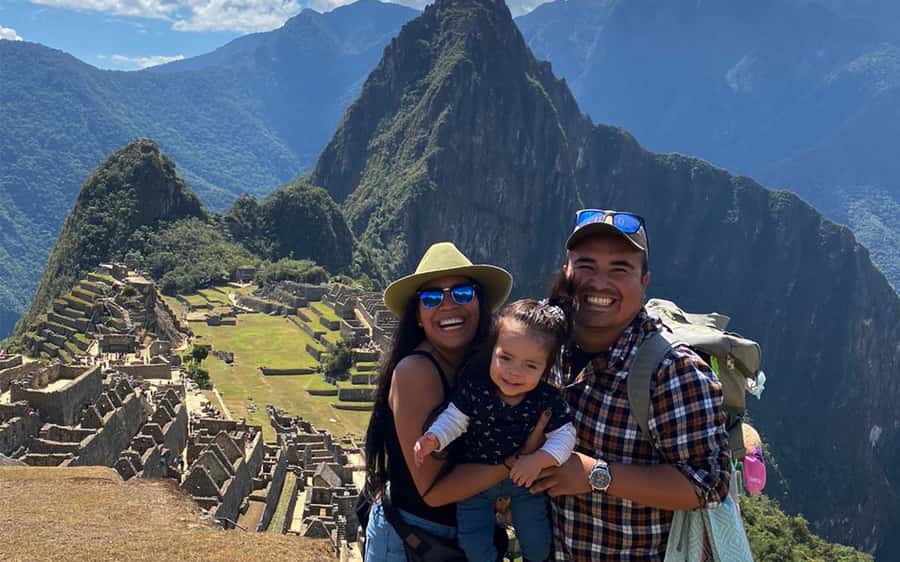
Jhordy is the named guide associated with the strongest feedback available for this experience. His style is described as warm and full of useful facts and curious details. That suits this route, since you get both small cultural encounters and major Inca sites.
You should use the guide actively. Ask about the terraces, water channels, local customs, Quechua place names, and the reason each structure matters. The best parts of Huchuy Qosqo are not just what you photograph, but what you understand while standing there.
The tour is offered in English and Spanish. If you need one language in particular, confirm it when booking rather than assuming the group will use only that language.
How hard is the trek?
The program plainly says the route requires great physical effort. That warning should guide your decision more than the three-day label.
Day one includes about two hours uphill from Tambomachay, a descent to Quesser Grande, the walk to Qoricocha Lake, and another two hours toward Patabamba. Day two continues on foot through Pukamarca and Puma Punku, reaches Huchuy Qosqo, and ends with about two hours downhill to Lamay.
The itinerary does not give total kilometers, trail elevation, or group size. I would not book this based on the duration alone. You need to be comfortable with extended walking and repeated climbs and descents.
Bring hiking shoes, hiking trousers, sunglasses, sunscreen, trekking gear, cash, personal medicine, and your passport or identity card. A medical statement is also requested. Trekking poles and a sleeping bag can be rented, but the available sizes and quality are not stated, so ask before relying on rentals.
Alcohol and drugs are not allowed. The route operates every day of the year, but daily operation does not remove the need to prepare for changing mountain conditions. The supplied information does not provide a weather guarantee or a seasonal packing list.
Who will like this trip most?
I would choose this trek if you want more than a direct Machu Picchu transfer. It suits people who enjoy long walks, local contact, archaeological sites, and a schedule that mixes trail time with train and bus travel.
It is also a good match if Huchuy Qosqo interests you. The site is not treated as a quick photo stop. You have time with a guide to see the sacred buildings, terraces, and water system before continuing to Machu Picchu.
I would hesitate if you want a relaxed holiday or if you dislike basic overnight accommodation. The first night is in a lodge in Patabamba, and the route includes substantial effort on both hiking days.
The trip may also feel busy for anyone who prefers a slow schedule. Day two, in particular, combines a morning trek, a site visit, a downhill walk, a road transfer, and a two-hour train journey. That is efficient, but not leisurely.
Booking details worth checking
Free cancellation is available up to 24 hours in advance for a full refund, and you can reserve now and pay later. Starting times are subject to availability, even though the Cusco pickup is listed for 7:00 in the morning.
The guide will meet you at your hotel reception, so provide the correct hotel details. Keep your passport or identity card with you because it is listed among the required items, and you need it for the archaeological visits and travel arrangements.
Ask the agency to confirm the hotel name in Aguas Calientes, the Patabamba lodge setup, the train schedule, the Machu Picchu entry circuit, and the exact return transport to Cusco. These questions do not change the appeal of the route, but they help you know what your $490 includes in practical terms.
Should you book the Huchuy Qosqo Trek?
Book it if you want a physically demanding Andean route with genuine local contact, two archaeological sites, and Machu Picchu in one compact trip. The strongest reasons are the Patabamba overnight, the quieter Huchuy Qosqo visit, the included transport, and a guide such as Jhordy who can add useful context along the way.
Skip it if you want an easy route, a fully polished hotel experience, or long free periods. The price is high, but it covers many costly pieces, including entrances, meals, lodging, trains, buses, and transfers. For a fit walker who values culture and variety, the package can justify its cost. For someone seeking the simplest possible Machu Picchu visit, a less demanding option may be the better buy.
FAQ
How long is the Huchuy Qosqo Trek to Machu Picchu?
The experience lasts three days.
Where does the trek begin?
The walking route begins at the archaeological center of Tambomachay, after pickup from your hotel in Cusco.
What time is hotel pickup in Cusco?
Pickup is scheduled for 7:00 AM. You should wait at the hotel reception five minutes before the scheduled time.
Which languages does the guide speak?
The tour provides a live guide in English or Spanish.
Where do you sleep during the trek?
You spend one night in a lodge in Patabamba and one night in a hotel in Aguas Calientes.
Are meals included?
The package includes two breakfasts, two lunches, and two dinners. Breakfast on the first day and lunch on the third day are not included.
Is a vegetarian meal available?
Yes. A vegetarian meal option is available at no extra cost.
Are Machu Picchu entrance tickets included?
Yes. Entrance tickets to Machu Picchu and Huchuy Qosqo are included.
Is transport to Machu Picchu included?
Yes. The package includes the bus between Aguas Calientes and Machu Picchu in both directions, along with the listed train and tourist transport services.
Can I rent a sleeping bag or trekking poles?
Yes. Sleeping bags and trekking poles can be rented through the agency office.
More Hiking & Trekking in Aguas Calientes
- From Arequipa: Sillar Route Trek
★ 4.2 · 461 reviews - From Arequipa: 2-Day Colca Canyon Trekking Tour
★ 4.8 · 243 reviews - Cusco: Rainbow Mountain Tour and Red Valley Hike (Optional)
★ 4.7 · 149 reviews - From Huaraz: Hike to the Lagoon 69
★ 4.4 · 121 reviews
Recently added around Aguas Calientes
- Machu Picchu: Private Tour Guide Service for up to 15 people★ 4.5 · 3 reviews
- From Cusco: Machu Picchu by Car 2D/1N★ 3.5 · 3 reviews
- Guide in Machu Picchu★ 5.0 · 3 reviews
- “Glamping Sky Lodge Domes” 2-Day Humantay Lake & Salkantay★ 5.0 · 3 reviews
- Machu Picchu 2 Days / 1 Night (By Bus)★ 3.7 · 4 reviews
- TOUR TO MACHU PICCHU FULL DAY BY TRAIN – The Best Adventure★ 3.2 · 4 reviews
- Inka Jungle trek to Machu Picchu 3 D/ 2 N★ 4.8 · 4 reviews
- Machu Picchu: Chinchero, Maras, Moray & Machu Picchu 2 days★ 4.8 · 5 reviews
Machu Picchu Tours, compared.



4-Day Inca Trail to Machu Picchu with Accommodation
Read our review →
2-Day Trip to the Sacred Valley and Machu Picchu
Read our review →
Machu Picchu 2-Day Inca Trail with Panoramic Train
Read our review →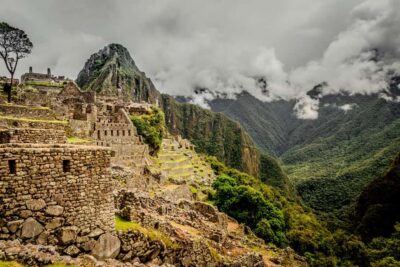
Browse the lists this tour appears in