
Reviewed · CUSCO TOURS
Historic/music Cusco FreeWalkingTour “free drink” Group Tour
Cusco’s story comes alive through its stonework, music, and steep streets on this compact walk from the Main Square to San Blas. You’ll see the Cathedral, Company of Jesus, Qoricancha, famous Inca walls, and the carved Condor, Puma, and Snake.
I like the small group of about 10 people, which should make it easier to hear the guide and ask questions. I also like the stop with a local luthier, where you hear Andean instruments played rather than simply seeing old buildings.
The main catch is the price. The booking cost is only $2, but a gratuity of around 30 soles, or $10, is required for the guide service. The loudspeaker has also been unreliable at times, so stay close to the guide.
Key points at a glance
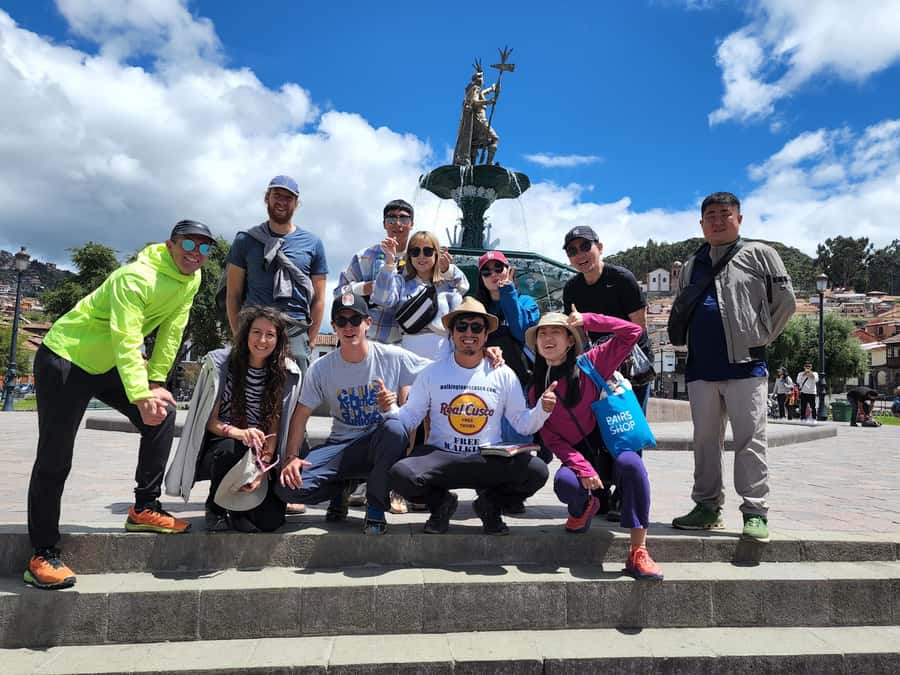
- Starts at the Inca Fountain: Meet on Cusco’s Main Square at the fountain near the listed coordinates, -13.5167681, -71.9787795.
- Covers major Cusco landmarks: See the Cathedral, Company of Jesus, Qoricancha, famous Inca stonework, and San Blas.
- Includes music and local craft: Visit a luthier and hear an Andean musical performance with city views.
- Ends with a Peruvian drink: Choose a Pisco Sour or non-alcoholic Chicha Morada.
- Small, two-hour format: A group of roughly 10 people keeps the walk fairly personal and easy to follow.
- Budget price with a required tip: The $2 booking fee does not tell the whole cost, since about $10 for the guide is required.
A short walk through Cusco’s long story
This tour works best as an introduction to Cusco. In two hours, you move from the Spanish colonial center into Inca architecture and then up toward San Blas, an area known for artists, workshops, and views over the city.
I like that the route does not treat Cusco as a collection of photo stops. The guide connects churches, walls, neighborhoods, music, and local customs. That makes the city easier to understand when you explore on your own later.
The pace is active but not built around a bus or van. You walk the entire route, so comfortable shoes matter. Cusco is high above sea level, and the route includes streets in and around San Blas. The activity is not suitable for wheelchair users, and it is not intended for people over 95.
The group usually has about 10 participants. That is a useful middle ground: large enough to have some energy, but small enough for questions and conversation. You should still keep near the guide, especially in noisy parts of the center. One person specifically found that the loudspeaker did not always work well, which is a good reason not to drift to the back.
More Historical Tours in Cusco
- Cusco: Historical Guided City Tour with 4 Inca Ruins
★ 4.5 · 99 reviews - Machu Picchu Private Archaeological and Historical Guided Tour
★ 5.0 · 86 reviews - 6-Day Cultural Tour to Machu Picchu
★ 5.0 · 76 reviews
Meeting the guide at the Inca Fountain
Your starting point is the Inca Fountain on Cusco’s Main Square, also called Plaza de Armas. The square is an easy central meeting place, but it is also a busy one. Give yourself time to locate the fountain and look for the tour group before the scheduled start.
The guide conducts the walk in English or Spanish. The quality of this kind of tour depends heavily on the person leading it, and the available feedback points to strong historical explanations, clear cultural context, and a good sense of humor. Erick is one guide praised for combining facts with a lighter touch.
Before setting off, I would confirm two things: the language of your group and the exact route for that day. The advertised sights are clear, but entrance arrangements for places such as the Cathedral and Qoricancha are not specified. This appears to be a guided city walk, not a package that includes admission tickets.
Plaza de Armas, the Cathedral, and Company of Jesus
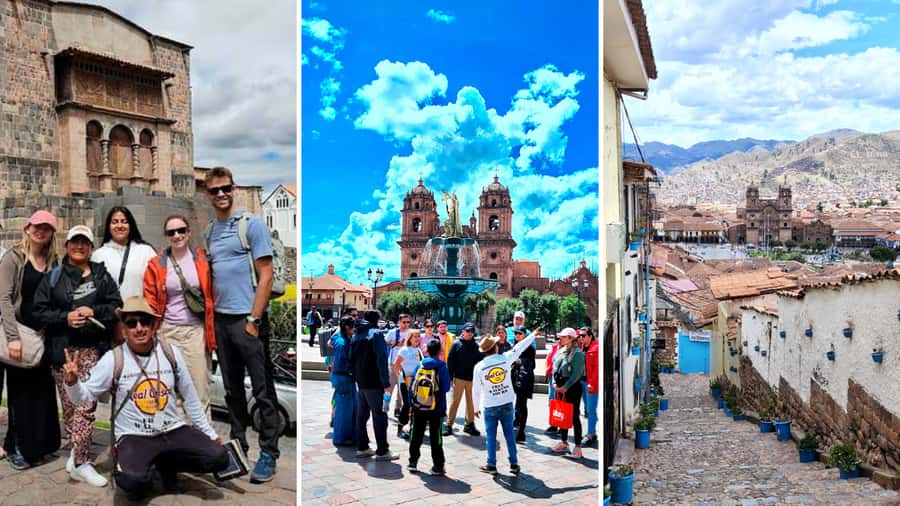
The Main Square gives you a quick lesson in the layers of Cusco. Here, Spanish colonial churches frame a city built on an older Inca foundation. The Cathedral is one of the first major sights, followed by the Company of Jesus, known for its striking architecture.
The value of this opening is context. You are not just looking at two churches and taking pictures. The guide explains how the colonial center was shaped around the square and how Spanish buildings became part of a city with a much older Andean past.
The square can be noisy and crowded. This is one of the places where a faulty speaker could make things difficult, so stand near the guide and ask for a repeat if you miss a key point. A small group helps, but it cannot remove the noise of the city.
You should also keep your expectations clear about the word visit. The activity description does not say that entrance tickets are included, so do not assume that the walk includes full interior tours of every landmark. If entering a particular church matters to you, ask before booking.
Qoricancha and the Inca foundation
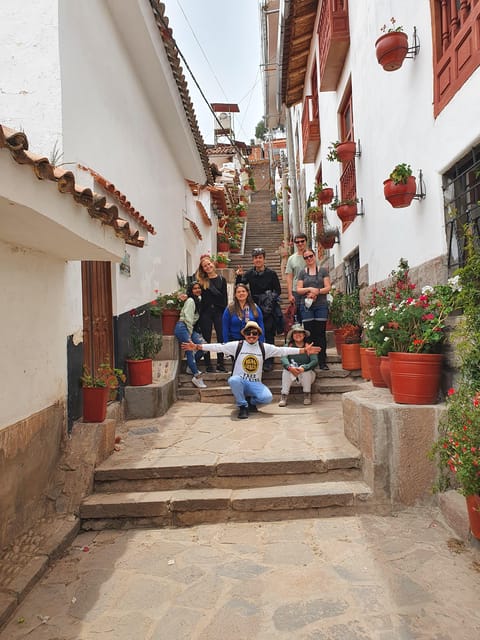
Qoricancha, or the Temple of the Sun, is one of the central stops. Its importance comes from the way it shows the meeting of Inca and Spanish Cusco. The guide explains its place in Inca life and why the site remains so important to the city’s identity.
This is one of the strongest parts of the route for anyone who wants more than pretty streets. Cusco’s masonry can look like a wall of large gray stones until someone points out the precision of the joints, the engineering, and the meaning attached to the site.
The supplied information does not confirm an admission fee or an interior visit. Treat Qoricancha as a scheduled sightseeing stop unless the guide or booking page confirms entry. That distinction matters because the $2 price is exceptionally low and does not necessarily cover paid sites.
Take your time here if the group pauses near the walls. The stonework is the kind of detail that rewards close attention. Look for the clean joins and the way later construction sits against the older Inca work.
more ancient sites near Cusco
- Cusco: Historic Walking Tour with Pisco Sour and Music Show
★ 4.6 · 65 reviews - Pisco Sour Secrets: Hands-On Mixology in Historic Cusco
★ 4.5 · 50 reviews - Machu Picchu: historical and photographic guided tour
★ 4.9 · 27 reviews - Cusco: Full-Day Sacred Valley History Tour
★ 4.6 · 14 reviews
The 12 and 13 angled stones
The walk includes two of Cusco’s most famous examples of Inca stone construction: the 12 angled stone and the 13 angled stone. These stops are popular because the stones fit into surrounding masonry with remarkable precision, using multiple sides rather than a simple rectangular shape.
The guide’s explanation adds value here. Without context, you may see an unusual wall and move on. With a good explanation, you begin to notice how the stones connect and why the technique has become one of the clearest signs of Inca craftsmanship in the city.
These are public street stops, so expect people, cameras, and limited space. You may not get a long quiet look. The advantage of a walking guide is that you learn exactly what to look for instead of searching for the stones by yourself.
I would keep your phone ready but listen first. The best part of these stops is not simply getting a picture beside a famous wall. It is understanding why the masonry has survived and why it remains such a source of pride in Cusco.
The Andean Trilogy on an ancient wall
The route also points out the Andean Trilogy: the Condor, Puma, and Snake carved into an ancient Inca wall. These animals represent different parts of the Andean world and give the guide a chance to explain beliefs and symbolism beyond architecture.
This is a particularly useful moment for understanding that Inca culture was not only about construction and empire. Animals, natural forces, and ideas about different realms all appear in Andean traditions. The carving turns an ordinary-looking wall into a lesson in local thought.
Because the route is short, the guide has to keep moving. You may receive an overview rather than a long academic talk. I see that as a strength for a first-day tour, especially if you want enough time left to explore on your own.
The walk’s best explanations appear to come from guides who enjoy the subject. Several descriptions of the experience praise the amount of history covered, and one person noted that the guide shared both information and humor. That combination helps keep a two-hour history walk from feeling heavy.
San Blas, craft, and music above the center
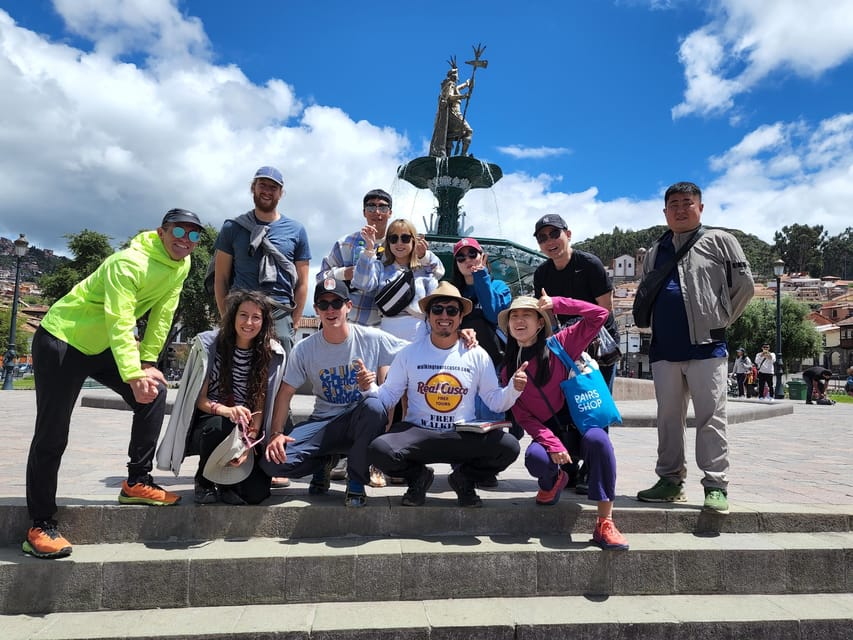
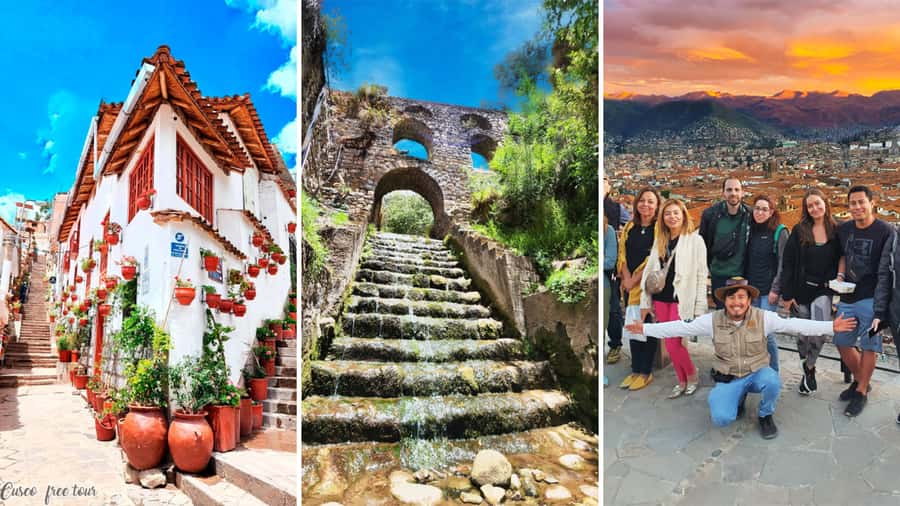
From the historic center, the tour continues through San Blas. This neighborhood is known for its artistic character, and the change in mood is part of the appeal. You leave the grand square and major monuments for smaller streets, local workshops, and city views.
The luthier visit gives the tour a human scale. Instead of hearing only about old buildings, you meet a craftsperson who makes musical instruments. The activity includes an Andean performance, with instruments made locally and views across Cusco.
This was one of the most warmly praised parts of the experience. The playing of authentic instruments was described as a delightful surprise, and another account specifically noted a presentation of Inca music with beautiful instruments. That makes the stop more than a quick shopping visit, at least in the way it is presented.
You should understand that the experience is not described as a full workshop. You visit a luthier and watch or hear a performance. Personal purchases are not included, and any spending at local stops is your responsibility.
San Blas also means uphill walking and uneven city streets. The tour is not suitable for wheelchair users, and anyone with limited mobility should think carefully about the route. Even if you walk regularly, Cusco’s altitude can make slopes feel harder than expected.
Seven Borreguitos Street and the final temple
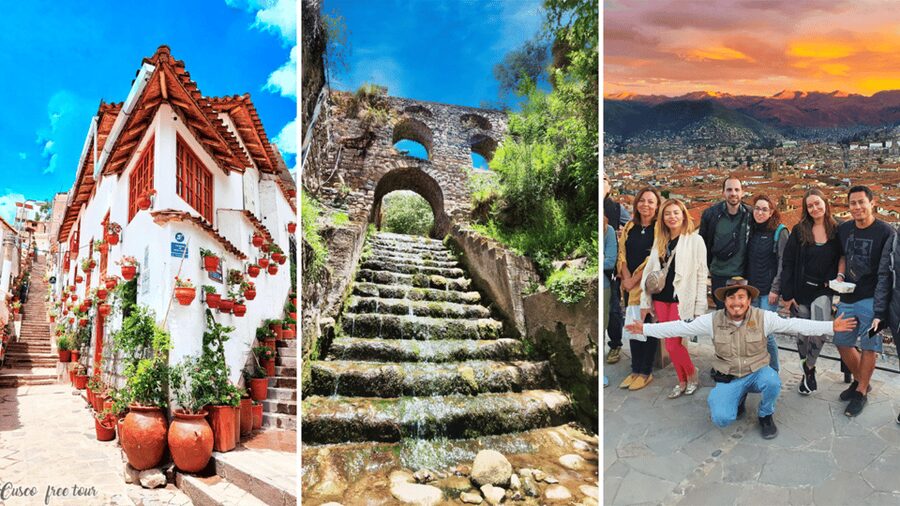
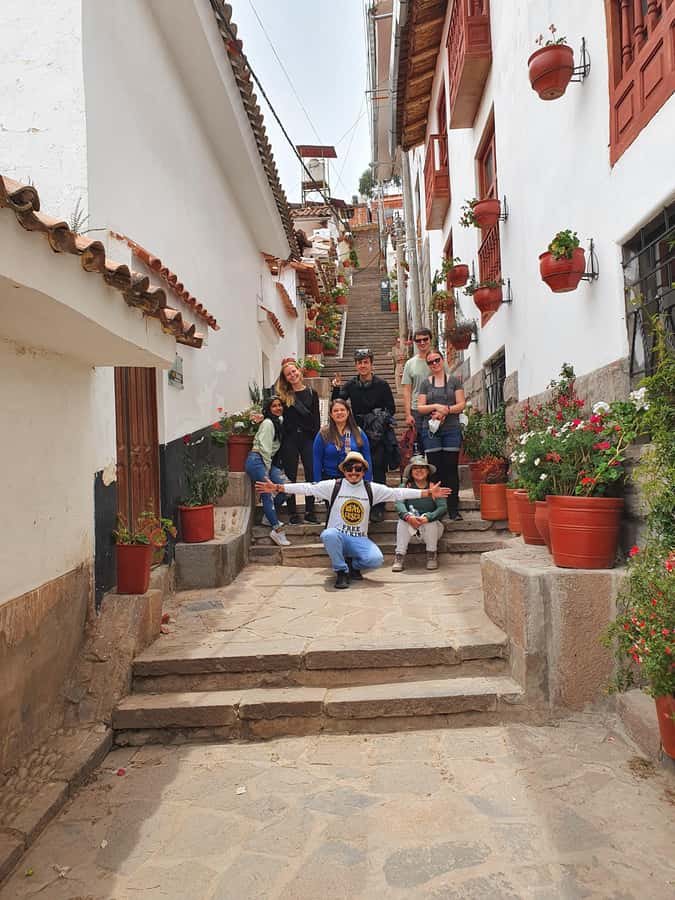
Seven Borreguitos Street is presented as one of Cusco’s most picturesque streets. This is the sort of stop that works well near the end of a walking tour: narrow, photogenic, and different from the grand scale of Plaza de Armas.
You can expect time for photographs, though the schedule is still limited by the two-hour duration. Try to listen to the guide’s explanation before stepping aside for pictures. A pretty street becomes more memorable when you know how it fits into the neighborhood.
The final stop is the Temple of the First Inca Ruler, Manco Capac. The temple gives the tour a fitting endpoint because the route has moved from Spanish colonial landmarks to Inca foundations, cultural symbols, Andean music, and the living streets of San Blas.
The itinerary does not say that you enter every temple or building. The emphasis is on guided sightseeing and explanation, so confirm any admission details if interior access is important to you.
Pisco Sour or Chicha Morada at the finish
The tour ends with a choice of Pisco Sour or Chicha Morada. Pisco Sour is Peru’s best-known national cocktail, while Chicha Morada is a popular non-alcoholic drink made from purple corn.
I like this ending because it gives you a simple taste of Peru after the history lesson. It also lets you choose according to your mood. If you do not drink alcohol, Chicha Morada gives you a clear alternative rather than leaving the final stop out.
The drink is described as complimentary, but personal expenses beyond the included tasting are not covered. Water is also not included. Bring your own bottle, especially if you are walking uphill or adjusting to Cusco’s altitude.
Do not confuse the drink with the guide’s gratuity. The tasting is part of the activity, while the required gratuity is a separate cost. That distinction is important when you work out the real budget.
Is the $2 price really a bargain?
The advertised price is $2 per person, with reserve-now-and-pay-later booking available. Cancellation is free up to 24 hours before the activity for a full refund. Those terms make it easy to hold a place while your Cusco plans take shape.
Still, the actual cost includes a required gratuity of about 30 soles, or $10, for the guide service. I would judge the tour on the combined cost, not the headline booking price. At roughly $12 total before any personal spending, it can still be good value if you want a guided introduction to the city.
You are paying for a route that combines major sights, interpretation, local craft, music, a drink, and a small group. You are not paying for transportation, water, or clearly stated admission tickets. That makes this a good choice for someone who wants orientation and cultural context rather than a ticket-heavy sightseeing package.
The two-hour length also helps with value. You can use it early in your stay to learn the city’s layout, then return to Qoricancha, San Blas, or the Main Square on your own. Several people found the walk useful as a first activity in Cusco because it revealed places they would not have found by simply wandering.
How to prepare for this Cusco walk
Wear shoes with a firm grip. The route includes historic streets and San Blas, and the tour is entirely on foot. Bring water because it is not supplied.
Stay close enough to hear the guide, particularly if the group is larger than expected or the speaker is not working well. A small group helps, but noisy streets can still swallow a few sentences.
Set aside the required gratuity before you arrive. Calling the payment a tip may suggest that it is optional, but the information provided says around 30 soles or $10 is required for the guide service.
This tour suits first-time visitors, history fans, and anyone who wants to connect architecture with local culture. It also works for solo visitors who prefer a planned route and some company. You may want a different activity if you need wheelchair access, dislike uphill walking, or want long indoor visits at each monument.
Should you book the Historic and Music Cusco Free Walking Tour?
Book it if you want a brisk, low-cost introduction to Cusco that mixes Inca masonry, colonial landmarks, San Blas, local music, and a Peruvian drink. The strongest reasons are the small group, the range of sights, and the luthier performance, which adds something you would not get from a basic photo walk.
Skip it if you want a slow, private tour, guaranteed working audio equipment, or confirmed admission to every major site. Also budget the required $10 gratuity, bring water, and stay close to the guide.
For many people, this is a smart way to begin a Cusco stay. You get the main historical vocabulary, a few memorable streets, and enough local context to make the rest of your time in the city more rewarding.
FAQ
Where does the tour begin?
The meeting point is the Inca Fountain on Cusco’s Main Square, Plaza de Armas. The listed coordinates are -13.5167681, -71.9787795.
How long does the walking tour last?
The tour lasts two hours.
What languages are available?
The live guide is available in English or Spanish.
How large is the group?
The activity accommodates approximately 10 participants.
Which landmarks are included?
The route includes Cusco’s Main Square, the Cathedral, the Company of Jesus, Qoricancha, the 12 and 13 angled stones, the Andean Trilogy carving, San Blas, Seven Borreguitos Street, and the Temple of Manco Capac.
Is a drink included?
Yes. At the end, you can choose a Pisco Sour or Chicha Morada.
Do I need to pay the guide separately?
Yes. A gratuity of around 30 soles or $10 for the guide service is required.
Is the tour wheelchair accessible?
No. The activity is not suitable for wheelchair users. It is also not suitable for people over 95.
Recently added around Cusco
- Palcoyo colored mountain hike + stone forests★ 4.6 · 3 reviews
- Maras Moray★ 5.0 · 3 reviews
- Full-Day Condor Viewpoint & Inca Sites Tour★ 5.0 · 3 reviews
- From Cusco: Vinicunca Mountain of Colors Excursion + Ticket★ 5.0 · 3 reviews
- Excursion Cusco – Puno – Titicaca Observatory Train★ 5.0 · 3 reviews
- Machu Picchu: Private Tour Guide Service for up to 15 people★ 4.5 · 3 reviews
- Machu Picchu: 1-day tour by Vistadome Observatory train★ 5.0 · 3 reviews
- Cusco: Chonta Canyon and Condor Flight Tour with Lunch★ 5.0 · 3 reviews
Cusco Tours, compared.
Humantay Lake Tour with Breakfast and Buffet Lunch
Read our review →
Sacred Valley & Maras Salt Mines Tour with Lunch
Read our review →
Moray, Maras Salt Mines & Chinchero Weavers Tour
Read our review →


Half-Day City Tour with Sacsayhuaman and Q’enco
Read our review →
Sacred Valley, Pisac, Ollantaytambo, Salt Mines Moray
Read our review →
Browse the lists this tour appears in