
Reviewed · CUSCO TOURS
Cusco: Historical Guided City Tour with 4 Inca Ruins
Cusco’s best first lesson in Inca history is not confined to one museum. This six-hour tour links Qoricancha and four major Inca sites, taking you from the former Temple of the Sun to the massive stones of Sacsayhuaman and the water channels at Tambomachay. It is a smart way to cover ground while you adjust to Cusco’s altitude.
I like the $23 price, especially since transport and an accredited guide are included. I also like the choice of morning or afternoon departures, plus guides such as Luis, Alfredo, Romulo, and Hyame, who have been praised for clear English and lively explanations. The main catch is the extra entrance cost: the archaeological sites and Qoricancha are not included, and the schedule can vary by option.
Key points to know before booking
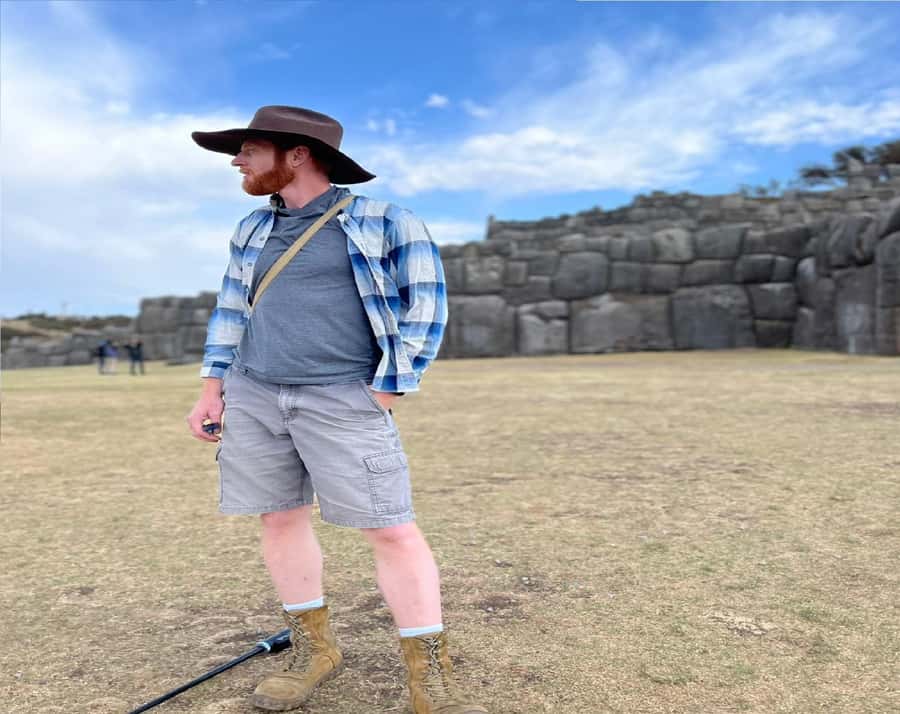
- Sacsayhuaman is the headline stop: See enormous fitted stones, some described as weighing more than 100 tons.
- Qoricancha adds essential context: The former Temple of the Sun shows how important religion was to the Inca state.
- The morning tour finishes around 2:30 pm: That leaves time for lunch and a relaxed afternoon in central Cusco.
- The afternoon option begins at noon: You meet at the cathedral entrance and finish around 6:00 to 6:30 pm.
- Tickets cost extra: Plan for 15 soles for Qoricancha, 70 soles for the archaeological zones, and 50 soles for the cathedral if you enter.
- Central hotel pickup is limited: Pickup is offered from selected hotels close to Cusco’s main square.
Why this six-hour Cusco tour works well
I see this as a practical orientation tour rather than a slow, intimate walk through the city. Cusco’s four major Inca sites sit outside the compact center, so reaching them by tourist vehicle saves your legs and gives you a useful overview in half a day.
The route combines two different kinds of places. Qoricancha sits in the city and helps explain Inca religion and Spanish colonial history. The other four sites occupy the hills above Cusco, where you can better appreciate the defensive, ceremonial, and water-related sides of Inca planning.
The price is appealing for budget-conscious visitors. At $23 per person, you receive transportation, a professional accredited guide, hotel pickup on the available morning options, and drop-off near Plaza de Armas. You still need to budget for admission tickets, so the real cost is higher than the headline price.
I would use this tour early in a Cusco stay, especially if you have only a day or two before Machu Picchu. It gives you names, places, and basic context that make later visits easier to understand. It also avoids spending your first day trying to arrange taxis to four separate sites.
More City Tours in Cusco
- Cusco: Half-Day City Tour with Sacsayhuaman and Q’enco
★ 4.6 · 1,129 reviews - City Tour Cusco Qoricancha Sacsayhuaman y Tambomachay
★ 4.7 · 617 reviews - Cusco: Sightseeing Tour of the City on an Open-Top Bus
★ 4.0 · 481 reviews
Qoricancha, where Inca religion met Spanish power
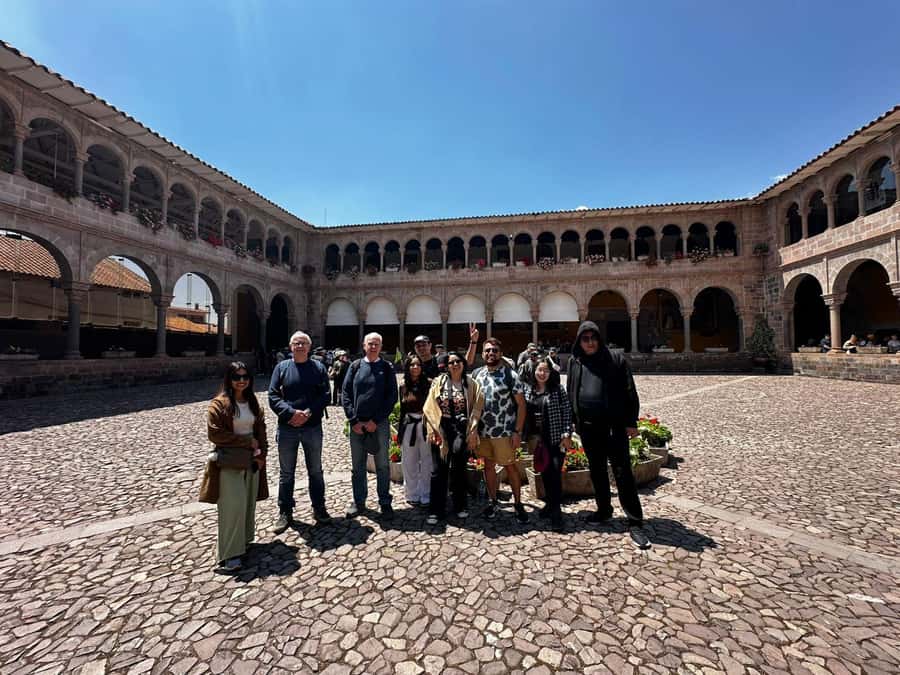
The tour begins at Qoricancha, also called the Temple of the Sun. The morning options visit around 8:55 am, while the afternoon schedule includes it after the noon meeting at the cathedral entrance.
Qoricancha was the most important Inca religious building in Cusco. The name refers to a gold-enclosed temple, and its importance came from more than decoration. This was a central place for worship and state ceremony, tied to the Sun God and the authority of the Inca ruler.
You should pay close attention to how the site brings together Inca stonework and later Spanish construction. Qoricancha is not simply an Inca ruin preserved in isolation. It is a place where the colonial city was built over and around an earlier sacred center.
The guided visit is included in morning options 1 and 2, but the 15-sol entrance fee is not. Confirm the exact access arrangements when booking, since the tour information gives slightly different descriptions for the city-center stops.
Sacsayhuaman and the stones that define Cusco
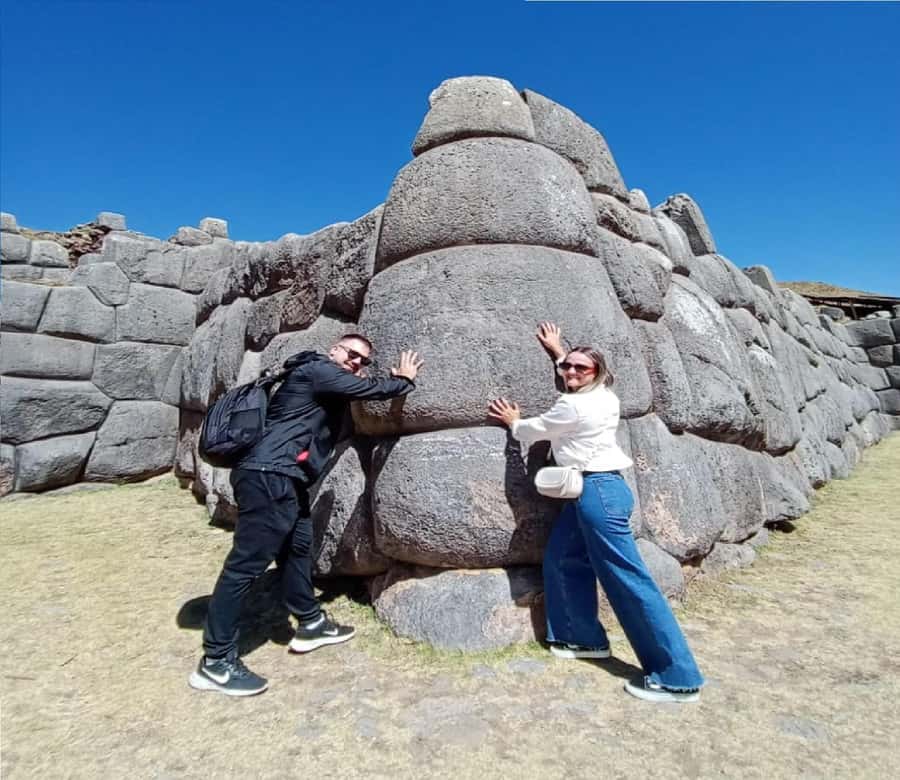
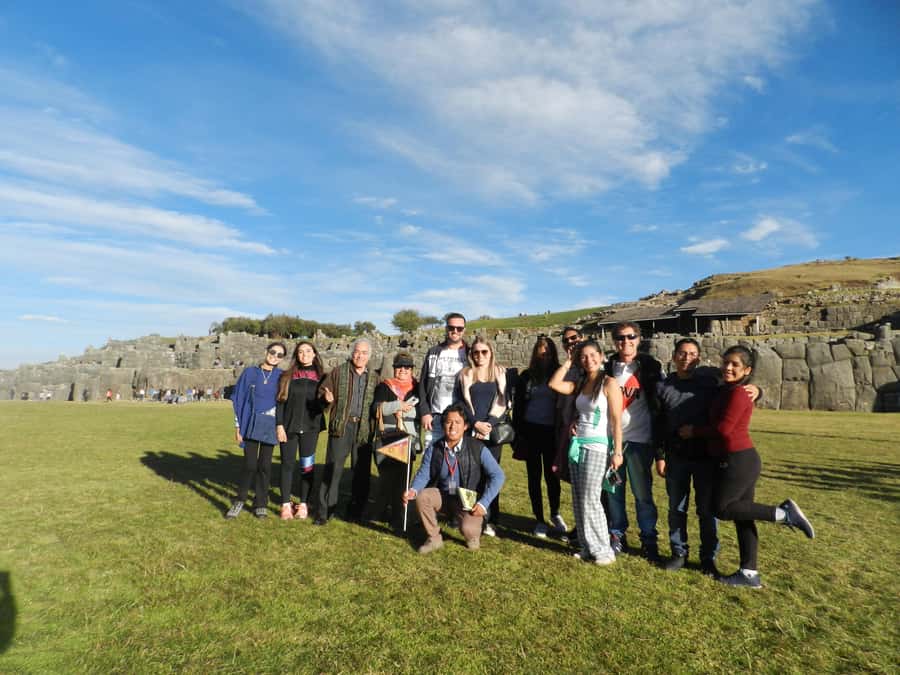
From Qoricancha, the vehicle heads uphill to Sacsayhuaman, the largest archaeological site within Cusco itself. This is usually the tour’s big visual moment.
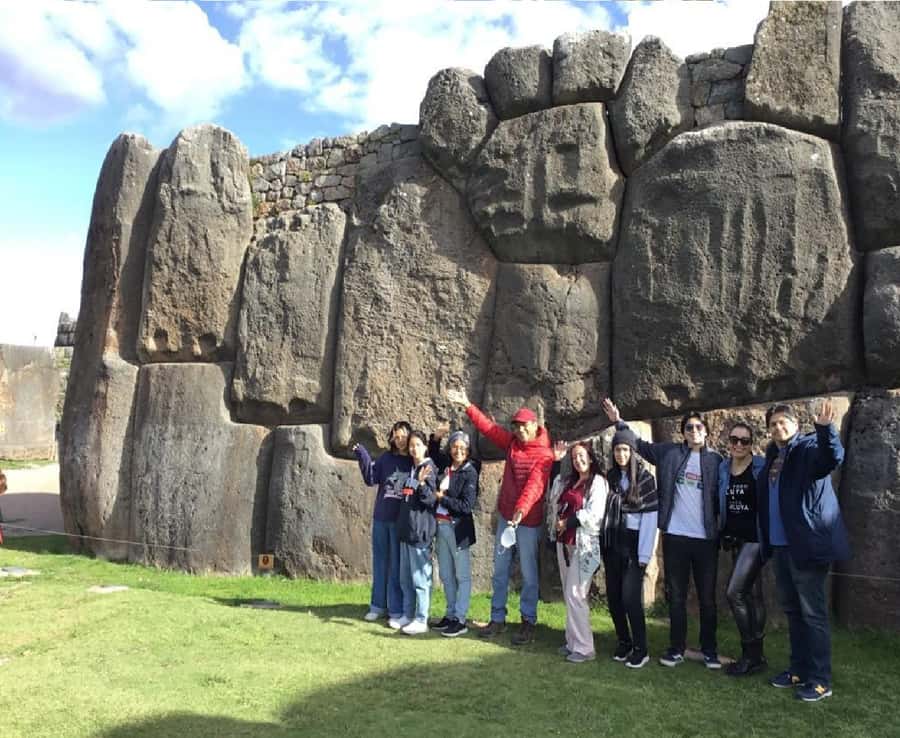
The site is often described as the head of a puma, reflecting Cusco’s traditional puma-shaped plan. The enormous zigzag walls make that idea easier to understand, even if you need a guide to explain the symbolism and purpose.
The stones are the real show. Some blocks are described as reaching four to six meters high, while others weigh more than 100 tons. They fit together with remarkable precision, with irregular edges that create strong walls without ordinary mortar joints.
Your guide should help you separate solid evidence from popular Inca stories. That matters here, because Sacsayhuaman attracts plenty of dramatic claims about construction. The best explanations cover military use, ceremony, engineering, and the site’s role in conflicts involving the Spanish.
Allow about 1.5 hours for this stop. Wear shoes with a firm grip, and bring water and sun protection. The open setting can feel exposed, and the altitude makes uphill walking harder than it may look on a map.
Qenqo, a ceremonial site with a mysterious interior
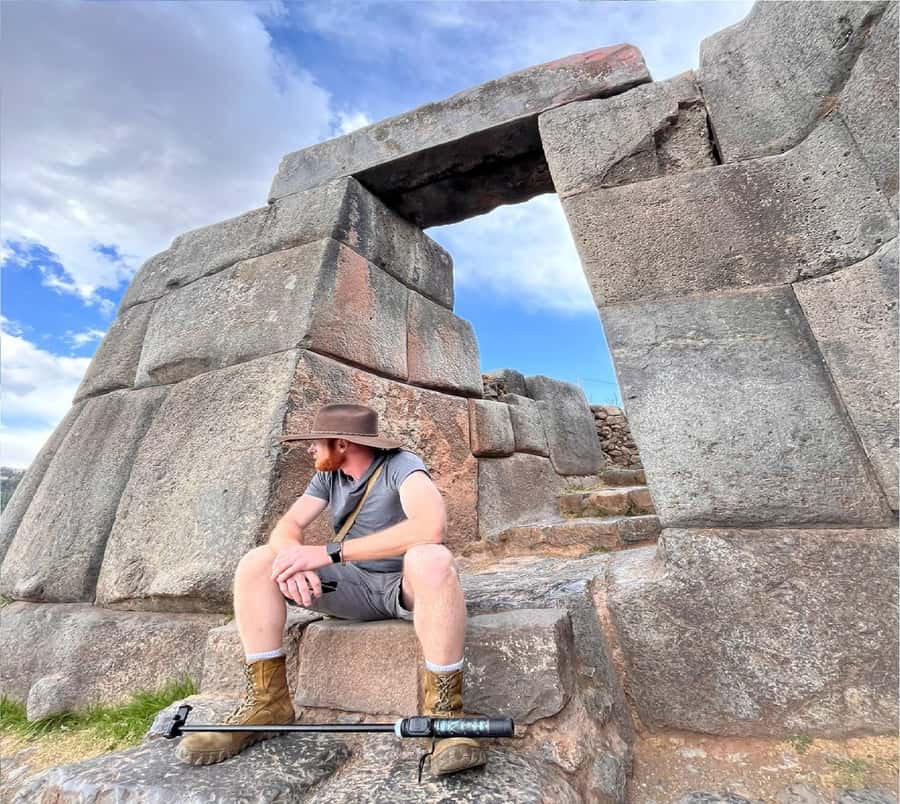
Qenqo is a very different experience. Instead of massive open walls, you find carved rock, narrow passages, and a ceremonial setting linked with ritual activity.
One description presents Qenqo as a place where sacrifices were made to the Sun God. Another connects it with mummification. The exact purpose and meaning of the site are not fully certain, which is why a good guide adds real value here.
I like this stop because it encourages questions rather than offering a single neat answer. Your guide can explain what is known, what is inferred, and how later stories may have shaped the way the site is presented today.
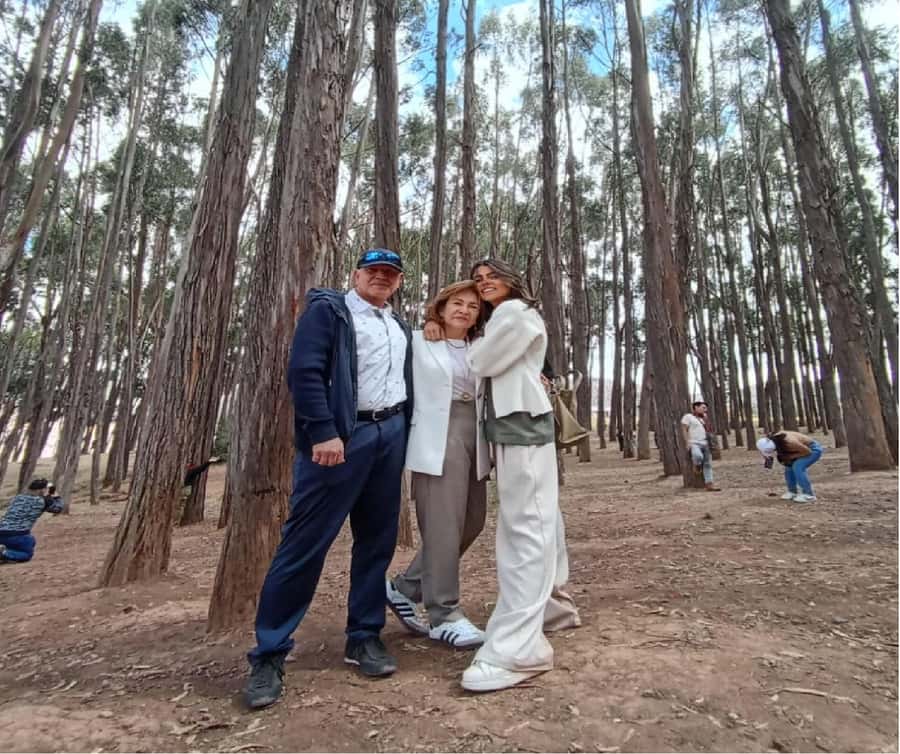
The tour also includes the Qenqo eucalyptus forest, a useful pause after the stone complex. It is listed as a photography stop, and you should have time to take pictures. Still, do not expect a long forest walk. The focus remains on seeing several sites in one outing.
Qenqo is another stop where comfortable shoes matter. The visit includes uneven ground and stone surfaces, so it is not ideal for anyone who needs completely flat access.
More Historical Tours in Cusco
- Machu Picchu Private Archaeological and Historical Guided Tour
★ 5.0 · 86 reviews - 6-Day Cultural Tour to Machu Picchu
★ 5.0 · 76 reviews - Cusco: Historic Walking Tour with Pisco Sour and Music Show
★ 4.6 · 65 reviews - Pisco Sour Secrets: Hands-On Mixology in Historic Cusco
★ 4.5 · 50 reviews
Puka Pukara and the road into Cusco
Puka Pukara is often translated as the Red Fortress. Its name refers to the reddish color of the stone, and its position gives you wide views across the Andean surroundings.
The site is commonly explained as a lookout or control point above Cusco. It helped monitor movement toward the Inca capital, although your guide may also explain its links with the larger network of roads and nearby Tambomachay.
I find Puka Pukara valuable because it shows that Inca sites were not isolated monuments. Their locations mattered. From here, you can think about movement, access, and the way the Inca state managed people and goods across difficult terrain.
This is a shorter-feeling stop for many people because the views do part of the work. Bring your camera, but also listen for the practical details. The site’s position is as important as its remaining walls.
The open location can bring sun, wind, and sudden rain. Pack sunscreen and rain gear even on a clear morning. Cusco weather can change quickly, and the tour runs for six hours.
Tambomachay and the Inca worship of water
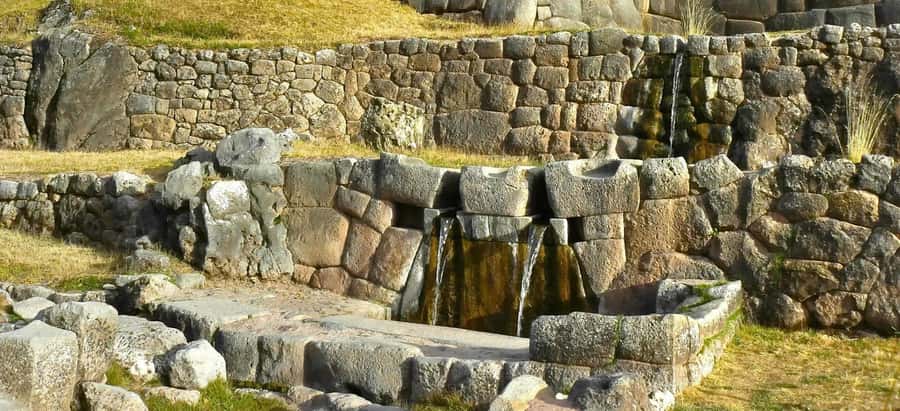
Tambomachay is the last archaeological stop. It is known as the Temple of Water, with channels and fountains fed by an Inca water system.
The site feels more peaceful than Sacsayhuaman, but it is no less revealing. Water had practical and sacred importance in Inca culture, and Tambomachay shows how engineering and ceremony could share the same place.
Look closely at the stone channels and the way water moves through the fountains. Your guide can explain the site’s ceremonial role and why water mattered to the people who built and used it.
Tambomachay is near Puka Pukara, so the two stops work well together. One focuses on watching the route into Cusco, while the other focuses on water and ritual. By the end of the circuit, you have seen military, ceremonial, religious, and hydraulic examples of Inca design.
The tour then returns to central Cusco. Morning departures finish around 2:30 pm, with drop-off near Plaza de Armas on Calle Plateros. The afternoon option ends around 6:00 to 6:30 pm near the main square.
Morning or afternoon: choose based on your plans
The morning option is the better fit for most people. Pickup runs roughly from 8:35 to 9:00 am at selected central hotels, and one version begins at Qoricancha at 8:55 am. You finish around 2:30 pm, leaving time for lunch, a museum, or a quiet rest.
That early finish also helps if you are still adapting to Cusco’s elevation. You can see the main sites without giving up the entire day, then slow down afterward.
The afternoon option begins at the entrance to Cusco Cathedral between 11:50 am and noon. It finishes in the early evening, so it suits you if you want a free morning or have already spent time exploring central Cusco.
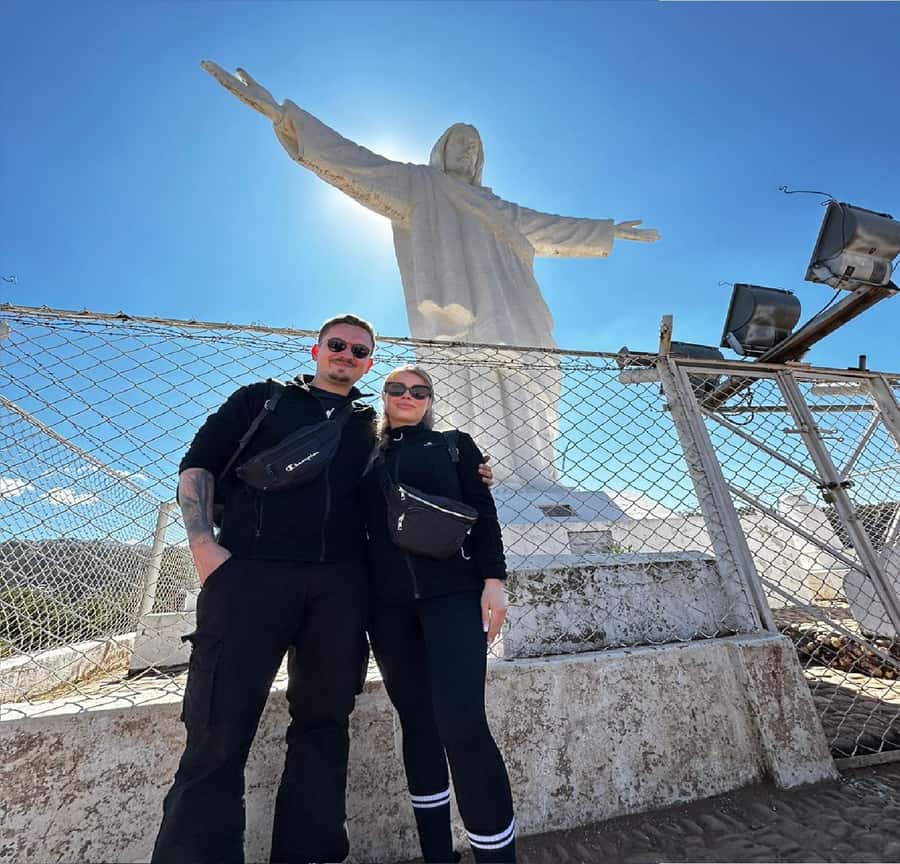
The options are not identical. Cathedral access is listed for options 2 and 3, while the first special option includes photography experiences and the Cristo Blanco viewpoint. Cathedral entry costs 50 soles, and availability must be requested. Ask exactly what your selected departure includes before paying.
Guides make the difference here
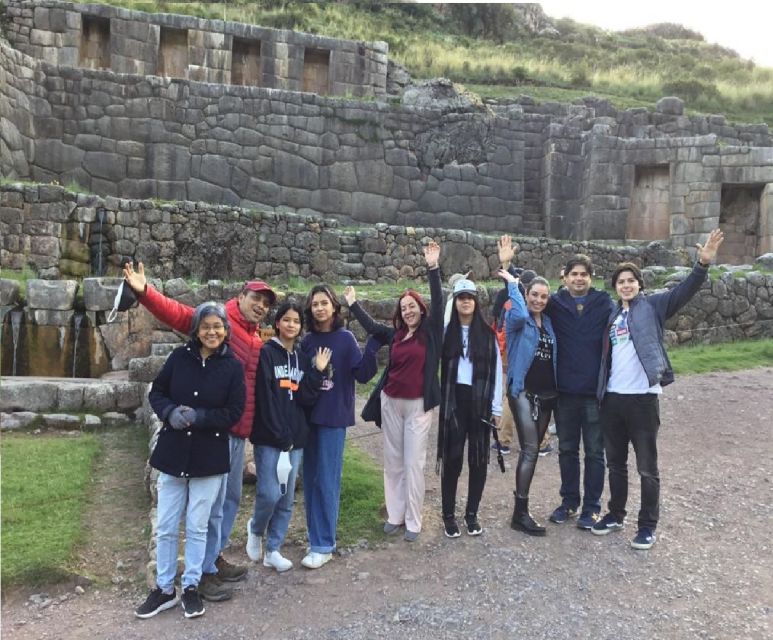
This tour covers a lot of ground, so the guide matters more than fancy transport or a long stop at any one ruin. The strongest guide reports name Luis, Alfredo, Romulo, and Hyame.
Luis is noted for explaining details in both English and Spanish, checking that people understood, and allowing time for photographs. Alfredo is praised for switching smoothly between English and Spanish. Hyame is singled out for helping a visitor see several sites during a short Cusco stay, while Romulo is credited with strong explanations and helpful support.
You should expect a bilingual tour in English or Spanish, not a private lecture tailored only to your interests. That format works well if you want reliable background and a chance to ask questions. If you prefer spending twenty minutes alone at one wall or photographing every angle, the fixed schedule may feel brisk.
Ask questions when something sounds too certain. Qenqo in particular has areas of debate, and the best guide will distinguish archaeology from legend. Several guides are praised for using facts while also explaining myths, which is exactly the balance I want at these sites.
What the price includes, and what it does not
The $23 base price covers the main service:
- Tourist transportation
- Professional accredited guide
- Hotel pickup for the available central hotels
- Guided visits to the listed sites
- Drop-off near Plaza de Armas
- Ongoing assistance during the tour
The admission fees are separate. The listed prices are 15 soles for Qoricancha, 70 soles for the archaeological zones, and 50 soles for Cusco Cathedral. The archaeological access requires the Cusco Tourist Card, available in person with your passport. Children under nine can receive the card free with a passport.
That ticket policy is the most important budget detail. The tour remains good value if you want transport and explanations, but it is not a $23 all-inclusive visit. Bring cash and your passport or identification, and leave room in your budget for the entrance fees.
The cathedral is not automatic. If you want to enter, ask about availability. The tour can still be worthwhile without it because the four hilltop sites and Qoricancha are the main historical focus.
Practical advice for altitude, weather, and walking
Bring comfortable shoes, water, sunscreen, a camera, rain gear, and cash. That list is basic but accurate. You will visit exposed hilltop sites, walk over uneven surfaces, and spend enough time outside for sun or rain to become uncomfortable.
Cusco’s altitude can make a modest walk feel demanding. I would not rush between stops, and I would use the vehicle time to rest. The route is useful precisely because it reduces long walks between distant sites, but it does not remove the need to walk around each complex.
Hotel pickup is offered from many named properties near central Cusco, including hotels around Plaza de Armas, San Pedro, San Blas, and Qoricancha. If your hotel is outside the pickup area, you may need to reach the meeting point yourself. Wait in the hotel lobby if pickup applies.
The tour is not suitable for people over 95 according to the activity rules. Bikes, alcohol, drugs, explosives, and alcoholic drinks in the vehicle are not allowed.
Free cancellation is available up to 24 hours before departure, and you can reserve now and pay later. Those terms are useful if your Cusco plans depend on weather, altitude, or a changing Machu Picchu schedule.
Who should book this Cusco ruins tour?
I would recommend it to first-time visitors, short-stay visitors, and anyone who wants a clear introduction before exploring Peru independently. It is especially useful if you have only a few hours in Cusco before a trek, as the route reaches sites that would be hard to visit efficiently on foot.
Families with older children may also like the variety. The tour moves from giant stones to carved ceremonial rock, forest photographs, high viewpoints, and water fountains. Very young children or anyone uncomfortable with uneven ground may find the six-hour outing tiring.
You should think twice if you want a private, slow-paced visit. The schedule gives each place meaningful time, but it also tries to fit five major stops into one day. The benefit is range. The tradeoff is that you will not study every site in great depth.
Should you book it?
Book this tour if you want maximum coverage for a modest base price and prefer having an English or Spanish-speaking guide explain the sites as you go. Sacsayhuaman alone is worth seeing, and adding Qoricancha, Qenqo, Puka Pukara, and Tambomachay gives you a strong first picture of Inca Cusco.
Choose the morning departure if you want an early finish and time to recover from the altitude. Choose the afternoon option if your morning is free and you prefer starting near the cathedral.
Just calculate the admission fees first, carry your passport, and confirm which version includes the cathedral, Cristo Blanco, and photography stops. With those details clear, this is a useful, efficient introduction to the monuments above Cusco.
FAQ
How long does the Cusco city tour last?
The tour lasts approximately six hours. Morning options finish around 2:30 pm, while the afternoon option ends between 6:00 and 6:30 pm.
Which sites are included?
The route includes Qoricancha, Sacsayhuaman, Qenqo, Puka Pukara, and Tambomachay. Some options also include Cusco Cathedral, the eucalyptus forest, photography stops, or Cristo Blanco viewpoint.
Is hotel pickup included?
Hotel pickup is included for the available morning options from selected hotels close to Cusco’s main square. You should wait in your hotel lobby if pickup applies to your accommodation.
How much do the entrance tickets cost?
Qoricancha costs 15 soles, the archaeological zones cost 70 soles, and Cusco Cathedral costs 50 soles. These fees are not included in the tour price.
Do I need a passport?
Yes. Access to the Inca sites requires the Cusco Tourist Card, which is available only in person and requires your passport. Children under nine need a passport to receive the card free.
What languages are available?
The tour offers live guides in English and Spanish.
Where does the tour end?
Drop-off is near Cusco’s main square, usually at Plaza de Armas or on Calle Plateros.
More Ancient Sites near Cusco
- Machu Picchu: historical and photographic guided tour
★ 4.9 · 27 reviews - Cusco: Full-Day Sacred Valley History Tour
★ 4.6 · 14 reviews - Historic/music Cusco FreeWalkingTour “free drink” Group Tour
★ 4.9 · 11 reviews - Cusco: Half-Day Historic City Tour
★ 4.6 · 11 reviews
Recently added around Cusco
- Palcoyo colored mountain hike + stone forests★ 4.6 · 3 reviews
- Maras Moray★ 5.0 · 3 reviews
- Full-Day Condor Viewpoint & Inca Sites Tour★ 5.0 · 3 reviews
- From Cusco: Vinicunca Mountain of Colors Excursion + Ticket★ 5.0 · 3 reviews
- Excursion Cusco – Puno – Titicaca Observatory Train★ 5.0 · 3 reviews
- Machu Picchu: Private Tour Guide Service for up to 15 people★ 4.5 · 3 reviews
- Cusco: Chonta Canyon and Condor Flight Tour with Lunch★ 5.0 · 3 reviews
- Machu Picchu: 1-day tour by Vistadome Observatory train★ 5.0 · 3 reviews
Cusco Tours, compared.
Humantay Lake Tour with Breakfast and Buffet Lunch
Read our review →
Sacred Valley & Maras Salt Mines Tour with Lunch
Read our review →
Moray, Maras Salt Mines & Chinchero Weavers Tour
Read our review →
Half-Day City Tour with Sacsayhuaman and Q’enco
Read our review →
Sacred Valley, Pisac, Ollantaytambo, Salt Mines Moray
Read our review →
Browse the lists this tour appears in