
Reviewed · CUSCO TOURS
Cusco: City Tour | Half-Day Tour to 4 Archaeological Sites
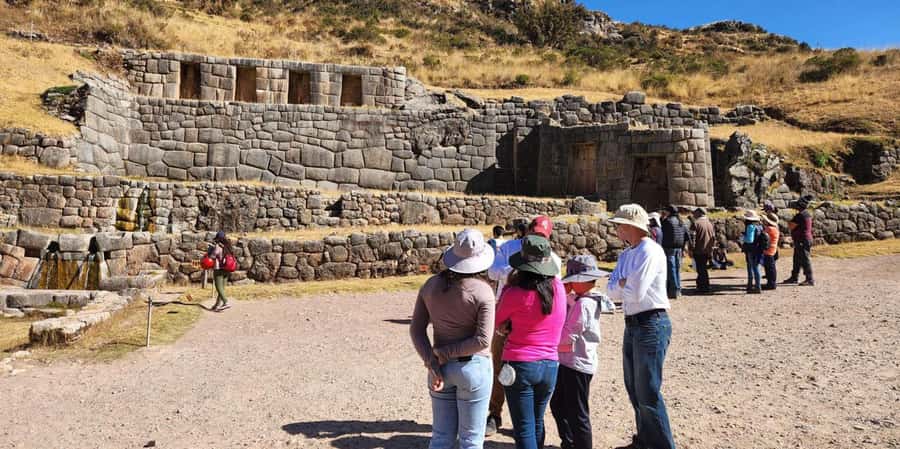
Cusco’s best first look may be this quick sweep from the Temple of the Sun to the huge stones of Sacsayhuamán and the water channels of Tambomachay. In four hours, you move from the colonial center into the hills above town, seeing how Inca religion, military power, ceremony, and water worship fit together.
I like the hotel pickup and the smart mix of walking and transport. I also like the guides’ personal touch. Luis, Maribel, Fabrisio, Joel, Yenny, and others have earned praise for clear explanations, patience, humor, and making sure English speakers are not left behind.
The main caution is timing. A bilingual group can take longer, and one departure ran five and a half hours instead of four after an unplanned textile-market stop. Entry fees are extra, some sites can feel rushed, and you should carry cash for tickets.
Key points to know before you book
- Five major Inca-era stops: See Qoricancha, Sacsayhuamán, Qenqo, Puca Pucara, and Tambomachay in one half-day outing.
- Strong guide service: Luis is often singled out for his history knowledge and friendly manner, while Maribel, Fabrisio, Joel, Yenny, and other guides have also received high marks.
- Hotel pickup in central Cusco: Pickup is included from hotels in Cusco Centro Historico.
- Tickets cost extra: Qoricancha costs 20 soles, while the Cusco Tourist Ticket costs 70 to 120 soles depending on the ticket type.
- English and Spanish are used together: The guide explains the same material in both languages, which is useful but can make the tour feel slower.
- Good afternoon option: A 2 p.m. start can finish with a view over Cusco around dinner time, though bring a warm layer.
Why this half-day tour works as a Cusco introduction
Cusco is not just a base for Machu Picchu. The city itself was the center of the Inca world, and ruins sit right beside colonial churches, markets, and modern streets. This tour gives you a quick framework for understanding the place before you tackle longer trips into the Sacred Valley or the mountains.
The route covers the city center first, then climbs into the surrounding hills. That change matters. At Qoricancha, you see Inca religion layered with Spanish colonial rule. At Sacsayhuamán, you confront the scale of Inca stonework. At Qenqo, Puca Pucara, and Tambomachay, the sites become smaller and more specialized.
I would not treat this as a slow archaeological study. It is a high-value orientation tour. You see a lot, hear the main ideas, and get enough visual context to return later to the places that catch your interest.
The tour is sold as four hours, but actual timing can vary. Pickup may take longer than expected, and a bilingual group needs the guide to repeat explanations. Most departures are described as well organized and well paced, but one outing became noticeably longer after an added textile stop. If you have a dinner reservation, train, or evening performance, leave a buffer.
More City Tours in Cusco
- Cusco: Half-Day City Tour with Sacsayhuaman and Q’enco
★ 4.6 · 1,129 reviews - City Tour Cusco Qoricancha Sacsayhuaman y Tambomachay
★ 4.7 · 617 reviews - Cusco: Sightseeing Tour of the City on an Open-Top Bus
★ 4.0 · 481 reviews
Qoricancha, where Inca gold met a Spanish church
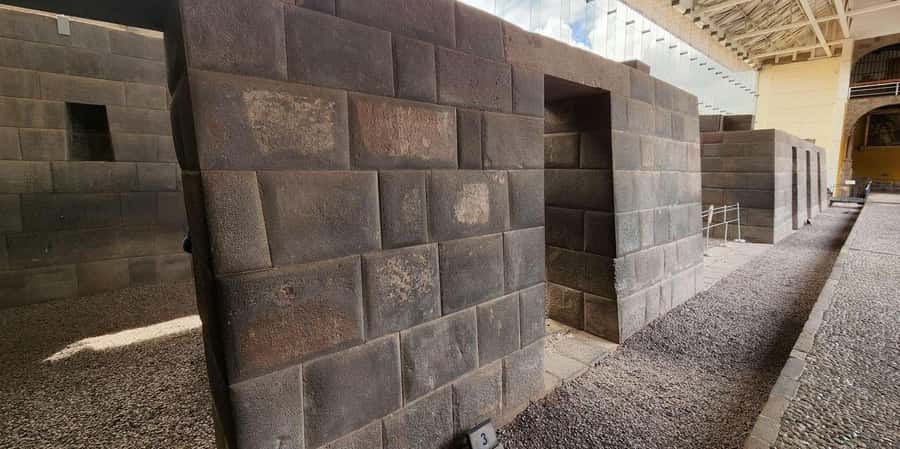
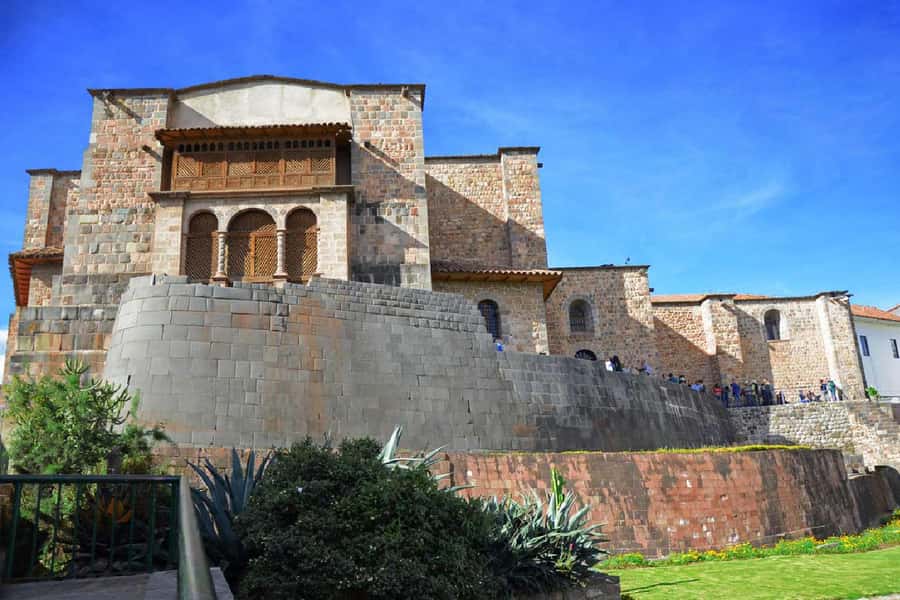
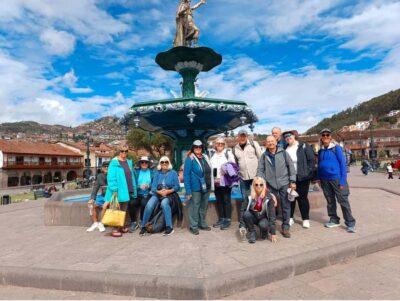
The tour begins around Cusco’s main square, a useful place to notice the city’s Andean and Spanish layers. The first main stop is Qoricancha, the Inca Temple of the Sun, now combined with the Santo Domingo church and convent.
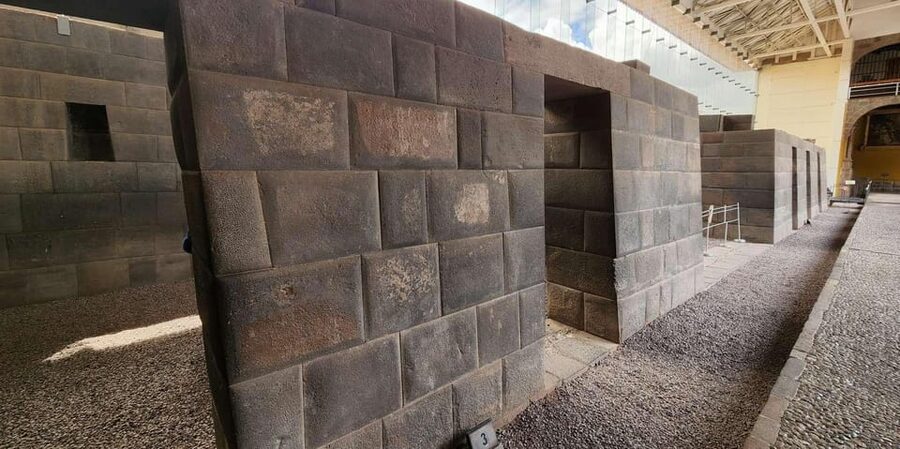
Qoricancha was the most important Inca religious center in Cusco. Inside, your guide explains the temple layout, the different sacred spaces, and the fine stone construction. The building is especially useful for showing how Spanish colonists built over an existing Inca center rather than replacing every trace of it.
You may also see paintings from the Cusquenian School inside the colonial section. This gives the visit a wider frame than a simple ruin tour. You are looking at Inca engineering, Spanish religious power, and colonial art in one place.
The entrance fee is not included. Plan on 20 soles for Qoricancha, paid separately. The experience description also lists an optional visit to Cusco Cathedral, but it does not give a price or confirm that every departure includes it, so ask your guide before counting on the cathedral.
One small point is worth knowing: the route begins near the main square, but the main Plaza de Armas is not necessarily presented as a formal sightseeing stop. If you want a full explanation of the square and cathedral, arrange separate time for them.
Sacsayhuamán and the scale of Inca stonework
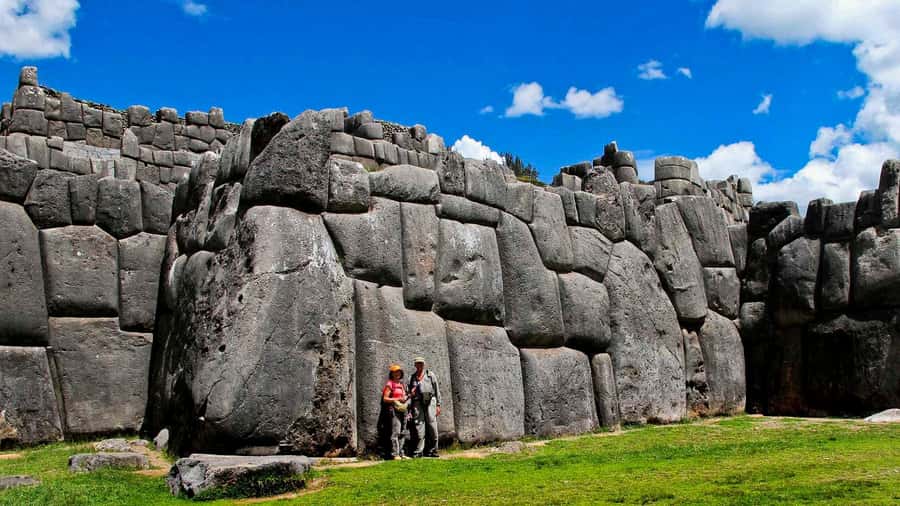
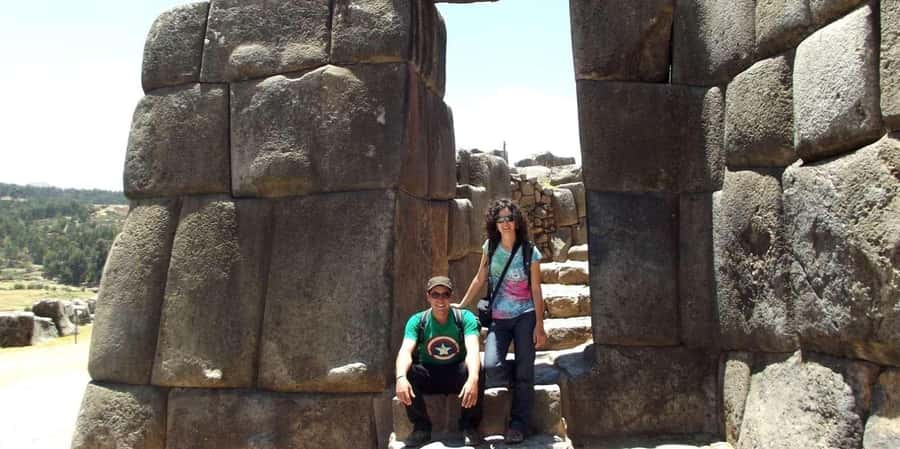
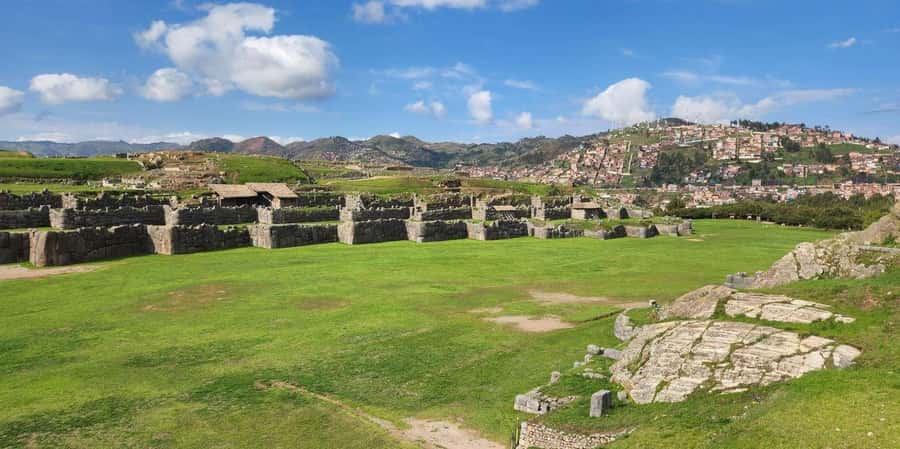
From the center, the group travels to the Sacsayhuamán Archaeological Park. This is the stop that gives the tour its biggest visual impact. Massive stones fit together in tight, irregular lines, forming walls and platforms above Cusco.
Some blocks are described as roughly 9 meters high and weighing more than 350 tons. The exact figures are less important than the physical impression. You can walk beside the stonework and see how carefully the joints were shaped, with no easy explanation for the labor and planning involved.
Your guide will connect the site to Inca ceremonial and military life. Sacsayhuamán is also the setting for Inti Raymi, the Festival of the Sun, held each June 24. That living connection helps the site feel less like a silent ruin and more like part of an ongoing cultural calendar.
This stop needs enough time. One outing reached Sacsayhuamán with only about 30 minutes before closing after an unplanned textile-market visit, leaving too little room to explore. That is an exception rather than the stated plan, but it shows why you should ask at the start if the schedule has changed.
Wear shoes you can walk in comfortably. The site includes platforms, walls, open areas, and stone steps. You may find crowds here, especially at popular times, so the guide’s ability to keep the group together matters.
Qenqo, a compact ceremonial site with a mysterious feel
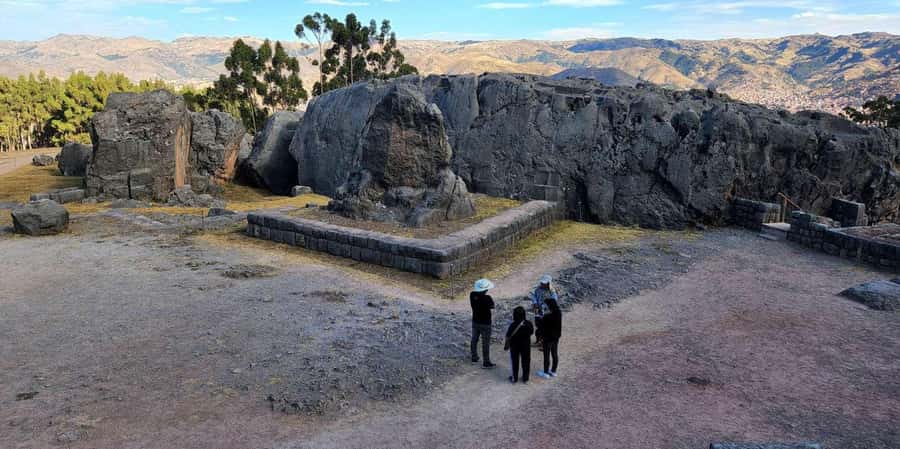
Qenqo is a different experience from Sacsayhuamán. Instead of huge defensive walls, you see rocky outcrops, carved surfaces, paths, and enclosed spaces linked to ceremony and religion.
The site is described as an amphitheater and ceremonial center where sacrifices took place. Some interpretations of Inca sites are debated, so listen for what is established and what remains theory. One useful criticism of the guiding style is that some explanations can be delivered with too much certainty. A careful guide should separate archaeological evidence from later interpretation.
Qenqo works well on a short tour because it does not require a long walk to make an impression. The rock formations invite close attention, and the narrow routes add a sense of discovery without requiring a major hike.
Still, this is a place where the guide makes a large difference. Without explanation, you may see stone, shadows, and pathways without knowing how they may have been used. With a good guide, the site becomes a lesson in ritual space and the way the Incas shaped natural rock for religious purposes.
more Cusco days to weigh up
- Cusco: Half-Day City Tour
★ 4.2 · 129 reviews - From Cusco: Moray, Maras Salt Mines & Chinchero Weavers Half-Day
★ 5.0 · 126 reviews - Cusco: Half-Day Horseback Riding at Devil’s Balcony
★ 4.9 · 89 reviews - Sacsayhuaman Temple, Tambomachay and Puca Pucara Half-Day Tour
★ 4.5 · 59 reviews
Puca Pucara, the lookout above the old approach to Cusco
Puca Pucara was an Inca surveillance post and an entry-control point for the capital. Its name is often translated as Red Fortress, and its elevated position helps explain its role.
The remains include terraces, walls, and stone steps. Compared with Sacsayhuamán, the site is more restrained, but its value is practical. You begin to see how the Incas organized movement around Cusco, rather than viewing each ruin as an isolated monument.
This stop is usually brief. That is appropriate for a half-day route, since the main lesson is the site’s position and function. Take a moment to look outward from the walls and consider the approach into the imperial capital.
You may also encounter vendors near the route. Some visitors enjoy buying hot tea or small items, while others prefer to keep the stop focused. Bring small cash if you want refreshments, but do not feel obliged to buy anything. One useful boundary to set at the beginning is whether you want shopping stops included.
Tambomachay and the sound of flowing water
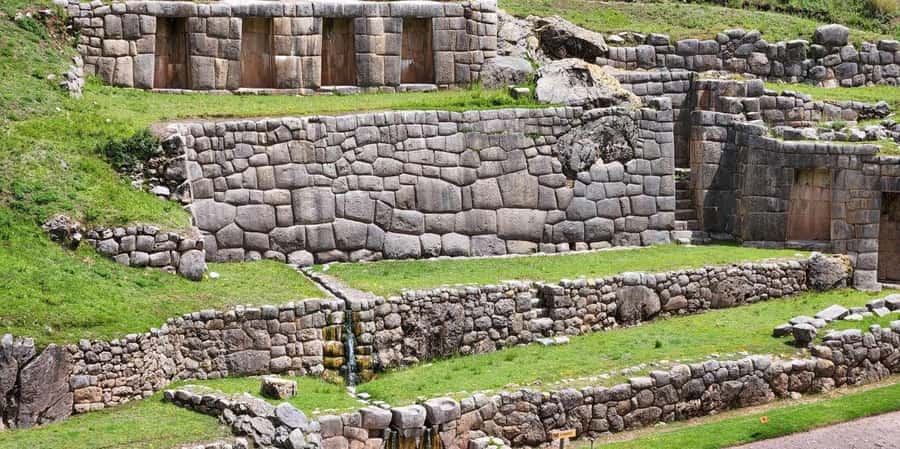
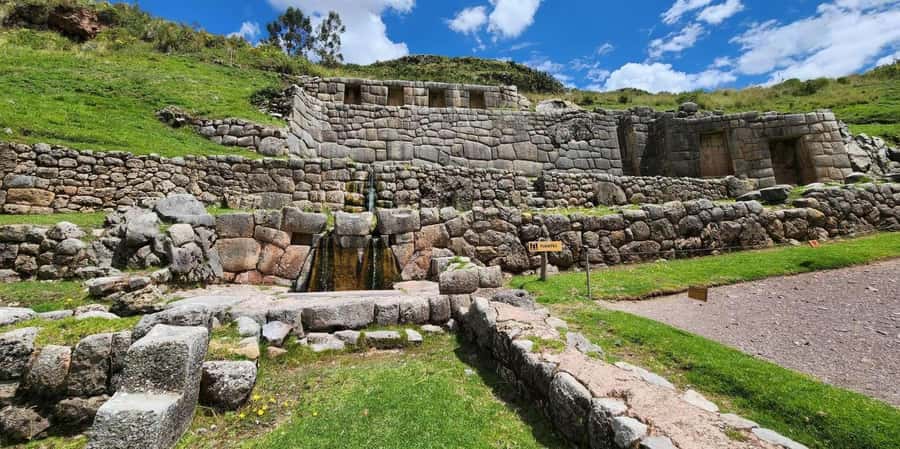
Tambomachay is the final archaeological stop and one of the most pleasant. It is associated with water worship, leisure, and the idea of eternal youth. Stone channels and fountains still give the place a sense of movement and purpose.
After several walls and rocky ceremonial spaces, the water features offer a calmer finish. Your guide can explain how water was treated as a sacred force and how the site fitted into the wider network around Cusco.
Do not rush this stop. The fountains are not enormous, but their construction is precise, and the quiet flow helps you notice details that can be missed at larger sites. The surrounding hills also provide a different view from the city-center monuments.
One guide recommended by experience is the final stop for its view over Cusco. If you take the 2 p.m. departure, the return can coincide with evening light and dinner time. The tradeoff is cooler air near the end, so pack layers even if Cusco feels mild when you leave your hotel.
What the bilingual format feels like in practice
The guide speaks in English and Spanish, taking turns so both parts of the group receive the same core explanation. Several guides have handled this well, including Luis, who is praised for keeping English speakers included, and Maribel, who is described as strong on Cusco history and local culture.
For many people, this arrangement works perfectly well. The guide can answer questions in both languages, and the group shares the same stops and schedule. English speakers who are the only non-Spanish participants have still been looked after carefully on several departures.
The downside is simple: every explanation takes longer. If the guide speaks for ten minutes in English and then repeats the same material in Spanish, the total time adds up. Some people find the rhythm perfectly manageable, while others feel the stops become rushed.
I would book this format if price and route matter more to you than a private, unhurried lecture. If you want every question explored at length, a private English-only tour may suit you better, though it will likely cost more. At the start, tell the guide which language you need and ask how the group will be divided.
Tickets, transport, timing, and the real cost
The advertised price is $29 per person, which is low for hotel pickup, transport, a live guide, and five important sites. The value is strong if you want a broad first look at Cusco without arranging taxis between the ruins.
The entry fees change the calculation. Qoricancha costs 20 soles, and the Cusco Tourist Ticket costs 70 to 120 soles. A full ticket bought near the Plaza de Armas may pay for itself on this route and can also cover additional museums and sites in the Sacred Valley, depending on the ticket type.
Entry is not included, and cash is important. One practical warning is that site tickets may be cash only, so buy soles before the pickup or visit the ticket office near the central plaza ahead of time. If you already own the required tourist ticket, bring it with you.
Transport is included, and the mix of vehicle time and walking makes sense for the spread-out sites. Pickup is available from hotels in Cusco Centro Historico. The main weakness is that collection can be chaotic or late at the beginning, and one person felt the transport process needed improvement.
The listed duration is four hours. In normal conditions, that is enough for an efficient route, not a leisurely one. Rain can alter the order, but a guide may rearrange the visit so you still get time at the sites. Afternoon weather can also bring cold or rain, so a light waterproof layer is sensible.
Guide quality is the tour’s biggest strength
The most important part of this experience is not the vehicle. It is the person explaining what you are seeing. The strongest guide names that come through repeatedly are Luis, Maribel, Fabrisio, Joel, Yenny, and Jessica, though your guide will depend on the departure.
Luis is praised for his history book about the Incas and the region, his humor, and his ability to include English speakers in a mostly Spanish-speaking group. Maribel is noted for her command of Cusco history and local culture. Fabrisio is described as helpful and well informed, while Joel is praised for answering questions and keeping the group engaged.
That does not mean every guide will have the same style. Some may speak with more certainty than the evidence allows. One practical improvement would be clearer wording around theory, especially at ritual sites such as Qenqo. You can help by asking which parts are confirmed and which are scholarly interpretations.
Some guides also take many photographs or encourage shopping stops. If you prefer to focus on the ruins, say so politely. The tour is inexpensive, but your time at Sacsayhuamán and the other sites is more valuable than an unwanted retail stop.
Who should book this Cusco city tour?
I would recommend it to first-time visitors who want to see the major ruins quickly, families and couples who prefer transport between sites, and anyone with only a few days in Cusco. It also makes a useful first outing before a Sacred Valley or Machu Picchu trip because the guide introduces the basic themes of Inca religion, stonework, water, and imperial control.
It suits you especially well if you enjoy getting a lot from a half-day and do not mind sharing a bilingual group. The price is hard to beat once you understand the extra ticket costs.
I would hesitate if you need a strict four-hour finish, dislike repeated explanations, or want long quiet periods at each ruin. I would also avoid booking it immediately before a fixed evening commitment. The route is busy enough that pickup delays, traffic, weather, or an added stop can push the return time later.
Should you book it?
Yes, if you want an affordable and well-organized overview of Cusco’s key archaeological sites. The combination of Qoricancha, Sacsayhuamán, Qenqo, Puca Pucara, and Tambomachay gives you a useful picture of the Inca capital in a single outing.
Book it with three conditions in mind: buy or budget for the separate tickets, carry cash, and leave extra time after the stated four hours. Choose an afternoon departure for the city view and dinner timing, but bring layers. If you want a slower, more precise archaeological discussion, spend more on a private tour. For most visitors seeking a strong first orientation, this is a sensible buy.
FAQ
How long does the Cusco City Tour last?
The stated duration is four hours. Actual timing can vary because of hotel pickups, bilingual explanations, weather, traffic, and any added stops.
Which archaeological sites are included?
The route includes Qoricancha, Sacsayhuamán, Qenqo, Puca Pucara, and Tambomachay.
Is hotel pickup included?
Yes. Pickup is included from hotels in Cusco Centro Historico.
What languages does the guide speak?
The tour is conducted in English and Spanish by a live bilingual guide.
Are entrance fees included in the price?
No. Qoricancha costs 20 soles, and the Cusco Tourist Ticket costs 70 to 120 soles depending on the ticket type.
Can I use a tourist ticket I already purchased?
Yes. You can show a tourist ticket you already bought for another tour, as long as it covers the sites on this route.
Is Cusco Cathedral included?
A visit to the cathedral is optional, but the available information does not state its entrance price or confirm that it is included on every departure.
What should I bring for the tour?
Bring cash for entrance tickets, comfortable walking shoes, and layers. Afternoon outings can become cold toward the end, and rain is possible.
Can I cancel the booking?
You can cancel up to 24 hours in advance for a full refund. Reserve now and pay later is also available.
Recently added around Cusco
- Palcoyo colored mountain hike + stone forests★ 4.6 · 3 reviews
- Maras Moray★ 5.0 · 3 reviews
- From Cusco: Vinicunca Mountain of Colors Excursion + Ticket★ 5.0 · 3 reviews
- Full-Day Condor Viewpoint & Inca Sites Tour★ 5.0 · 3 reviews
- Excursion Cusco – Puno – Titicaca Observatory Train★ 5.0 · 3 reviews
- Machu Picchu: Private Tour Guide Service for up to 15 people★ 4.5 · 3 reviews
- Machu Picchu: 1-day tour by Vistadome Observatory train★ 5.0 · 3 reviews
- Cusco: Chonta Canyon and Condor Flight Tour with Lunch★ 5.0 · 3 reviews
Cusco Tours, compared.
Humantay Lake Tour with Breakfast and Buffet Lunch
Read our review →
Sacred Valley & Maras Salt Mines Tour with Lunch
Read our review →
Moray, Maras Salt Mines & Chinchero Weavers Tour
Read our review →
Half-Day City Tour with Sacsayhuaman and Q’enco
Read our review →
Sacred Valley, Pisac, Ollantaytambo, Salt Mines Moray
Read our review →
Browse the lists this tour appears in