
Reviewed · CUSCO TOURS
Cusco: City and Nearby Ruins 5-Hour Guided Tour
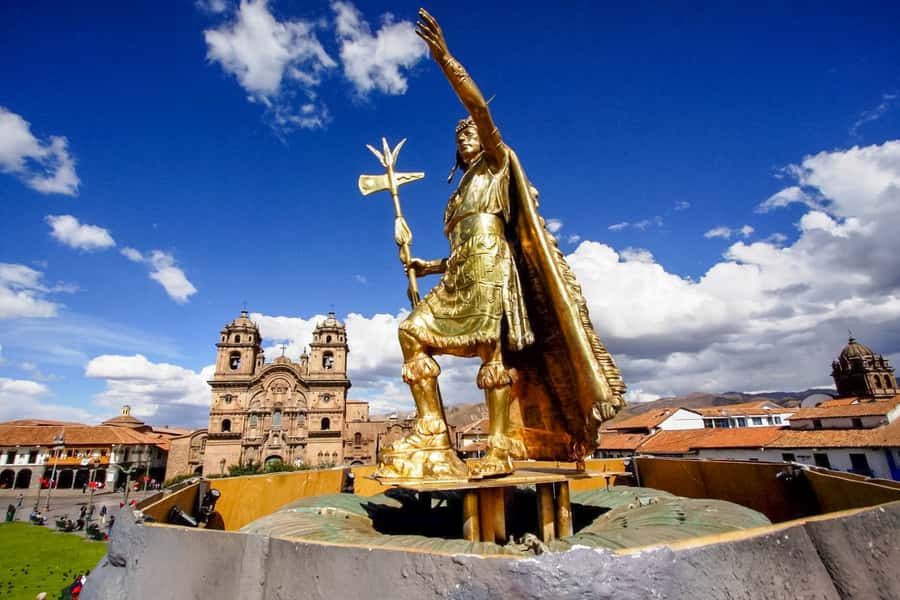
Cusco’s best-known sights come in two layers: Spanish churches built over Inca foundations, and massive stone complexes scattered above the city. This five-hour afternoon tour connects both sides, from Coricancha and the Cathedral to Sacsayhuaman, Qenqo, Tambomachay, and Puka Pukara. I like the way it packs major sights into one outing, and I like that transportation takes you to the hilltop ruins without making you arrange separate taxis.
I also like the chance to see the enormous stones at Sacsayhuaman and the odd, shadowy passages at Qenqo in the same trip. The main caution is timing: a textile shop stop has taken about 45 minutes on some departures, leaving the final ruins in fading light. Ask about the route before setting out, especially if shopping is not on your list.
Key points to know before you go
- Six major sights in five hours: The route covers two central Cusco landmarks and four nearby Inca sites.
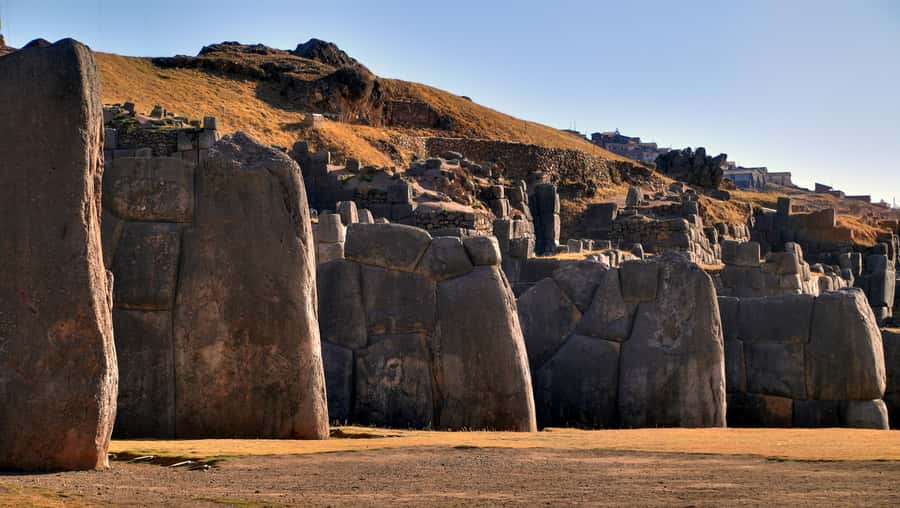
- Sacsayhuaman is the visual star: Its huge stones, some said to weigh up to 180 tons, are fitted with remarkable precision.
- Qenqo feels unlike the other ruins: Carved stone, zigzag forms, and subterranean passages give it a more mysterious character.
- Transport saves time and effort: A small bus or minibus carries you to the northern ruins after the walking portion in central Cusco.
- Entrance fees are extra: Bring money for the required site tickets, since they are not included in the $22 price.
- Check the language carefully: Tours are offered in English or Spanish, but one mixed-language group had limited English translation.
Why this half-day route works in Cusco
At $22 per person, this tour is priced as a budget-friendly way to cover a lot of ground. You receive a professional guide and transportation, but entrance tickets are separate. That matters because the low headline price does not represent the full cost of the outing.
I see the value in the format. Cusco’s central sights are easy to reach on foot, but the northern ruins are spread across higher ground outside the compact center. A guided vehicle removes the need to find several taxis or work out a route on your own. You also get historical explanation along the way, which helps turn impressive stones into places with a purpose.
The tour lasts five hours and begins in the early afternoon with pickup from accommodation in downtown Cusco. That schedule gives you a useful first or second day option, especially if you want your morning free. The tradeoff is daylight. A delayed departure, a long shopping stop, or a slow group can push Tambomachay and Puka Pukara toward dusk.
The experience is offered for private groups or small groups. Smaller numbers usually make it easier to hear the guide and ask questions, but the exact feel depends on the departure you book. The guide may speak English or Spanish, so confirm your preferred language at booking and again at pickup.
More City Tours in Cusco
- Cusco: Half-Day City Tour with Sacsayhuaman and Q’enco
★ 4.6 · 1,129 reviews - City Tour Cusco Qoricancha Sacsayhuaman y Tambomachay
★ 4.7 · 617 reviews - Cusco: Sightseeing Tour of the City on an Open-Top Bus
★ 4.0 · 481 reviews
Coricancha: where Inca gold met a Spanish church
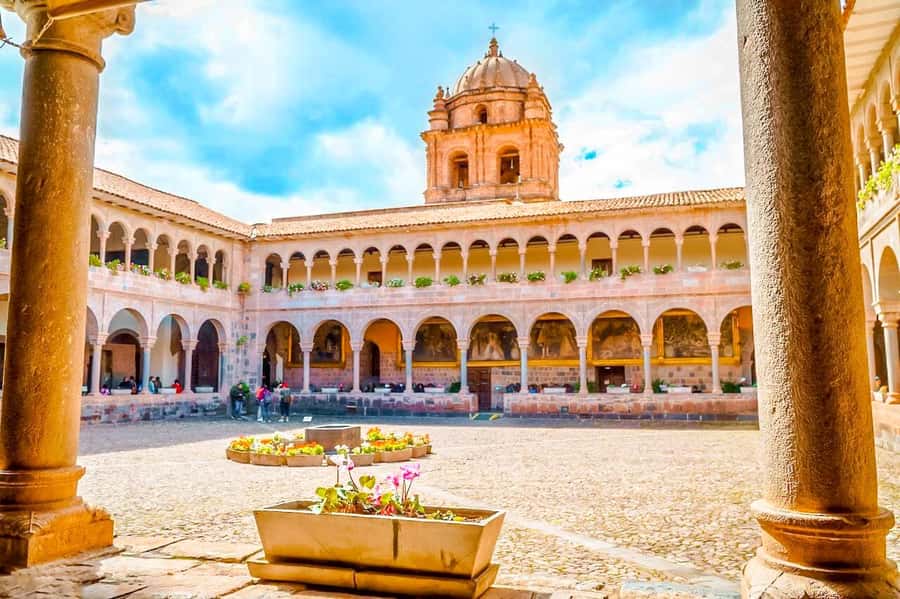
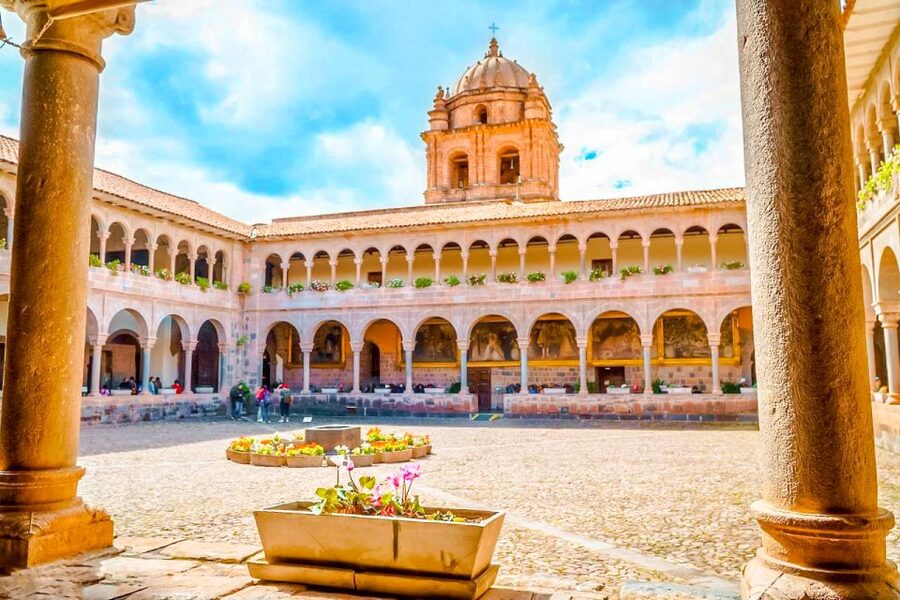
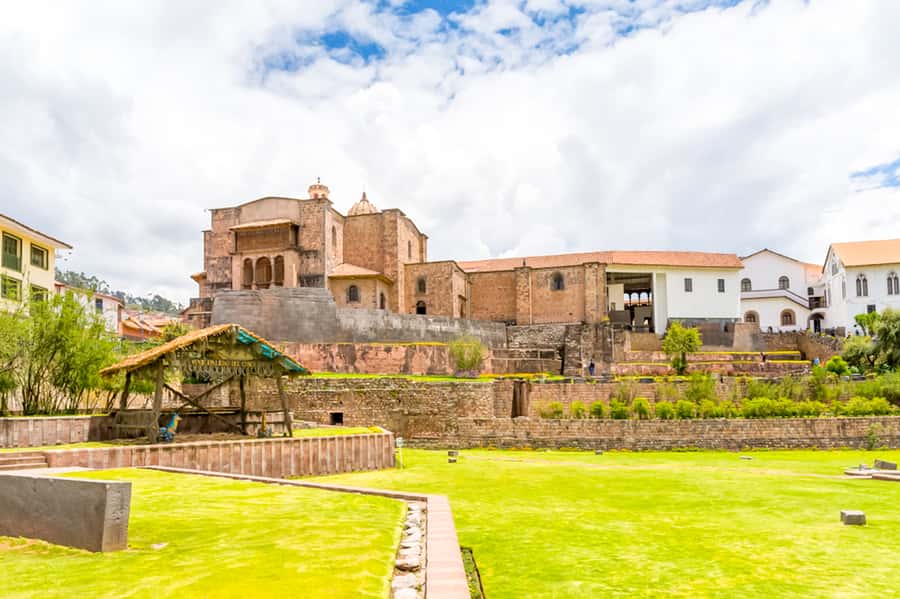
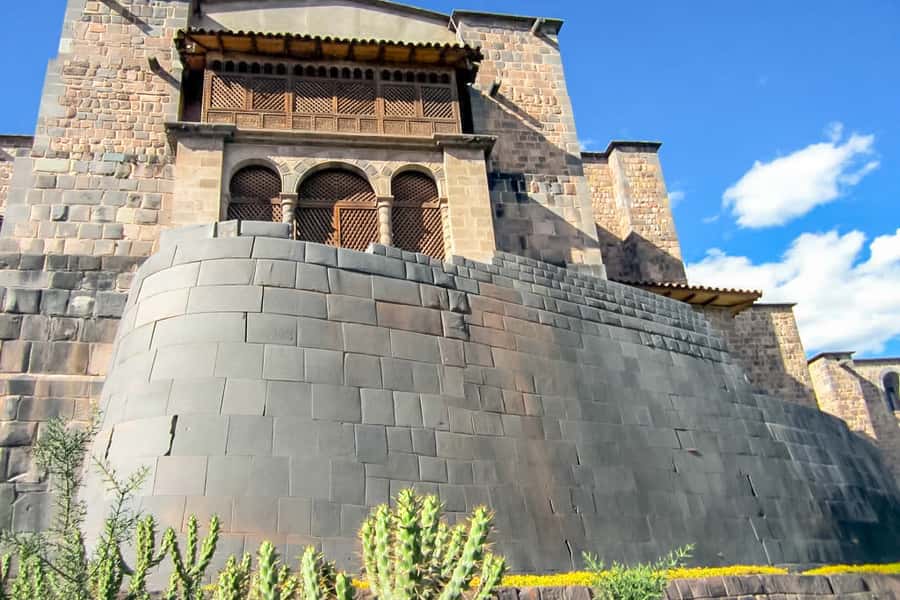
The tour begins at Coricancha, the Inca Sun Temple and one of the most important places in central Cusco. The site is valuable because it shows, in one glance, how Spanish colonial construction was laid over Inca foundations.
Your guide explains the ceremonial role of the complex and points out the quality of the stonework. The name Coricancha is commonly translated as Golden Enclosure, a reminder of the importance once given to the temple. The colonial Church of Santo Domingo now occupies the site, creating a striking contrast between the clean, tight Inca masonry and the later church architecture.
I would pay close attention here to the joints between the stones. The walls were made without the rough mortar lines you see in many older buildings. Their carefully cut surfaces are part of what makes Coricancha more than a quick photo stop.
This is also one of the walking portions of the outing. Wear shoes that feel secure on old stone streets and allow yourself time to look upward and sideways, not only at the most obvious wall. The guide’s explanation is especially useful here because the site can otherwise seem like a church with a few ancient walls attached.
Plaza de Armas and the Cathedral’s layered past
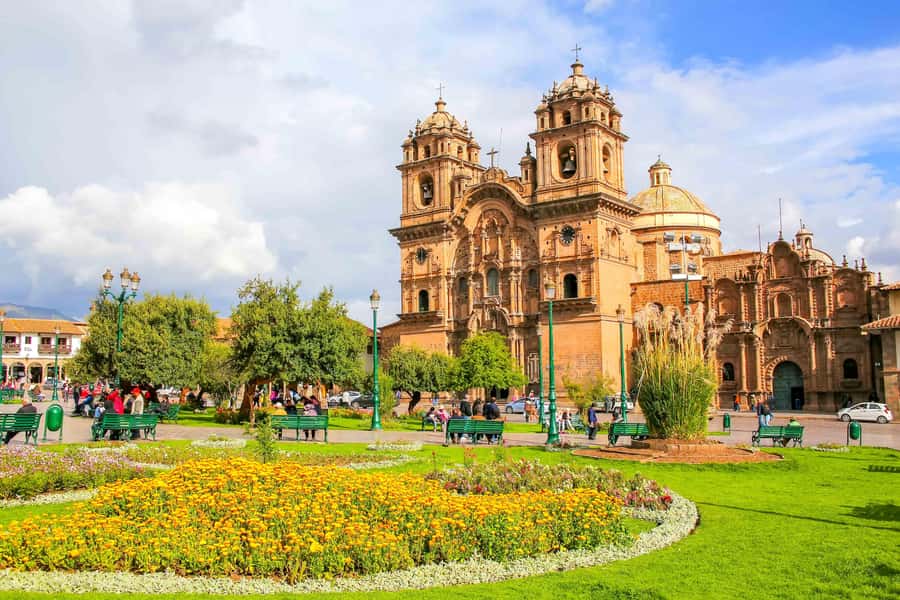
From Coricancha, the route continues to the Plaza de Armas, Cusco’s main square. The square gives you the city’s clearest meeting point between Inca and Spanish power, and it is an easy place to appreciate how central Cusco remains to the region.
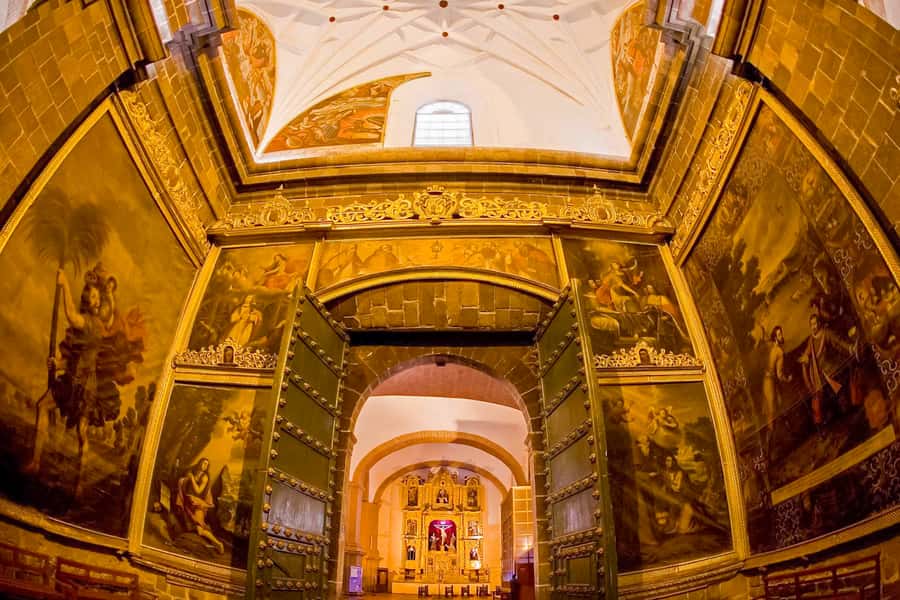
The Cathedral is a major stop, with impressive interiors and a construction story tied to earlier Inca buildings. Your guide explains how the Spanish cathedral was built on top of the older foundations. That detail changes the way you read the building: it is not simply a church in a grand plaza, but part of a larger story of replacement and adaptation.
The interior is included in the afternoon itinerary described here. The schedule note is important: the Cathedral visit is not included on the morning tour. If you are comparing departure times, do not assume both versions cover the same stops.
I like this part of the route because it slows the pace before the drive to the ruins. You get architecture, religious art, and city history before switching to open-air archaeological sites. At the same time, the Cathedral can feel rushed if the group is large or if the earlier stop runs late. Use the guide’s explanation as your main source of context, then take a few quiet minutes to look at the interior details yourself.
Sacsayhuaman and the giant stone walls
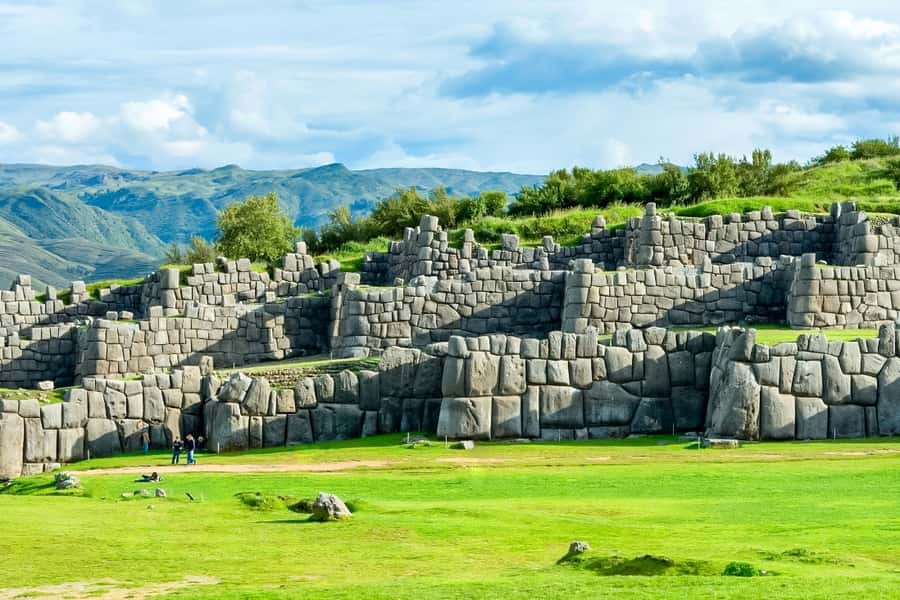
After the central Cusco stops, a vehicle takes you north to Sacsayhuaman. This is the point where the scale of Inca construction becomes hard to ignore.
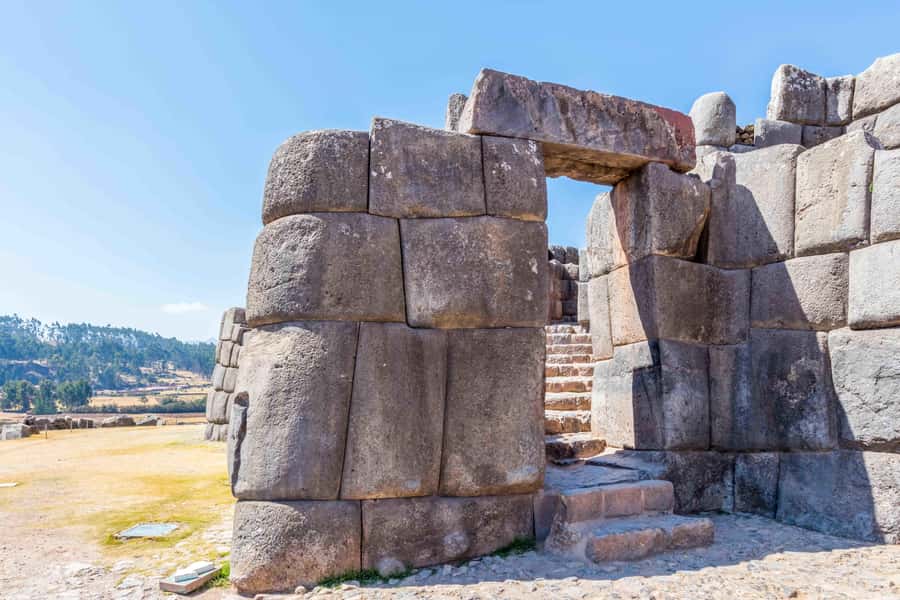
The complex is known for enormous stones fitted tightly together. Some are described as weighing up to 180 tons. The most memorable moment is walking near or through the openings in the walls and seeing how the blocks meet at irregular angles without obvious gaps.
Do not treat Sacsayhuaman as just a high viewpoint over Cusco. The walls are the reason to come. Their size and precision show a level of planning and stone cutting that is difficult to grasp from photographs. Your guide can also help explain how the complex relates to Cusco below, rather than leaving you with only the impression of a huge pile of rocks.
The stop is also a good test of the tour’s pace. Sacsayhuaman deserves time, but the route has several more sites to cover. You may need to choose between listening closely to the guide, taking photographs, and walking farther through the complex. I would stay near the guide at the start, hear the main explanation, then use free moments for photos.
A small vehicle is a practical advantage here. The ruins are not part of the central walking route, and using organized transportation lets you focus on the sites instead of negotiating each transfer. The drawback is that the schedule depends on the whole group. A long stop elsewhere can shorten your time at Sacsayhuaman or push later visits into low light.
more Cusco days to weigh up
- Machu Picchu: Inca Trail 2-Day Overnight Guided Tour
★ 4.9 · 203 reviews - Full Day Private Guided Tour in Machu Picchu
★ 5.0 · 115 reviews - Machu Picchu: Group Guided Tour
★ 4.7 · 102 reviews - Cusco: Historical Guided City Tour with 4 Inca Ruins
★ 4.5 · 99 reviews
Qenqo, a carved stone site with a strange mood
Qenqo, whose name refers to a zigzag form, is very different from Sacsayhuaman. Instead of broad walls and giant terraces, you find carved stone surfaces and subterranean passages tucked into the complex.
The site is unusual enough to be memorable even if you have already seen several Inca ruins. The interior stonework creates a more enclosed experience, and the passages give the place a sense of mystery. It is thought that the Incas may have mummified their dead here, although the precise purpose of every feature is not certain.
That uncertainty is worth respecting. A good guide should explain what is known, what is likely, and what remains unclear, rather than presenting every theory as fact. At Qenqo, I would listen for that distinction.
The passages can be the most interesting part of the stop, but they also make this a place where a fast-moving group can miss details. Stay close enough to hear the explanation, and watch your footing in the carved and enclosed areas. The tour is not designed as a long archaeological study, so use the guide’s main points to decide what deserves your attention.
Tambomachay and the waterworks of the Incas
The route then reaches Tambomachay, known for its Inca baths. Water is the focus here, and the site provides a useful change after the heavy stone walls of Sacsayhuaman and the enclosed passages at Qenqo.
The terraces, channels, and carved stone features show how the Incas incorporated water into ceremonial or elite spaces. Even with limited time, you can see why the site belongs on the circuit. It is not simply another wall complex. Its interest comes from the movement and control of water through carefully shaped stone.
This is one of the later stops, so daylight can affect what you notice. In bright conditions, the stone channels are easier to study. Near dusk, the visit may become more of a short look than a detailed explanation. If your group has spent a long time at a shop or earlier stop, ask the guide how much time remains and stay focused on the water features.
Puka Pukara, the lookout on the route back
Puka Pukara is the final named archaeological stop, a military lookout point near Tambomachay. Its position gives it practical importance within the route of sites above Cusco.
The site is less monumental than Sacsayhuaman, but it helps complete the picture. You see how the Incas used different kinds of places for different purposes: ceremonial spaces, carved ritual areas, water facilities, and points connected with defense or observation.
I would not rank Puka Pukara as the main reason to book the tour. I would see it as a useful final piece that makes the circuit more complete. If you arrive in darkness, though, its value drops sharply. The stonework and setting are much harder to appreciate without daylight.
The vehicle then returns you to downtown Cusco, where the tour ends. Since pickup and drop-off are centered on downtown accommodation, this is easiest for people staying in the central area.
The shopping stop you should ask about
The most important practical warning comes from the textile shop. A stop for baby-alpaca clothing and other products has taken roughly 45 minutes, and that delay has pushed the last two archaeological sites into twilight or darkness.
Some people may find the stop useful. It can offer a place to compare higher-quality baby-alpaca items instead of buying the first low-cost sweater from a street stall. If you are shopping for clothing, the visit may save you time later.
If you are focused on ruins, it can feel like a sales stop inserted into a short itinerary. I would ask before departure if the shop is part of the day’s plan, how long it will last, and if it can be placed at the end. That simple conversation may help you protect daylight for Tambomachay and Puka Pukara.
This is also where group travel affects the experience. One person’s careful shopping can become everyone’s lost sightseeing time. A private departure may offer more flexibility, but the supplied information does not promise that every private group can remove or change the stop.
Guide quality and language are important here
The guide can make a major difference because the tour moves quickly across six sites. Peto has been singled out as a guide who brings strong enthusiasm for Cusco and Inca culture, with clear and detailed explanations. If Peto is available for your date, you may wish to request him, though guide assignment is not guaranteed.
Language deserves equal attention. The tour is offered in English and Spanish, but one mixed group had mostly Spanish speakers and received limited English translation. That is not a minor issue on a five-hour tour. Much of the value comes from understanding why the sites matter, not merely being driven to them.
Confirm the language when you book and at pickup. If you find yourself in a bilingual group, ask politely for English explanations at each stop. A small-group format should make that easier, but it is still wise to speak up early rather than wait until the final ruin.
Who will get the most from this $22 tour
I would consider booking this tour if you have limited time in Cusco and want a guided overview of the major central and nearby Inca sites. It works well for first-time visitors who want transport, a clear route, and historical background without arranging several separate visits.
It also suits you if you want to compare different kinds of Inca construction in one afternoon. Coricancha gives you layered colonial and Inca architecture. Sacsayhuaman supplies scale. Qenqo offers carved interiors and passages. Tambomachay focuses on water, while Puka Pukara adds a military lookout to the picture.
I would be more cautious if you want long, quiet visits at each site. Five hours is efficient, not leisurely. The shopping stop can reduce the archaeological time further, and the final two stops may be dimly lit if the schedule slips.
You should also factor in the extra entrance fees. The $22 cost is attractive for the guide and vehicle, but the tickets are not included. Ask for the current total before paying so you can compare the real cost with a different city tour or a self-guided plan.
Pets are not allowed, and the activity is non-refundable once confirmed. That makes careful checking worthwhile, especially for date, language, pickup area, and tour version.
Should you book the Cusco ruins tour?
Book it if you want a compact, low-cost introduction to Cusco’s major sights and you value having transport between the downtown center and the northern ruins. The strongest parts are the route itself, Sacsayhuaman’s huge stonework, Qenqo’s unusual passages, and the chance to hear the city’s story from a local guide.
Before confirming, ask three things: Is the guide speaking English, are entrance tickets available to buy on the day, and will the textile shop be included? If the answer to the last question is yes, ask whether it can be moved to the end.
I would choose this tour for a first overview, then return independently to the places that deserve more time. I would not choose it if you want a slow archaeological visit or if seeing every ruin in daylight matters more than convenience.
FAQ
How long does the tour last?
The tour lasts five hours and begins in the early afternoon for the itinerary described.
Which sites are included?
The route includes Coricancha, the Plaza de Armas and Cathedral, Sacsayhuaman, Qenqo, Tambomachay, and Puka Pukara.
Are entrance fees included in the price?
No. Entrance fees are not included and must be paid separately.
Is the Cathedral included on every departure?
The Cathedral visit is included in the afternoon itinerary described here. The morning tour does not include the Cathedral.
What languages are available?
Live guiding is available in English and Spanish. Confirm your preferred language because mixed-language groups may not receive equal translation time.
Can I book a private tour?
Yes. Private and small-group options are available.
Recently added around Cusco
- Palcoyo colored mountain hike + stone forests★ 4.6 · 3 reviews
- Maras Moray★ 5.0 · 3 reviews
- Full-Day Condor Viewpoint & Inca Sites Tour★ 5.0 · 3 reviews
- From Cusco: Vinicunca Mountain of Colors Excursion + Ticket★ 5.0 · 3 reviews
- Excursion Cusco – Puno – Titicaca Observatory Train★ 5.0 · 3 reviews
- Machu Picchu: Private Tour Guide Service for up to 15 people★ 4.5 · 3 reviews
- Machu Picchu: 1-day tour by Vistadome Observatory train★ 5.0 · 3 reviews
- Cusco: Chonta Canyon and Condor Flight Tour with Lunch★ 5.0 · 3 reviews
Cusco Tours, compared.
Humantay Lake Tour with Breakfast and Buffet Lunch
Read our review →
Sacred Valley & Maras Salt Mines Tour with Lunch
Read our review →
Moray, Maras Salt Mines & Chinchero Weavers Tour
Read our review →


Half-Day City Tour with Sacsayhuaman and Q’enco
Read our review →
Sacred Valley, Pisac, Ollantaytambo, Salt Mines Moray
Read our review →
Browse the lists this tour appears in