
Reviewed · MARAS AND MORAY TOURS
From Cusco: Moray, Maras Salt Mines & Chinchero Weavers Half-Day
The best part of this outing is the mix: Quechua textile traditions, Inca farming terraces, and working salt pools all fit into one day beyond Cusco. At Chinchero, you see natural dyes made from plants and learn how local weavers keep old methods in use. At Moray, huge circular terraces show how carefully the Incas worked with altitude and growing conditions.
I like the strong value at $15.20, especially with hotel pickup, transport, and a bilingual guide included. I also like the guides’ personal touch. Felipe, Julio, Manuel, and Eddie are praised by name for clear explanations, help with photos, cultural stories, and even sharing coca leaves.
The tradeoff is the pace. You may spend six to seven hours on the road and at the sites without a meal stop, and a full minibus can feel tight. Bring water and snacks, and do not treat the low price as the final cost since Moray and the salt mines require separate entrance fees.
Key points to know before you book
- Chinchero is a textile center visit, not a full town tour: You see a traditional market area and a weaving workshop, but only part of Chinchero.
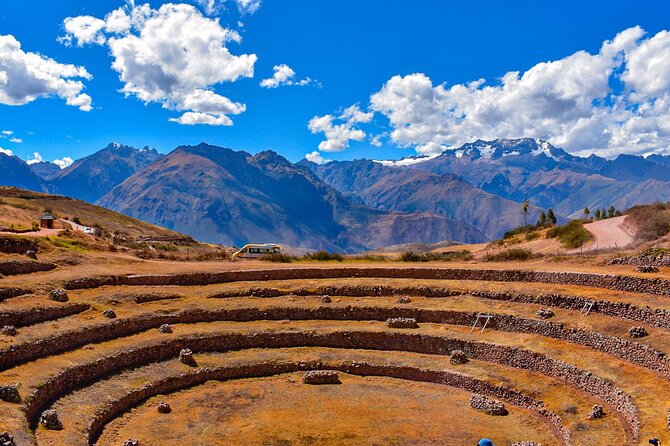
- Moray explains Inca agriculture: The enormous bowl-shaped terraces reveal an ingenious approach to creating different growing conditions at high altitude.
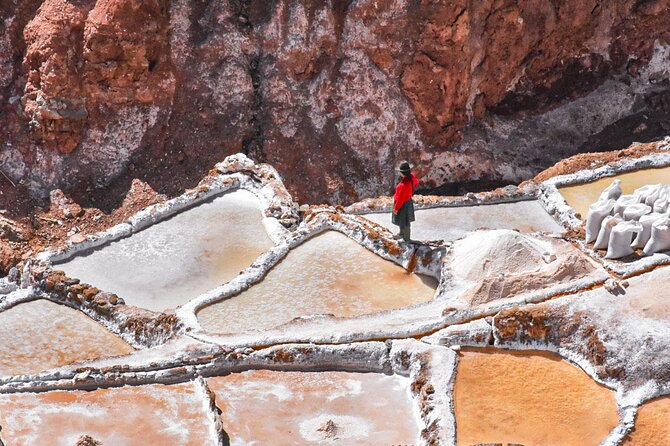
- Maras is still a working salt site: About 3,000 small pools are fed with salty spring water and maintained by local workers.
- The $15.20 price excludes both major entrance fees: Budget another $25, based on the listed $19 Moray fee and $6 salt mine fee.
- The schedule leaves little room for food: The return to Cusco is around 3:15 pm, so carry snacks and water.
- Guide quality is a major strength: Felipe, Julio, Manuel, John, and Eddie are all praised in the supplied feedback for history, culture, and clear bilingual commentary.
A practical half-day route from Cusco
This is called a half-day tour, but plan on roughly six to seven hours. Pickup is scheduled between 8:20 and 8:40 am, with a return near Cusco’s Plaza de Armas at about 3:15 pm.
That timing works well if you want a substantial Sacred Valley outing without a very early start. It can also suit you if you have an evening flight, as one solo guest used the schedule for exactly that reason. Still, do not plan a leisurely lunch during the tour. The day moves from one stop to the next, and lunch is on your own after returning to Cusco.
Transport and hotel pickup are included. Hotel drop-off is not, so you should expect to make your own way from the return point. The group is listed as no more than 16 people, although one account described a group of about 20. Group size may affect how quickly everyone boards and gathers at each stop.
more maras and moray mornings
- From Cusco: Sacred Valley & Maras Salt Mines Tour with Lunch
★ 4.8 · 2,227 reviews - From Cusco: Moray, Maras Salt Mines & Chinchero Weavers Tour
★ 4.8 · 1,925 reviews - Cusco: Sacred Valley, Pisac, Ollantaytambo, Salt Mines Moray
★ 4.6 · 1,058 reviews
Chinchero: weaving, bartering, and Andean color
The first major stop is Chinchero, at about 3,762 meters above sea level. That is higher than Moray and high enough for the altitude to matter, especially if you have just arrived in Cusco.
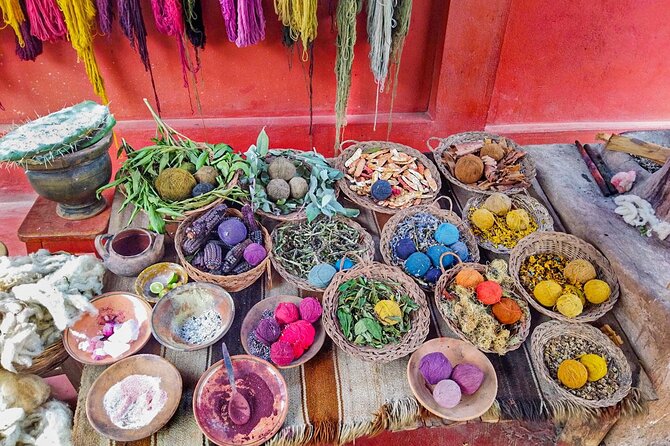
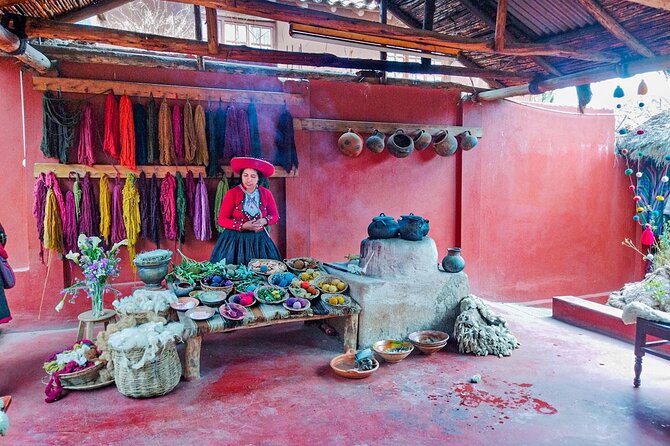
You visit part of the town, including a traditional market area where bartering is practiced, and an Andean textile center. The most useful part of the stop is the demonstration of how local weavers obtain colors from natural plants. The process gives you a better sense of the work behind the bright wool goods sold in the region.
You may also see llamas and alpacas, feed them, try on Andean clothing for photos, and sample a traditional drink. The local makers explain which materials are used, including the difference between alpaca and acrylic in some products. That transparency is helpful when you are deciding what is fairly priced and what is simply made to look traditional.
There is an important limitation here. Chinchero is not explored in full. The stop focuses on the textile center and the tourist-facing part of the town, and the demonstration may be brief before shopping begins. One practical account described about 15 minutes of explanation followed by strong sales pressure.
I would treat this stop as a cultural introduction and a chance to buy textiles, not as a quiet visit to an untouched market. If you enjoy seeing how wool is spun, dyed, and prepared, it earns its place on the route. If you dislike sales-oriented stops, keep your expectations in check and remember that you do not have to buy anything.
Moray: the Inca farming bowl
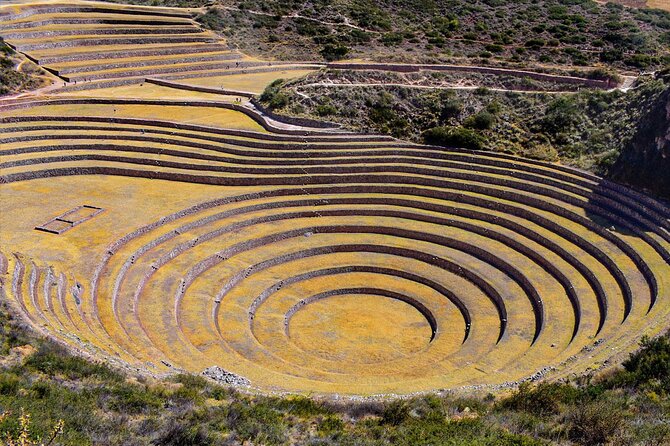
Moray sits at about 3,450 meters, or 11,318 feet. Its broad circular terraces are carved into a natural bowl, with several levels descending toward the center.
The site is striking even before the guide begins explaining it. The terraces form a giant pattern in the earth, but their purpose was practical. The Incas used the levels and irrigation system to create differing growing conditions, helping them study which crops could thrive at high elevations.
The description of Moray as an agricultural laboratory is useful, as long as you picture a working experiment rather than a modern research station. The terraces created small variations in climate, and the Incas used that setting to grow a wide range of crops in places where normal conditions were difficult.
The guide adds real value here. Felipe, Julio, Manuel, and other guides are praised for explaining not only the site itself, but also the way people in the Cusco region lived in the past and live today. A good explanation helps you see Moray as a piece of agricultural planning, not just a photogenic ruin.
Entrance to Moray is not included. The listed price is $19, or 70 soles, and you should confirm the current fee and currency arrangements when booking. Since this is one of the two required site payments, add it to the headline tour price when working out your budget.
Allow about an hour at Moray. The stop is manageable for most people, but you are still at high altitude. Walk at your own pace, especially if you are not yet used to Cusco’s elevation. The views toward the Andean peaks add to the appeal, and guides often help with photos at the best viewpoints.
Maras: 3,000 pools of working salt
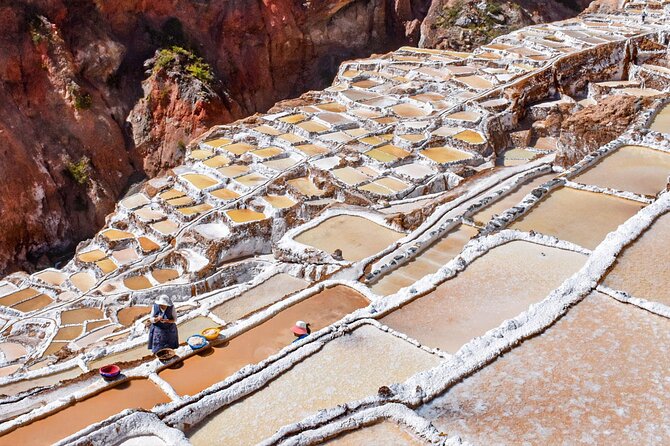
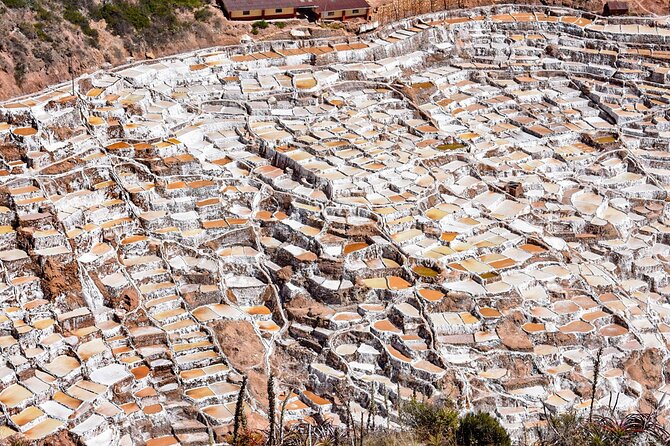
The Maras salt mines are the most unusual stop for many people. Rather than a single open pit, Salineras is a huge spread of roughly 3,000 small pools cut into the mountainside.
Salt water comes from a natural hot spring. During the dry season, workers fill the pools about every three days. As the water evaporates, salt collects and is then ground, treated with iodine, packaged, and sold in regional markets.
That ongoing work gives the site more meaning than a simple scenic stop. Salt production here began before the Incas and continues today, linking pre-Inca practice, Inca-era use, and modern local livelihoods.
The view is especially impressive from above, where the small white and brown pools form lines across the slope. You will want time for photos, but listen to the guide too. The explanation of the cooperative communities and the production process helps you understand why the site remains important.
Entrance is separate from the tour and listed at $6, or 20 soles. The fee is modest compared with Moray, but together the two admissions add $25 to the advertised $15.20 price. That makes the realistic basic cost about $40.20 before tips and food, assuming the listed dollar amounts apply.
The road to Maras passes through Maras village, where colonial buildings made from thin stone are still visible. This is a short scenic part of the drive rather than a full guided town visit, but it breaks up the route and gives you another view of the area’s architecture.
more Cusco days to weigh up
- Cusco: Half-Day City Tour with Sacsayhuaman and Q’enco
★ 4.6 · 1,129 reviews - Cusco: City Tour | Half-Day Tour to 4 Archaeological Sites
★ 4.6 · 206 reviews - Cusco: Half-Day City Tour
★ 4.2 · 129 reviews - Cusco: Half-Day Horseback Riding at Devil’s Balcony
★ 4.9 · 89 reviews
What the guide adds to the day
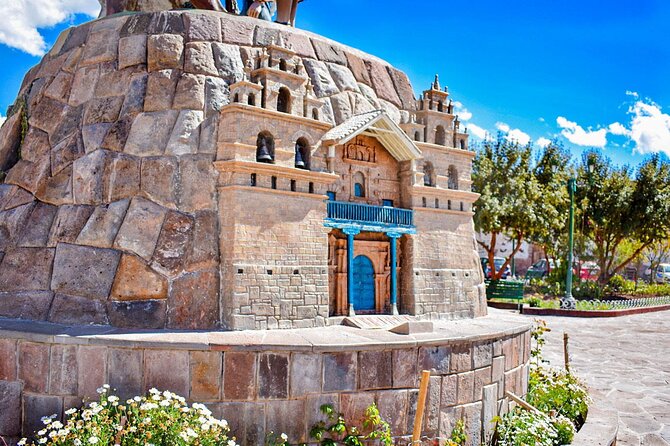
The best guides on this route do more than announce the next stop. Felipe is praised for detailed historical stories, cultural explanations, photo help, and sharing coca leaves for you to try. Julio is described as clear in both English and Spanish, while Manuel is noted for switching between the two languages so everyone could follow along.
John and Eddie are also mentioned positively for friendly, informative guiding. The exact guide assigned to you will depend on the departure, but the pattern is clear: the human commentary is a central part of the experience.
You should expect bilingual guiding rather than a private lecture. That means the guide may explain things in both English and Spanish, which can take time at each stop. For many people, the tradeoff is worthwhile because you get context about agriculture, dyeing, salt production, and modern life in the Cusco region.
The guide may also help with group photos and practical directions. That matters at sites where the best view is not always obvious, and it takes some pressure off you when the schedule is tight.
Transport, timing, and comfort
The included transport makes this easy to arrange, especially if you are staying in Cusco and want one efficient day outside the city. The route covers a lot of ground, so you spend a meaningful amount of time in the vehicle looking out at Andean scenery.
The main comfort warning is the minibus. One person found it very uncomfortable when full, while another described the bus as comfortable. Both experiences are possible depending on the vehicle and group size, so I would not book this expecting spacious coach seating.
The timetable also depends on everyone returning promptly. If people linger, boarding and departures can become stressful. You will get more from the day if you are ready to move when the guide gives the meeting time.
Bring:
- Water
- Snacks or a packed meal
- Sun protection
- Comfortable walking shoes
- Some cash for entrance fees and purchases
Breakfast, lunch, tips, and hotel drop-off are not included. The tour ends near the Plaza de Armas around mid-afternoon, giving you time to find lunch in Cusco after the outing.
Is $15.20 a good value?
Yes, provided you calculate the extra costs. At $15.20 per person, hotel pickup, transportation, and a bilingual guide make the base price unusually low for a full route with three major stops.
The required admission fees change the picture. With $19 for Moray and $6 for the salt mines, you are closer to $40.20 before food or tips. Even then, the price is strong for a six to seven-hour outing, especially if you would otherwise need to arrange separate transport to three sites.
The value is highest for first-time visitors who want a broad introduction to the countryside around Cusco. You see living craft traditions at Chinchero, Inca engineering at Moray, and an active salt industry at Maras. Each stop offers something different, so the tour does not rely on one attraction carrying the whole day.
It is less appealing if you want a slow, private visit or a detailed exploration of Chinchero. The group format and fixed schedule keep the cost down, but they also limit your freedom.
Who should book this tour?
I would recommend it to you if you have limited time in Cusco and want several major sights in one organized outing. It suits solo visitors, couples, and friends who prefer a guide to explain what they are seeing rather than simply being dropped at viewpoints.
It is also a good choice after you have had enough time to adjust to altitude. Chinchero is the highest stop, and all three places involve some walking and time outdoors. Most people can participate, but the schedule is not designed around long rest periods.
Families may appreciate the llamas, alpacas, bright textiles, and unusual salt pools. Shoppers should enjoy the weaving center, while history-minded visitors will get the most from Moray and the stories connecting ancient agriculture with present-day life.
I would hesitate if you need a guaranteed small group, a comfortable large bus, or a proper lunch break. I would also be cautious about booking it immediately before an important flight unless you allow a generous buffer, since traffic, group delays, and the seven-hour upper estimate can all affect the return.
Final verdict: a strong first look beyond Cusco
Book this tour if you want a budget-friendly introduction to the Sacred Valley area and are happy with a brisk group schedule. The strongest reasons are the range of stops, the quality of cultural explanations, and the chance to see real textile and salt-making traditions rather than only ruins.
Go in prepared: bring food, budget for both entrance fees, expect a possible sales pitch at Chinchero, and do not assume the minibus will feel roomy. With those conditions understood, this is an efficient and worthwhile way to spend a day outside Cusco.
Free cancellation is available up to 24 hours before the start time. Changes or cancellations inside that window are not accepted for a refund, and poor weather may lead to a new date or a full refund.
FAQ
How long does the tour last?
The experience takes approximately six to seven hours. Pickup is scheduled between 8:20 and 8:40 am, and the return to Cusco is around 3:15 pm near the Plaza de Armas.
What places does the tour visit?
The route includes Cusco pickup, Chinchero, Moray, the Maras salt mines, and a return to Cusco. At Chinchero, you visit part of the town and an Andean textile center.
Is hotel pickup included?
Yes. Pickup from your hotel is included. Hotel drop-off is not included after the tour.
Are entrance fees included?
No. Moray costs $19 or 70 soles, and the Maras salt mines cost $6 or 20 soles according to the supplied information.
Is lunch included?
No. Breakfast and lunch are not included. The tour returns to Cusco around 3:15 pm, and you can have lunch on your own afterward.
What is included in the tour price?
Transportation, hotel pickup, and a bilingual tour guide are included.
How large is the group?
The tour is listed with a maximum of 16 travelers. One account described a group of about 20, so you may wish to confirm the expected group size before booking.
Can most people participate?
Yes. The activity information says most people can participate, and it is near public transportation. The route does include high-altitude stops and walking.
What happens at the Chinchero textile center?
You see local weaving methods, learn how colors are made from natural plants, and may have the chance to wear Andean clothing for photos. Llamas and alpacas may also be present, and handmade goods are offered for sale.
Can I cancel for a full refund?
Yes, if you cancel at least 24 hours before the experience start time. Cancellations or changes made less than 24 hours in advance are not refunded or accepted, and poor weather may result in a different date or a full refund.
Recently added around Cusco
- Palcoyo colored mountain hike + stone forests★ 4.6 · 3 reviews
- Maras Moray★ 5.0 · 3 reviews
- From Cusco: Vinicunca Mountain of Colors Excursion + Ticket★ 5.0 · 3 reviews
- Full-Day Condor Viewpoint & Inca Sites Tour★ 5.0 · 3 reviews
- Excursion Cusco – Puno – Titicaca Observatory Train★ 5.0 · 3 reviews
- Machu Picchu: Private Tour Guide Service for up to 15 people★ 4.5 · 3 reviews
- Machu Picchu: 1-day tour by Vistadome Observatory train★ 5.0 · 3 reviews
- Cusco: Chonta Canyon and Condor Flight Tour with Lunch★ 5.0 · 3 reviews
Maras and Moray Tours, compared.
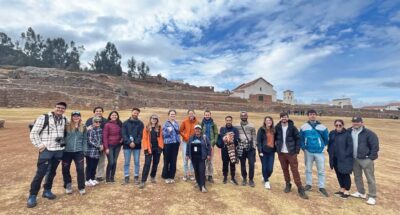
Sacred Valley & Maras Salt Mines Tour with Lunch
Read our review →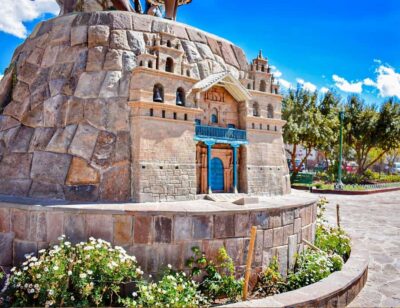
Moray, Maras Salt Mines & Chinchero Weavers Tour
Read our review →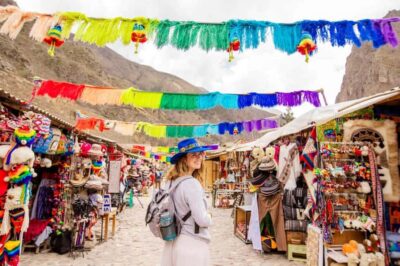
Sacred Valley, Pisac, Ollantaytambo, Salt Mines Moray
Read our review →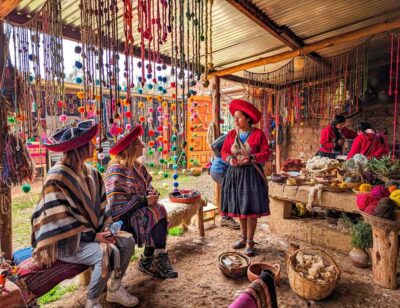
Chinchero,Moray & Salt Mines drop-off in Ollantaytambo
Read our review →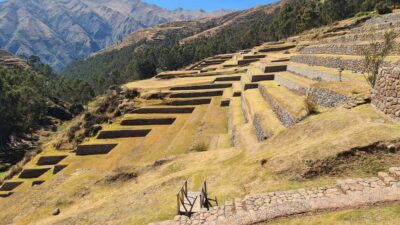

Browse the lists this tour appears in