
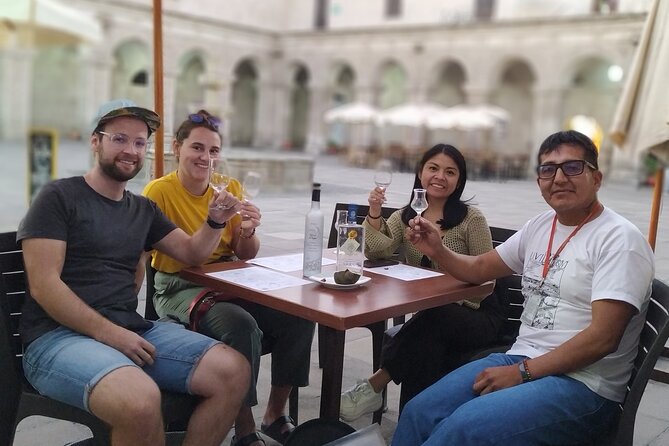
Reviewed · AREQUIPA TOURS
Arequipa Tasting Tour
Arequipa’s best introduction may be a walk that treats food and architecture as part of the same story. For about three and a half hours, you move from colonial plazas and earthquake-shaped churches to San Camilo Market, then finish with queso helado, local fruit, and pisco.
I like the small group, capped at eight, and the low $13 price. I also like the market stop, where guides such as Jose, Daniel, and Jorge have taken guests beyond a quick look at the stalls to try local products and explain how Arequipa eats. The main consideration is simple: this is mostly a history and walking tour, with the tasting saved for the end.
Key points at a glance
- San Camilo Market is the food heart of the walk: Expect local fruits, tubers, meats, and other regional products, with samples depending on the day.
- The tasting comes at the finish: Queso helado, traditional dessert, fruit, and pisco are included, while lunch, bottled water, and soda are not.
- The route covers central Arequipa’s essentials: You visit Plaza Campo Redondo, San Francisco, Plaza de Armas, the Company of Jesus, and the Jesuit cloisters.
- Guides add much of the value: Jose is praised for answering questions and explaining pisco, while Daniel has covered architecture, religion, local industries, alpaca wool, and vicuña.
- The group stays personal: A maximum of eight people makes it easier to ask questions and adjust the pace than on a large city tour.
- Plan for steady walking: A moderate fitness level is requested, and the afternoon departure works best after you have eaten lunch.
Why this $13 walk works as an Arequipa introduction
At $13 per person, this tour offers a useful amount of city orientation for very little money. You get a guide, a central walking route, market visits, local samples, and a pisco tasting without paying separate admission for the listed stops.
The value is strongest if you have just arrived in Arequipa. The route connects places you might otherwise visit as separate stops, and the guide explains how the city’s buildings, earthquakes, religious orders, markets, and food traditions fit together.
I would not book it expecting a three-hour food crawl. One part of the route is culinary, but much of the time is spent learning about Arequipa’s urban history and architecture. The tasting is at the end, not spread evenly across the walk.
That distinction matters. If your priority is trying many dishes, a dedicated food tour may suit you better. If you want a first look at the historic center with a few well-chosen tastes, this is a strong bargain.
more Arequipa days to weigh up
- Arequipa Food Tour: Ancestral Cuisine & City Tour
★ 5.0 · 11 reviews - Arequipa: Colca Canyon Trekking 2 days and 1 night + food
★ 4.8 · 3 reviews - Cooking Class Typical Food in Arequipa
★ 3.9 · 3 reviews
Starting at Campo Redondo and San Francisco
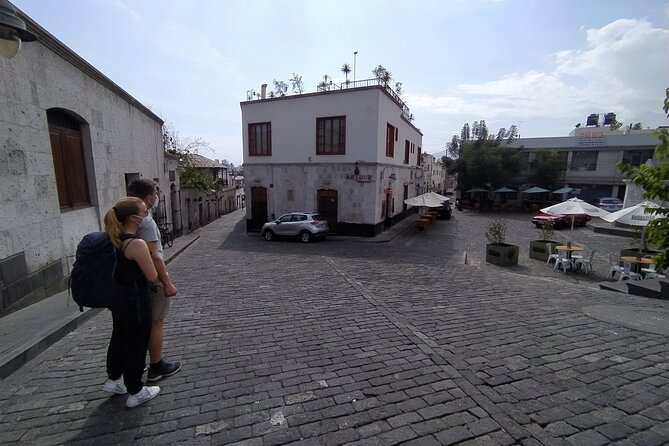
The meeting point is Plaza de Armas Arequipa, but the route begins with Plaza Campo Redondo, a traditional neighborhood associated with the first settlement of the Spanish conquerors in the area. This opening gives the tour a useful sense of place before the grand central squares appear.
You spend about 10 minutes here. It is a short stop, but it sets up the story of how Arequipa developed from an early settlement into the city you see today.
From there, the walk passes the Santa Catalina Convent and Santa Catalina Street before reaching San Francisco Plaza. The church and monastery create a strong contrast with the open plaza, and the nearby Fundo el Fierro artisan center adds a more local, craft-focused note.
This portion takes about 20 minutes. Admission is listed as free, but the tour does not include entrance tickets for attractions that charge separately. The route is mainly about seeing the exteriors and understanding the area, not spending a long time inside every building.
The short stops also mean you should keep moving with the group. If you want extended visits to Santa Catalina or another major attraction, save those for a separate time.
Plaza de Armas and the city shaped by earthquakes
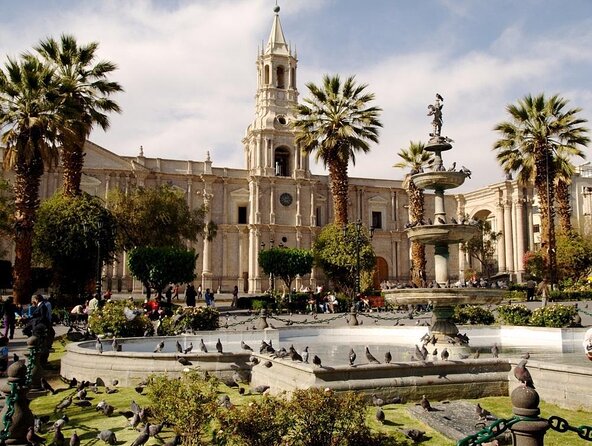
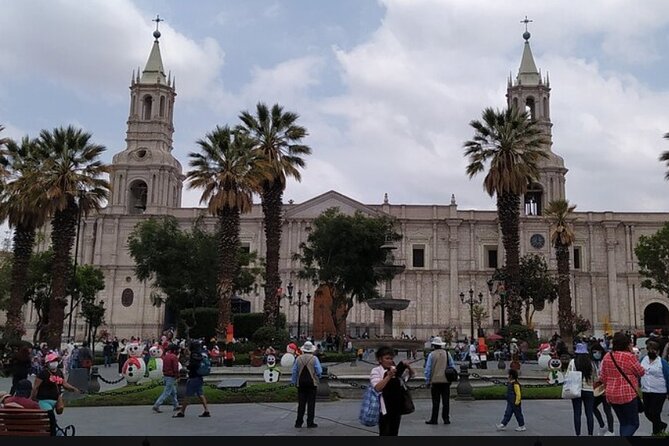
The main discussion begins at Plaza de Armas, Arequipa’s central gathering place. The guide explains the founding of the city, changes over time, the Cathedral, and the effects of earthquakes on its buildings and identity.
You spend about 25 minutes here. That is enough time for a clear introduction, though not enough for a full architectural study. I find this useful early in a stay because it gives you details to notice when you walk through the square again on your own.
Arequipa’s buildings are not simply old decorations. Earthquakes have repeatedly forced repairs, rebuilding, and changes in style. The guide’s explanation helps you see why the city’s architecture has the look it does instead of treating every stone facade as a pretty backdrop.
This is also a good point to ask questions. Jose is described as patient and willing to answer many questions, while Daniel has explained the city’s people, industries, religions, architecture, and food traditions in detail. The exact guide may vary, but the small group gives you a better chance to shape the conversation.
The Company of Jesus and its gold-covered altars
On one side of Plaza de Armas, the old Company of Jesus complex brings the tour into Arequipa’s religious and colonial past. The church is known for its baroque facade, quieter interior, and altars covered in gold leaf.
The stop at the Church of the Company of Jesus lasts about 10 minutes. That is brief, so think of it as an orientation rather than a complete church visit. You get the key points from the guide and can return later if you want more time with the facade or interior.
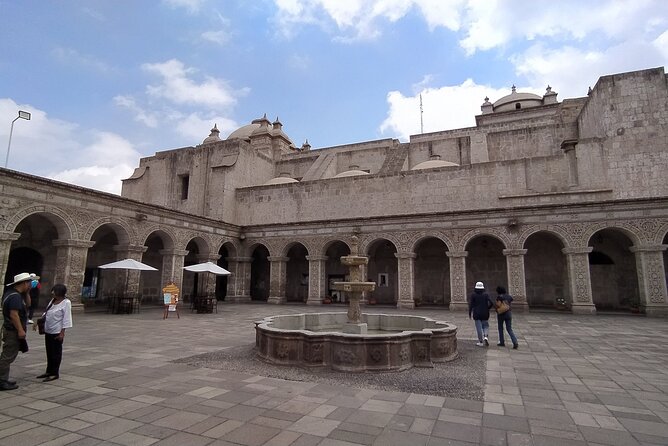
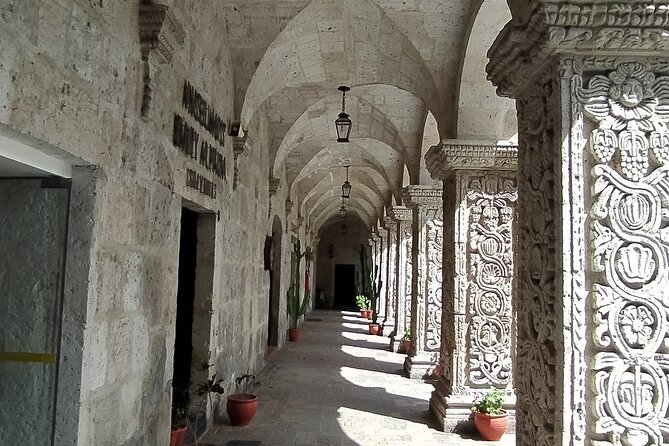
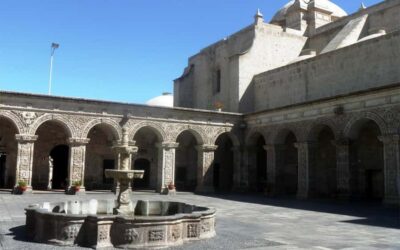
The route later returns to the Company’s former cloisters for about 40 minutes. These cloisters were connected to the Jesuit school and convent and are described as one of the city’s best examples of viceregal religious architecture.
That longer stop gives the architecture more room to breathe. Courtyards, arches, and carved details are easier to appreciate when you are not rushing through a single photo stop. It also gives the walking tour a calmer finish before the food and pisco portion.
One practical point: entrance tickets are not included. The listed stops themselves have free admission, but the tour’s terms state that entrance tickets are extra. Ask your operator about any site you hope to enter in depth.
Somewhere else entirely, still within reach of Arequipa:
- From Arequipa: Colca Canyon Full-Day Guided Tour with Meals
★ 4.5 · 982 reviews - Tour to the Salinas Lagoon and National Reserve in Arequipa
★ 4.5 · 548 reviews - From Arequipa: Sillar Route Trek
★ 4.2 · 461 reviews - Arequipa: Chili River White Water Rafting with Hotel Pickup
★ 4.8 · 329 reviews
San Camilo Market is the tour’s most useful food stop
The 30-minute visit to San Camilo Market is where the tour becomes most connected to daily life. This is not just a place to admire colonial stonework. It is where you see the products used in the region, including tubers, meats, fruits, and other market goods.
I would pay close attention here. A guide can point out products that are easy to miss when you are walking alone, and the market gives you a better sense of Arequipa’s food culture than a polished restaurant menu does.
The tour may include fruit samples or small tastes from different stands. Jose has taken groups through several food stalls before settling in for queso helado and pisco later. Another guide, Jorge, has included local artisan products and food samples along the way.
The market is also the place where the experience can vary most. What you see and taste depends on what is available that day, and 30 minutes passes quickly. You will not have time to explore every aisle or shop for a full meal.
That is why I recommend eating beforehand if you choose an afternoon departure. Lunch is not included, and the tour is too long to treat the included samples as a substitute for a meal.
Queso helado and pisco finish at Fundo el Fierro
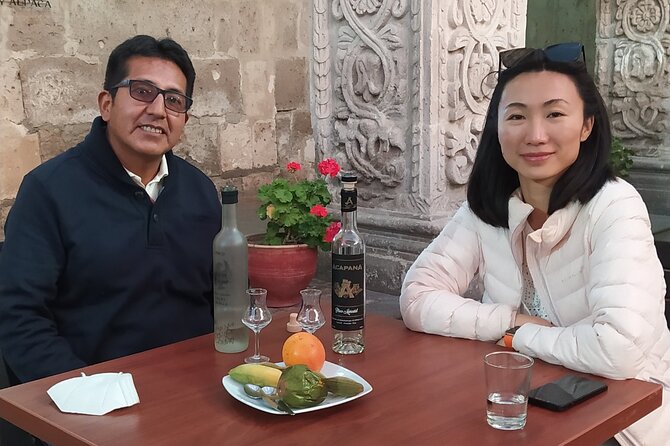
The tour ends at Centro Artesanal Fundo el Fierro on C. Zela, near San Francisco Plaza. This is where the pisco tasting takes place, along with the traditional dessert and local fruit included in the price.
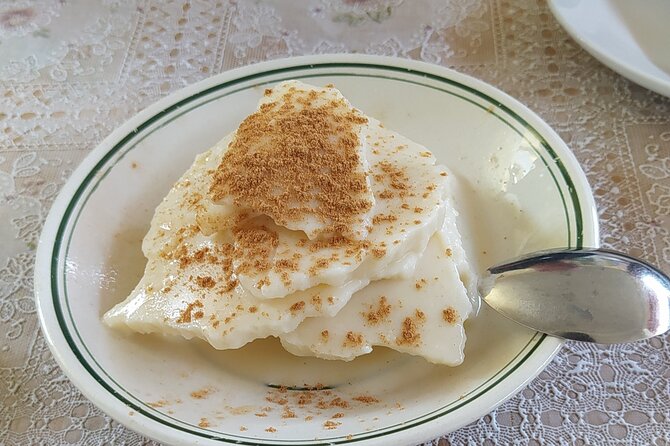
Queso helado is one of Arequipa’s signature treats. Despite its name, it is not a conventional block of cheese. It is a cold, creamy dessert, and the tasting gives you a chance to try a local specialty in the place where the walk finishes.
The pisco portion is more than a quick shot if your guide follows the approach described by previous guests. Jose has explained what pisco is and how it is made, while the tasting has also included pisco sour at the finishing venue. The exact format can change, so do not assume every departure includes the same drink or number of samples.
Soda and bottled water are not included. Bring water, especially if you are walking in warm conditions or adjusting to Arequipa’s altitude. The activity asks for moderate physical fitness, and the combination of steady walking and tasting is easier when you are properly hydrated.
I like the order of this finish. You learn about the city first, then sit down with a local dessert and pisco while the details are still fresh. Just remember that the food component is concentrated near the end.
What the guides add to the experience
The guide can make this tour either a pleasant city walk or a genuinely useful introduction. Jose has been especially good at linking the buildings to Arequipa’s story, answering questions, and explaining pisco without making the tasting feel rushed.
Daniel has also covered a wide range of subjects, including religious buildings, local industries, food, alpaca wool, and vicuña. The route may include information about Mundo Alpaca and the wool trade, although this is not listed as one of the six main stops, so you should not count on it as a guaranteed part of every departure.
Jorge has been described as friendly and close to his guests, with a habit of taking the group to key city sights and introducing local handmade products. These names are useful when you book or meet your guide, but the operator may assign someone else.
The maximum group size of eight is important. It gives you room to ask why a building looks a certain way, where to return for a longer visit, or what you are tasting at the market. On a private or very small departure, the guide may also spend more time with your questions.
There is one fair limitation. The tour follows a set route, and one guest wanted a shorter walk but felt the guide did not adapt enough. If you tire easily or prefer a flexible schedule, tell the operator before setting out and understand that the full experience is planned to last roughly three and a half hours.
Timing, meeting points, and practical planning
The activity begins at Plaza de Armas Arequipa, postcode 04001. It finishes at Centro Artesanal Fundo el Fierro, at C. Zela 202, near Plaza San Francisco. Since the end point differs from the start, you should plan your next activity from San Francisco rather than expecting to return to Plaza de Armas.
The tour is booked, on average, 13 days ahead. That is not a rule, but it is a useful hint if your schedule is fixed. A small group capped at eight can fill sooner than a large bus tour.
Confirmation arrives when you book. Service animals are allowed, and the route is near public transportation. You still need a moderate fitness level because this is a walking activity with several stops and a total duration of about three hours and 30 minutes.
Good weather is required. If poor weather cancels the tour, you are offered a different date or a full refund. You can also cancel for a full refund up to 24 hours before the start time. Changes or cancellations inside that 24-hour window are not accepted, and the cut-off uses local Arequipa time.
Who should book this Arequipa walk?
I would recommend it to solo visitors, couples, and families who want a gentle first look at the historic center without paying much. It is especially useful if you want both cultural context and a few food experiences, rather than choosing between a city walk and a tasting.
It also suits people who like to ask questions. The small group and guides such as Jose, Daniel, and Jorge make the experience more conversational than a fixed audio guide.
Families should consider the length. The tour is not described as difficult, but it is long enough that young children or anyone who dislikes walking may lose interest before the tasting.
Food-focused visitors should set expectations correctly. San Camilo Market is the strongest culinary stop, but the activity is not a full lunch and does not promise a large number of dishes. Eat before an afternoon departure, then treat the market samples, queso helado, fruit, and pisco as the food portion.
Architecture fans will probably get the most from the route. The churches, cloisters, plazas, and earthquake stories form the main body of the tour, with food providing a memorable finish.
Should you book the Arequipa Tasting Tour?
Book it if you want an inexpensive, small-group orientation that combines Arequipa’s central sights with local flavor. At $13, the market visit, guide time, dessert, fruit, and pisco tasting make good value, particularly at the start of your stay.
Skip it if you want a short tasting-only experience, a full meal, or long interior visits at the churches. The walk is the main event, and the tasting arrives at the end.
My practical choice would be to schedule it early in your Arequipa stay, eat lunch first if you go in the afternoon, bring water, and keep another hour free afterward if you want to revisit a favorite church or market stall. For a modest price, it gives you the city’s basic orientation, several useful food discoveries, and a clearer idea of where to spend your own time next.
FAQ
How much does the Arequipa Tasting Tour cost?
The tour costs $13 per person.
How long does the tour last?
The experience lasts approximately three hours and 30 minutes.
Where does the tour begin?
The meeting point is Plaza de Armas Arequipa, Arequipa 04001, Peru.
Where does the tour finish?
The tour ends at Centro Artesanal Fundo el Fierro, at C. Zela 202 in Arequipa. The pisco tasting takes place there.
What food and drinks are included?
The price includes a pisco tasting, a traditional dessert, and local fruits. The experience also includes queso helado, as described in the tasting details.
Are lunch, bottled water, and soda included?
No. Lunch, bottled water, and soda are not included. If you take the tour in the afternoon, it is recommended that you eat lunch beforehand.
How many people can join the tour?
The maximum group size is eight people.
Is the tour suitable for people with limited mobility?
The activity requires a moderate level of physical fitness. It is a walking tour, and the provided information does not give specific accessibility details beyond allowing service animals and noting nearby public transportation.
Can I cancel for a refund?
You can cancel at least 24 hours before the start time for a full refund. Cancellations or changes made less than 24 hours before the start time are not accepted. If poor weather causes the operator to cancel, you will be offered another date or a full refund.
Recently added around Arequipa
- From Arequipa: 1 Day Tour to the Colca Canyon + Buffet lunch★ 4.2 · 3 reviews
- Arequipa: Colca Canyon Trekking 2 days and 1 night + food★ 4.8 · 3 reviews
- Arequipa: Catarata de Pillones and Bosque de Piedras Tour★ 4.3 · 3 reviews
- 2-Day Colca Canyon Tour to Puno with accommodation★ 3.9 · 3 reviews
- From Arequipa: Full Day Colca Canyon Tour★ 4.5 · 3 reviews
- From Arequipa: Colca Canyon and Condor Watching Day Trip★ 3.7 · 3 reviews
- Cooking Class Typical Food in Arequipa★ 3.9 · 3 reviews
- Walking tour through the Historic Center of Arequipa★ 4.0 · 3 reviews
Arequipa Tours, compared.
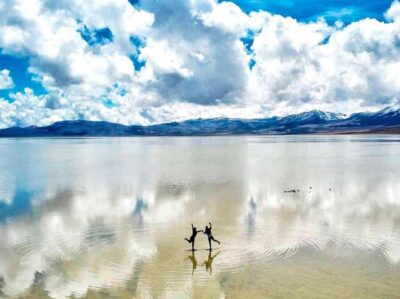
Tour to the Salinas Lagoon and National Reserve in Arequipa
Read our review →
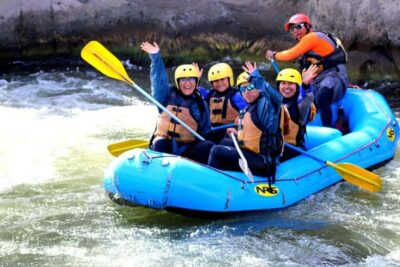
Chili River White Water Rafting with Hotel Pickup
Read our review →
2-Day Tour Colca Canyon in Arequipa with end in Puno
Read our review →
Walking tour in the Historic Center of Arequipa
Read our review →Browse the lists this tour appears in