
Reviewed · LIMA TOURS
Half-Day Local Communities and Social Tour in Lima
Lima’s polished districts tell only part of the story. This private tour takes you into the hill communities of San Juan de Miraflores, then to Nueva Esperanza Cemetery, where colorful graves and Andean burial customs fill a vast desert setting. I like the direct contact with local families and the home-cooked meal, and I like that part of the fee supports a local social project. The tradeoff is real: the visit can feel emotionally heavy, and the rough paths, strong sun, and long traffic delays demand some stamina.
I also like the way the tour uses both a bilingual guide and a local guide. Guides such as Alfredo handle the history and translation, while community members explain daily life in their own neighborhood. Just keep your expectations honest: this is not a polished sightseeing loop, and some planned activities, including visits with children, may not be taking place that day.
Key points to know before booking
- One of the world’s largest cemeteries: Nueva Esperanza spreads across the hills, with about one million people buried there according to the information shared on the tour.
- A meal in a local home: Lunch is prepared by a local cook and may include chicken, rice, and a sweet purple corn drink.
- A private, personal format: Your group travels by private vehicle, with hotel pickup and drop-off included.
- A community-based visit: You meet small-business owners, local families, and community leaders rather than seeing Lima only through tourist districts.
- A social contribution is included: Part of the tour price goes toward the project visited in the settlement.
- Plan for uneven ground and fierce sun: Wear sneakers, bring water and sunscreen, and allow extra time for Lima traffic.
Why this tour shows a less polished Lima
Lima is often presented through Miraflores, Barranco, fine restaurants, and grand colonial buildings. Those places matter, but they do not explain how most of the city works. This outing takes you beyond the familiar postcard version and into communities built up the sides of Lima’s dry hills.
You will see homes and streets shaped by limited water, difficult terrain, and years of local effort. The point is not to treat hardship as a spectacle. The better reason to come is to understand how residents organize, work, raise families, and create support systems in places that receive fewer services.
The experience is guided, private, and arranged around personal meetings. That makes it more thoughtful than simply driving past a poor district. You have a chance to ask questions, hear individual stories, and understand where the tour’s contribution goes.
Still, this kind of visit requires care. You should arrive ready to listen rather than compare your life with someone else’s. The setting can be confronting, especially if you have not seen how families manage without steady access to water or secure housing.
more Lima days to weigh up
- Lima’s Vibrant Heritage: Exploring the City’s Landmarks Half-day
★ 4.5 · 581 reviews - Lima: Pachacamac Ruins & Barranco Half-Day Guided Tour
★ 4.6 · 296 reviews - Pre Inca Temple of Pachacamac Half-Day Tour from Lima
★ 4.5 · 283 reviews
The 50-minute drive to Nueva Esperanza Cemetery
The first transfer usually takes about 50 minutes, though Lima traffic can stretch that considerably. Your hotel pickup and private transportation remove much of the hassle, but you should tell the operator if you have a flight, train, or other fixed appointment afterward.
The drive itself helps you see how large and uneven Lima is. From the more comfortable central districts, the city changes as it reaches the hills and settlements. You may spend part of the ride discussing Peruvian customs, urban growth, and the communities ahead with your bilingual guide.
The tour is commonly led by guides such as Alfredo, whose role includes explaining what you are seeing and translating conversations. A strong guide matters here. Without context, the neighborhood might be reduced to a series of startling images. With context, you can begin to understand the work that residents have put into making a community on difficult ground.
Nueva Esperanza Cemetery and Andean funeral customs
Nueva Esperanza Cemetery is the tour’s most visually striking stop. It is described as the second-largest cemetery in the world, with roughly one million burials. The cemetery spreads across the hills among human settlements, rather than sitting apart from the city.
Give yourself time to look closely. Graves may be marked with crosses, flowers, personal objects, and items linked to spiritual practices. The setting reflects a blend of Catholic tradition and Andean beliefs, with families maintaining connections to the dead in ways that can feel more communal and celebratory than the cemetery customs familiar to many North American and European visitors.
The Day of the Dead is an important example. Families may visit loved ones with food and drink, turning remembrance into a shared gathering. Your guide can explain how these traditions fit into local life, rather than leaving you to guess from what you see.
You have about 30 minutes here, which is enough for an introduction and photographs but not a long, detailed exploration. The views across the cemetery and hills are excellent for photography. Ask before photographing people, graves, or private family gatherings, and keep your camera use respectful.
The cemetery is also a reminder that Lima is a desert city. Dust, harsh light, and bare hills shape the experience. Even under cloud cover, the sun can be strong. A hat, sunscreen, and water are not optional extras for most of the year, especially from December through April.
Meeting a local craft worker in San Juan de Miraflores
After the cemetery, the tour continues to a human settlement in San Juan de Miraflores. The wording may sound formal, but the setting is a lived-in neighborhood where families have built homes and services over time.
One early stop is the home workshop of a local woman who has started her own small business. She explains her work, her products, and the path she has taken to support herself. The visit may include handmade crafts, with some proceeds helping her continue that work.
A previous tour arrangement included handicrafts sold through a fair-trade group called Bridge of Hope. Another local project connected with the wider social work is Asociación Grupo de Trabajo Redes AGTR, also known as La Casa de Panchita. The precise people and organizations you meet can vary, but the basic idea is consistent: your visit links local enterprise with community support.
You may hear a prepared introduction from the host. That is not unusual in a visit built around a small business and a scheduled group. The useful part comes when you ask questions. Ask about her work, household, goals, and what makes selling crafts difficult. You are more likely to have a genuine exchange if you show interest beyond making a purchase.
The surroundings may be rough. Paths can be uneven, and homes may be made from basic materials. This is not an attraction designed for comfort, so wear closed shoes or sneakers instead of sandals.
Somewhere else entirely, still within reach of Lima:
- Lima: Ultimate Peruvian Food Tour
★ 4.9 · 700 reviews - Full Day Paracas Ica and Huacachina from Lima All Included
★ 4.5 · 623 reviews - From Lima: Day trip to Paracas, Ica and Oasis Huacachina
★ 4.6 · 409 reviews - Private transfers from Lima Airport or to Lima Airport
★ 4.0 · 359 reviews
A homemade lunch and the story behind it
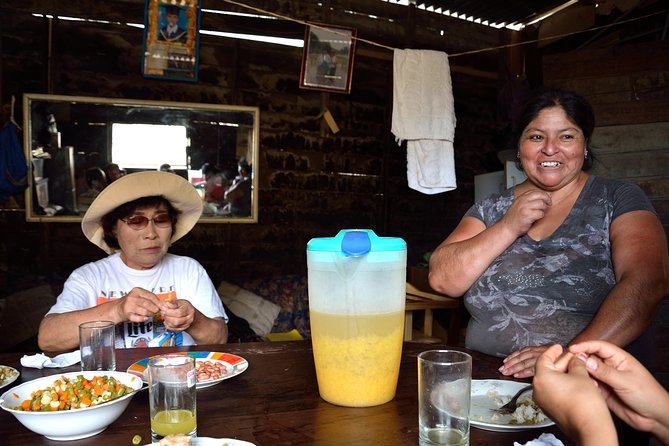
The heart of the visit is lunch in a local home. A local cook prepares the meal, giving you a direct connection to everyday Peruvian hospitality rather than a restaurant version designed for an international audience.
A meal described from this experience included chicken and rice, along with a sweet red drink made from purple corn. The exact menu can vary, so tell the operator about food restrictions when you book. You should also mention any physical limitations in advance.
The meal is valuable for more than its food. The cook may explain her own life and the work she does for neighbors. One account describes a woman who rises early to prepare breakfast for local children and older people who cannot afford it. Stories like this show the quiet labor behind community support, work that rarely appears in a standard city tour.
At the same time, you should understand that lunch takes place in a basic home, not a restaurant. Conditions may include dust, flies, limited space, and little or no running water. That can be uncomfortable, but it is also part of the reality the tour is trying to explain. If you need a highly controlled dining environment, this outing may not suit you.
I would treat the meal as a chance to be gracious and flexible. Eat what you can, ask polite questions, and remember that accepting hospitality carries more weight than judging the house by standards that do not fit the setting.
Walking the neighborhood with a local guide
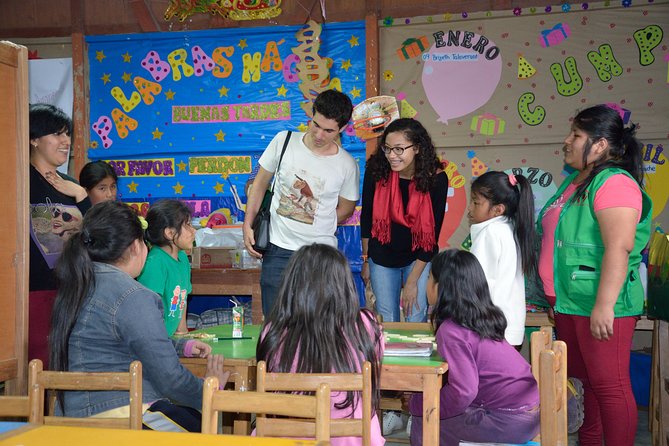
After lunch, a local guide takes you through the neighborhood. This second guide is an important part of the design. Your bilingual guide can translate and provide broader context, while the local guide can point out familiar places, introduce residents, and explain the neighborhood from personal experience.
You may meet community leaders and hear about the practical problems residents face. Water access is one example. Lima sits in a desert, and households in some areas rely on delivered water rather than a regular indoor supply. The details of water distribution can vary, but the larger point is clear: basic tasks require planning when water is scarce.
The walk also shows what residents have accomplished. Communities have worked together to create local groups, support networks, and projects for children. You are not simply being shown what is missing. You are also shown the effort that goes into building something useful with limited resources.
A social project connected with the tour supports children between roughly six and twelve years old. It may provide a place for games, conversation, tutoring, or other activities. On some days, you may see the children’s programs in action. On other days, no children may be present, so do not book this expecting a guaranteed meeting with them.
That uncertainty is worth noting for families. A parent traveling with children may find the visit meaningful and eye-opening, especially if the children are old enough to ask thoughtful questions. It can also be a lot to process. Keep the conversation respectful and avoid presenting poverty as a lesson meant to make children feel guilty about their own lives.
What the tour supports
The contribution included in the price is one of the strongest reasons to consider this experience. Your visit supports the social project connected with the community, rather than treating the neighborhood as a backdrop for photographs.
The project may work with children, local families, or community programs. The information available describes support for children from six to twelve and mentions activities that give them a place to play and speak with trusted adults. One related nonprofit helps child domestic workers, while other efforts support local craft workers and education.
You should not assume that every tour follows the same exact route or meets the same person. Local schedules, community activities, weather, and safety conditions can change the day. The operator may alter the program if conditions become unsafe or if a planned activity is unavailable.
For me, that flexibility is acceptable because the point is to meet real people in a working community, not to watch a fixed performance. You get the most from the tour if you see the social contribution as part of the price, not as a bonus added to a sightseeing trip.
Is $182 a fair price?
At $182 per person, this is not a cheap half-day outing. The cost makes more sense when you consider that it is a private experience lasting about five to six hours, with hotel pickup and drop-off, private transportation, a bilingual guide, a local guide, lunch, and a contribution to the community project.
The value is personal rather than luxurious. You are paying for access, translation, planning, and a responsible introduction to places you would have difficulty visiting alone. You are also paying for a small-scale experience rather than being folded into a large bus group.
For one person or a couple, the price may feel high compared with a conventional Lima city tour. For a small private group, the value improves because the vehicle and guiding costs are shared. A group of four can also make the conversations feel more natural without losing the private format.
The experience has received a 5 rating from 40 ratings, with 100 percent recommending it. That record suggests the tour is delivering what it promises, especially for people seeking direct contact and a serious look at another side of Lima. It does not change the fact that the outing is physically and emotionally different from a relaxed food walk or museum visit.
Comfort, safety, and timing
Expect five to six hours from pickup to return, with traffic taking up a meaningful part of that time. The first drive alone can last about 50 minutes, and Lima’s roads may slow you further. If you have an evening flight or a strict schedule, leave a generous buffer.
The walking is limited, but some ground is uneven and may involve hills. A moderate level of fitness is recommended. Serious back or neck problems are listed as reasons to avoid the tour, and you should report medical or mobility concerns before booking.
Wear sturdy, comfortable shoes. Sandals are specifically discouraged. Bring:
- Water
- Sunscreen
- A hat
- Comfortable sneakers
- Any required medication
- Details of food restrictions provided in advance
The operator can cancel or change the tour because of very poor weather, political conditions, or another unexpected problem. If that happens, you can choose another date or receive a full refund. You can also cancel for a full refund up to 24 hours before the start time, but late cancellations and late changes are not accepted.
This is a private activity, so only your group participates. That is useful when the subject matter leads to sensitive questions. You can pause, ask for clarification, and take the day at a more personal pace than on a large group excursion.
Who should book this Lima experience?
I would choose this tour if you have already seen Lima’s main historic and coastal districts and want a clearer picture of the city’s social reality. It suits people who value conversation, local food, and community projects more than a long list of famous sights.
It can work well for families with older children and teenagers, provided you prepare them to listen respectfully. It is also a good choice for anyone who wants a meaningful final day in Lima after visiting other parts of Peru.
I would skip it if you want polished facilities, guaranteed children’s activities, easy walking, or a predictable schedule. The cemetery and settlement can be confronting, and the physical setting is basic. You should also avoid squeezing it between time-sensitive travel connections because traffic is hard to predict.
FAQ
How long does the tour last?
The experience lasts approximately five to six hours, including transportation between stops.
Does the tour include hotel pickup and drop-off?
Yes. Hotel pickup and drop-off are included, along with private transportation.
Is lunch included?
Yes. Lunch is prepared by a local cook in a community home. A described meal included chicken, rice, and a sweet drink made from purple corn, but menus can vary.
What should I wear and bring?
Wear comfortable closed shoes or sneakers because some walking takes place on uneven terrain. Bring water, sunscreen, and a hat because the sun can be strong even when the sky is cloudy.
Is the tour suitable for people with limited mobility?
The tour requires a moderate level of physical fitness and includes some walking on uneven ground. It is not recommended for people with serious back or neck problems. Tell the operator about physical restrictions when booking.
Can I cancel the tour for a refund?
You can cancel at least 24 hours before the start time for a full refund. Cancellations or changes made less than 24 hours before the start time are not accepted for a refund. The operator may also cancel or alter the tour because of severe weather, political conditions, or other unexpected events.
Should you book it?
Book this tour if you want to meet people, share a home-cooked meal, and understand how Lima’s hill communities support themselves. The cemetery, local workshop, neighborhood walk, and social project create a day with real substance, and guides such as Alfredo can make translation and sensitive conversations much easier.
Skip it if your idea of a good half-day means air-conditioned comfort, famous architecture, and a tightly timed route. At $182, the tour is best value for people who want a private, human-centered look at Lima and are willing to accept rough conditions, changing plans, and difficult subjects.
Recently added around Lima
- Enjoy Lima Walking Historic Center, Plaza San Martin and Plaza de Armas★ 5.0 · 3 reviews
- From Lima: City tour Prehispanic + Colonial & Modern Lima★ 5.0 · 3 reviews
- Lima: City Sightseeing Panoramic Bus Tour★ 3.3 · 3 reviews
- City Tour Colonial and Modern Lima for 5 Hours★ 3.2 · 3 reviews
- Lima: Lunuhuaná Extreme All In + Cerro Azul + Rafting + ATV + Canopy★ 4.4 · 3 reviews
- Lima: Shanty Town Exploration★ 5.0 · 3 reviews
- Lima: Tour to Huaca Pucllana and Huaca Mateo Salado★ 5.0 · 3 reviews
- Lima: Historic Center Walking Tour with Pisco Sour Tasting★ 5.0 · 3 reviews
Lima Tours, compared.


Full Day Paracas Ica and Huacachina from Lima All Included
Read our review →
Lima’s Vibrant Heritage: Exploring the City’s Landmarks Half-day
Read our review →

Paracas and the Huacachina Oasis Guided Day Tour
Read our review →
The Charm of Barranco & Pre Inca Pyramid in Miraflores
Read our review →
Full Day to Paracas and Huacachina Desert Oasis
Read our review →
Pachacamac Ruins & Barranco Half-Day Guided Tour
Read our review →Browse the lists this tour appears in