
Reviewed · CUSCO TOURS
Guided tour of Cusco and its 4 ruins
Cusco’s best introduction is a split-level history lesson: Spanish colonial art in the city center, followed by massive Inca stonework in the hills. This tour covers the Cathedral, Qoricancha, and all four major ruins in one outing, which saves you from arranging several separate visits.
I like the low starting price and the minibus transfer, especially for Sacsayhuamán, Qenqo, Puca Pucara, and Tambomachay. I also like that the guide leads you through both Spanish and Inca sites, rather than treating the ruins as isolated photo stops. The main concern is timing: the advertised duration varies between four and a half and six hours, and Sunday’s altered order caused one guest to miss the Cathedral and Qoricancha.
Key points to know before you book
- Six headline sights in one outing: You visit the Cathedral, Qoricancha, Sacsayhuamán, Qenqo, Puca Pucara, and Tambomachay.
- The $20 price is only the tour cost: Foreign visitors should budget another 125 soles for the three required entrance fees.
- Sunday scheduling matters: The ruins may come first, with Qoricancha and the Cathedral later.
- A bilingual guide leads the tour: Spanish and English are available, and one guide was praised for teaching history with real passion.
- Minibus transport covers the outer sites: This is useful because the four ruins sit outside the central plaza.
- The tour combines two cultures: Qoricancha and the Cathedral show how Inca and Spanish traditions overlap in Cusco.
A practical look at the Cusco itinerary
This is designed as a broad first look at Cusco, not a slow, specialist study of one monument. You begin near the center, visit the city’s major religious buildings, then ride into the surrounding hills for the four ruins.
The tour information gives a six-hour duration, but the detailed schedule describes about four and a half hours. That difference is important. You should ask for the exact start and finish time when booking, especially if you have a train, museum visit, or dinner reservation afterward.
Pickup takes place at a meeting point, followed by a return transfer to central Cusco. The exact meeting point is part of the booking details, so check it carefully rather than assuming the minibus will collect you at your hotel.
more Urubamba days to weigh up
- Machu Picchu: Group Guided Tour
★ 4.7 · 102 reviews - Machu Picchu: Tour Guide Service & Entrance Ticket Circuit-2
★ 4.6 · 90 reviews - Machu Picchu: historical and photographic guided tour
★ 4.9 · 27 reviews
Cusco Cathedral and the Plaza de Armas
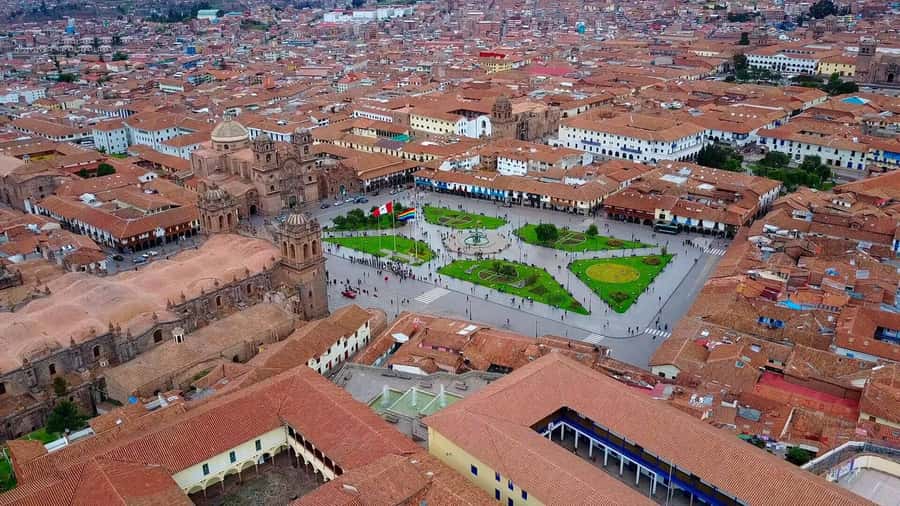
The first city-center stop is the Plaza de Armas, Cusco’s main square, where the Cathedral dominates the scene. The visit focuses on the Cathedral’s architecture and art, including decorative elements made with Inca gold.
That detail points to one of the most revealing parts of Cusco’s past. The Cathedral is not simply a Spanish building placed in an Inca city. Its art and materials reflect the meeting, and often the collision, between Spanish Catholic power and the older Inca world.
A guide adds value here because the building can otherwise feel like a grand collection of paintings, altars, and carved details. You can expect an explanation of its artistic wealth and its place in the city. The Cathedral entrance is not included, so foreign visitors pay 40 soles, listed as about $10.70. Local visitors pay 12.50 soles, listed as about $3.40.
The order is not guaranteed on Sundays. One Sunday booking began with the ruins and left Qoricancha and the Cathedral until late in the day. By then, the scheduled tour time had almost run out. If the Cathedral is a priority for you, confirm that it will be visited early or allow extra time after the tour.
Qoricancha, the Temple of the Sun
From the Plaza de Armas, you walk to nearby Qoricancha, also called the Temple of the Sun. This was one of the Inca Empire’s most important religious centers, though the exact construction date remains uncertain.
Qoricancha is especially valuable because it shows the physical meeting of Inca and Spanish cultures. The Spanish colonial church built over and around the Inca complex creates a sharp contrast between two building traditions. You can see how Inca masonry was reused and incorporated into a later religious setting.
The name Temple of the Sun gives you a clue to its original purpose, but the site’s importance reached beyond one deity. It was a major sacred center, and its remains help explain why Cusco was the heart of the Inca world.
Admission costs 15 soles per person, listed as about $4. The ticket is separate from the Cathedral and ruins entrance. Since this visit is central to the tour’s cultural story, I would not book without checking that Qoricancha is included on your chosen day.
Sacsayhuamán and the scale of Inca stonework
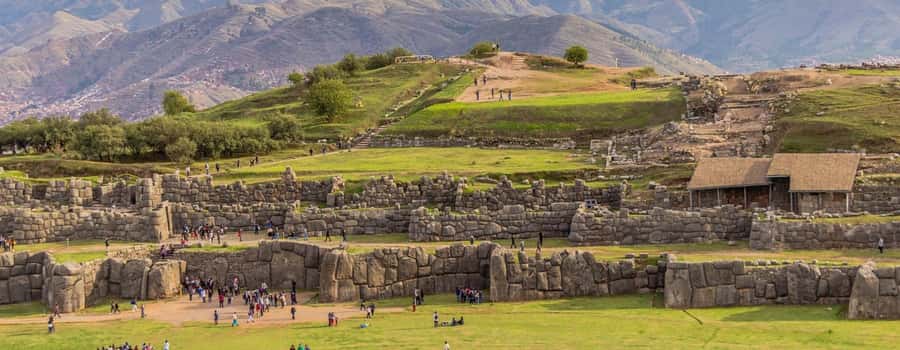
After the city-center visits, the minibus travels for about half an hour to Sacsayhuamán. This is the largest and most dramatic of the four ruins on the route.
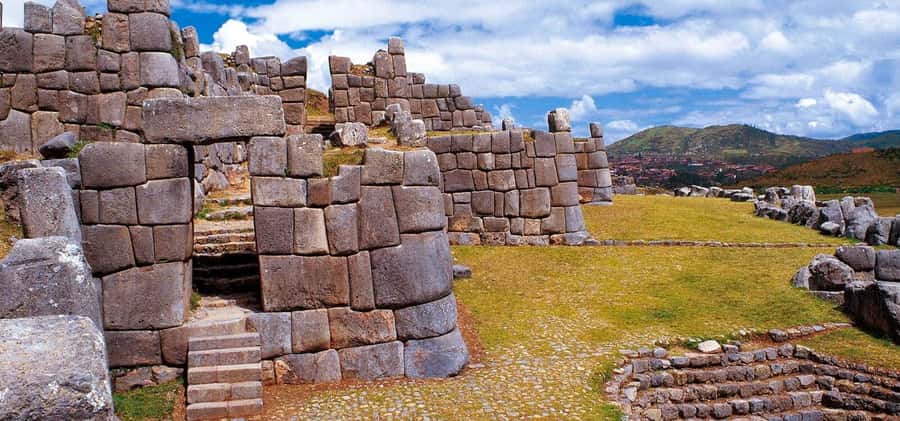
The guided visit explains why Sacsayhuamán is considered the greatest architectural work of the Incas. Its huge fitted stones are the main attraction. The site gives you a much better sense of Inca engineering than a quick look at isolated walls in downtown Cusco.
The scale also changes your understanding of the city. From the central streets, Cusco can feel like a colonial town with Inca foundations. At Sacsayhuamán, the Inca construction takes over your attention. You can expect open spaces, monumental walls, and views across the area around Cusco, though the supplied information does not specify how much free time you receive at the site.
Sacsayhuamán is included in the four-ruin admission ticket, but that ticket is not included in the tour price. Foreign visitors pay 70 soles for the four ruins, listed as about $18.80. Local visitors pay 40 soles, listed as about $10.70.
Somewhere else entirely, still within reach of Urubamba:
- Cusco:Sacred Valley Pisaq,Ollantaytambo,Chinchero with Lunch
★ 4.8 · 183 reviews - From Cusco: Chinchero, Moray, Maras and Ollantaytambo
★ 4.5 · 83 reviews - from Urubamba & Ollantaytambo:Sacred Valley Full-Day Private
★ 4.9 · 31 reviews - Cusco: One Day Tour to Machu Picchu with Train Transfers
★ 4.8 · 28 reviews
Qenqo, a sacred site with a different feel
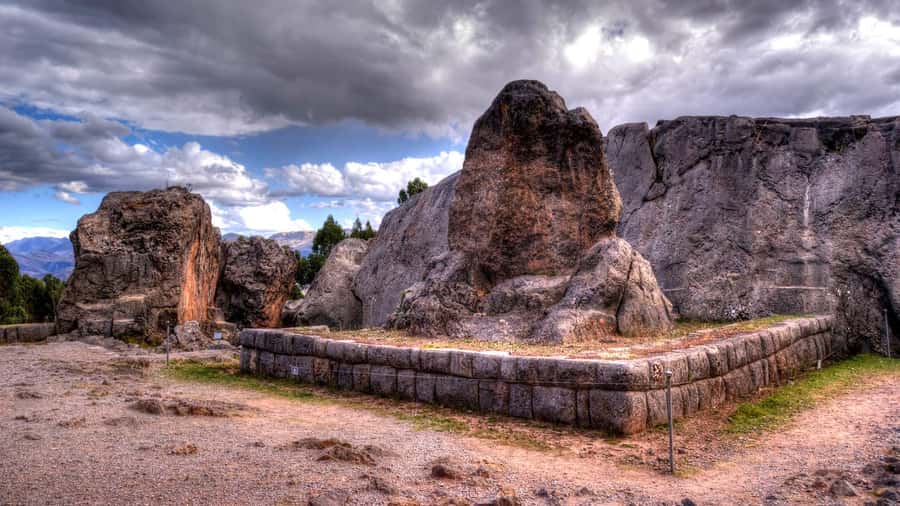
The minibus then continues to Qenqo, described as one of the most important sanctuaries of its time. Compared with Sacsayhuamán, Qenqo is less about sheer size and more about sacred use.
The word shrine matters here. This stop helps you see that Inca sites were not all forts or settlements. Some were places for ceremony and worship, with meaning tied to the rock and the setting.
Your guide explains the site during the visit, giving you a better chance to connect its physical remains with Inca religious life. The stop is part of the same four-ruin ticket, so there is no separate admission charge listed for Qenqo.
Because the tour covers four ruins in one circuit, do not expect a long, private exploration of each one. The value comes from seeing how the sites differ: Sacsayhuamán for monumental construction, Qenqo for sacred purpose, Puca Pucara for watch and control, and Tambomachay for water.
Puca Pucara, the Red Fortress
Puca Pucara is known as the Red Fortress and is presented as a watchtower. Its role adds a practical side to the route. After seeing a ceremonial sanctuary at Qenqo, you visit a site connected with observation and movement through the region.
The stop is shorter in description than Sacsayhuamán, but it helps complete the picture of how the Incas organized the area around Cusco. The four ruins were not random monuments scattered outside town. Together, they show religious, defensive, ceremonial, and water-related concerns.
The tour uses a minibus for this section, which is one of its strongest practical features. You avoid arranging separate rides between the outer sites and can spend your energy listening to the guide rather than working out the next taxi.
Tambomachay and the worship of water
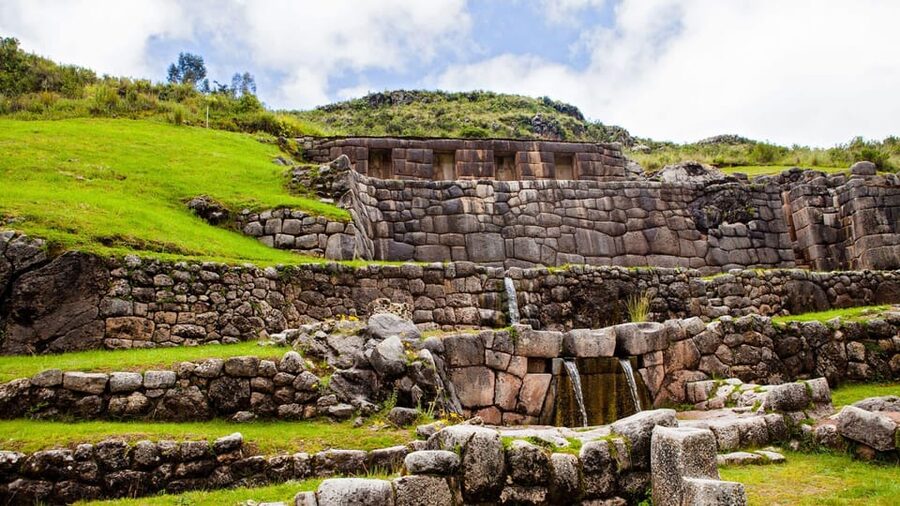
The last ruin is Tambomachay, also called the Inca Bath. Here, the Incas worshiped water, making this a fitting final stop after the fortress and sanctuary visits.
Tambomachay broadens the tour beyond stone walls and military history. Water had religious meaning, and this site shows how the Incas treated natural resources as part of sacred life. The supplied information does not describe the condition of the water channels or the amount of time spent there, so keep your expectations focused on a guided introduction rather than an extended visit.
After Tambomachay, the minibus returns you near the Plaza de Armas. The detailed description says the drop-off comes after about four and a half hours, while the activity summary lists six hours. That is not a small wording issue if you have plans later in the day.
What the $20 price really buys you
At $20 per person, the base cost is appealing. You receive pickup at the meeting point, return transport to central Cusco, minibus service, and a live guide in Spanish or English.
The entrance fees change the real cost. A foreign visitor paying all listed admissions spends:
- 40 soles for the Cathedral
- 15 soles for Qoricancha
- 70 soles for the four ruins
That totals 125 soles, listed as about $33.50. Added to the $20 tour cost, the overall outlay is roughly $53.50 per foreign visitor, using the supplied dollar conversions.
For a local visitor, the listed admissions total 67.50 soles: 12.50 soles for the Cathedral and 40 soles for the four ruins, plus 15 soles for Qoricancha. The activity information lists different rates by visitor type, so check which price applies to you before budgeting.
I still consider the package a fair deal if you want one organized introduction to Cusco. The minibus and guide save time and planning. The value drops if you mainly want the Cathedral and Qoricancha, since the ruins take up much of the day and the admission fees are extra.
The guide can shape the whole day
The strongest personal praise connected with this tour went to a guide called Doctor, described as a university professor with strong passion for history and teaching. That gives you a useful clue about the best version of this experience: the sites have more meaning when someone explains how they fit together.
Guide quality matters here because several stops are easier to appreciate with context. Sacsayhuamán needs an explanation of its construction. Qenqo benefits from a discussion of sacred use. Qoricancha and the Cathedral need a clear account of how Inca and Spanish traditions occupy the same space.
The tour is offered in Spanish and English. The booking information does not promise a particular guide, so you should not assume Doctor will lead your departure. Still, the reported quality of that guiding style is worth seeking: a teacher who explains rather than simply points.
Sunday timing and the main risk
The biggest practical warning is Sunday scheduling. On Sundays, the order may change to ruins first, followed by Qoricancha, the Cathedral, and the Plaza de Armas.
That arrangement can work if you want to finish near the center and have no fixed plans. It can fail if the Cathedral and Qoricancha are your main reason for booking. One delayed pickup meant the ruins were still being visited at 2 p.m., after the advertised four-and-a-half-hour window had nearly passed.
You can reduce the risk by asking three direct questions before paying:
- What is the exact duration on my date?
- On Sunday, will the Cathedral and Qoricancha be visited?
- What time should I expect to return near the Plaza de Armas?
The activity allows cancellation up to 24 hours before departure for a full refund, and you can reserve now and pay later. Those options help if your schedule is still changing, but they do not replace checking the Sunday order.
Who should book this Cusco tour?
I would choose this tour if you have limited time in Cusco and want the main sights handled in one half-day outing. It suits you if you prefer a guide’s explanation to independent reading and if you like having transport between the four outer ruins.
It also works well as an early orientation to the city. After seeing Qoricancha, the Cathedral, and Sacsayhuamán, you will have a clearer sense of how Cusco’s Inca and Spanish layers fit together.
I would hesitate if you need a firm four-and-a-half-hour schedule. The conflicting duration information and the Sunday order create too much uncertainty for a tight itinerary. I would also think twice if you want long, quiet visits at each ruin, since the route covers six major sights in one outing.
Should you book it?
Book it for breadth, transport, and guided context. At $20 before admission fees, it is a sensible way to connect Cusco’s central monuments with Sacsayhuamán, Qenqo, Puca Pucara, and Tambomachay.
Before you commit, confirm the duration and Sunday order. If Qoricancha and the Cathedral matter most, make sure they will not be left until the end. With that check completed, this is a useful first tour for a visitor who wants the essential Cusco story in one organized trip.
FAQ
How long does the tour last?
The activity summary lists a six-hour duration. The detailed schedule describes a four-and-a-half-hour outing, so you should confirm the exact timing for your date before booking.
Which places are included?
The route includes Cusco Cathedral, Qoricancha, Sacsayhuamán, Qenqo, Puca Pucara, and Tambomachay.
Is transportation included?
Yes. The tour includes pickup at the meeting point, minibus transportation to the ruins, and a return transfer to central Cusco.
Is a guide included?
Yes. A live guide is included, with Spanish and English available.
Are entrance fees included in the $20 price?
No. The Cathedral, Qoricancha, and four-ruin entrance fees are separate.
How much are the entrance fees for foreign visitors?
The Cathedral costs 40 soles, Qoricancha costs 15 soles, and the four ruins cost 70 soles per foreign visitor.
Can the tour order change on Sundays?
Yes. On Sundays, the ruins may be visited first, followed by Qoricancha, the Cathedral, and the Plaza de Armas.
Can I cancel the booking?
Yes. You can cancel up to 24 hours in advance for a full refund. The activity also offers reserve now and pay later.
Recently added around Urubamba
- From Cusco:Chinchero, Moray, Maras, Ollantaytambo with lunch★ 5.0 · 3 reviews
- From Cusco: Sacred Valley & Moray, Salt Mines with Lunch★ 4.6 · 3 reviews
- From Cusco: Sacred Valley VIP Tour with Buffet Lunch★ 4.7 · 3 reviews
- Peru in 5 days: Lima, Cusco, Machupicchu & Rainbow Mountain★ 5.0 · 3 reviews
- Cusco | Visit Maras, Moray, Chinchero, Pisac | Valle Vip★ 4.4 · 3 reviews
- 1 Day – Humantay Lake★ 3.1 · 3 reviews
- Classic Sacred Valley full day★ 5.0 · 3 reviews
- Sun and Moon Tour★ 4.5 · 3 reviews
Cusco Tours, compared.
Humantay Lake Tour with Breakfast and Buffet Lunch
Read our review →
Sacred Valley & Maras Salt Mines Tour with Lunch
Read our review →
Moray, Maras Salt Mines & Chinchero Weavers Tour
Read our review →


Half-Day City Tour with Sacsayhuaman and Q’enco
Read our review →
Sacred Valley, Pisac, Ollantaytambo, Salt Mines Moray
Read our review →