
Reviewed · CUSCO TOURS
From Cusco: City tour 4 ruins + Qoricancha
Cusco’s famous Qoricancha and four nearby Inca sites make a smart first look at the city. You begin with the former Temple of the Sun, then ride uphill to Sacsayhuamán, Qenqo, Puca Pucara, and Tambomachay, seeing how Inca religion, defense, stonework, and water worship fit together.
I like the low $11 price and the simple half-day format. I also like that transport and a bilingual guide are included, with strong praise directed at guides Werner and Angélica for their care and clear explanations. The catch is that the archaeological entrance ticket costs extra, and shopping stops or late transport can leave the final sites feeling rushed.
Key points to know before booking
- Qoricancha starts the cultural story: See how an Inca religious center was reshaped by Spanish colonial builders.
- Sacsayhuamán is the main event: Its huge fitted stones and hilltop setting give the tour its biggest visual impact.
- Four sites fit into five hours: You get broad coverage, but not much freedom for a slow, private visit.
- The $11 price excludes admission: Budget separately for the required boleto turístico.
- Guides can make the difference: Werner, Angélica, and Sam have earned especially warm comments for their help and explanations.
- Shopping stops need watching: A long clothing-shop visit has reduced time at the last ruins for some groups.
Why this half-day tour works in Cusco
I see this outing as an introduction to Cusco rather than a full archaeological study. In about five hours, you move from a Spanish-built city center to four Inca sites outside town, gaining a useful sense of how the empire used religion, military planning, ceremonial spaces, and water.
The morning departure meets near the Plaza de Armas between 8:40 and 9:00 a.m. and usually returns around 2:30 p.m. The afternoon option meets between 12:40 and 1:00 p.m. and finishes around 6:30 p.m. That gives you a choice between cooler morning hours and a later start after breakfast or another morning activity.
I especially like the format for your first day in Cusco. You see major sights without arranging several taxis, and the steady movement between sites can help you get used to the city’s high altitude. Still, take it gently. A five-hour outing includes walking, stairs, sun, and visits at elevated archaeological sites.
The group meets in or near the Plaza de Armas, then walks about three blocks to Qoricancha. Pickup help is also included. A guide is expected to contact you about 15 minutes before pickup, and you should wait roughly 10 minutes in your hotel lobby if hotel pickup applies. Plaza meeting instructions can feel confusing, so arrive early and confirm your guide’s name and vehicle before setting off.
More City Tours in Cusco
- Cusco: Half-Day City Tour with Sacsayhuaman and Q’enco
★ 4.6 · 1,129 reviews - City Tour Cusco Qoricancha Sacsayhuaman y Tambomachay
★ 4.7 · 617 reviews - Cusco: Sightseeing Tour of the City on an Open-Top Bus
★ 4.0 · 481 reviews
Qoricancha: Inca gold beneath Spanish stone
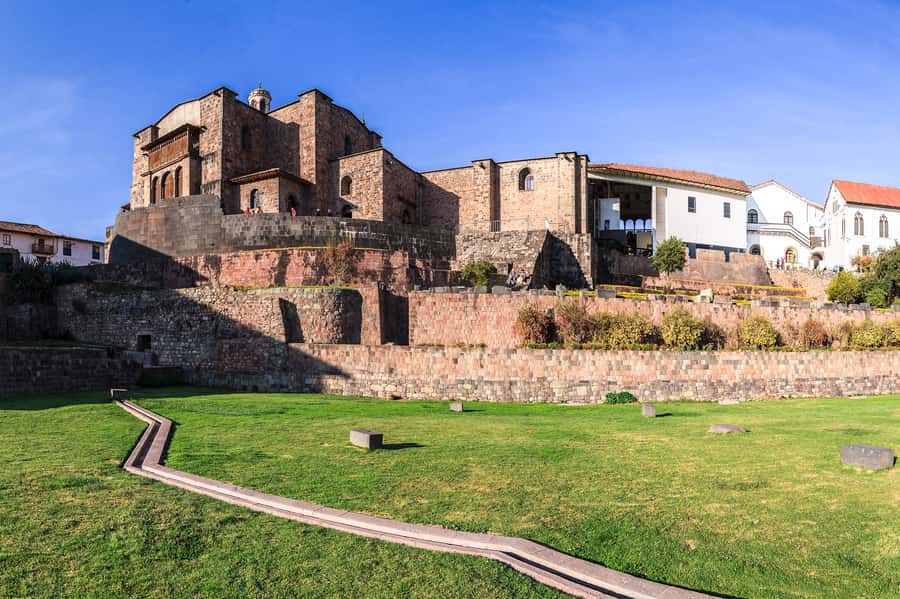
Qoricancha is the strongest opening because it shows Cusco’s two cultures in one compact place. The Inca Temple of the Sun was one of the empire’s most important religious centers. After the Spanish conquest, colonial construction altered the complex, leaving you with a striking contrast between Inca stonework and Spanish religious architecture.
Your guide leads the visit inside the religious complex. This is where the tour’s theme becomes clear: Spanish Cusco was built over, beside, and sometimes directly against Inca Cusco. The site is not simply a set of old walls. It helps you understand why the city feels both Andean and colonial at the same time.
Allow yourself to look closely at the masonry. Inca builders fitted stones with remarkable precision, creating joints that need no thick mortar. The guide’s explanation matters here, since an unhurried story can turn a wall into evidence of engineering, power, and belief.
Qoricancha is also the place where guide quality first matters. Angélica has been singled out for making the historical material engaging, and Werner has been praised for being attentive throughout the visit. You should expect the guide to provide the main context, but ask questions when something catches your eye. The value of this stop rises sharply when the commentary connects the building to the later Spanish use of the site.
Sacsayhuamán and the stones that define Cusco
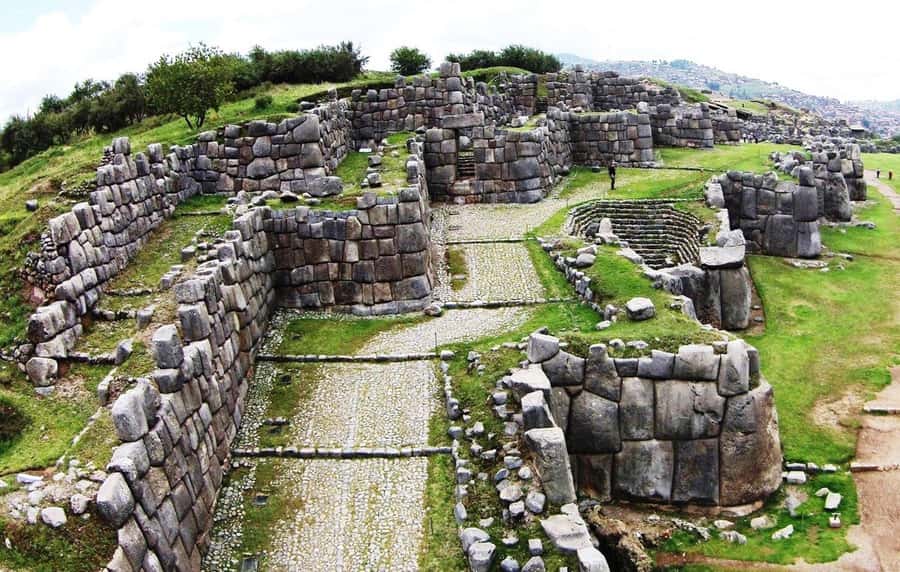
After Qoricancha, the tour heads to Sacsayhuamán, the largest and most impressive stop on the route. It is known for massive stone walls assembled with extraordinary accuracy, and the scale is hard to grasp until you are standing beside them.
The site is linked to Inca military architecture, but it also served a wider ceremonial and political purpose. From its high position, you get a broad view over Cusco, making it easier to understand the city’s location in the surrounding mountains.
This is where I would spend your extra attention. Look at the shape of the stones, the way the walls follow the terrain, and the tight joins between blocks. The workmanship is the point, not just the size. A good guide can explain how the site fit into Cusco’s defenses and why its construction required such a major investment of labor.
Sacsayhuamán is also the stop most likely to justify the separate entrance fee. If your time at the archaeological sites is shortened by delays or a shopping visit, this is the place you will want protected. Stay close enough to hear the guide, but leave a moment to take in the view and the stonework without commentary.
Qenqo, a ceremonial site shaped by rock
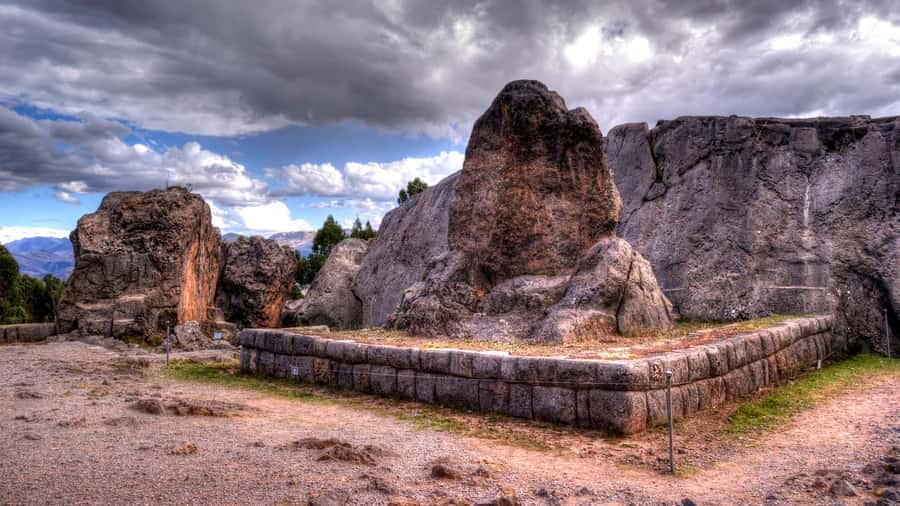
Qenqo is smaller and more intimate than Sacsayhuamán. The site was built around a natural rock formation and used for religious rituals. Its carved surfaces, channels, and unusual stone spaces give the guide room to explain ceremonial practices and the symbolic role of rock in Inca belief.
This stop may feel less immediately impressive if you are measuring everything by size. I find its value comes from the change in mood. After the huge defensive walls at Sacsayhuamán, Qenqo turns the focus inward, toward ritual and sacred space.
You will not have unlimited time here, so listen for the main explanation and examine the rock carefully. The site rewards attention to small details more than grand photographs. If you have vertigo, keep the safety warning in mind and tell the guide if certain paths or edges make you uncomfortable.
Somewhere else entirely, still within reach of Cusco:
- Cusco: Humantay Lake Tour with Breakfast and Buffet Lunch
★ 4.9 · 2,976 reviews - From Cusco: Sacred Valley & Maras Salt Mines Tour with Lunch
★ 4.8 · 2,227 reviews - From Cusco: Moray, Maras Salt Mines & Chinchero Weavers Tour
★ 4.8 · 1,925 reviews - From Cusco: Full-Day Group Tour of Machu Picchu
★ 4.7 · 1,767 reviews
Puca Pucara and the Inca road system
Puca Pucara was a military fortress within Cusco’s defensive network. Its name is often associated with red-toned stone, and the site includes walls, terraces, and stairways arranged on a strategic hillside position.
Compared with Sacsayhuamán, Puca Pucara is more modest. Its importance lies in how it helps complete the picture of Inca control. The empire needed more than grand ceremonial centers. It also needed lookout points, routes, and places connected to movement through the region.
The stop is usually brief, which is reasonable on a route covering five sites. Use the time to ask how the fortress related to the road and to the other nearby sites. The guide’s explanation can make an otherwise quick photo stop feel purposeful.
The high setting also means strong sun and changing temperatures. Bring a hat, sunscreen, sunglasses, and a layer suitable for the activity. Comfortable shoes are not optional here, since the route includes uneven archaeological ground and stairs.
Tambomachay and the final fountains
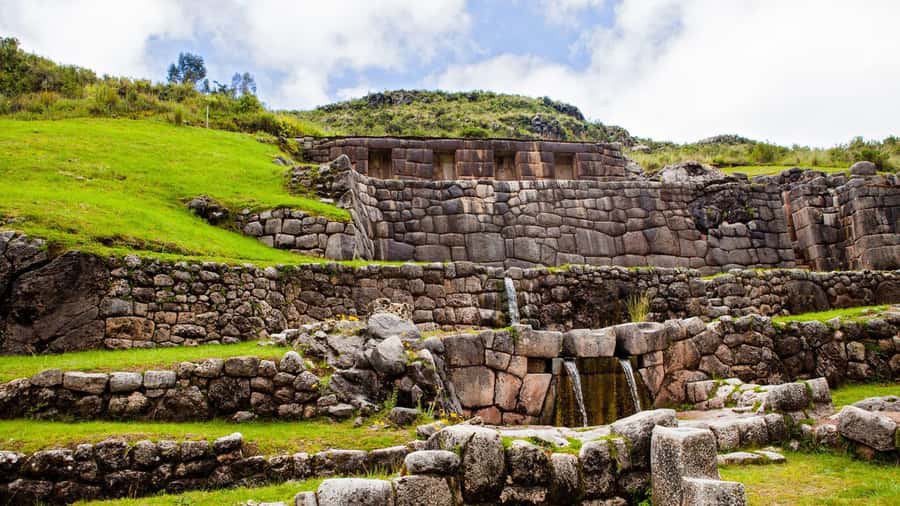
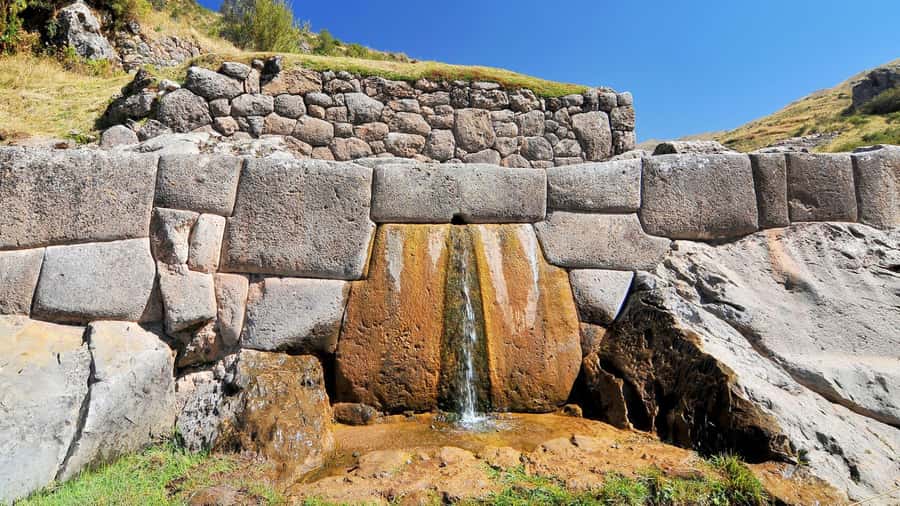
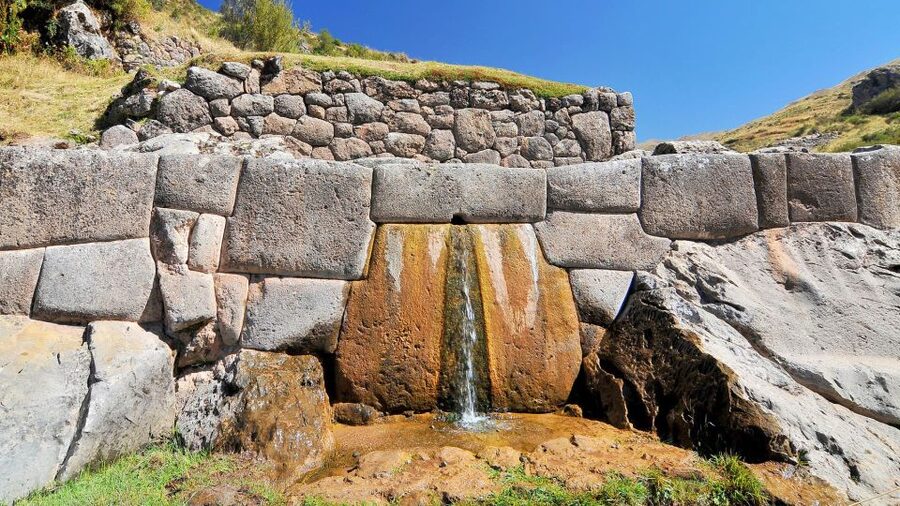
Tambomachay closes the archaeological circuit with water. The site is linked to water worship and purification, and its canals and fountains are the main feature. The sound and movement of water offer a calmer finish after the larger stone complexes.
This is a useful final stop because it shows another side of Inca planning. Water was not only practical. At Tambomachay, it also had religious meaning. Your guide can connect the fountains to purification and ceremony, giving the day a clear ending.
The drawback is timing. Delays earlier in the day can compress the visit to Tambomachay, Puca Pucara, and Qenqo. One recent outing lost more than 30 minutes at a clothing shop, leaving the final two archaeological sites with less explanation. If shopping is not your priority, ask before the stop how much time it will take and remind the guide that you want the full site visit.
The tour returns to Cusco and ends near the Plaza de Armas. That central finish is handy for lunch, a hotel rest, or further sightseeing.
The $11 price and the extra ticket
At $11 per person, this is an inexpensive way to cover a lot of ground. Tourist transport and a bilingual guide are included, which means you are mainly paying for coordination, driving, and interpretation rather than a private experience.
The important budget detail is the entrance fee. Archaeological admissions are not included, and you need the appropriate boleto turístico. A recent ticket price cited for the full pass was S/130, with a student rate of S/70, but prices and eligibility can change. Ask at the ticket office about the current rate and bring proof of student status if it applies.
The full ticket may make sense if you plan to visit the Sacred Valley or other archaeological sites after this tour. Buying separate admissions without checking your wider plans could cost more or create confusion. Confirm what the ticket covers before paying.
The low tour price also explains some of the compromises. This is a shared group outing, not a custom private tour. You get an efficient route and a guide, but you may have less control over pace, photo time, and unscheduled stops.
Guides, timing, and common snags
Guide quality is one of the best reasons to book this experience. Werner has been praised for being attentive, and Angélica for combining strong historical explanations with care for the group. Sam has also helped solve meeting-point confusion and missing-name problems at the start.
That last detail matters. The Plaza de Armas can have several tour groups gathering at similar times, so do not simply follow the first guide holding a sign. Keep your booking information available, ask for the operator name, and confirm the route includes Qoricancha plus the four archaeological sites.
Transport delays are another practical risk. One outing began much later than planned, while another had confusion before the group was properly organized. Build some flexibility into your day, especially if you have a train, flight, or timed restaurant booking afterward.
The listed duration is five hours, but the actual experience depends on traffic, group organization, and optional stops. The morning tour ends around 2:30 p.m., while the afternoon option ends around 6:30 p.m. On Sundays, opening times may change because some sites open later. Confirm the departure time before you go.
What to bring and how to handle the altitude
Bring your passport or identity card, comfortable shoes, sunglasses, a camera, and sunscreen. The supplied instructions also call for a hat and suitable clothing. That advice is practical: several sites are exposed, and the stone paths can be uneven.
Coca tea before the tour may help you cope with altitude symptoms, but take the broader warning seriously. Walk slowly, drink water when appropriate outside the vehicle, and tell your guide if you feel unwell. The experience is not suitable for people with vertigo.
Drinks are not allowed in the vehicle, and alcoholic drinks, alcohol, drugs, pets, and littering are prohibited. Keep your belongings compact so you can move easily between the vehicle and the sites.
Who should book this Cusco route
I would choose this tour if you want a broad first look at Cusco’s major nearby Inca sites for very little money. It suits you especially well if you are staying near the center, want transport handled for you, and prefer a guide to explain what you are seeing.
It is also a good fit for a first day in the city, provided you keep your pace slow and leave room for altitude adjustment. The combination of Qoricancha and the four outdoor sites gives you a useful overview before a longer Sacred Valley visit.
I would hesitate if you want long photo stops, a quiet private visit, or strict control over the schedule. The shopping stop is the clearest concern, and the possibility of a late vehicle makes this a poor choice before a fixed departure. If the operator confirms that the group will skip commercial stops, the value improves.
Should you book it?
Book it if your priority is efficient coverage at a low price. Qoricancha and Sacsayhuamán are the major rewards, while Qenqo, Puca Pucara, and Tambomachay add useful context about ritual, defense, roads, and water.
Before paying, confirm the meeting point, current boleto turístico price, Sunday opening times, and whether any clothing-shop stop is planned. Choose the morning or afternoon shift based on your energy and other plans, then protect enough time for the sites themselves. With a good guide such as Werner or Angélica, this can be a strong introduction to Cusco, but it works best when you accept the limits of a budget group outing.
FAQ
How long does the Cusco city tour last?
The activity lasts about five hours. The morning shift usually runs from roughly 8:40 or 9:00 a.m. until 2:30 p.m., while the afternoon shift runs from about 12:40 or 1:00 p.m. until 6:30 p.m.
Which sites are included in the route?
The route includes Qoricancha, Sacsayhuamán, Qenqo, Puca Pucara, and Tambomachay.
Is the entrance ticket included?
No. Archaeological entrance fees are not included in the $11 tour price. Meals and personal expenses are also excluded.
Are transport and a guide included?
Yes. Tourist transport and a live bilingual guide are included. Guiding is offered in Spanish and English.
Where does the tour begin and end?
The tour meets near Cusco’s Plaza de Armas. It begins with a walk of about three blocks to Qoricancha and ends near the Plaza de Armas after the return from the archaeological sites.
What should I bring?
Bring your passport or identity card, comfortable shoes, sunglasses, a camera, sunscreen, a hat, and suitable clothing. The activity is not suitable for people with vertigo.
Recently added around Cusco
- Palcoyo colored mountain hike + stone forests★ 4.6 · 3 reviews
- Maras Moray★ 5.0 · 3 reviews
- From Cusco: Vinicunca Mountain of Colors Excursion + Ticket★ 5.0 · 3 reviews
- Full-Day Condor Viewpoint & Inca Sites Tour★ 5.0 · 3 reviews
- Excursion Cusco – Puno – Titicaca Observatory Train★ 5.0 · 3 reviews
- Machu Picchu: Private Tour Guide Service for up to 15 people★ 4.5 · 3 reviews
- Machu Picchu: 1-day tour by Vistadome Observatory train★ 5.0 · 3 reviews
- Cusco: Chonta Canyon and Condor Flight Tour with Lunch★ 5.0 · 3 reviews
Cusco Tours, compared.
Humantay Lake Tour with Breakfast and Buffet Lunch
Read our review →
Sacred Valley & Maras Salt Mines Tour with Lunch
Read our review →
Moray, Maras Salt Mines & Chinchero Weavers Tour
Read our review →


Half-Day City Tour with Sacsayhuaman and Q’enco
Read our review →
Sacred Valley, Pisac, Ollantaytambo, Salt Mines Moray
Read our review →
Browse the lists this tour appears in