
Reviewed · CUSCO TOURS
Cusco: Walking Tour with a Local Guide
Cusco’s story unfolds best on foot, where an Inca wall can sit beneath a Spanish church and a narrow stone lane can lead into a working neighborhood. This 150-minute private walking tour takes you from the Plaza de Armas through Qoricancha and onward to San Blas, mixing major sights with ordinary city life.
I like the clear route and the chance to see Cusco in layers, from Inca stonework to colonial homes and present-day artisan workshops. I also like the low $15 price, which makes a local introduction easy to fit into a first day. The drawback is simple: this is a moderately demanding uphill walk, and one booking had a serious no-show problem, so reliable guide communication matters.
Key points at a glance
- Start in the Plaza de Armas: Learn how Cusco’s main square changed from an Inca ceremonial space into a colonial center.
- Follow Loreto Street: See colonial buildings, local shops, and carefully fitted Inca stonework along a narrow route.
- Study Qoricancha: Hear why the Sun mattered so much to Inca society and see surviving Inca construction.
- Walk through San Blas: Reach artisan workshops, colonial churches, and streets where daily Cusqueño life is close at hand.
- Finish at San Blas viewpoint: End with a useful orientation point above the central city.
- Plan for a steady walk: Comfortable shoes, water, a hat, and sunscreen are essential.
Starting between Calle del Medio and the Plaza de Armas
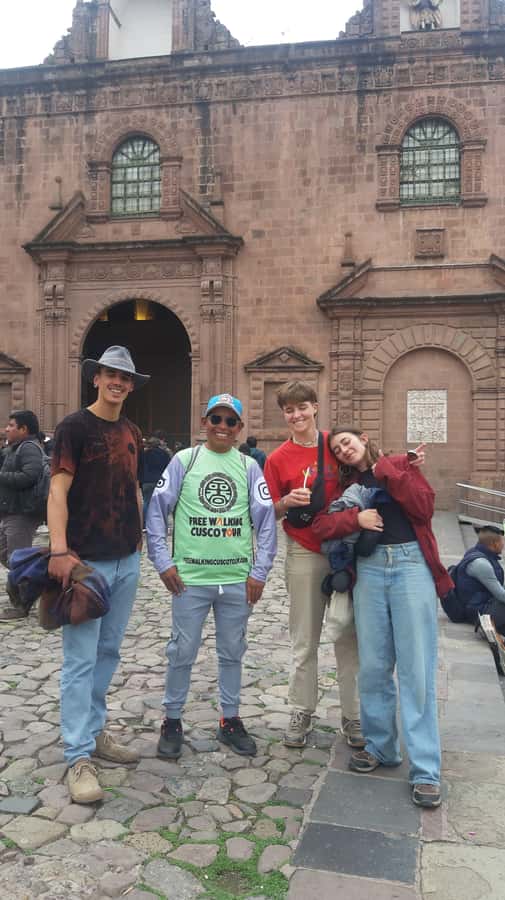
The tour begins between Calle del Medio and Cusco’s Plaza de Armas. Look for the guide wearing a green T-shirt. The meeting point is central, with coordinates listed as -13.5170627, -71.9795113, so you can check your position before setting out.
This central start works well because the Plaza de Armas gives you an immediate sense of Cusco. Instead of beginning with a long transfer or hotel pickup, you step straight into the city’s main public space. There is no pickup or drop-off, so plan your route to the square yourself.
The guide leads in either English or Spanish. The tour is described as private, which should suit you if you prefer a more personal pace and the chance to ask questions as you go. Still, confirm the meeting details carefully. One booking received no guide and no reply to messages, a poor experience that deserves attention. The overall rating is 4.3 from five ratings, but the small number means you should not treat it as a guarantee.
More Walking Tours in Cusco
- Cusco: Historic Walking Tour with Pisco Sour and Music Show
★ 4.6 · 65 reviews - Walking Culinary Experience
★ 5.0 · 41 reviews - Cusco: Walking Tour Cusco
★ 3.4 · 6 reviews
Reading Cusco in the Plaza de Armas
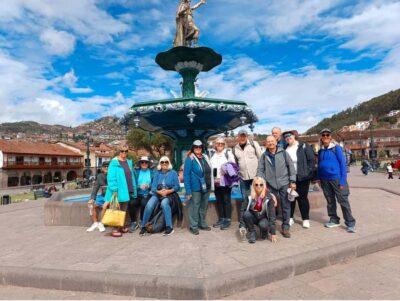
The Plaza de Armas is more than a pretty opening scene. It is the place where the tour sets up Cusco’s basic story: Inca foundations, Spanish rule, colonial buildings, Catholic institutions, and modern city life all occupy the same center.
Your guide explains the history of the plaza, points out its colonial architecture, and introduces Inca legends connected with the city. This is useful early in your visit because the rest of the walk keeps returning to the same question: how did Cusco change while keeping so much of its older form?
The square is also a good place to get your bearings. From here, the route moves into narrower streets, where the scale changes quickly. Large civic spaces give way to stone walls, small shops, and lanes that require you to watch your step.
I like this opening because it avoids treating the square as a quick photo stop. You get a framework for understanding the places that follow. The guide’s job here is not just to name buildings, but to connect the city’s visible parts to the people and beliefs behind them.
Loreto Street and the close-up view of Inca stonework
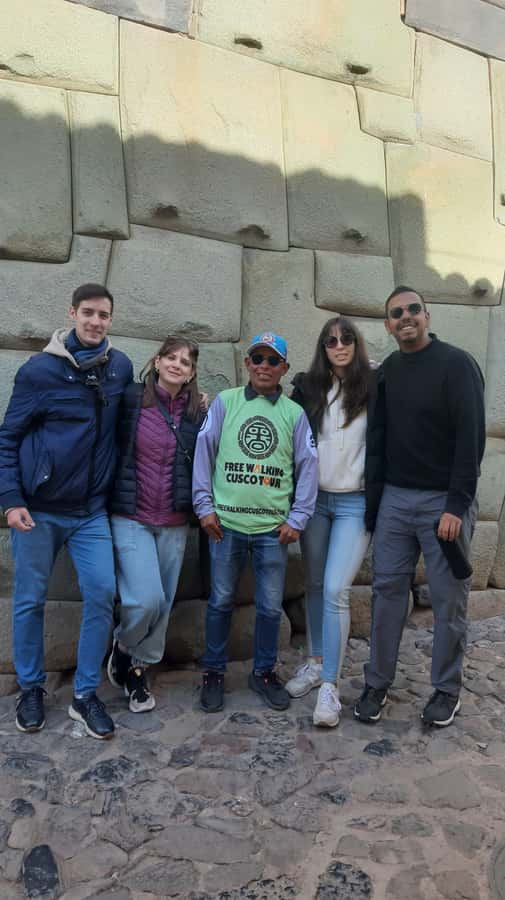
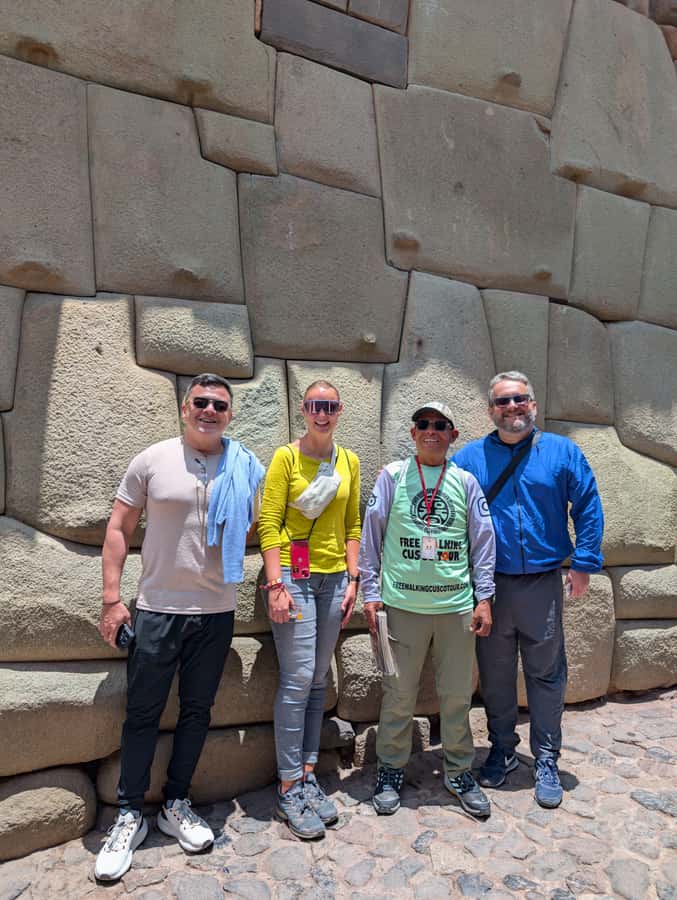
From the main square, you continue to Loreto Street. This section brings you close to the mix that makes central Cusco so distinctive: Spanish colonial buildings above older Inca walls, local shops at street level, and workshops where handmade goods are part of everyday commerce.
Loreto Street is especially useful for travelers who want to see construction details without leaving the center. You can study the tight fit of the stones and compare it with the later colonial architecture above. The street is narrow, so your guide can point out details that are easy to miss if you simply walk through on your own.
The route also passes local shops and artisan workshops. That gives the walk a practical, lived-in feel. You are not only moving between formal monuments. You are seeing the small businesses and working spaces that keep this part of Cusco active.
Do not expect a long shopping stop unless your guide chooses to pause. The value here is context. You learn how architecture, trade, and daily movement share the same few streets.
Qoricancha and the importance of the Sun
The next major stop is Qoricancha, also called the Temple of the Sun. This is the tour’s main chance to discuss Inca religion and the central place of the Sun in Inca culture.
Your guide explains why the Sun mattered and highlights the Inca architecture that remains. The subject gives the walk more depth than a simple list of dates. You begin to understand that Cusco was not only a political center. It was also a place where religion, power, agriculture, and the movement of the year were closely tied to the Sun.
Qoricancha is also important because it shows the collision of two building traditions. Inca masonry and colonial religious architecture occupy the same site, letting you see how the city was reshaped after the Spanish conquest.
The activity information says the tour can skip the ticket line, but it does not clearly state that admission is included in the $15 price. Check the booking details before you count on entering every interior space. Even if your time is spent mainly around the site, the guide’s explanation still helps you read the stonework and understand why the building matters.
Flash photography is not allowed, and smoking is not allowed during the activity. Bring your phone or camera for ordinary photographs where permitted, but be ready to put it away when site rules require it.
Somewhere else entirely, still within reach of Cusco:
- Cusco: Humantay Lake Tour with Breakfast and Buffet Lunch
★ 4.9 · 2,976 reviews - From Cusco: Sacred Valley & Maras Salt Mines Tour with Lunch
★ 4.8 · 2,227 reviews - From Cusco: Moray, Maras Salt Mines & Chinchero Weavers Tour
★ 4.8 · 1,925 reviews - From Cusco: Full-Day Group Tour of Machu Picchu
★ 4.7 · 1,767 reviews
Inka Palace Cusicancha and the city’s layered past
The route continues to the Inka Palace Cusicancha, described as an Inca palace and temple that is now a church. This is another stop where the city’s layers are easy to see in one place.
The name and changing use tell you something important about Cusco. Buildings were not isolated from political change. Spaces connected with Inca power and worship were later absorbed into a colonial religious setting. A local guide can explain that transition while you stand among the surviving structures.
This stop also helps balance the tour. Qoricancha focuses strongly on the Sun and Inca belief. Cusicancha shows how architecture and institutions changed over time. Together, the two sites give you a more useful picture than either one alone.
Because the walk has several stops packed into 150 minutes, expect explanations rather than long museum-style visits. If you want to study every room or inscription, you will need extra time on your own after the tour.
Inka Roca Street and the ordinary side of Cusco
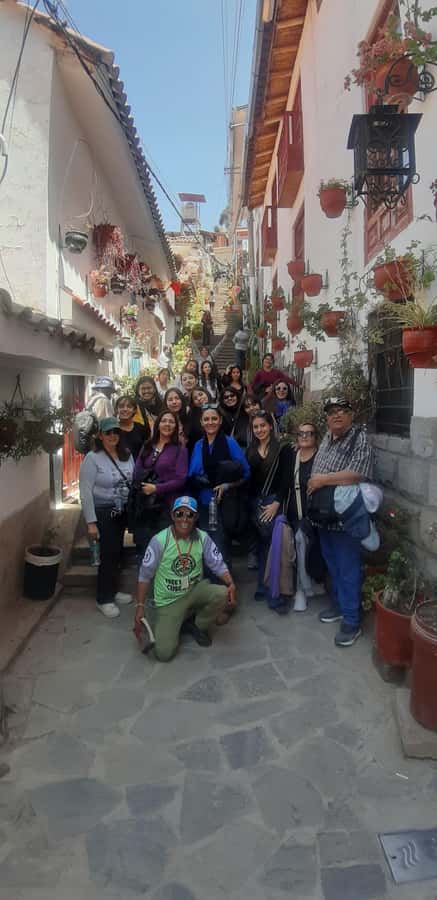
Next comes Inka Roca Street, a narrow cobblestone lane lined with colonial houses and local life. This is where the tour shifts away from grand sites and gives you a closer look at the city’s residential texture.
The stones can make walking slower, especially if you are not used to uneven surfaces. Take steady steps and leave your high heels or flimsy sandals at the hotel. The route requires a moderate level of fitness, and Cusco’s altitude can make an ordinary walk feel harder than expected.
I like this part because it gives the tour breathing room between major monuments. You can see how colonial homes fit into the older street plan and how people use these lanes today. The description does not promise specific shops, performances, or food tastings, so approach it as a walking and observation stop, not a programmed activity.
This is also a good point to ask your guide about details you noticed earlier. A private walk is most useful when you can stop the flow with a question about a wall, doorway, church, or local custom.
San Blas workshops and Cusqueño daily life
The final neighborhood is San Blas, one of Cusco’s best-known areas for artisan workshops and colonial streets. Here, the tour moves into a district with a more local, neighborhood feel than the formal center.
You will see artisan workshops, colonial churches, and the daily life of Cusqueños. That last part matters. A city is easier to understand when you see where people work, shop, walk, and worship, not only the places marked in guidebooks.
The route gives you a chance to notice how the neighborhood changes as the streets rise. San Blas is reached on foot, and the walk includes a moderate amount of walking, so save your energy. The tour is not suitable for wheelchair users or people with mobility impairments, and the cobblestones and uphill route make that limitation important.
The neighborhood can also be a useful place to return later for a slower look at workshops and churches. During the guided walk, you may have enough time to understand the area, but not enough time to browse every craft shop.
Finishing at the San Blas viewpoint
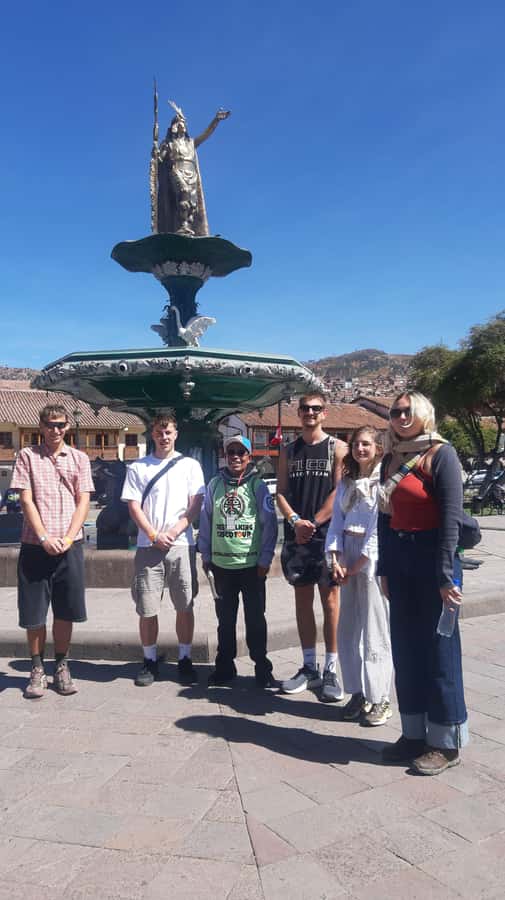
The tour ends at the Mirador de San Blas. Ending here gives the route a clear finish rather than dropping you in the middle of another street.
A viewpoint is also practical. After walking through enclosed lanes and built-up streets, you get a broader view of Cusco from above. The supplied information does not specify exactly what can be seen from the viewpoint, so I would treat it as a final orientation stop rather than expect a promised panorama or a formal photo session.
From here, you can continue exploring San Blas or make your own way back toward the center. Since drop-off is not included, you remain responsible for your onward plans.
What $15 buys you
At $15 per person, this tour is priced as an affordable introduction rather than a full-day cultural program. You are paying for a professional live guide, a structured route, and local explanation across several important areas.
The strongest value comes from the connections between stops. You get the Plaza de Armas, Loreto Street, Qoricancha, Cusicancha, Inka Roca Street, and San Blas in one two-and-a-half-hour walk. Seeing those places independently would cost little in transport, but you would lose the guide’s account of how Inca, colonial, and modern Cusco fit together.
The tour also includes fun in its stated inclusions, though that is not a measurable service in the same way as a ticket or transfer. Food and drinks are not included, so bring water and plan your own snack or meal.
For a first morning or afternoon in Cusco, I think the price is fair if the guide arrives and the route runs as planned. The no-show incident means I would keep confirmation details and the meeting point handy. The strongest praise went to Enrique, who was credited with setting a good pace and showing sights that would have been difficult to find alone. If Enrique is assigned to your booking, his reported approach sounds especially suited to people who want history without being rushed.
Who will enjoy this walk most?
I would choose this experience if you want a quick, guided introduction before exploring Cusco on your own. It suits first-time visitors, couples, solo visitors, and small private groups who want to ask questions and move at a manageable pace.
It is also a good match for anyone interested in architecture. The route gives you repeated comparisons between Inca stonework and colonial buildings, rather than showing only one famous monument.
You should think twice if walking uphill on cobblestones is difficult, if you need wheelchair access, or if you prefer a slow museum visit with lots of indoor time. This is an active city walk, not a vehicle tour.
Wear comfortable shoes, a hat, and sunscreen. Bring water. Cusco’s sun can feel strong, and the route has enough walking that small preparations make a real difference.
Booking details worth checking before you go
The activity lasts 150 minutes, with starting times available according to the booking calendar. It offers free cancellation up to 24 hours before the start for a full refund, and you can reserve now and pay later. Those terms help if your Cusco schedule may change.
The tour is offered in English and Spanish. There is no hotel pickup, no hotel drop-off, and no food or drink included.
You should also check how entry to Qoricancha and any other paid interior is handled. The tour information mentions skipping the ticket line, but it does not clearly identify admission as an inclusion. That is a small detail, but it can affect your budget and expectations.
Should you book the Cusco walking tour?
Book it if you want a low-cost, focused introduction to Cusco’s central sights, Inca remains, colonial streets, and San Blas life. The route is well chosen, and its best feature is the way it links major landmarks with smaller streets that are easy to miss alone.
I would book with comfortable shoes, water, sun protection, and realistic expectations about the walking. I would also verify the meeting details and keep the green T-shirt and exact coordinates in mind. If reliable guide service is confirmed, the $15 price offers good value, especially for a first look at Cusco.
FAQ
Where does the Cusco walking tour start?
It starts between Calle del Medio and the Plaza de Armas in Cusco. Look for a guide wearing a green T-shirt. The coordinates are -13.5170627, -71.9795113.
Where does the tour finish?
The tour finishes at the Mirador de San Blas.
How long does the walking tour last?
The experience lasts 150 minutes, or two and a half hours.
What languages are available?
The live guide can conduct the tour in English or Spanish.
What is included in the price?
A professional guide and fun are included.
Are food and drinks included?
No. Food and drinks are not included.
Is hotel pickup included?
No. Pickup and drop-off are not included.
What should I bring?
Bring comfortable shoes, a hat, sunscreen, and water.
Is the tour suitable for wheelchair users?
No. The tour is not wheelchair accessible and is not suitable for people with mobility impairments.
Can I cancel for a full refund?
Yes. You can cancel up to 24 hours in advance for a full refund. You can also reserve now and pay later.
Recently added around Cusco
- Palcoyo colored mountain hike + stone forests★ 4.6 · 3 reviews
- Maras Moray★ 5.0 · 3 reviews
- Full-Day Condor Viewpoint & Inca Sites Tour★ 5.0 · 3 reviews
- From Cusco: Vinicunca Mountain of Colors Excursion + Ticket★ 5.0 · 3 reviews
- Excursion Cusco – Puno – Titicaca Observatory Train★ 5.0 · 3 reviews
- Machu Picchu: Private Tour Guide Service for up to 15 people★ 4.5 · 3 reviews
- Cusco: Chonta Canyon and Condor Flight Tour with Lunch★ 5.0 · 3 reviews
- Machu Picchu: 1-day tour by Vistadome Observatory train★ 5.0 · 3 reviews
Cusco Tours, compared.
Humantay Lake Tour with Breakfast and Buffet Lunch
Read our review →
Sacred Valley & Maras Salt Mines Tour with Lunch
Read our review →
Moray, Maras Salt Mines & Chinchero Weavers Tour
Read our review →
Half-Day City Tour with Sacsayhuaman and Q’enco
Read our review →
Sacred Valley, Pisac, Ollantaytambo, Salt Mines Moray
Read our review →
Browse the lists this tour appears in