
Reviewed · CUSCO TOURS
Cusco Half Day City Tour: Four Ruins
Sacsayhuaman’s giant zigzag walls are the showstopper here, with stones weighing as much as 125 tons fitted together without mortar. I like that this tour adds three smaller sites, so you see more than one famous ruin, and I like the small-group limit of 15, which gives the guide room to explain what you are looking at. The views over Cusco and toward sacred peaks such as Ausangate add real drama.
The main caution is timing. Six hours are advertised, but one reported outing lasted closer to four, and several stops can feel rushed. You will also walk uphill and climb stairs at high altitude, so this works best after you have had some time to adjust to Cusco.
Four details worth knowing before you book
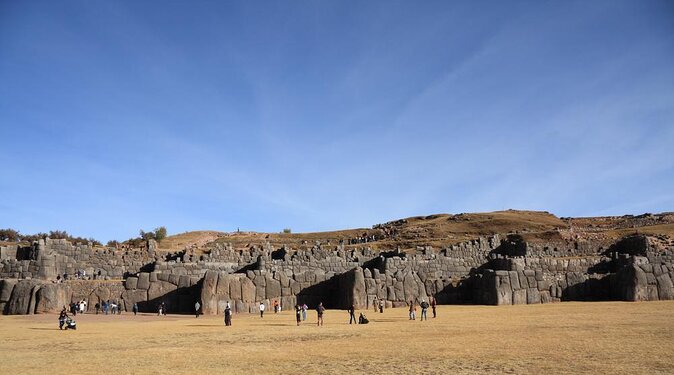
- Sacsayhuaman supplies the big visual moment: Huge zigzag stones, terraces, shrines, roads, and aqueducts make this the strongest stop for first-time visitors.
- Q’enqo is the most mysterious site: A carved monolith, underground chambers, and a zigzag channel leave plenty for your guide to interpret.
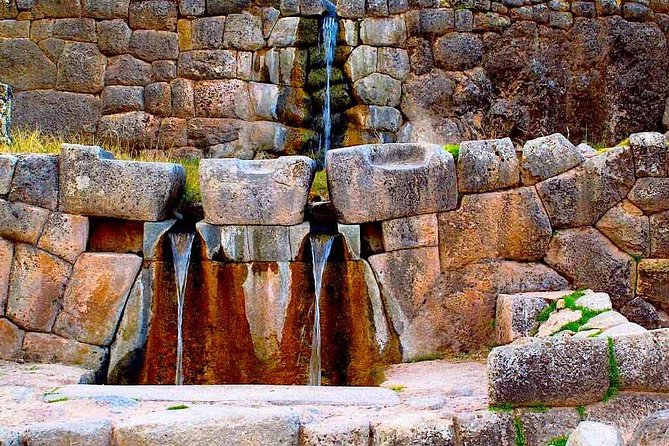
- Tambomachay brings a quieter finish: Spring-fed canals and small waterfalls show the Inca approach to water, ritual, and stonework.
- The group is capped at 15 people: That is small enough for questions, though the vehicle may still feel full if the group reaches its limit.
- The $45 price does not cover entry: Budget an additional PEN 70 per person for the archaeological sites, plus PEN 20 for Qorikancha if that separate admission applies to your booking.
- Pickup starts at 10 a.m.: Meet at Heidi Travel EIRL, Plateros 324, in central Cusco, and return there at the end.
Why these four ruins make a smart first outing
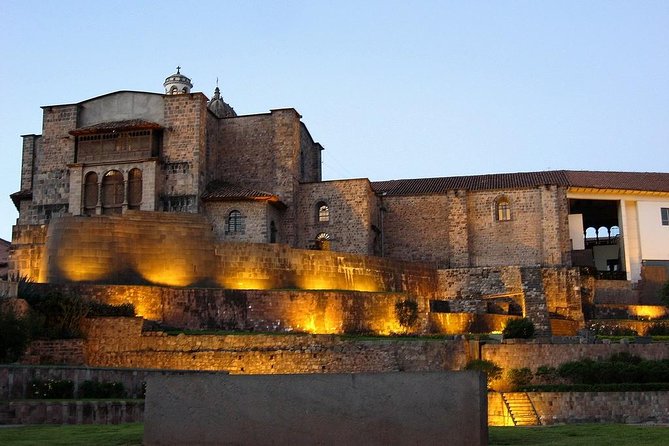
This is a useful introduction to the Inca world around Cusco. In roughly half a day, you move from a huge defensive-looking complex to a carved ceremonial rock, a roadside post, and a spring-fed sanctuary. The sites are close enough to combine by vehicle, yet different enough that the visit does not feel like four versions of the same ruin.
I especially like the order. Sacsayhuaman gives you a clear sense of Inca scale first. Q’enqo then shifts the focus from walls and military power to ritual questions. Puka Pukara shows how the empire supported movement and official journeys, while Tambomachay ends with water, quiet stone terraces, and a more peaceful mood.
Your bilingual English and Spanish guide is important here. These ruins do not come with complete written explanations of their original purpose. A guide can point out the road network, explain what is known and uncertain, and help you tell a ceremonial structure from a practical one.
The tour has earned a 4.8 rating from 30 ratings, with 97 percent recommending it. Praise centers on the guides’ clear explanations, friendly manner, and care with the walking pace. Edith is singled out for explaining both languages clearly and looking after families, while Freddy is praised for keeping communication clear and offering useful suggestions for the rest of a Cusco visit.
Still, organization can vary. One outing began 30 to 40 minutes late after confusion about group arrangements. Confirm the meeting point and start time, and allow some patience at the beginning.
More City Tours in Cusco
- Cusco: Half-Day City Tour with Sacsayhuaman and Q’enco
★ 4.6 · 1,129 reviews - City Tour Cusco Qoricancha Sacsayhuaman y Tambomachay
★ 4.7 · 617 reviews - Cusco: Sightseeing Tour of the City on an Open-Top Bus
★ 4.0 · 481 reviews
Sacsayhuaman: giant stones above Cusco
Sacsayhuaman is the reason many people choose this tour. The name comes from Quechua and is commonly translated as place where the hawk is satiated. The high position makes the name feel fitting, since birds of prey are associated with the area.
Spanish forces called the site a fortress because of its imposing walls and military appearance. That label is only part of the story. The complex also included sacred buildings, towers, homes, shrines, storage areas, roads, and aqueducts. It was likely a place with several roles, not simply a stone stronghold.
The main zigzag wall is the visual centerpiece. Some blocks reach about five meters high and 2.5 meters wide, with individual stones estimated at 90 to 125 tons. The stones are tightly fitted, and the long, polished wall on the south side runs for roughly 400 meters.
Give this stop your full attention. Your guide can help you notice the way the walls follow the ground instead of forcing the site into a simple rectangle. The terraces and curves also show why the place has been compared with other sacred Inca sites, including Machu Picchu.
The setting is almost as striking as the masonry. From here, you can look over Cusco and toward Ausangate, Pachatusan, and Cinca, peaks that held sacred meaning for the Inca. This is a good place to pause for photographs, but the stop is scheduled for about an hour, so you will not have unlimited time to wander.
Admission is not included in the $45 tour cost. The additional site fee is listed as PEN 70 per person for the archaeological sites.
Q’enqo: a carved rock with unanswered questions
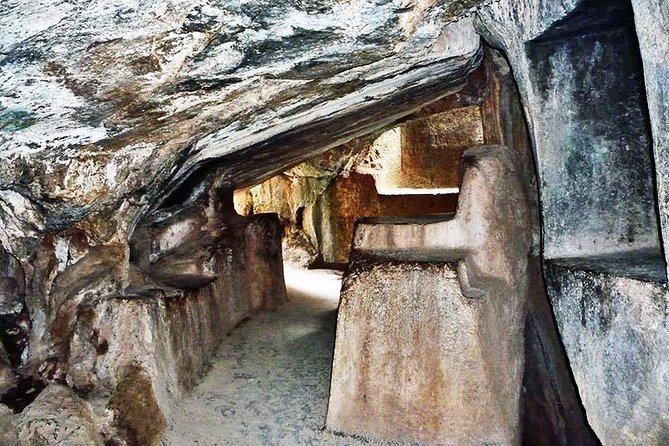
Q’enqo, about 15 minutes from Cusco, is a very different experience. Instead of broad walls and open terraces, you encounter a huge natural rock altered by human hands. The name means labyrinth or zigzag, referring to a crooked channel cut into the stone.
The channel clearly carried liquid, but its exact purpose remains uncertain. Possible explanations include holy water, chicha made from corn, or blood used in a ritual setting. Those possibilities point toward ceremonies connected with death, sacrifice, or the judgment of a person’s life.
This uncertainty is part of Q’enqo’s appeal. You are not simply being handed a neat answer. You can see the channel, the carved surfaces, the natural chambers, and the small niches, then listen as the guide explains the theories without pretending that every detail is known.
One chamber has 19 small niches and is arranged like an amphitheater. Its original use is unclear too. It may have been connected with ceremonies honoring the sun, moon, and stars, or with offerings and sacrifice.
The stop is scheduled for about an hour. The site is compact, but the footing and carved spaces demand attention. Watch your step and stay close enough to hear the guide, especially if the group spreads out.
Q’enqo may be the best stop for you if you enjoy questions more than grand views. Sacsayhuaman is instantly impressive. Q’enqo rewards patience and a willingness to consider what the evidence can and cannot tell us.
Puka Pukara: the Inca road station
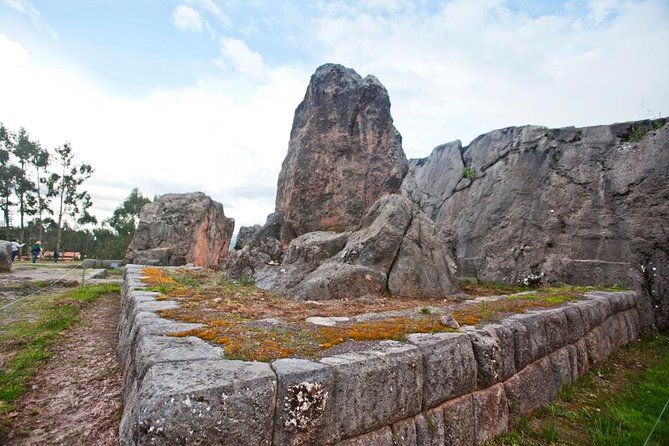
Puka Pukara means red fort, a name linked to the reddish earth and the site’s setting. The current name came into use in the twentieth century, so it is worth asking your guide about how modern names and older Inca uses do not always match.
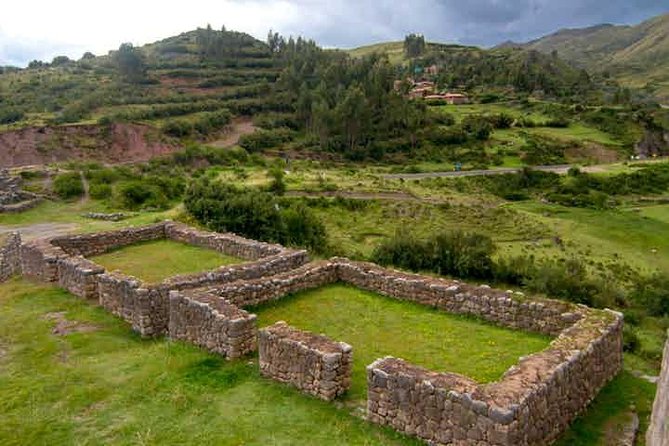
The site contains inner squares, canals, aqueducts, baths, and an ancient road associated with the Qhapaq Ñan, the extensive Inca road network. Its position helps explain its practical role. According to accounts from chroniclers, an imperial entourage could stay here while the Inca visited the baths at Tambomachay.
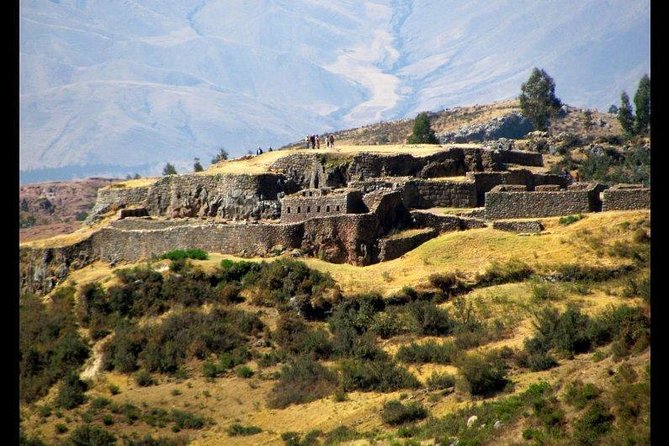
That makes Puka Pukara easier to understand than a simple fortress label suggests. It may have served as a barracks and tambo, or roadside hostel, for soldiers and attendants. The complex has three irregular walls arranged over three levels, with rooms fitted around existing rock rather than imposed on a perfect plan.
The masonry looks less polished than at Sacsayhuaman. Stones vary in size, and the surfaces are uneven. That contrast is useful: Inca construction was not one single style used everywhere. The builders adapted the work to the ground, the purpose of the place, and the importance of the structure.
A high trapezoidal area is reached by an outside staircase. Other rooms sit irregularly along the walls, while some upper sections have trapezoidal rather than rectangular floors. You may also hear about a supposed tunnel linking Puka Pukara and Tambomachay. Treat that as a local theory, not an established fact.
The scheduled visit lasts about an hour. It is a good stop for understanding how roads, rest stations, water systems, and official travel supported the Inca state. It may feel less immediately dramatic than Sacsayhuaman, but the practical story gives the four-stop route a useful balance.
Somewhere else entirely, still within reach of Cusco:
- Cusco: Humantay Lake Tour with Breakfast and Buffet Lunch
★ 4.9 · 2,976 reviews - From Cusco: Sacred Valley & Maras Salt Mines Tour with Lunch
★ 4.8 · 2,227 reviews - From Cusco: Moray, Maras Salt Mines & Chinchero Weavers Tour
★ 4.8 · 1,925 reviews - From Cusco: Full-Day Group Tour of Machu Picchu
★ 4.7 · 1,767 reviews
Tambomachay: water, stone, and a calm ending
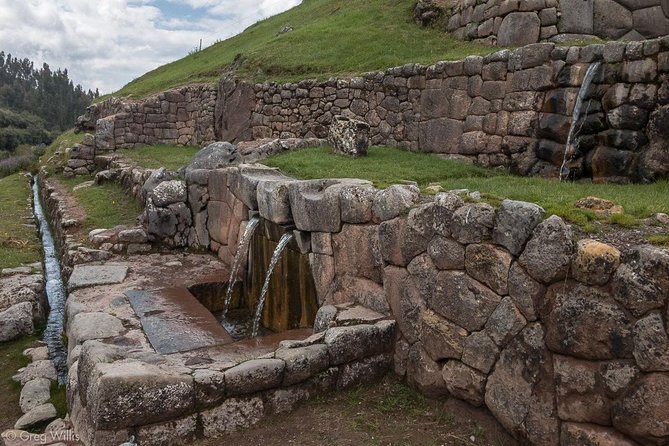
Tambomachay is known as El Baño del Inca, or the Bath of the Inca. It sits about four miles north of Cusco at roughly 12,150 feet, or 3,700 meters. The air is high, and even a short walk can feel demanding if you have not adjusted to the altitude.
The site is built around a natural spring. Water flows through small aqueducts, canals, and waterfalls set into three stepped terraces. Precise stonework and trapezoidal niches give the retaining walls the familiar Inca look, while the moving water makes the place feel more intimate than the larger ruins.
Its original role is not certain. It may have been a ceremonial site, an elite bathing place, a military outpost, or a combination of these. The spring and secluded setting support the bathing theory, but the site may have had religious and administrative importance too.
This is the shortest stop, at about 45 minutes. That is enough to see the terraces and water channels with a guide, but not enough for a slow, extended exploration. I would pay attention to the engineering rather than expect a large complex.
Tambomachay is also a good reminder that Inca sacred places were tied closely to natural features. Water was not just a useful resource. At a site like this, it could shape the design, the ceremony, and the meaning of the place.
What the $45 price really covers
At $45 per person, the tour offers fair value if you want transport and a guide to handle four sites in one morning or afternoon block. The cost is not an all-inclusive archaeological pass, though. Entry to the sites costs PEN 70 per person, and PEN 20 is listed for Qorikancha.
That extra cost matters when you compare this with exploring independently. The tour removes the need to arrange transport between high sites outside central Cusco and gives you historical context at places where the evidence can be hard to read on your own.
Transport is included, along with an English and Spanish-speaking guide. The vehicle was described as comfortable, though a full group can mean every seat is occupied. Since the drives between central Cusco and the ruins are relatively short, that may be manageable, but it is still worth knowing if you prefer extra space.
One outing included an unlisted stop at an alpaca wool shop, where materials were explained. That can be pleasant if you want help understanding local textiles, but it also takes time from the ruins. Ask at the start if any shopping stop is planned, especially if your schedule is tight.
Walking, altitude, and the pace of the day
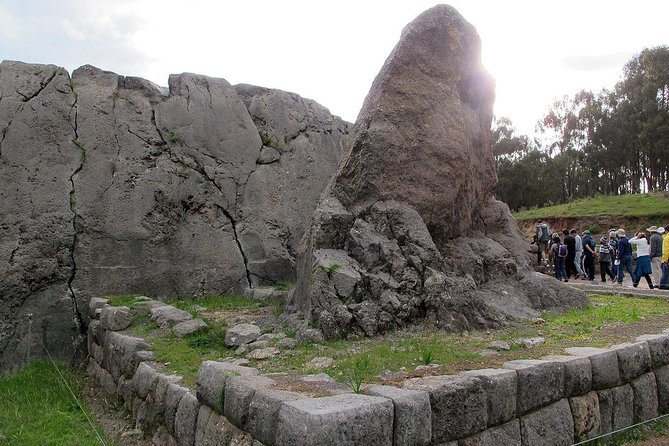
You should expect uphill walking, steps, and uneven archaeological ground. The distances are not described as extreme, but altitude can make ordinary stairs feel much harder. A guide has allowed people to slow down rather than pushing everyone to keep a fixed pace, which is helpful for families and anyone still adjusting to Cusco.
The advertised duration is about six hours, starting at 10 a.m. and returning to the Plateros 324 meeting point. In practice, timing may be shorter or affected by pickup delays and group arrangements. If you have a train, flight, or timed museum booking later that day, leave a generous buffer.
The small-group maximum of 15 is a good middle ground. You get more personal attention than on a large coach outing, but the tour is not private. If you want a completely flexible pace, a private guide would be better, but it would also change the price.
Wear shoes with a solid grip, carry water, and bring protection from strong high-altitude sun. Those are sensible choices for any visit to these sites, especially when the group moves between stairs, terraces, and rough stone surfaces.
Who will get the most from this tour
I would choose this outing for a first visit to Cusco, particularly if you want a guided introduction before tackling larger sites elsewhere in Peru. It gives you the big stones, the ritual questions, the road network, and the sacred water source in one compact route.
Families can benefit from the bilingual explanations and a guide who is willing to adjust the pace. Couples and solo visitors get an efficient way to reach the ruins without arranging separate transport. It also suits anyone who wants a clear historical framework instead of simply taking photographs and moving on.
I would be more cautious if you dislike fixed schedules or want long periods at each site. The four locations are worthwhile, but the time at each is limited. The possibility of a late pickup, a full vehicle, or an extra textile stop makes the timing less predictable than the six-hour description suggests.
Free cancellation is available if you cancel at least 24 hours before the local start time. Changes or cancellations made later are not accepted for a refund.
Should you book the Four Ruins tour?
Book it if you want a practical, guided introduction to the Inca sites around Cusco for $45 plus entrance fees. Sacsayhuaman is the major payoff, while Q’enqo, Puka Pukara, and Tambomachay supply the cultural and engineering detail that makes the visit more than a quick photo stop.
Before paying, make sure you are comfortable with the additional PEN 70 site fee and the high-altitude walking. Confirm the 10 a.m. meeting point, ask about the day’s expected timing, and avoid placing an important reservation too close to the scheduled return.
If you want the most sites for the least planning, this is a sensible choice. If you want a slow, private exploration with no schedule changes, choose a private arrangement instead.
FAQ
Where does the Cusco Four Ruins tour start?
The tour starts at Heidi Travel EIRL, Plateros 324, Cusco 08000, Peru.
What time does the tour begin?
The stated start time is 10 a.m.
Where does the tour end?
The activity returns to the same meeting point at Plateros 324.
How long does the tour last?
The advertised duration is approximately six hours, though the actual timing can be shorter or affected by pickup and group arrangements.
Which archaeological sites are included?
The route visits Sacsayhuaman, Q’enqo, Puka Pukara, and Tambomachay.
Is transportation included?
Yes. Transport between the meeting point and the archaeological sites is included.
Is a guide included?
Yes. An English and Spanish-speaking guide is included.
How many people can join the tour?
The maximum group size is 15 people.
Are entrance fees included in the price?
No. Entrance to the archaeological sites costs PEN 70 per person. Qorikancha admission is listed separately at PEN 20 per person.
Recently added around Cusco
- Palcoyo colored mountain hike + stone forests★ 4.6 · 3 reviews
- Maras Moray★ 5.0 · 3 reviews
- From Cusco: Vinicunca Mountain of Colors Excursion + Ticket★ 5.0 · 3 reviews
- Full-Day Condor Viewpoint & Inca Sites Tour★ 5.0 · 3 reviews
- Excursion Cusco – Puno – Titicaca Observatory Train★ 5.0 · 3 reviews
- Machu Picchu: Private Tour Guide Service for up to 15 people★ 4.5 · 3 reviews
- Machu Picchu: 1-day tour by Vistadome Observatory train★ 5.0 · 3 reviews
- Cusco: Chonta Canyon and Condor Flight Tour with Lunch★ 5.0 · 3 reviews
Cusco Tours, compared.
Humantay Lake Tour with Breakfast and Buffet Lunch
Read our review →
Sacred Valley & Maras Salt Mines Tour with Lunch
Read our review →
Moray, Maras Salt Mines & Chinchero Weavers Tour
Read our review →


Half-Day City Tour with Sacsayhuaman and Q’enco
Read our review →
Sacred Valley, Pisac, Ollantaytambo, Salt Mines Moray
Read our review →
Browse the lists this tour appears in