
Reviewed · CUSCO TOURS
Cusco : City Tour of 4 Ruins and Sun Temple
The best part of this Cusco tour is the sharp contrast between Coricancha’s Inca stonework and Spanish colonial walls and the huge ruins above the city. In one half-day, you move from a former temple to the Sun God to fortress walls, ritual channels, and an old military post.
I like the efficient route and the excellent value at $16 per person, especially if you want an introduction before spending more time at the Sacred Valley or Machu Picchu. I also like that transportation and a bilingual guide are included. The main caution is time: some stops can feel rushed, and unscheduled textile or souvenir stops have reduced sightseeing time for some groups.
Key points to know before booking
- Coricancha gives you the strongest cultural contrast: Inca foundations and colonial architecture share the same site.
- Sacsayhuamán is the visual highlight: Massive carved stones and wide Cusco views make this the stop where you most want enough free time.
- Qenqo is small but unusual: Carved rock passages, ceremonial spaces, and water channels reward close attention.
- Tambomachay explains the role of water: Stone channels still guide spring water through an Inca ritual site.
- The $16 price does not include entrance tickets: Plan on 15 soles for Coricancha and 70 soles for the partial Tourist Ticket.
- Ask about shopping stops at the start: The sightseeing schedule is tight, and sales visits may cut into time at the ruins.
Why this five-hour Cusco route works
Cusco is not just a pretty colonial city with Inca stones built into its walls. It was the center of an Inca state, and the ruins around town show different jobs within that world: religious worship, military control, ceremony, water management, and defense.
This tour gives you a quick look at all of those pieces. You begin near Cusco’s historic center, visit Coricancha on foot, then use a tourist van to reach the higher sites. The route finishes back near the center, at Calle Plateros.
You should think of this as an orientation tour rather than a slow archaeological study. The listed visit periods range from 20 to 60 minutes. That is enough to hear the main story, take photos, and see the major structures, but not enough to inspect every stone or wander at leisure.
The morning departure begins at 9:00 a.m. and returns around 2:00 p.m. An afternoon option begins at 1:00 p.m. and returns at about 6:30 p.m. The afternoon timetable adds up to roughly five and a half hours, so confirm the exact departure and return time when you book.
More City Tours in Cusco
- Cusco: Half-Day City Tour with Sacsayhuaman and Q’enco
★ 4.6 · 1,129 reviews - City Tour Cusco Qoricancha Sacsayhuaman y Tambomachay
★ 4.7 · 617 reviews - Cusco: Sightseeing Tour of the City on an Open-Top Bus
★ 4.0 · 481 reviews
Coricancha: where Inca and Spanish Cusco meet
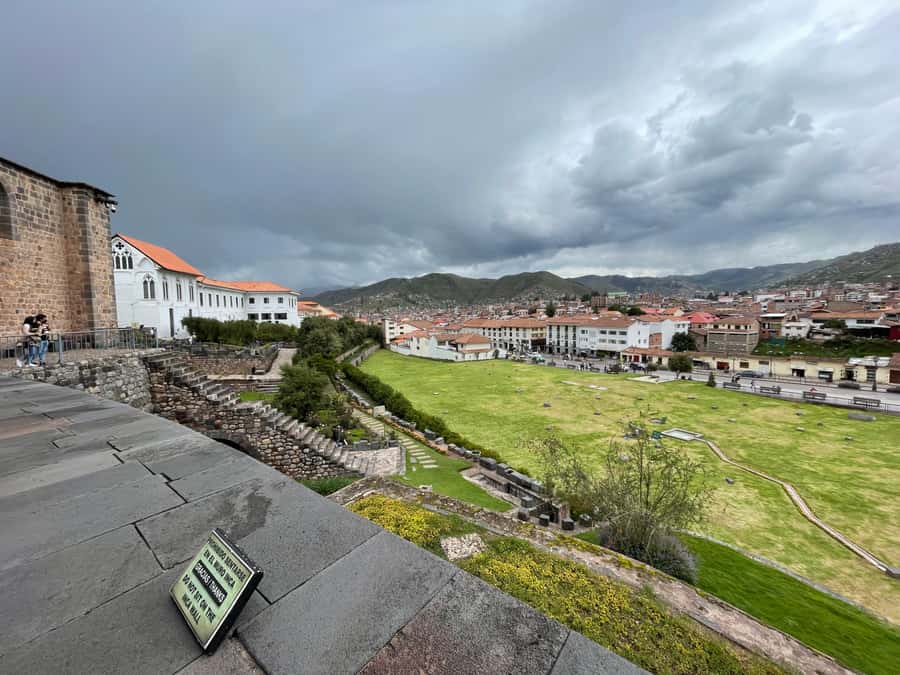
Your first stop is Coricancha, also written Qorikancha or the Temple of the Sun. You walk about 10 minutes from the pickup area, then spend roughly 40 to 60 minutes here, depending on the schedule used by your group.
This is the most important stop for understanding how Cusco changed after the Spanish conquest. The site is known for its Inca and colonial architecture, so you see two layers of history in the same place. The Inca temple was dedicated to the Sun God, while the later colonial construction sits over and around the earlier stonework.
Look closely at the masonry. Inca builders fitted stones with remarkable care, creating walls that have survived earthquakes better than many later structures. Your guide should help you see where the older work begins and where the colonial layer takes over.
Coricancha is also a good first stop because it gives the rest of the tour a useful frame. After seeing a major religious center, you can better understand why the outlying sites were placed on the hills and roads around Cusco.
The entrance fee is not included. The stated cost is 15 soles, payable at the site. Bring cash in Peruvian soles, since the tour information specifically notes that archaeological admission payments are made in local currency.
Sacsayhuamán: massive stones above the city
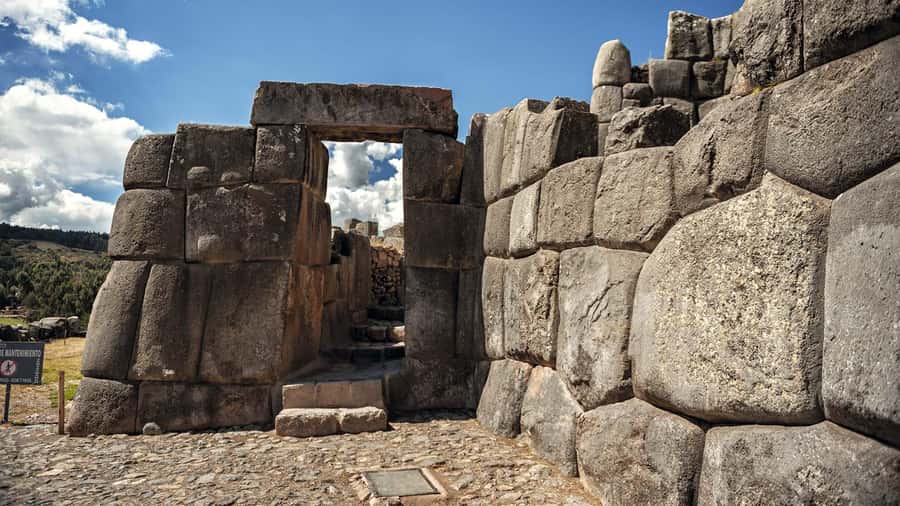
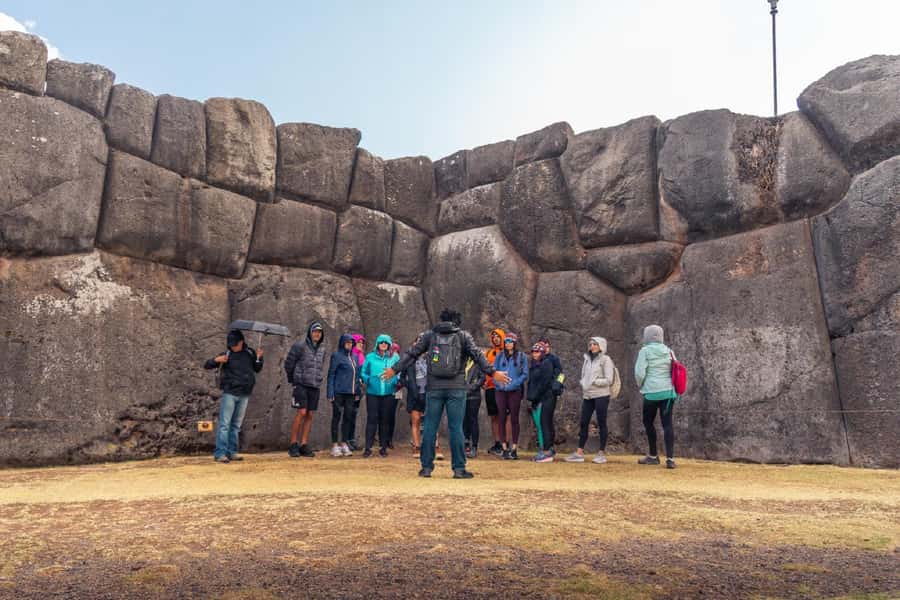
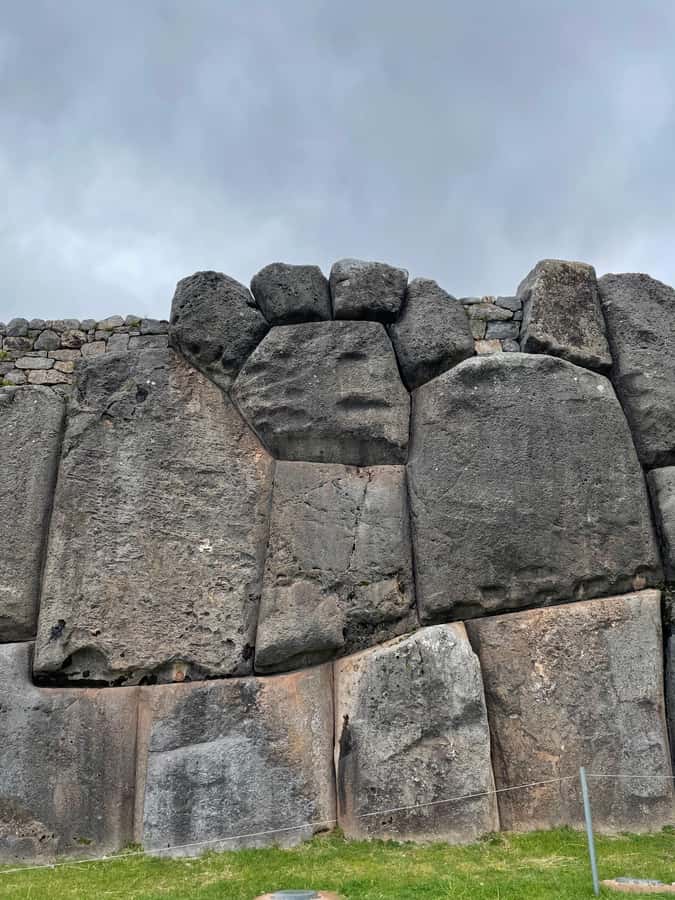
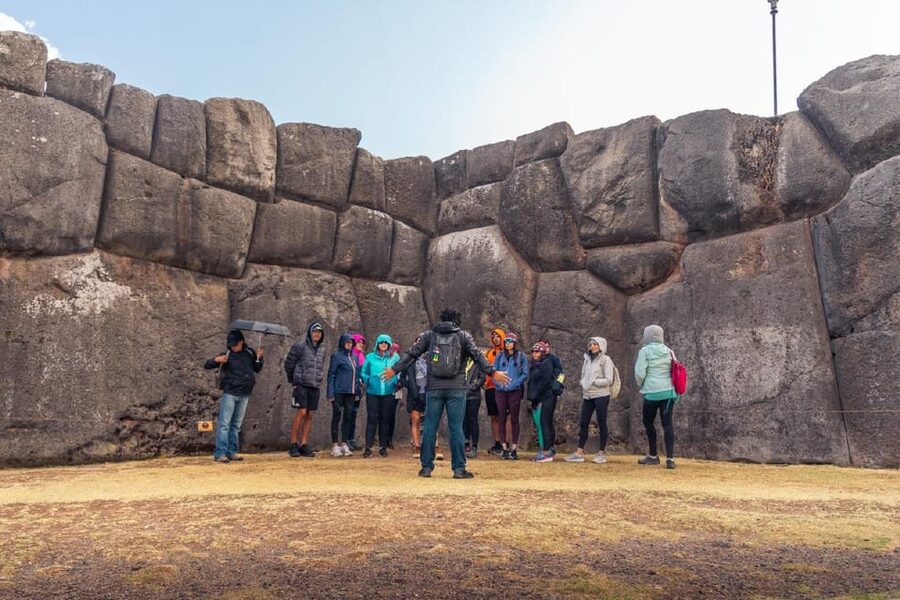
A van ride of about 15 minutes takes you to Sacsayhuamán, also spelled Saksaywaman. The scheduled visit lasts around 40 to 45 minutes, with time for a guided explanation, photos, and some walking.
This is usually the most impressive stop in terms of scale. The site is known for immense carved stone blocks, strategic placement, and broad views over Cusco. You will quickly understand why photographs of Cusco so often include these walls.
The key issue here is time. A scheduled 40-minute stop sounds reasonable, but some groups have spent as little as 15 minutes at the site. That is not enough for a relaxed look at the walls and views, especially if the guide needs to gather the group or the van arrives late.
If Sacsayhuamán is your main reason for booking, stay alert to the schedule and ask how much time you will have on foot. Wear shoes with a good grip. The itinerary includes walking, and the stone surfaces can be uneven. Comfortable hiking shoes are a sensible choice even though this is not a long trek.
The partial Tourist Ticket costs 70 soles and is separate from the tour price. It covers the archaeological sites on this route, according to the supplied admission information. Ask at booking or before departure exactly which ticket your group will use, then keep enough soles ready.
Qenqo: a compact site with strange stone details
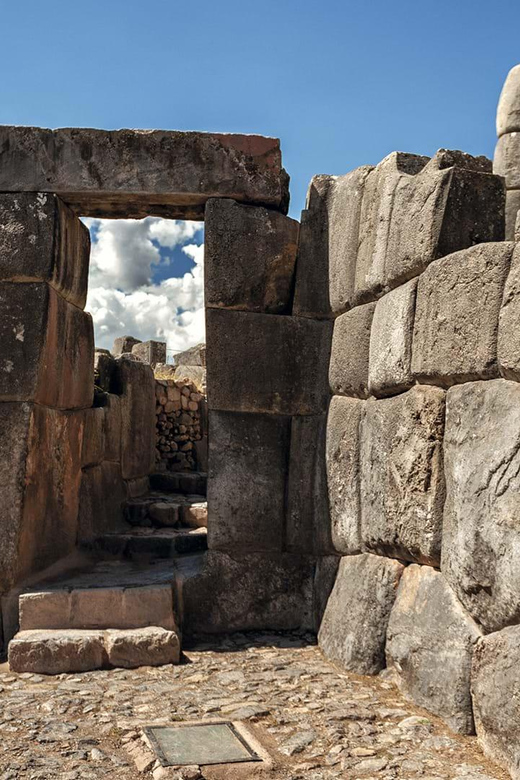
From Sacsayhuamán, the van ride to Qenqo takes about five minutes. The visit is shorter, around 20 minutes, so this is a stop where a guide’s explanation matters.
Qenqo was a ceremonial site, known for carved rock structures, water channels, and maze-like stone spaces. It does not have the broad scale of Sacsayhuamán, but its appeal is more mysterious and intimate. You look at how the rock was shaped and used rather than simply standing back to admire a wall.
Because the visit is brief, stay close to the guide and listen for the practical details. The carved passages and channels are easy to pass without understanding what you are seeing. A good explanation turns a cluster of unusual stones into a place connected with ritual activity.
This stop also shows why a five-hour route can feel packed. You are not just covering distance. You are changing from one type of Inca site to another, often with only a few minutes between stops.
Somewhere else entirely, still within reach of Cusco:
- Cusco: Humantay Lake Tour with Breakfast and Buffet Lunch
★ 4.9 · 2,976 reviews - From Cusco: Sacred Valley & Maras Salt Mines Tour with Lunch
★ 4.8 · 2,227 reviews - From Cusco: Moray, Maras Salt Mines & Chinchero Weavers Tour
★ 4.8 · 1,925 reviews - From Cusco: Full-Day Group Tour of Machu Picchu
★ 4.7 · 1,767 reviews
Tambomachay: water, stone channels, and ritual use
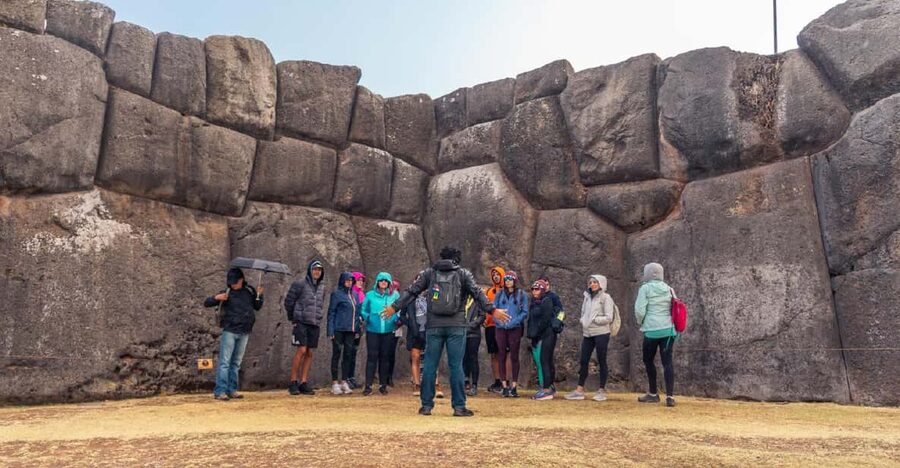
The van ride to Tambomachay takes about 20 minutes. The planned visit lasts around 45 minutes to one hour, with time for walking, photographs, and a closer look at the water features.
Tambomachay is known for its springs and carefully built stone channels. Water flows through the site, and the complex is associated with purification and ritual use. Compared with the dry, heavy walls at Sacsayhuamán, Tambomachay feels more delicate. Its importance comes from the way water was guided and displayed.
This is a stop where taking a little time helps. Watch the channels rather than rushing only to the best photo position. The site shows that Inca engineering was not limited to roads, terraces, and fortress walls. Water could also carry religious meaning.
Bring a long-sleeved shirt and sunscreen. The supplied preparation advice also recommends breathable clothing, long pants, and biodegradable sunscreen. Rain is possible during the wet season, so pack waterproof clothing or buy a poncho in the plaza. The weather can change quickly around Cusco, and a light rain layer is easier than trying to protect a camera with a plastic bag.
Puca Pucara and the final views
The final archaeological stop is Puca Pucara, about five minutes from Tambomachay by van. The visit is scheduled for roughly 20 minutes.
Puca Pucara was an Inca military fortress and strategic control point. Its position gave it wide views toward Cusco and the surrounding routes. The site is less monumental than Sacsayhuamán, but it helps complete the military side of the story.
You will see why the location mattered. A fortress or checkpoint here could monitor movement along important approaches to the city. The short stop is mainly about orientation, views, and the role of the site within the wider network around Cusco.
The route then returns toward the city. One part of the published route lists a photo stop in the Cusco Region before a 30-minute van ride to Calle Plateros. Exact traffic and group timing can affect the finish, so do not schedule a tight connection immediately afterward.
The guide and language setup
The tour is offered in English and Spanish with a professional bilingual guide. Explanations are given in both languages, but the balance can vary. One documented group found that the English explanations were sometimes shorter than the Spanish ones.
That matters at sites such as Qenqo, where you need context to understand the carved rock features. If you are in the English group, stay near the guide and politely ask for any detail you missed. The guide’s pace and language balance can shape the experience more than the low booking price.
A guide named Yako received particular praise for being caring and for explaining the ancient Inca civilization well. You may not have Yako on your departure, but this gives you a useful standard: the best version of the tour is one where the guide explains how the five sites relate, not just where to stand for photos.
There is also an important practical warning. Some departures have included a highly commercial textile stop, including an alpaca clothing shop, plus sales of books and liquor on the bus. These stops are not part of the listed archaeological route, and they can take time away from Sacsayhuamán or the other sites.
At the start, ask clearly if any shopping visits are planned. If the answer is yes, decide if you are comfortable with that tradeoff. You can also remind the guide that your priority is archaeological time.
What the $16 price really covers
At $16, this is a low-cost way to reach four sites outside the city center while receiving transportation and guiding. Hotel pickup is included for hotels near Cusco’s historic center, and the provider contacts you a day in advance to coordinate the pickup.
The value is strongest if you want to avoid arranging separate transport to the hilltop ruins. A private taxi or self-arranged visits may give you more control over timing, but this tour removes some planning work and gives you a basic explanation at each stop.
The cheap headline price is not the final cost. Add 15 soles for Coricancha and 70 soles for the partial Tourist Ticket, paid in soles at the entrance. You should also carry cash for any small personal purchases, though buying anything is optional.
The tour includes a tourist van, but the route is not entirely vehicle-based. You walk to Coricancha and walk around Sacsayhuamán and Tambomachay. Pack light, keep your phone charged, and bring a camera if photos matter to you.
Who will enjoy this tour most
I would choose this tour if you have limited time in Cusco and want a first look at the major ruins around the city. It suits visitors who prefer a set route, shared transport, and a guide rather than working out taxis and entrance points alone.
It is also a good fit for anyone interested in seeing different sides of Inca society in one outing. Coricancha covers religion and colonial change. Sacsayhuamán and Puca Pucara show defense and control. Qenqo covers ceremony, while Tambomachay focuses on water and purification.
I would be more cautious if you want long, quiet visits or detailed archaeology. The schedule is tight, and the quality of the day depends on the guide keeping the group moving without cutting the site visits too short.
The tour is not suitable for children under three, babies under one, people with altitude sickness, or people over 95. Anyone who feels unwell at Cusco’s altitude should not treat this as a casual outing. Tell the provider about pickup details in advance, especially if your meeting area has limited phone coverage. If no covered meeting point is available, the guide may call out your name.
What to bring for a smoother half-day
Wear comfortable shoes or hiking shoes, long pants, and breathable clothing. Bring a long-sleeved shirt, biodegradable sunscreen, a charged smartphone, a camera, and cash in soles.
During the rainy season, add waterproof clothing or plan to buy a poncho in the plaza. The advice to bring clothes that can get dirty is sensible, since several sites involve stone paths and outdoor walking.
Leave baby strollers and carriages at home. Explosive substances are not allowed. Keep your passport or another form of identification with you, as requested in the tour information.
Should you book the Cusco City Tour?
Book it if you want a budget-friendly introduction to Cusco’s major surrounding ruins and you accept a brisk pace. The route covers a lot for $16, and the mix of Coricancha, Sacsayhuamán, Qenqo, Tambomachay, and Puca Pucara gives you a useful first map of Inca religion, ceremony, water management, and defense.
I would book with two conditions. Confirm the pickup time and entrance-ticket cost, and ask directly about shopping stops. If the provider can keep the focus on the archaeological sites, this is a practical half-day choice. If you want spacious visits, especially at Sacsayhuamán, choose a longer or private tour instead.
FAQ
How long does the Cusco City Tour last?
The advertised duration is five hours. The morning schedule runs from 9:00 a.m. to about 2:00 p.m. The listed afternoon schedule begins at 1:00 p.m. and returns around 6:30 p.m., so confirm the exact timing for your departure.
Which sites are included?
The route includes Coricancha, Sacsayhuamán, Qenqo, Tambomachay, and Puca Pucara. Coricancha is the Temple of the Sun, while the other four are archaeological sites around Cusco.
Is hotel pickup included?
Pickup is included for hotels near the historic center of Cusco. You will be contacted a day in advance to coordinate the pickup.
Are entrance fees included in the $16 price?
No. Coricancha admission costs 15 soles, and the partial Tourist Ticket costs 70 soles. Admission payments are made in Peruvian soles at the entrance.
Is the tour available in English?
Yes. The tour is offered in English and Spanish with a live bilingual guide.
How do I get to the first stop?
The itinerary includes about 10 minutes of walking from the pickup location to Coricancha. The remaining route uses a tourist van, with walking at several archaeological sites.
What happens during the rainy season?
You can bring waterproof clothing or purchase a poncho in the plaza. Waterproof protection is useful because several parts of the tour take place outdoors.
Is the tour suitable for young children?
It is not suitable for children under three or babies under one year old. Baby strollers and baby carriages are also not allowed.
Can I cancel the booking?
You can cancel up to 24 hours in advance for a full refund. The reserve-now, pay-later option lets you hold a place without paying at the time of booking.
Recently added around Cusco
- Palcoyo colored mountain hike + stone forests★ 4.6 · 3 reviews
- Maras Moray★ 5.0 · 3 reviews
- From Cusco: Vinicunca Mountain of Colors Excursion + Ticket★ 5.0 · 3 reviews
- Full-Day Condor Viewpoint & Inca Sites Tour★ 5.0 · 3 reviews
- Excursion Cusco – Puno – Titicaca Observatory Train★ 5.0 · 3 reviews
- Machu Picchu: Private Tour Guide Service for up to 15 people★ 4.5 · 3 reviews
- Machu Picchu: 1-day tour by Vistadome Observatory train★ 5.0 · 3 reviews
- Cusco: Chonta Canyon and Condor Flight Tour with Lunch★ 5.0 · 3 reviews
Cusco Tours, compared.
Humantay Lake Tour with Breakfast and Buffet Lunch
Read our review →
Sacred Valley & Maras Salt Mines Tour with Lunch
Read our review →
Moray, Maras Salt Mines & Chinchero Weavers Tour
Read our review →


Half-Day City Tour with Sacsayhuaman and Q’enco
Read our review →
Sacred Valley, Pisac, Ollantaytambo, Salt Mines Moray
Read our review →
Browse the lists this tour appears in