
Reviewed · CUSCO TOURS
City Tour Cusco
Cusco’s great Inca sites sit just outside the city, and this tour links four of the most important in one half-day circuit. Sacsayhuaman’s huge stonework is the main event, but Q’enqo, Tambomachay, and Puca Pucará add the religious, practical, and military sides of Inca life.
I like two things here: the low $15 price keeps the outing accessible, and a live guide gives meaning to stones that can otherwise look like a jumble of walls. The tour also gives you broad views around Cusco without asking you to spend a full day away from town.
The catch is simple: entrance tickets are not included, and the route is not suitable for people with mobility impairments. The published timing says five hours, with the schedule also described as about five and a half, so leave room in your plans.
Key points to know before you go
- Four major Inca-era sites in one circuit: Visit Sacsayhuaman, Q’enqo, Tambomachay, and Puca Pucará in a single guided outing.
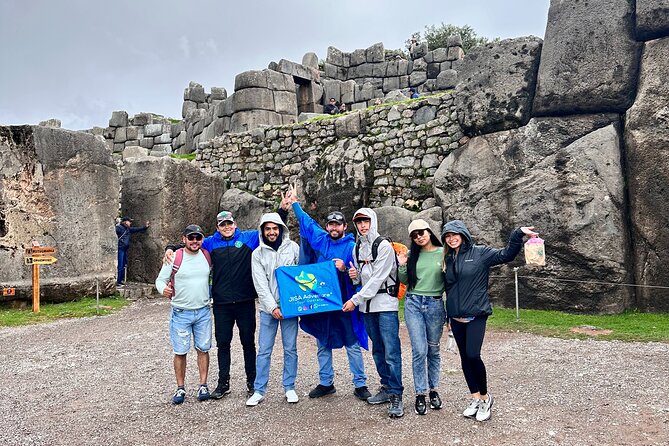
- Sacsayhuaman is the star: Walk through three levels and see the bases of the towers that once looked over Cusco.
- Q’enqo adds a sacred dimension: The shrine includes an interior altar linked with ceremonies for Pachamama.
- Tambomachay still centers on water: Springs and channels show the importance of water in Andean beliefs and daily life.
- Pickup is flexible: Begin from the Plaza de Armas or coordinate collection from your hotel or a neutral meeting point.
- Bring identification, not luggage: Carry your passport or ID card, and leave large bags behind.
Why this half-day circuit works in Cusco
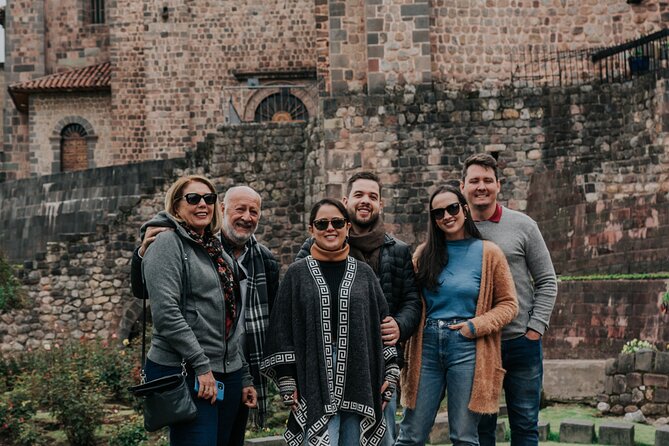
Cusco can feel like two cities placed on top of each other. Spanish churches, arcades, and tiled roofs fill the central streets, while Inca walls form the foundations below. This tour moves beyond the main square and lets you look at the older city through four very different sites.
That range is useful. Sacsayhuaman shows engineering and ceremony. Q’enqo points toward ritual practice. Tambomachay connects belief with water management. Puca Pucará brings in defense and movement through the valley.
I also like the tour’s scale. Five hours is long enough to get a proper look at the sites, yet short enough to leave part of your day for Cusco’s museums, churches, markets, or a slow meal. You are not committing to a full-day excursion far from town.
The guide matters here. The service includes an English- or Spanish-speaking professional guide, with guided visits at the sites. A good explanation can help you notice how stones were shaped, how sacred spaces were arranged, and why each stop had a different role. Without that context, some of the ruins can seem like attractive piles of masonry.
More City Tours in Cusco
- Cusco: Half-Day City Tour with Sacsayhuaman and Q’enco
★ 4.6 · 1,129 reviews - City Tour Cusco Qoricancha Sacsayhuaman y Tambomachay
★ 4.7 · 617 reviews - Cusco: Sightseeing Tour of the City on an Open-Top Bus
★ 4.0 · 481 reviews
Sacsayhuaman and the city below
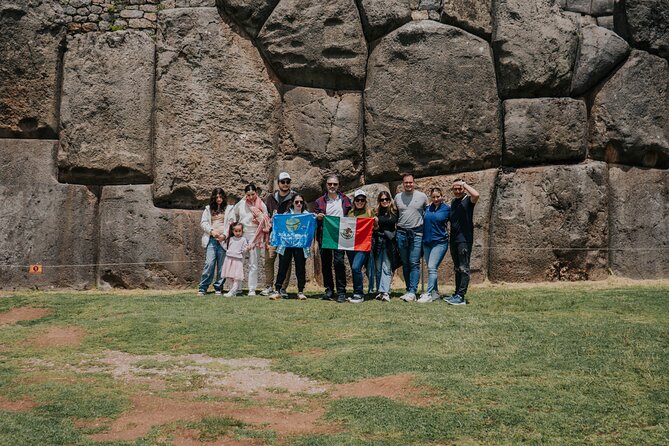
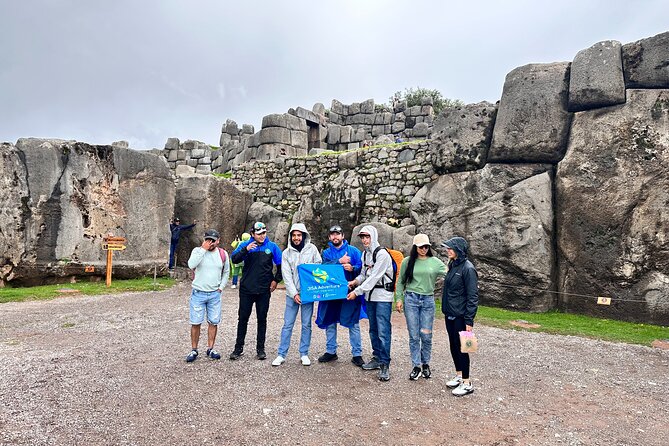
Sacsayhuaman is the place most likely to make you stop talking for a moment. Its walls use enormous blocks fitted together with remarkable care. The scale is hard to grasp from photographs, especially when you are standing near the lower courses and looking up at the layers above.
The visit covers three levels of the site. At the upper part, you can see the bases of the great towers that once dominated Cusco during the Inca period. The towers themselves are gone, but their foundations help you picture how strongly the complex controlled the space around the imperial capital.
The setting is part of the appeal. You get open views and a clear sense of how the site relates to Cusco below. This is one of the best stops for understanding that the Inca capital was not a small settlement tucked into the mountains. It was a carefully planned center with ceremonial, political, and defensive spaces.
Do not reduce Sacsayhuaman to a fortress, though. Its ceremonial role matters just as much. The site reflects the Inca habit of building in close relation to the surrounding terrain rather than treating nature as something to flatten or ignore.
Your guide can also help you look past the famous zigzag walls. Pay attention to the way the stone courses meet, the changing size of the blocks, and the views toward the city. Those details are easy to miss if you only stop for a photograph.
The practical drawback is the walking. The tour is officially not suitable for people with mobility impairments, and the site includes multiple levels. Even if you are comfortable walking, take the visit at a steady pace and wear sensible shoes.
Q’enqo, a shrine shaped by ritual
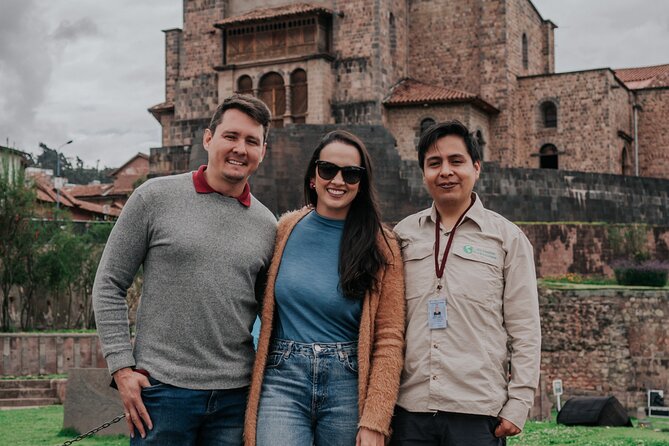
Q’enqo is a smaller and more enclosed stop, but it changes the mood of the tour. The site is described as an ancient shrine of the Puma, with an altar for sacrifices inside a space associated with Pachamama, or Mother Earth.
You can expect the guide to focus on the ceremonial meaning of the site. This is where an explanation is especially helpful. Rock formations and carved spaces do not always announce their purpose clearly, and the significance of Q’enqo comes from how the space was used, not simply how it looks.
The connection with the Puma is important because animals, mountains, water, and the earth all held a place in the Andean world. Q’enqo gives you a chance to consider the Inca capital as a sacred environment, not only a political one.
I like the contrast with Sacsayhuaman. After the broad walls and open views, Q’enqo feels more focused. The experience is less about size and more about the relationship between stone, ceremony, and belief.
This stop may be less immediately impressive if you prefer grand ruins. That is not a flaw, but it is worth knowing. Q’enqo rewards attention to the guide’s explanation and to the shape of the site itself. It is not the place to rush through while waiting for the next large monument.
Tambomachay and the meaning of flowing water
Tambomachay brings water to the center of the story. The site is known for its architectural quality and is regarded as one of the important supports of the Andean way of understanding the world.
The springs here still send water through the site, irrigating fields and terraces in the area. That continuing flow gives Tambomachay a direct, practical quality. You are not looking only at a ruined structure. You are seeing how water was directed and valued.
This stop also helps explain why water appears so often in Andean sacred places. It supported crops, terraces, settlements, and ceremony. At Tambomachay, engineering and belief meet in a compact setting.
I would listen closely to the guide here. The channels and fountains may look simple at first glance, but their value lies in the careful control of water. Notice how the site uses slope and stonework. The tour’s focus on architecture and Andean ideas makes this more than a quick photo stop.
Tambomachay may not satisfy you if you want dramatic walls on the scale of Sacsayhuaman. Its strength is subtler. It shows the practical side of Inca culture and the care given to natural springs.
Somewhere else entirely, still within reach of Cusco:
- Cusco: Humantay Lake Tour with Breakfast and Buffet Lunch
★ 4.9 · 2,976 reviews - From Cusco: Sacred Valley & Maras Salt Mines Tour with Lunch
★ 4.8 · 2,227 reviews - From Cusco: Moray, Maras Salt Mines & Chinchero Weavers Tour
★ 4.8 · 1,925 reviews - From Cusco: Full-Day Group Tour of Machu Picchu
★ 4.7 · 1,767 reviews
Puca Pucará, a lookout over the valley
The final stop is Puca Pucará, a watchtower and strategic position above the valley. From here, you can look across the area around Cusco and understand why the site mattered to the imperial city.
Its role was tied to observation and movement. A lookout could help control routes and monitor people approaching the capital. The site brings a military and administrative angle to a tour that has already covered ceremony, sacred space, and water.
I find this a useful final stop because it pulls the earlier visits together. Sacsayhuaman showed power on a grand scale. Q’enqo showed ritual space. Tambomachay showed water management. Puca Pucará shows how the wider area was watched and organized.
The name can be translated as Red Fortress, though the experience here is less about a massive fortress than about position. The views are the key feature. You can see why a site with command of the valley would have been useful to the Inca state.
As with the other stops, the site involves walking and uneven ground may be present. The supplied information does not give exact path conditions, so ask about the route if mobility is a concern before booking.
Spanish and Inca Cusco in one afternoon
The tour begins and ends in the Cusco area, with the Plaza de Armas as the stated meeting and finishing point. Hotel collection may be arranged, and pickup can also be coordinated from a neutral point if that works better with the schedule.
That flexibility is useful when you are still learning Cusco’s streets. It also means you can fit the tour around a morning arrival, a later meal, or another central activity. A collection schedule is provided, so confirm the exact meeting details before the day begins.
The city portion includes a guided visit and scenic views along the way. The main focus is the nearby archaeological circuit rather than a long walking tour through every colonial street, but the route helps you connect the ruins with the city that grew around them.
Cusco’s architecture is one of the tour’s broader themes. You are encouraged to notice the meeting of Inca and Spanish styles, along with the local forms of Cusco art. The most useful way to approach this is to compare what you see in the old city with what you learn at the ruins.
Look for the contrast between heavy, precise Inca masonry and later Spanish construction. Notice how Cusco’s artistic traditions developed around both Andean and colonial influences. The experience does not provide a separate museum visit, so you should treat the architecture and the guide’s interpretation as the art lesson built into the route.
What the $15 price really covers
At $15 per person, this is a low-cost way to arrange transport and a guide for the four-site circuit. The price includes tourist transportation, a professional guide, guided visits for about five hours, and agency assistance at any time.
That is good value if you want the structure of an organized outing without paying for a full-day private excursion. Transport is particularly useful because the sites sit outside the central square and are spread along a circuit. You avoid working out each connection on your own.
The price does not include entrance tickets. This is the biggest cost detail to clarify before you book. The $15 is not the complete price of the day, so ask the provider what tickets you need and how they are handled.
Meals, drinks, snacks, and travel insurance are also excluded. Bring what you need for the outing, since there is no food service built into the tour. The activity specifically asks you to bring a passport or ID card, which may be needed for site access.
Large bags and luggage are not allowed. Keep your belongings to a small day bag and avoid arriving with airport luggage. This is a sightseeing circuit, not a transfer service.
Timing, language, and the walking level
The experience lasts five hours, while the schedule describes the guided portion as about five and a half hours. Treat it as a half-day activity with a little flexibility rather than an appointment that ends exactly at a fixed minute.
The guide service is available in English and Spanish. Choose the language that lets you ask questions easily, especially at Q’enqo and Tambomachay, where the meaning of the site may not be obvious from the stones alone.
The pickup collection can be made from your hotel, with the schedule coordinated in advance. The Plaza de Armas is also listed as a pickup option, and the tour finishes at Cusco’s main square. Confirm whether your hotel falls within the practical pickup area and where you should wait.
Mobility is the main concern. The experience is not suitable for people with mobility impairments, and the route includes archaeological sites with different levels and open outdoor areas. If you need a gentler route, ask the provider about the exact walking conditions before paying.
Bring your passport or ID card. Leave large luggage behind. Those two instructions are easy to follow and can prevent a frustrating start.
Who will get the most from this tour
I would choose this tour if you are in Cusco for a short stay and want a clear introduction to the Inca sites near the city. It gives you four different subjects in one outing, so you can begin to understand how ceremony, water, defense, and architecture fit together.
It also suits you if you prefer having a guide explain the sites rather than reading signs or trying to assemble the story yourself. The service is offered in English and Spanish, and the guide is there for the full guided visit.
The tour is a good match for budget-conscious visitors. At $15 before entrance tickets, it keeps transport and interpretation affordable. It is also useful if you do not want to spend time arranging separate taxis or working out the order of the stops.
I would think twice if you need fully accessible paths, dislike scheduled group transport, or want a slow, highly detailed study of one site. Four stops in about five hours means the pace has to keep moving. You will see the main features, but you may not have unlimited time at every wall, spring, or viewpoint.
The tour is also not designed around meals, shopping, or a long colonial walking route. If those are your main interests, pair it with another activity in central Cusco.
Should you book City Tour Cusco?
Book it if you want a practical introduction to Cusco’s Inca sites at a modest price. Sacsayhuaman provides the scale, Q’enqo adds ritual, Tambomachay explains water, and Puca Pucará gives you the wider strategic view.
Before booking, budget separately for entrance tickets and confirm the pickup time. Bring identification, a small bag, and shoes suited to outdoor walking. If you have mobility limits, this is not the right outing unless the provider can clearly explain an accessible alternative.
For a first look at the archaeological sites around Cusco, I think the route makes good use of half a day. It gives you enough context to return to the city with sharper eyes, ready to notice the Inca foundations and Andean ideas beneath Cusco’s Spanish surface.
FAQ
How long does City Tour Cusco last?
The activity is advertised as five hours, while the schedule describes the guided visit as about five and a half hours. Check the available starting times and allow some flexibility around the finish.
Where does the tour begin and end?
Pickup can be arranged from the Plaza de Armas in Cusco. Hotel collection may also be coordinated, and the tour finishes at Cusco’s main square.
Which places are included?
The route visits Sacsayhuaman, Q’enqo, Tambomachay, and Puca Pucará. It also includes scenic views on the way and a guided visit in Cusco.
Is the entrance fee included in the $15 price?
No. Entrance tickets are not included. Meals, drinks, snacks, and travel insurance are also separate.
What languages are available for the guide?
The live guide service is available in English and Spanish.
What should I bring, and can I bring luggage?
Bring your passport or ID card. Large bags and luggage are not allowed, so carry only a small personal bag.
Recently added around Cusco
- Palcoyo colored mountain hike + stone forests★ 4.6 · 3 reviews
- Maras Moray★ 5.0 · 3 reviews
- From Cusco: Vinicunca Mountain of Colors Excursion + Ticket★ 5.0 · 3 reviews
- Full-Day Condor Viewpoint & Inca Sites Tour★ 5.0 · 3 reviews
- Excursion Cusco – Puno – Titicaca Observatory Train★ 5.0 · 3 reviews
- Machu Picchu: Private Tour Guide Service for up to 15 people★ 4.5 · 3 reviews
- Machu Picchu: 1-day tour by Vistadome Observatory train★ 5.0 · 3 reviews
- Cusco: Chonta Canyon and Condor Flight Tour with Lunch★ 5.0 · 3 reviews
Cusco Tours, compared.
Humantay Lake Tour with Breakfast and Buffet Lunch
Read our review →
Sacred Valley & Maras Salt Mines Tour with Lunch
Read our review →
Moray, Maras Salt Mines & Chinchero Weavers Tour
Read our review →


Half-Day City Tour with Sacsayhuaman and Q’enco
Read our review →
Sacred Valley, Pisac, Ollantaytambo, Salt Mines Moray
Read our review →
Browse the lists this tour appears in