
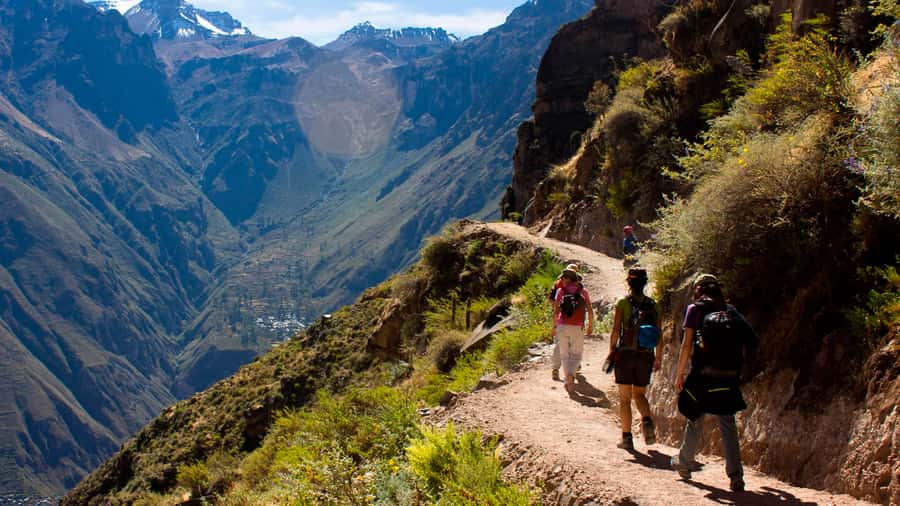
Reviewed · COLCA CANYON TOURS
From Arequipa: Full Day Colca Canyon Tour
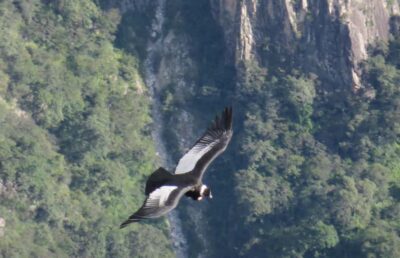
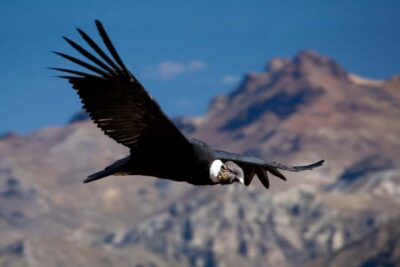
The star of this long day is Cruz del Cóndor, where you may watch huge Andean condors ride the morning air above one of the world’s deepest canyons. You also cross the Salinas and Aguada Blanca National Reserve, a high plain where vicuñas appear against volcanoes and open sky.
I like the mix of wildlife and local life. You get condors, llamas, alpacas, volcanoes, and high-altitude scenery, then stop in small towns such as Maca and Yanque. I also like that breakfast, hotel transfers, and a bilingual guide are included for $53, though entrance fees, lunch, and hot springs cost extra.
The main drawback is the punishing schedule. You leave very early, spend many hours on the road, and may face a crowded bus. One booking reported 17 people despite an advertised maximum of 10, with cramped seats at the back and no proper seat for the guide.
Key points to know before booking
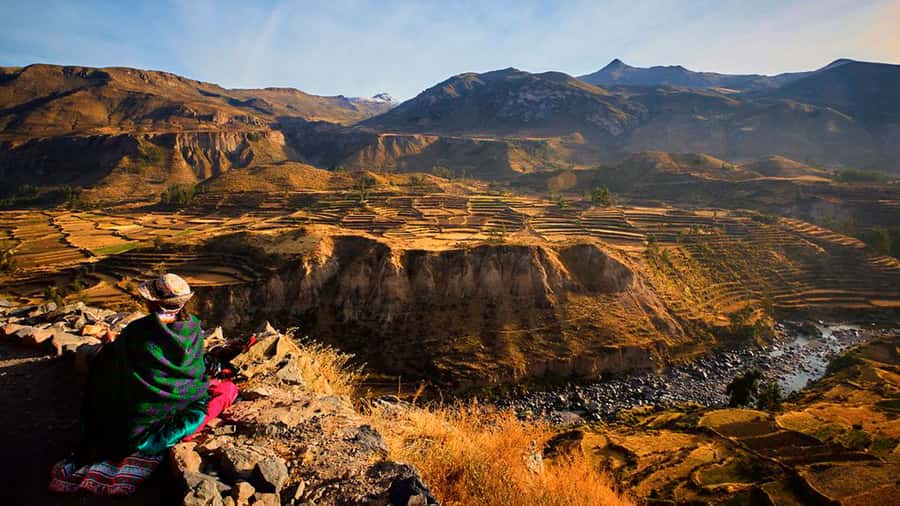
- Cruz del Cóndor is the main event: You get about an hour at the best-known condor viewpoint in the Colca area.
- The altitude is serious: Stops range from about 3,635 meters in Chivay to 4,800 meters at the volcano viewpoint.
- The reserve adds wildlife value: Salinas and Aguada Blanca is your first major stop, with a chance to see vicuñas.
- Chivay gives the day a local center: Lunch is optional, and you can add a visit to AguaVerde hot springs.
- The $53 price is not all-inclusive: Add the Colca entrance, lunch, and possibly hot springs to your budget.
- This is a shared bus tour: It suits visitors who want broad coverage in one day, not a relaxed canyon walk.
Why the condor lookout makes this trip worthwhile
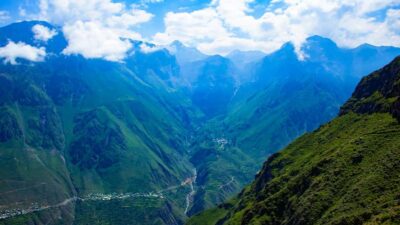
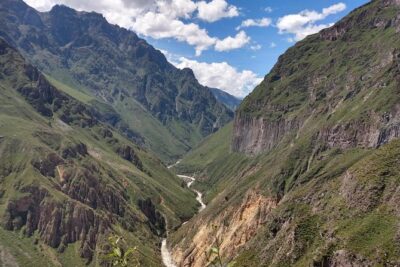
Colca Canyon is not simply a viewpoint with a dramatic name. The canyon reaches great heights and the tour takes you into an Andean region where agriculture, villages, volcanoes, and wildlife all fit into one long day.
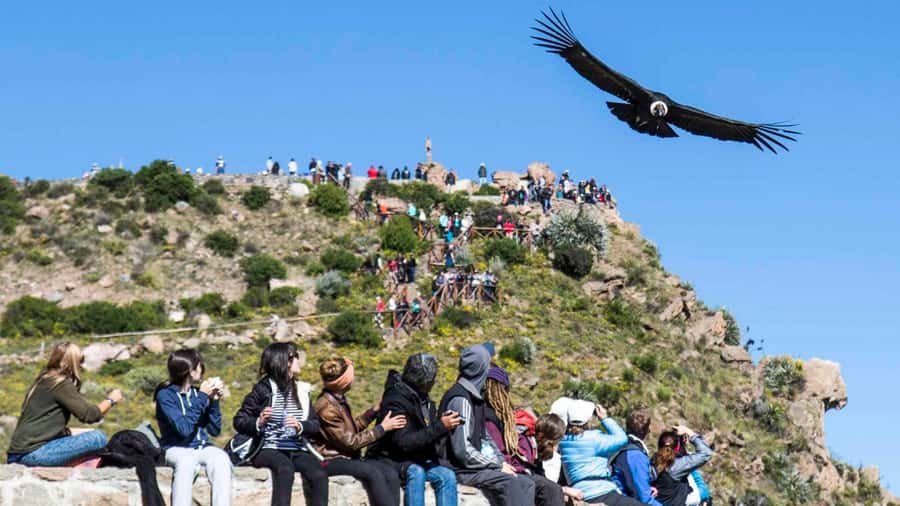
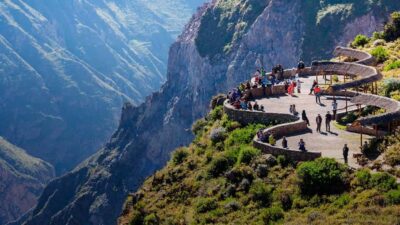
At Cruz del Cóndor, you have about an hour for the main viewing stop. The lookout reaches roughly 4,700 meters above sea level, and the Colca River lies far below. The draw is the Andean condor, one of the largest flying birds in the world and an important symbol of South America.
Condor sightings depend on nature, not the timetable. Still, the stop is planned for the place most associated with seeing these birds in their natural setting. Bring binoculars if you have them. A camera with a strong zoom will also help, though the wide views are part of the reward.
You should expect a sightseeing stop rather than a hike into the canyon. The tour gives you time to look, take photographs, and hear explanations about local wildlife and plant life from the guide. You need to walk over unpaved or uneven ground, so comfortable shoes matter.
more colca canyon trips
- From Arequipa: Colca Canyon Full-Day Guided Tour with Meals
★ 4.5 · 982 reviews - 2-Day Tour Colca Canyon in Arequipa with end in Puno
★ 4.6 · 248 reviews - From Arequipa: 2-Day Colca Canyon Trekking Tour
★ 4.8 · 243 reviews
The four-hour road to Chivay
The tour begins with pickup in Arequipa’s Historical Centre, very early in the morning. You need to wait in your hotel lobby 10 minutes before the scheduled pickup time. From there, the shared bus begins the long ride toward the Colca Valley.
The first major stop is the Salinas and Aguada Blanca National Reserve, at about 4,000 meters. The scheduled photo stop is short, around five minutes, but the reserve is important because it introduces you to the high Andean environment before you reach the canyon.
This is where you may see vicuñas, the small wild relatives of llamas and alpacas. You can also expect broad views of volcanic country and high plains. The stop is brief, so keep your jacket and camera close instead of burying them in the luggage.
After roughly four hours on the road, you reach Chivay. At 3,635 meters, this Andean town sits at the highest point of the canyon route used on this tour. It is the practical center of the day, with lunch and hot springs offered here before the return journey.
The long drive is the price of seeing Colca Canyon from Arequipa in a single day. You cover a lot of ground, but you do not get much time for rest. If long bus rides leave you worn out, this schedule deserves serious thought.
Villages and viewpoints along the Colca route
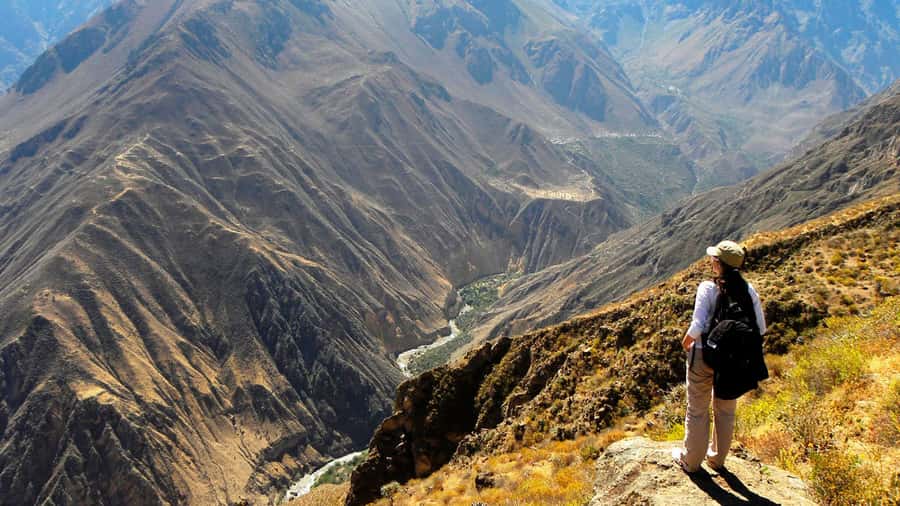
The tour passes through several religious and agricultural towns, including Pinchollo, Maca, Achoma, and Yanque. The stops are short, generally five to ten minutes when scheduled, so think of them as glimpses rather than full town visits.
Maca receives about 10 minutes on the itinerary. Yanque also receives about 10 minutes, while Pinchollo and Achoma are mainly pass-through points. These pauses break up the drive and give you a chance to see the small settlements that line the canyon route.
The Antahuilque viewpoint is listed among the tour’s stops, with views toward colorful lagoons and the Choquetico agricultural platforms. These terraces show how people have worked the steep Andean terrain over time. The stop adds cultural and agricultural context to a day that could otherwise become a string of scenic overlooks.
The tour also passes through the Colca Geopark, recognized by UNESCO. That designation matters because the area is valued for its geological features as well as its scenery and human settlements. You do not need to be a geology enthusiast to appreciate the volcanic forms and canyon walls, but the guide’s explanations can help you see more than just a dramatic photo.
Chivay lunch and the optional hot springs
Lunch in Chivay is optional and costs about S/ 25 to S/ 35 per person. The scheduled meal lasts around 40 minutes, so this is a functional stop rather than a leisurely regional food tour.
I would carry cash in Peruvian soles for lunch and other optional expenses. The tour price does not include the meal, and the canyon entrance fee is separate as well. A little planning keeps the day from turning into a scramble at the restaurant.
After lunch, you can choose to visit AguaVerde hot springs for about 40 minutes. The entrance fee is S/ 15 per person. The springs are described as having healing properties, but the practical value here is simpler: they offer a warm break after a cold, high-altitude morning and a long ride.
You do not have to use the hot springs. If you would rather keep the visit short or save the fee, you can skip this optional activity. If you do go, bring suitable clothing and remember that the stop is part of a tightly timed group schedule.
more Arequipa days to weigh up
- From Arequipa: Full Day Tour of Colca Canyon with Meals
★ 4.4 · 146 reviews - Full-Day Colca Canyon Tour from Arequipa
★ 4.3 · 112 reviews - Full Day Tour / Colca Canyon
★ 4.0 · 70 reviews - From Arequipa: Salinas Lagoon Full-Day Trip with Hot Springs
★ 4.0 · 62 reviews
The return route through Chucura and Patahuasi
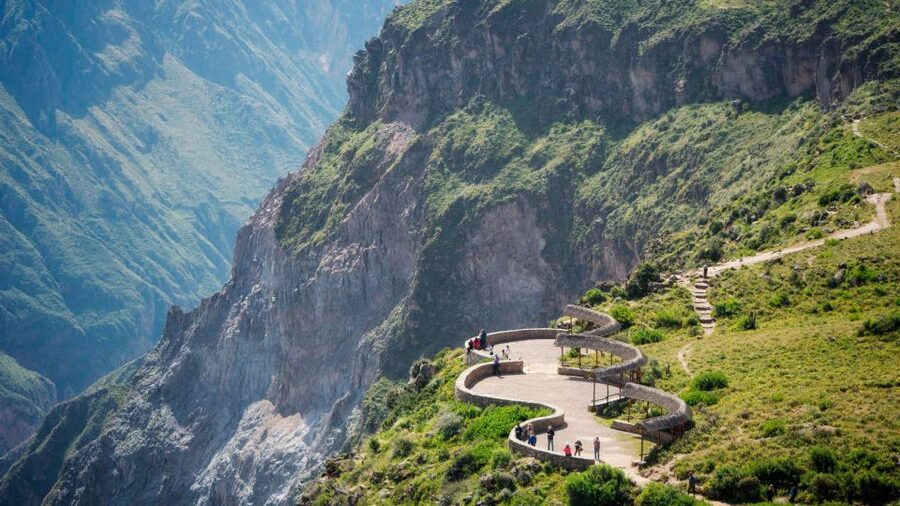
The return begins after the Chivay portion of the day, but the sightseeing is not finished. The group passes through the Chucura crater, where you have around 20 minutes for photographs.
The crater stop gives you another look at the volcanic forces that shaped this part of southern Peru. It is a scenic pause, not a long walk or geological expedition. Stay aware of the altitude and keep your movements easy.
The next major stop is the Patahuasi viewpoint, with about 20 minutes to look around. You may see birds, llamas, and alpacas here, making it another useful wildlife stop after the vicuñas in Salinas and Aguada Blanca.
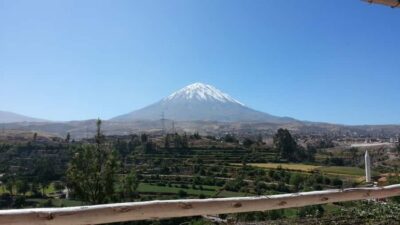
The final viewpoint reaches roughly 4,800 meters. From there, you can see volcanoes including Misti, Sabancaya, Chachani, and Ampato. These names give the view a strong sense of place, especially if you have already seen Misti from Arequipa.
The return drive to the city takes about two hours after the final sightseeing stops. You are usually back in Arequipa’s Historical Centre at the end of the 14-hour day, with a transfer to your hotel included.
Altitude is the real challenge
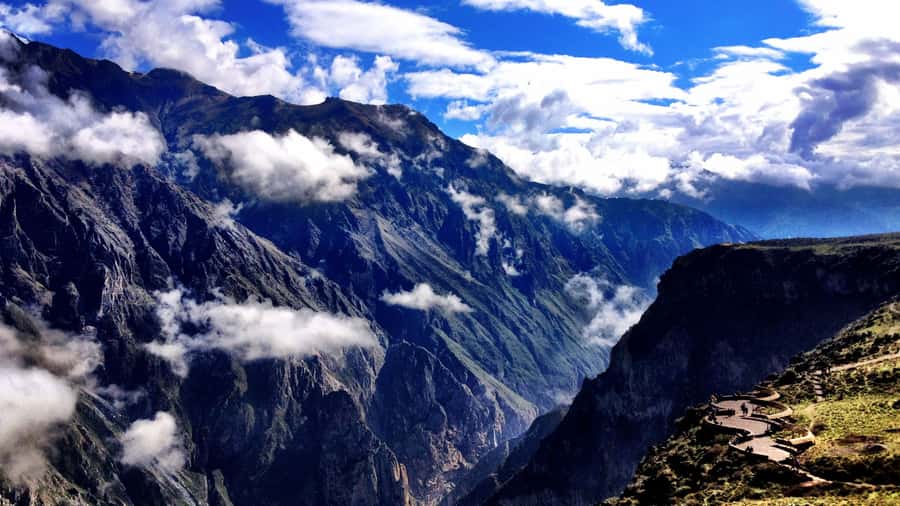
This tour reaches much higher than Arequipa. The Colca region has an average altitude of about 3,400 meters, while the itinerary rises to approximately 4,800 meters at the volcano viewpoint.
You should be in good physical condition and able to walk over uneven, unpaved ground. The tour is not suitable for people with altitude sickness or heart problems, and it is not suitable for wheelchair users.
You do not need to hike the canyon to feel the altitude. Even walking between the bus and viewpoints can be tiring at these heights. Move slowly, drink water, and avoid treating every stop like a race to take photographs.
Pack a warm jacket and comfortable clothes. Temperatures can shift sharply during a high-altitude day, and the early start adds to the chill. Bring your passport, camera, binoculars, and cash as well.
If you have no experience at altitude, consider how you feel in Arequipa before committing to this day. The itinerary is fixed and gives you limited time to recover if you feel unwell.
What the $53 price really includes
At $53 per person, this is a useful value for a visitor who wants Colca Canyon without arranging separate transport. You receive hotel transfers, a shared guided tour in Spanish and English, breakfast, and a first-aid kit.
The price does not include the Colca entrance fee. The listed rates are S/ 40 for Latin American visitors and S/ 70 for foreign visitors. You also need to budget S/ 25 to S/ 35 for lunch and S/ 15 if you choose the hot springs.
That means the final cost is higher than the advertised price, but the base fare still covers the expensive part of the day: the long round-trip ride from Arequipa. It also combines the canyon, condors, reserve, villages, volcano viewpoints, and optional Chivay activities in one booking.
The value is strongest if you have only one day available and want broad coverage. It is weaker if you prefer small groups, long stops, quiet roads, or an unhurried meal.
Shared transport and group-size caution
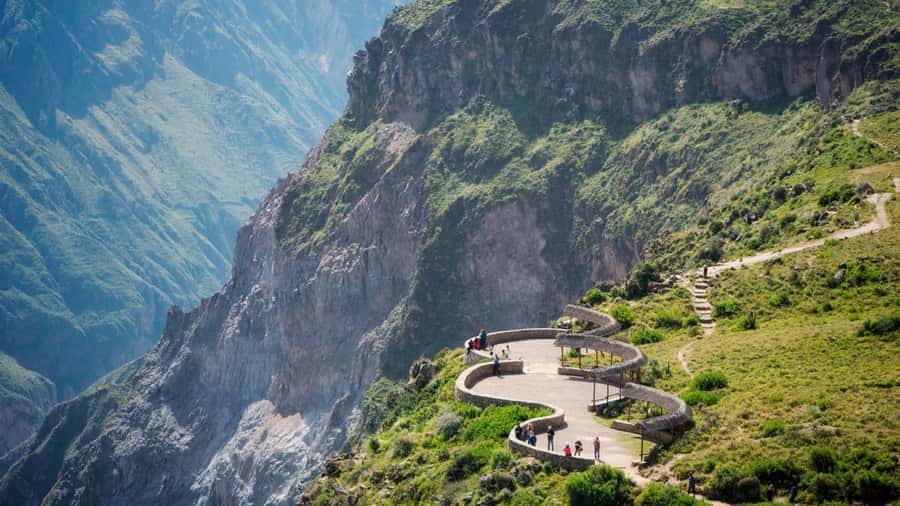
The trip uses shared transportation, and the road time totals many hours. That makes seat comfort and group size important, not minor details.
The tour information describes a maximum group of 10, but one dated booking reported a 17-person bus. That same account described very cramped seating in the back and no seat for the guide. I would confirm the expected group size and vehicle arrangement before paying, especially if you are tall or prone to motion sickness.
A shared bus also means the group follows one schedule. You cannot linger at Cruz del Cóndor, skip every village, or extend your time at the hot springs without affecting other people. The advantage is cost and simple planning. The tradeoff is less control.
The guide speaks Spanish and English, and the tour is designed to explain local fauna and flora along the route. Since no individual guide name is provided, you should not book this expecting a particular guide. The quality of the day will depend partly on the assigned guide and the conditions on the road.
Who should book this Colca Canyon day trip
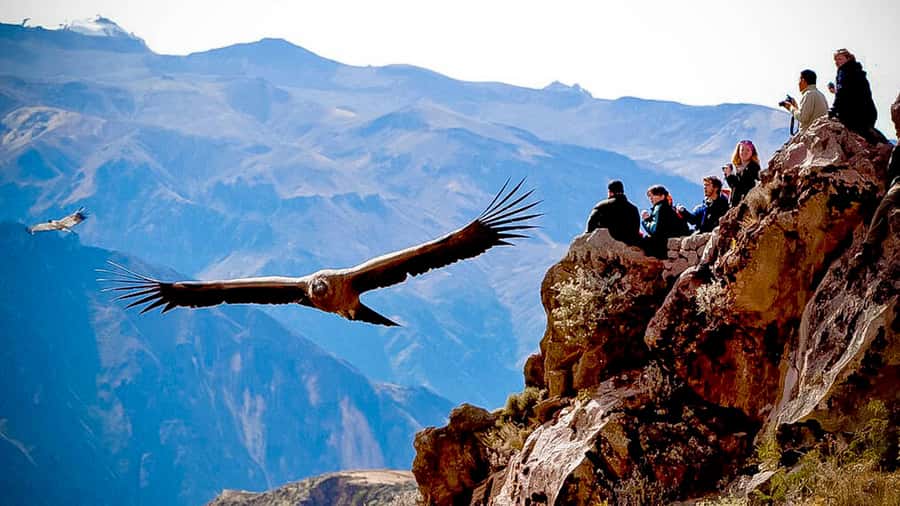
I would recommend this tour to you if you are based in Arequipa, have one free day, and want to see the canyon without renting a car or arranging several transfers. It works especially well for people who want a mix of condors, high-altitude wildlife, villages, volcanoes, and a hot-spring option.
It is also a good fit if you like structured sightseeing. The guide handles the route, the bus gets you between distant stops, and breakfast plus hotel transfers simplify the early start.
I would be cautious if you want a gentle day. Fourteen hours is a long stretch, and four hours of driving before Chivay can feel heavy. The altitude adds a second challenge, while the short stops leave little room to slow down.
I would also think twice if comfort and personal space matter more to you than price. The reported group-size problem is not proof that every departure will be crowded, but it is a useful warning to confirm the current arrangement.
Should you book it?
Book this trip if you want the most canyon coverage possible in one demanding day and accept a shared bus, optional extras, and high altitude. The condor viewpoint, Salinas reserve, Chivay, and volcano stops give the tour real range for its price.
Skip it if you have altitude concerns, need wheelchair access, or want a relaxed canyon experience. If you book, bring warm clothes, cash, binoculars, and patience, then ask about the group size before departure.
FAQ
How long does the Colca Canyon tour last?
The tour lasts 14 hours, including transportation, sightseeing stops, lunch time, and the return to Arequipa.
Where does pickup take place?
Pickup is included from hotels located in the Historical Centre of Arequipa. You should wait in the hotel lobby 10 minutes before your scheduled pickup.
Is breakfast included?
Yes. Breakfast is included in the tour price.
Is lunch included?
No. Lunch in Chivay is optional and costs about S/ 25 to S/ 35 per person.
How much is the Colca entrance fee?
The listed entrance fee is S/ 40 for Latin American visitors and S/ 70 for foreign visitors.
Can I visit the hot springs?
Yes. You have the option to visit AguaVerde hot springs for about 40 minutes. Entry costs S/ 15 per person.
What languages does the guide speak?
The live guide service is available in Spanish and English.
Is the tour suitable for people with altitude sickness or wheelchair users?
No. The tour is not suitable for people with altitude sickness, people with heart problems, or wheelchair users. You must also be able to walk on uneven or unpaved ground.
Recently added around Arequipa
- From Arequipa: 1 Day Tour to the Colca Canyon + Buffet lunch★ 4.2 · 3 reviews
- Arequipa: Colca Canyon Trekking 2 days and 1 night + food★ 4.8 · 3 reviews
- Arequipa: Catarata de Pillones and Bosque de Piedras Tour★ 4.3 · 3 reviews
- 2-Day Colca Canyon Tour to Puno with accommodation★ 3.9 · 3 reviews
- From Arequipa: Colca Canyon and Condor Watching Day Trip★ 3.7 · 3 reviews
- Cooking Class Typical Food in Arequipa★ 3.9 · 3 reviews
- Walking tour through the Historic Center of Arequipa★ 4.0 · 3 reviews
- Colca Canyon Day Trip: From Arequipa to Puno★ 3.5 · 3 reviews
Colca Canyon Tours, compared.
2-Day Tour Colca Canyon in Arequipa with end in Puno
Read our review →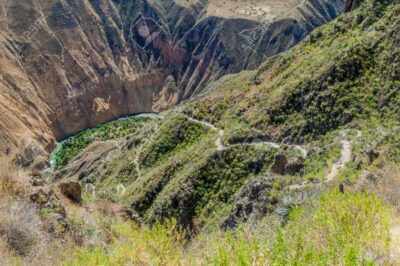
Browse the lists this tour appears in