
Reviewed · LIMA TOURS
Lima: Caral Full-Day Private Excursion with Meals
Caral is one of Peru’s most startling ancient sites: a city of pyramids built around 5000 B.C., long before the better-known cultures near Cusco. This private day trip pairs its quiet archaeological ruins with a seafront lunch in Huacho, giving you history, countryside, and coastal food in one long day.
I like the way the guide can use the long drive to connect Caral with places you may already have seen in Lima or Cusco. I also like the Huacho stop, since lunch by the sea and a look at local fishing life make this more than a straight archaeological outing. The main drawback is the long road time, with about seven and a half hours spent in the van.
Key points to know before you book
- Caral dates to around 5000 B.C.: You will see pyramids, plazas, residential areas, circular terraces, and an amphitheater at one of the oldest known urban sites in the Americas.
- The private format helps on a long day: Stops are available during the drive, and your guide can adjust explanations and pacing for your group.
- The Supe Valley adds variety: Watch for fields growing avocados, potatoes, onions, strawberries, passion fruit, and chili peppers.
- Huacho supplies the reward at the end: Lunch includes regional dishes and drinks at a restaurant in front of the sea.
- Guiding can involve translation: A local Caral guide may speak Spanish, while your English or Portuguese-speaking guide translates.
- The trip is best for archaeology fans: It suits you if you want an early Peruvian civilization site and do not mind a full day on the road.
Why Caral is worth a long day from Lima
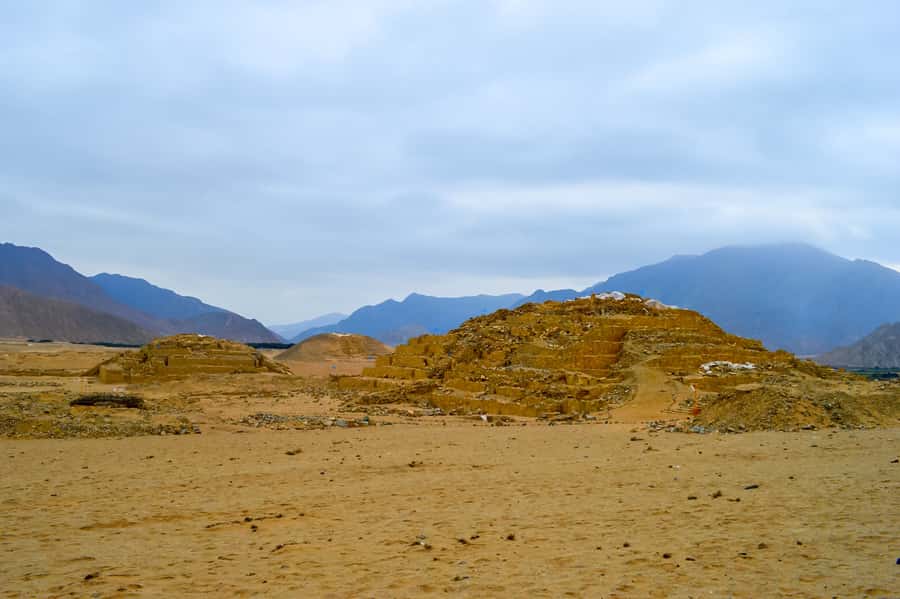
Many people know Machu Picchu, but Caral tells an older and less familiar story. The pyramids here are placed around 5000 B.C., making the site roughly as old as the great pyramid-building age of Egypt. You are not coming for ornate stonework or dramatic mountain walls. You are coming to see the remains of an early city and to consider how much organization was needed to build it.
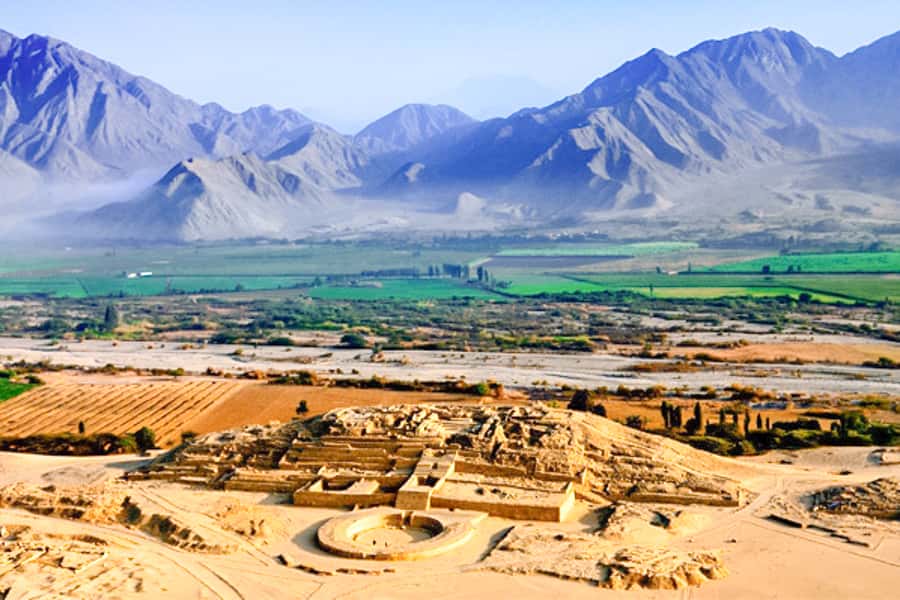
The setting helps. Caral sits in the Supe Valley, north of Lima, with the dry hills and cultivated valley floor giving the ruins a clear sense of place. The site feels remote, and that distance is part of its appeal. You get a chance to focus on the structures rather than moving through a crowded city attraction.
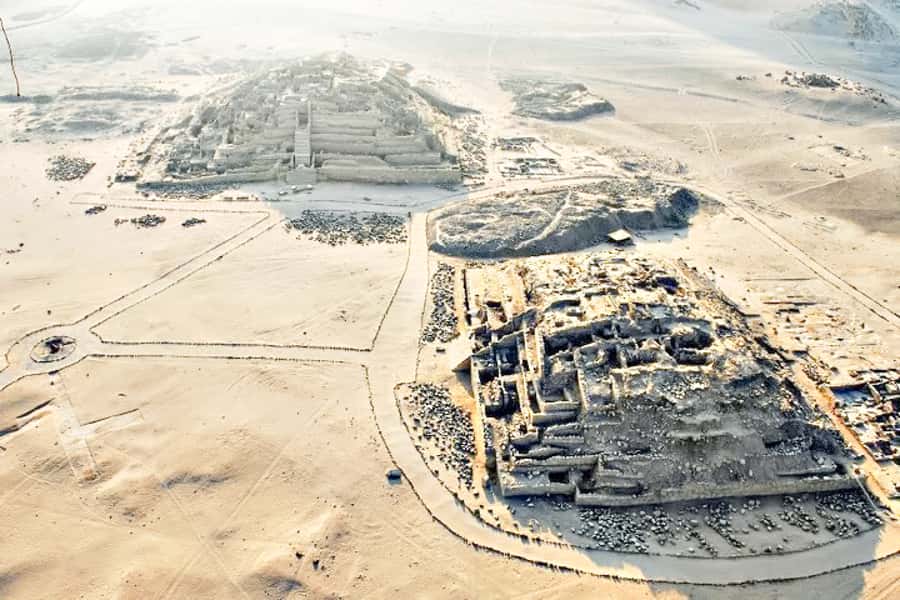
Your visit covers the major parts of the ancient settlement. Expect to see large pyramids, main plazas, residential areas, circular terraces, and the amphitheater. Each area adds something different. The pyramids show the scale of public construction, while the homes and terraces help you picture the city as a place where people lived, worked, gathered, and took part in ceremonies.
You should keep your expectations practical. These are archaeological remains, not restored buildings you can enter room by room. Much of the experience comes from the guide’s explanation and from looking across the site with the Supe Valley below. A strong guide makes a major difference.
more Lima days to weigh up
- Full Day Paracas Ica and Huacachina from Lima All Included
★ 4.5 · 623 reviews - From Lima: Full Day to Paracas and Huacachina Desert Oasis
★ 4.6 · 301 reviews - Caral The First Civilization in America – Full Day From Lima
★ 5.0 · 59 reviews
The road north from Lima
Pickup is offered from hotels in Miraflores, Barranco, San Isidro, San Miguel, Santiago de Surco, Callao, and parts of central Lima. The drive to Caral takes about three and a half hours, so this is not a casual morning excursion. It is a full commitment from breakfast through late afternoon.
The road follows the Pan-American Highway. During the trip, you receive a breakfast box along with fruit, cookies, and refreshing drinks. That is useful because the first substantial meal comes later in Huacho, and an early departure can make a proper breakfast difficult.
A private vehicle also makes the drive easier to manage. You can request stops along the way, which matters on a road trip of this length. The exact number and timing of stops are not fixed, so discuss your needs with the guide or driver at the start.
Look out the window as Lima gives way to the Supe Valley. The valley is known for crops including avocados, potatoes, onions, strawberries, passion fruit, and chili peppers. This stretch offers a useful contrast to the dry coastal surroundings. You may see cultivated land running through a setting that otherwise looks stark and dusty.
The vehicle itself is an important part of your comfort. One passenger specifically found the drive pleasant but wished the van had better window shades. Bring sunglasses and a hat, and be prepared for strong light during the day.
Walking through Caral’s ancient city
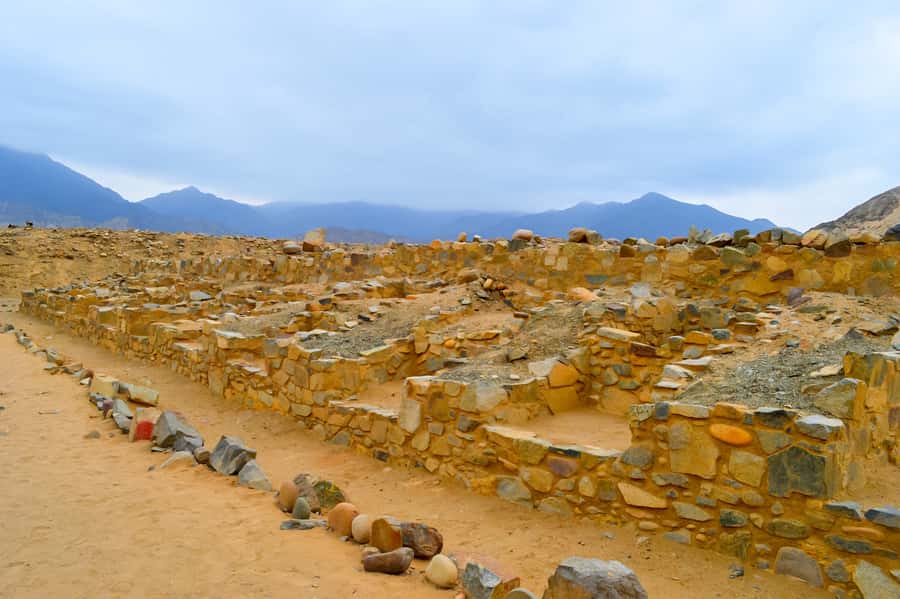
The guided visit at Caral lasts about two and a half hours, including the walk, explanations, photo opportunities, and some free time. Wear comfortable shoes. You will be outside, and the visit involves moving between several sections of the site rather than standing in one exhibit hall.
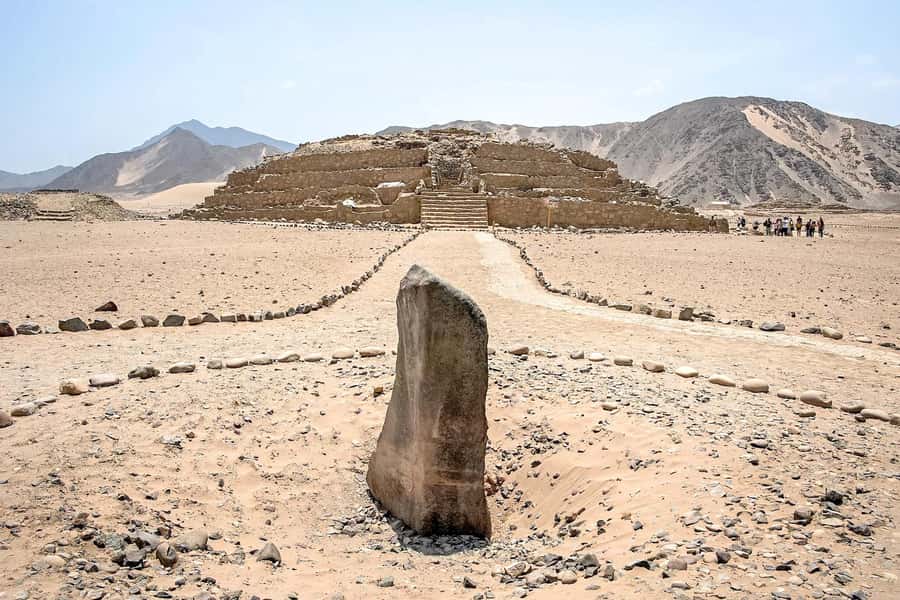
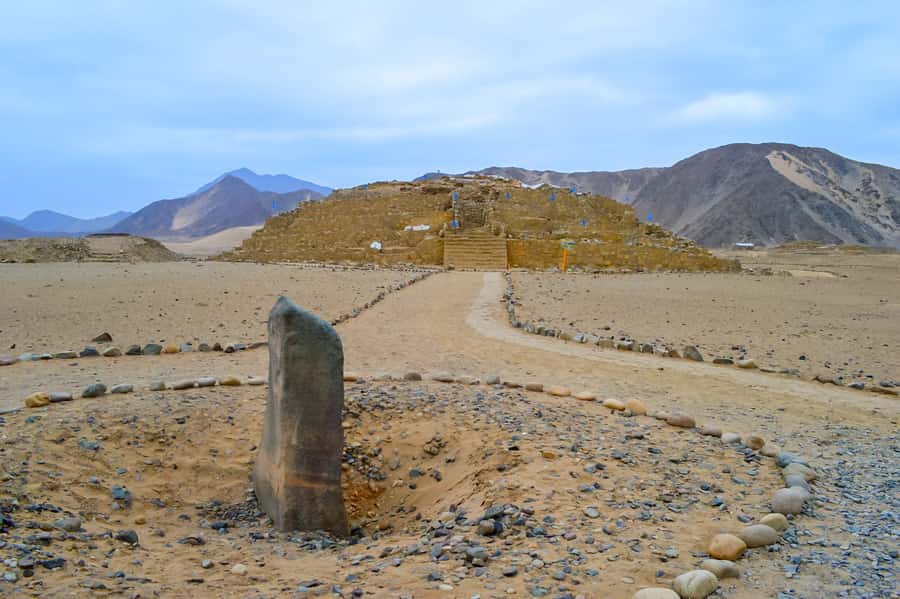
The main pyramids are the obvious starting point. Their age is the headline, but their size is what gives the date real meaning. Standing near these broad earthen structures, you can grasp that this was a planned center, not a small settlement with a few ceremonial mounds.
The main plazas show how open public spaces fit into the city plan. Your guide can explain how the different areas relate to each other and why the builders may have invested so much effort in large communal structures. Caral is most rewarding when you look at it as a functioning city rather than a collection of separate ruins.
The circular terraces are another distinctive feature. They give the site a shape that is easy to remember and help break up the visit after the large pyramids. Residential areas add a more ordinary human scale. Instead of seeing only monumental construction, you get a sense that families and workers occupied the city around its public centers.
The amphitheater and main plazas round out the visit. Your guide should help you connect the physical layout with the wider development of early Peruvian culture. Alexandra, one guide who has led this excursion, has used the road time to link Caral with Lima museums such as Larco and Amano, along with archaeological places around Cusco. That approach is especially useful if you have already spent time learning about later Peruvian societies.
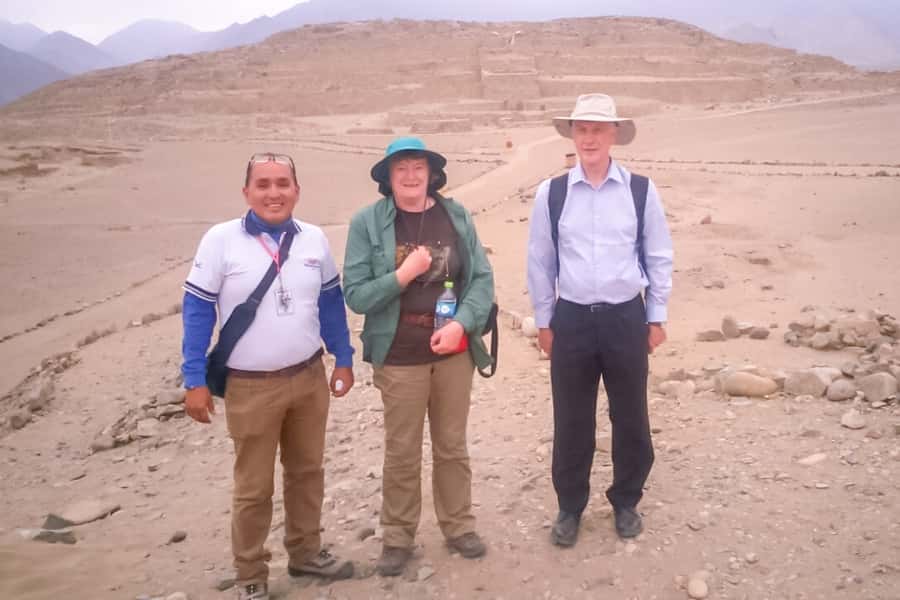
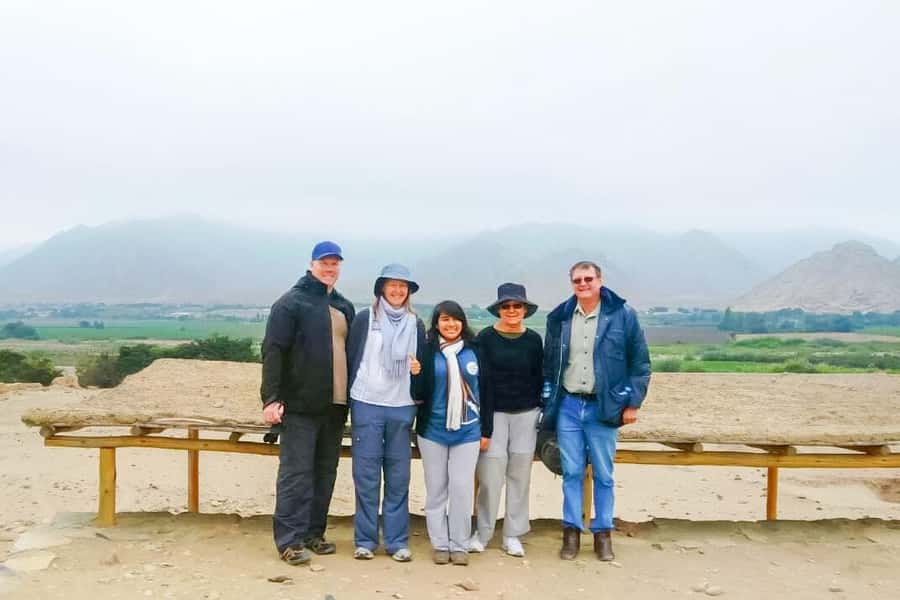
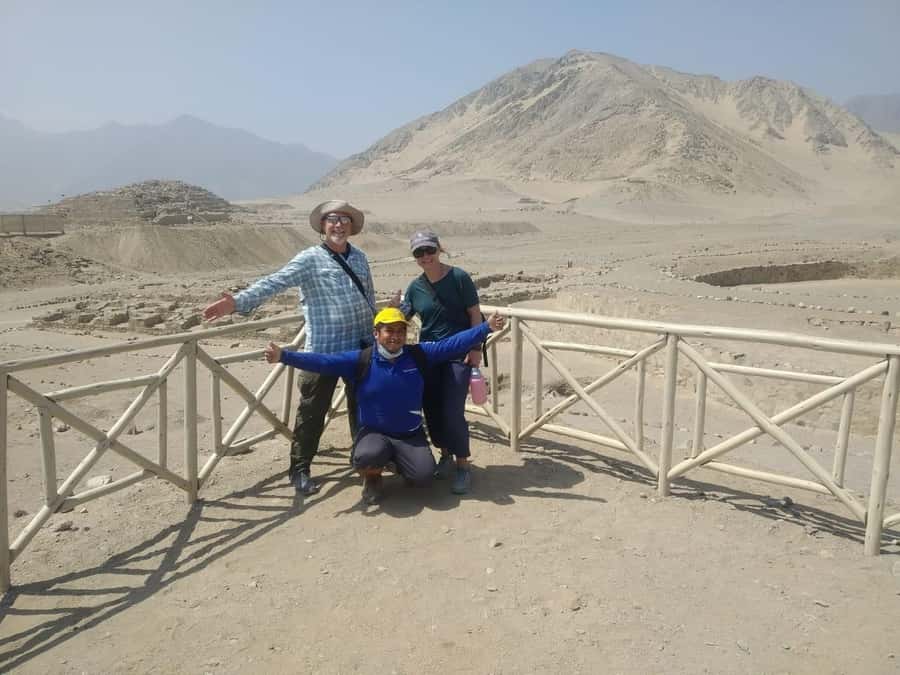
A local guide at Caral may also join the group. Roxana has been praised for her clear and friendly presentation, but local guiding can be in Spanish even when your main guide speaks English or Portuguese. In that case, your main guide translates. The arrangement works, though it can feel less direct than hearing one guide explain everything in your preferred language.
There are also bilingual information signs at the structures. If a Spanish presentation is being translated, take time to read these signs when possible. They can give you another way to follow the site’s details and reduce the feeling of waiting between explanations.
What the guides add to the experience
This trip involves a lot of time in a vehicle, so your guide’s teaching style matters almost as much as the ruins. Michael and Alexandra are among the guides associated with past departures, while Victor has driven the route. Alexandra, in particular, has used charts, pictures, and explanations during the journey to build a broad lesson about Peru before reaching Caral.
That is a good use of otherwise empty hours. Instead of arriving at the ruins with only the basic date, you can begin to place Caral within the larger story of Peru. If your guide has a similar style, ask questions during the drive rather than saving everything for the site.
Victor has also been noted for keeping the journey smooth and safe. Since the day includes several long road sections, a careful driver is not a minor detail. The private format means you are not sharing the schedule with a large group, and that can make stops and questions more manageable.
Still, guiding quality can vary by departure. The information provided for this experience confirms English, Spanish, and Portuguese service, but it does not guarantee that every local guide at Caral will speak all three languages. If precise language support is important to you, confirm your preferred language when booking.
Somewhere else entirely, still within reach of Lima:
- Lima: Ultimate Peruvian Food Tour
★ 4.9 · 700 reviews - Lima’s Vibrant Heritage: Exploring the City’s Landmarks Half-day
★ 4.5 · 581 reviews - From Lima: Day trip to Paracas, Ica and Oasis Huacachina
★ 4.6 · 409 reviews - Private transfers from Lima Airport or to Lima Airport
★ 4.0 · 359 reviews
Huacho lunch by the Pacific
After Caral, the drive to Huacho takes about an hour. This city gives the day a welcome change of pace. Rather than moving directly back to Lima, you stop for about an hour and a half for lunch at a restaurant in front of the sea.
The meal includes regional dishes and drinks. Possible choices include lomo saltado, rice with duck, seco a la huachana, and chicken milanesa. This is a practical part of the excursion, but it is also one of its most local-feeling moments. You get to try food associated with northern Peru in the city that is part of the region, not simply return to a restaurant near your Lima hotel.
Lunch has been described as delicious, and the regional dishes received especially strong praise. You should still remember that restaurant menus and specific selections can vary. Personal expenses are not included, so budget for anything beyond the provided meal and drinks.
After eating, you may have the option to explore the beach and see how local fishermen work. The exact amount of time available can depend on the day’s schedule, traffic, and the pace at Caral. Think of this as a useful extra rather than a full beach visit.
The Huacho stop also breaks up the return journey. Without it, the day would feel like a long archaeological commute. With it, you see a coastal city, eat a regional meal, and get a glimpse of working life near the sea.
The return to Lima and the real time commitment
The trip back to Lima takes about three hours, with drop-off generally available in Miraflores, Barranco, San Isidro, San Miguel, Santiago de Surco, Callao, and nearby central areas. The stated total duration is 11 hours, though the separate route segments add up to roughly 11 and a half hours when counted individually. Allow flexibility for traffic and roadside stops.
You are likely to return at about 5:30 p.m. That makes this a useful day trip if you have a free day in Lima, but a poor choice if you have an evening flight, a fixed dinner reservation, or another time-sensitive plan.
The long drive is the central tradeoff. You spend about three and a half hours reaching Caral, one hour getting to Huacho, and three hours returning to Lima. The site itself receives about two and a half hours, with another hour and a half for lunch. If you dislike long road journeys, the ratio may feel uneven.
For me, the private format makes that ratio more acceptable. You can ask for stops, discuss what you have already seen in Peru, and travel with your own group. A shared coach might cost less, but it would not offer the same control over pacing.
Is $250 per person a fair price?
At $250 per person, this is not a budget outing. The price includes hotel pickup and drop-off, private transportation, a guide, Caral admission, the breakfast box, drinks, and lunch in Huacho. You are paying for a full private day rather than only an entrance ticket and transfer.
The value depends on your group size and priorities. If you are traveling with family or friends and want a private vehicle, the cost may make sense because transport, guiding, food, and admission are bundled together. You also avoid arranging the distant site, finding a driver, and working out how to combine Caral with Huacho on your own.
If you are a solo visitor watching every dollar, $250 is a serious expense for one archaeological stop. The case for paying it becomes stronger if you care about guided interpretation, want pickup at your hotel, and prefer not to manage a long journey independently.
The tour is also a good fit for people who have already visited Lima’s museums or the major sites around Cusco. You will have more context for what Caral represents, and a guide such as Alexandra can connect those places into one story. If you know little about Peruvian archaeology, the trip can still work, but expect the day to teach you through conversation and explanation rather than through a large museum display.
Comfort, access, and what to pack
The activity is wheelchair accessible, which is important for a site visit involving transport and outdoor movement. You should still discuss your particular mobility needs in advance, since the available information does not describe every surface or route within Caral.
Pregnant women are specifically advised not to take this activity. The long road time and walking schedule are the main concerns indicated by the tour information.
Bring comfortable shoes, sunglasses, and a sun hat. The dry coastal setting and open archaeological site offer limited relief from the sun. Drinks and a breakfast box are provided, but you may want to carry anything else you personally need for an 11-hour day.
Pets are not allowed. Personal expenses are also not included, so carry money for extras, including anything outside the included lunch and drinks.
Who should book the Caral and Huacho day trip?
I would choose this tour if you want to see an ancient Peruvian site outside the standard Lima and Cusco circuit, and if you value having a guide explain what you are looking at. It is particularly good for archaeology-minded visitors, repeat visitors to Peru, and anyone who wants to connect Caral with museum collections and later Andean cultures.
It also suits you if food and local life matter as much as ruins. The Huacho meal and seafront stop keep the day from becoming only a study visit.
I would hesitate if your Lima schedule is tight, if you have an evening flight, or if sitting in a van for most of the day sounds miserable. Caral is impressive because of its age and planning, but it requires patience. The pyramids are not a quick add-on to a Lima city tour.
For the right person, the distance is part of the experience. You leave the capital, watch the Supe Valley pass by, walk an ancient city, and finish with northern Peruvian food beside the sea. That combination gives the day a clear identity.
FAQ
How long does the Caral excursion last?
The stated duration is 11 hours. The planned day includes roughly three and a half hours to Caral, two and a half hours at the site, one hour to Huacho, an hour and a half for lunch, and about three hours back to Lima.
Where can pickup be arranged?
Pickup is available from accommodations in Miraflores, Barranco, San Isidro, San Miguel, Santiago de Surco, Callao, Cercado de Lima, and nearby listed areas.
Where can I be dropped off?
Drop-off is available in Miraflores, Callao, Santiago de Surco, San Isidro, San Miguel, and Barranco.
Is Caral admission included?
Yes. The entrance fee to Caral is included in the tour price.
Is lunch included?
Yes. Lunch in Huacho, including regional dishes and drinks, is included. Personal expenses beyond the included items are not covered.
What food might be served in Huacho?
Possible regional dishes include lomo saltado, rice with duck, seco a la huachana, and chicken milanesa. The exact meal selection can vary.
What languages are available for the tour?
Live guiding is available in Spanish, English, and Portuguese. A local guide at Caral may speak Spanish, with translation provided by the main guide when needed.
Is the tour private?
Yes. It is a private group experience, with private transportation and a private guide.
Is the activity wheelchair accessible?
Yes, the activity is described as wheelchair accessible. You should still confirm your specific access needs before booking because detailed site-surface information is not provided.
What is the cancellation policy?
You can cancel up to 24 hours in advance for a full refund. A reserve-now, pay-later option is also available.
Should you book this tour?
Book it if Caral’s extreme age interests you and you have a full free day in Lima. The guide, private vehicle, included meals, and Huacho stop make the high price easier to justify for a small group. Skip it if you want a short outing or have little patience for long drives. For an archaeology-focused day with a distinctly northern Peruvian finish, this is a strong choice.
Recently added around Lima
- Enjoy Lima Walking Historic Center, Plaza San Martin and Plaza de Armas★ 5.0 · 3 reviews
- From Lima: City tour Prehispanic + Colonial & Modern Lima★ 5.0 · 3 reviews
- Lima: City Sightseeing Panoramic Bus Tour★ 3.3 · 3 reviews
- City Tour Colonial and Modern Lima for 5 Hours★ 3.2 · 3 reviews
- Lima: Lunuhuaná Extreme All In + Cerro Azul + Rafting + ATV + Canopy★ 4.4 · 3 reviews
- Lima: Shanty Town Exploration★ 5.0 · 3 reviews
- Lima: Tour to Huaca Pucllana and Huaca Mateo Salado★ 5.0 · 3 reviews
- Lima: Historic Center Walking Tour with Pisco Sour Tasting★ 5.0 · 3 reviews
Lima Tours, compared.

Full Day Paracas Ica and Huacachina from Lima All Included
Read our review →
Lima’s Vibrant Heritage: Exploring the City’s Landmarks Half-day
Read our review →

Paracas and the Huacachina Oasis Guided Day Tour
Read our review →
The Charm of Barranco & Pre Inca Pyramid in Miraflores
Read our review →
Full Day to Paracas and Huacachina Desert Oasis
Read our review →
Pachacamac Ruins & Barranco Half-Day Guided Tour
Read our review →Browse the lists this tour appears in