
Reviewed · CUSCO TOURS
Qampa Climbing 2 Days in Ausangate
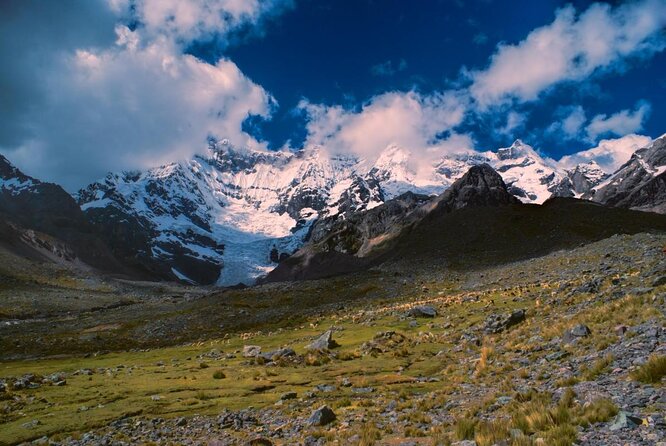
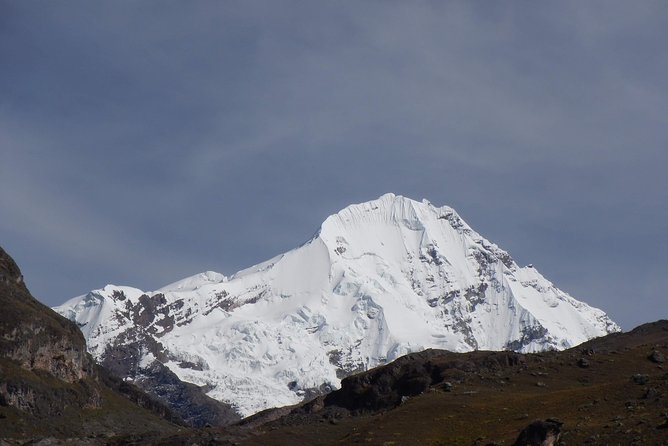
Qampa is the friendly entry point to high-altitude climbing near Ausangate. You leave Cusco before sunrise, hike to a camp above 4,600 meters, then climb across a glacier to a summit at about 5,520 meters. The payoff is a huge view toward Ausangate and, on clear days, as far as Salkantay.
I like two things here: the small groups, capped at six, and the practical support from Vidal Expeditions. Tents are set up, meals are prepared, and horses carry extra duffel bags. The guides named in past trips include Flavio, Chino, Angel, Carlos, Sergio, Raul, and Vinerson.
The catch is the altitude and the early start. You wake at 2:30 a.m. for summit day, and the route includes glacier travel plus, in some seasons, a short rock section. No mountaineering background is required, but you need moderate fitness and a steady head at high elevation.
Qampa Climbing at a Glance
- 5,520-meter summit: Qampa gives you a serious high-mountain achievement without requiring previous mountaineering experience.
- Glacier travel included: The summit climb begins after a hike to the moraine, followed by instruction and supplied climbing gear.
- Pacchanta hot springs: After the climb, you can soak while looking toward Ausangate Mountain.
- Small groups: The maximum group size is six, which matters when you need close guidance on a glacier.
- Camp support: Your tents are already set up, and horses can carry extra duffel bags.
- Two full days: The trip packs a long approach, a pre-dawn summit attempt, a descent, and the return to Cusco into a tight schedule.
Why Qampa Makes a Good First Climb
Qampa, also called Campa or Jampa in some trip descriptions, is presented as one of the easiest and most popular mountains around Cusco for a first mountaineering experience. That description needs a little context. Easy is a relative word at 5,520 meters.
You still have to walk at high altitude, sleep at 4,680 meters, put on climbing equipment, and cross a glacier. The route may also include a small rock-climbing pass depending on the season. This is not a casual sightseeing walk, but it is a sensible option if you want to try a guided summit without signing up for a longer expedition.
I like the way the trip lets you learn by doing. Your high-mountain guide supplies the equipment and explains how to use it before the climb. Several guides who have led the trip, including Flavio, Chino, Angel, and Carlos, are described as professional and reassuring with people new to climbing.
The small group limit also has real value. A group of up to six allows the guide to keep a closer eye on pacing, equipment, and comfort than a large trekking convoy. It does not remove the risks of altitude or weather, but it gives the outing a more personal feel.
more Cusco days to weigh up
- From Cusco: 2-Day Trip to the Sacred Valley and Machu Picchu
★ 4.6 · 265 reviews - Cusco: Machu Picchu 2-Day Inca Trail with Panoramic Train
★ 4.9 · 260 reviews - From Cusco: 2-Day Inca Trail to Machu Picchu
★ 4.2 · 244 reviews
The 6:00 a.m. Drive from Cusco to Tinki
Pickup is offered from your Cusco hotel at about 6:00 a.m. The first major drive takes you toward Tinki, a small town on the Interoceanic Highway. The journey takes roughly two and a half hours.
Tinki is a useful pause rather than a major sightseeing stop. You get around 30 minutes to look around, eat breakfast, or buy anything you still need. This is one of the few chances to handle last-minute supplies, so do not treat it as wasted time.
The meal details deserve attention. Dinner, breakfast, and two lunches are listed as included, but the first breakfast is described as something you may need to buy yourself in Tinki. One past account also notes that breakfast on the first day was not included. I would confirm this point with Vidal Expeditions before departure, and I would bring some Peruvian soles for food and small purchases.
From Tinki, the road continues to Pacchanta at about 4,060 meters. The drive saves valuable time and gets you quickly to the start of the walking portion, but it also means you gain altitude fast. If you have just arrived in Cusco, this is not the place to ignore how your body feels.
Hiking from Pacchanta to Azulccocha
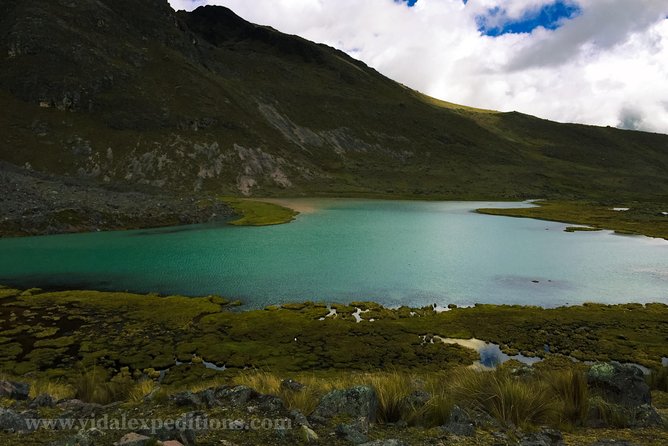
The walking route begins at Pacchanta, not at the base camp. From the village, you hike for around two hours toward Azulccocha. Lunch is served along the way, with views of snow-covered mountains around you.
This first section is important because it lets you settle into the pace before the technical part begins. The distance itself may not sound extreme, but the altitude changes the effort. You should walk steadily, drink often, and tell your guide early if you feel unwell.
Water is not included, so bring your own supply or ask the company exactly how water is handled. Several accounts describe having enough food and water during their outings, but the official inclusions specifically exclude water. That makes this a small but important packing issue.
The setting is one of the best reasons to choose this route. You are heading into the Ausangate area, where broad high-country views open toward snow-capped peaks. Lunch with those views is a welcome pause before the camp climb continues.
Sleeping at 4,680 Meters
After Azulccocha, you continue to base camp at approximately 4,680 meters. This is where you spend the night in tents prepared before your arrival. Dinner follows, and the early night matters because the summit attempt begins at 2:30 a.m.
The camp support takes much of the routine work off your shoulders. Past trip details describe tents and sleeping bags being arranged for you, while horses carry extra duffel bags. You still need warm personal clothing and essentials, but you do not have to haul every item up from Pacchanta.
Sleeping at 4,680 meters can be the hardest part for some people. The schedule gives you little time to settle in, eat, and rest before the alarm. That is one reason this trip suits someone who has already spent time in Cusco or at high altitude better than someone arriving in Peru and attempting the climb immediately.
Dinner is one of the most praised parts of the service. The cooks have prepared substantial meals, and one account even describes a cake after returning from the summit. Do not book this expecting restaurant comfort, but the food support appears to be a genuine strength of the trip.
Somewhere else entirely, still within reach of Cusco:
- Cusco: Humantay Lake Tour with Breakfast and Buffet Lunch
★ 4.9 · 2,976 reviews - From Cusco: Sacred Valley & Maras Salt Mines Tour with Lunch
★ 4.8 · 2,227 reviews - From Cusco: Moray, Maras Salt Mines & Chinchero Weavers Tour
★ 4.8 · 1,925 reviews - From Cusco: Full-Day Group Tour of Machu Picchu
★ 4.7 · 1,767 reviews
The 2:30 a.m. Summit Start
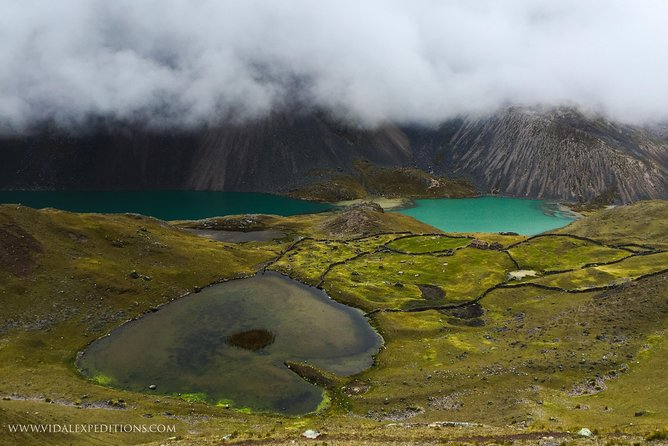
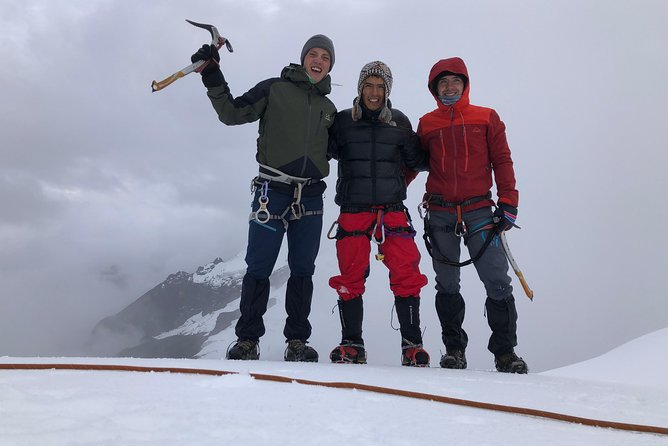
Summit morning begins with an early breakfast at 2:30 a.m. You then walk toward the moraine, where the glacier section starts. Your guide gives instructions and provides the required climbing equipment before you begin the ascent.
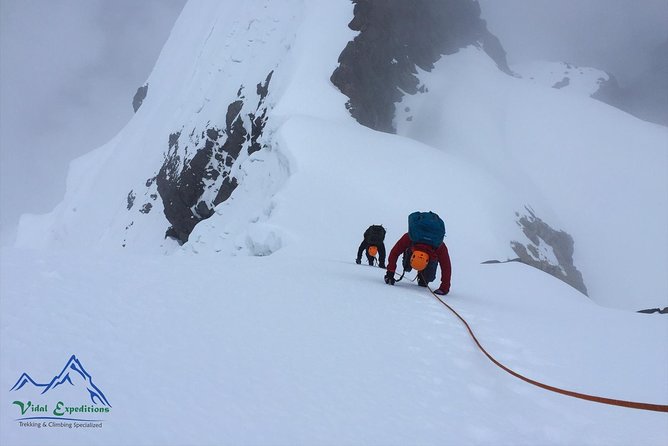
The climb from the glacier to the summit takes about two hours according to the stated schedule. The route includes steps, and seasonal conditions may add a short rock-climbing passage. Your guide will manage the technical details, but you still need to move carefully and follow directions closely.
The altitude is the central challenge. Qampa is listed at 5,520 meters, while some past descriptions give figures of 5,532 or 5,560 meters. The exact number may vary by route description or measurement, but the practical point is unchanged: this is an exceptionally high summit.
This is where experienced high-mountain leadership matters most. Past trips have named guides including Flavio, Vinerson, Chino, Angel, Sergio, Carlos, and Raul. The guide assigned to your departure may be different, so if you have a strong preference or want to ask about the current guide team, do so before booking.
I like that the climb is framed as an instructional outing rather than a simple escorted walk. You are not expected to arrive as a mountaineer, but you are expected to listen, keep a moderate pace, and accept that the guide may change the plan if conditions are unsafe.
The Summit View Toward Salkantay
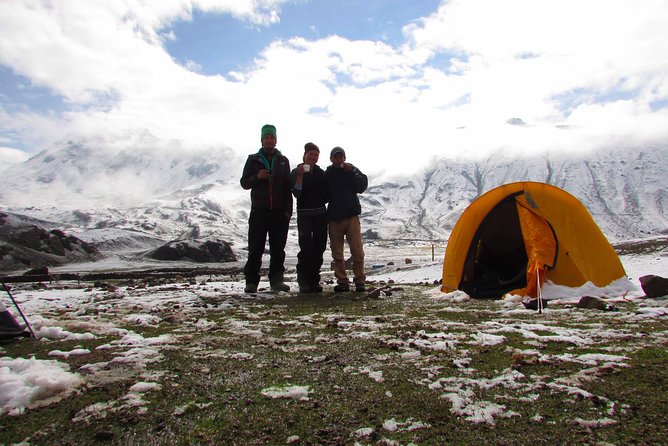
At the top, the reward is a wide view across the surrounding peaks. On a clear day, the panorama can extend toward Salkantay, more than 200 kilometers to the northwest.
The summit is not just a photo stop. It is the point where the whole trip makes sense: the early pickup, the long approach, the cold camp, and the pre-dawn climb all lead to this high ridge above the Ausangate region. Weather can change quickly, so you may get a shorter summit stay than you hoped.
The views are the strongest visual reason to choose Qampa instead of a standard day trip from Cusco. You see the mountains from a high, quiet position rather than from a roadside viewpoint. I would still keep expectations practical. Cloud, wind, snow, and visibility are outside the company’s control.
Descending to Camp and Returning to Pacchanta
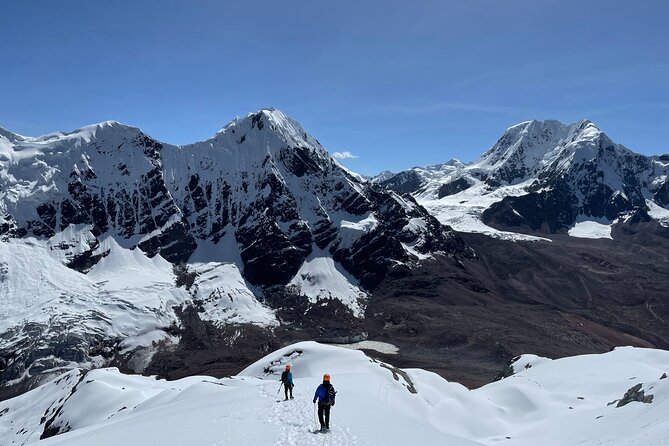
After time at the summit, you descend to base camp for lunch. The return trip is not finished there. You then hike back toward Pacchanta, retracing part of the approach before reaching the village.
The descent is easier on the lungs but can be tiring on the legs, especially after the early start. Your group has already spent hours awake and active by the time lunch arrives. Pace yourself on the way down rather than treating the summit as the end of the physical effort.
Pacchanta offers one of the trip’s nicest finishing touches: the option to soak in hot springs with a view of Ausangate Mountain. The hot springs are optional, but they can make a great difference after the climb. The experience ends with an afternoon bus ride back to Cusco.
Because the return to Cusco happens on the same day as the summit, you should not plan an important evening commitment. The schedule is long, and mountain timing can shift.
What the $380 Price Really Covers
The listed price is $380 per person. That is not a bargain-basement trek, but the value improves when you consider what is arranged for a two-day high-altitude climb.
The price covers the guided expedition structure, transport from Cusco and back, dinner, breakfast, two lunches, camp arrangements, climbing gear, and support from cooks and horse drivers. Past accounts describe small groups with a guide, cook, horse drivers, and sometimes a cook’s assistant. That support team explains why the trip can feel more like a compact expedition than a basic guided hike.
The included gear is especially important. Buying or renting glacier equipment separately can add cost and hassle, and you do not need to organize that part yourself. Ask exactly what equipment is supplied and what personal clothing or footwear you must bring.
Water and tips are not included. The first breakfast may also require separate payment, so confirm those details. These are not major additions compared with the total price, but knowing about them prevents surprises.
The value is strongest for someone who wants a first taste of high-altitude climbing without planning transport, food, camp, horses, and technical equipment independently. If you already own all your gear and have mountain support contacts in Cusco, the price may feel less attractive.
Fitness, Altitude, and Practical Limits
The stated fitness requirement is moderate, but the elevation makes that phrase important. You do not need previous mountaineering experience, yet you should be comfortable with a two-hour approach, a high camp, a pre-dawn start, and a summit climb at more than 5,500 meters.
The route is not suitable for treating fitness as an afterthought. Your body has to cope with thin air, cold conditions, uneven ground, and a long summit day. Take the guide’s instructions seriously and speak up if you feel ill.
I would allow time in Cusco before attempting Qampa if your schedule permits. The supplied details do not promise an acclimatization program, so you are responsible for judging how ready you are. The company can guide the climb, but it cannot make altitude effects disappear.
The maximum group size is six. That is a useful limit for a glacier route and a better arrangement than being one person in a large hiking group. Pickup is offered, and the activity begins and ends at the Cusco meeting point.
The activity has a free cancellation policy up to 24 hours before the start time. Cancellations within 24 hours are not refunded, and changes in that period are not accepted. This is worth noting because mountain plans can depend on your health and readiness.
Who Should Book This Ausangate Climb
I would choose Qampa if you want to try mountaineering for the first time, prefer a short two-day program, and are excited by the idea of crossing a glacier under professional supervision. It also suits you if you value a small group and want meals, tents, horses, and transport handled for you.
This is less suitable if you want a relaxed trek, dislike early mornings, or have no experience with high altitude and no time to prepare. The word easiest should not persuade you that the climb is gentle. At 5,520 meters, even a technically simple route can be demanding.
You may also want to ask about extending the trip. One past outing was extended to three days, suggesting that Vidal Expeditions may be able to discuss a slower version. The supplied two-day plan remains the standard option, so confirm any extra day, price, and itinerary before paying.
Should You Book Qampa Climbing?
Book it if the idea of a first glacier climb near Ausangate excites you more than the thought of a comfortable holiday schedule. The strongest reasons are the small groups, supplied climbing gear, experienced guide team, camp support, excellent meal reports, and the chance to stand above 5,500 meters with views toward distant Salkantay.
Think twice if your Cusco stay is too short for proper adjustment to altitude, or if you need a guaranteed return time. Confirm the first-breakfast arrangement, water provisions, current summit altitude, guide assignment, and seasonal rock section before departure.
For a prepared hiker with moderate fitness, Qampa offers a compact and well-supported introduction to high mountain travel. It is demanding, but the route gives you a clear reward and a strong sense of achievement without requiring a long expedition.
FAQ
How long is the Qampa Climbing experience?
The activity lasts approximately two days and includes one night at base camp.
Where does pickup take place?
Pickup is offered from your hotel in Cusco at about 6:00 a.m. The ticket redemption point is Vidal Expeditions Peru in the Santiago area of Cusco.
How high is Qampa Mountain?
The stated summit elevation is 5,520 meters above sea level. Some trip descriptions give slightly different figures, including 5,532 and 5,560 meters.
Do I need mountaineering experience?
No previous mountaineering experience is required. You should still have a moderate level of physical fitness because the route includes a glacier hike, high-altitude trekking, and a summit climb.
Is climbing equipment provided?
Yes. The high-mountain guide provides the climbing gear and instructions for the glacier section and summit climb.
What meals are included?
Dinner, breakfast, and two lunches are listed as included. The first breakfast may need to be purchased in Tinki, so confirm this detail before the trip.
Is water included?
No. Water is listed as an extra expense, so you need to plan for your own supply or confirm the company’s arrangements.
What happens if I cancel?
You receive a full refund if you cancel at least 24 hours before the experience starts. Cancellations or changes made within 24 hours are not accepted, and the amount paid is not refunded.
Recently added around Cusco
- Palcoyo colored mountain hike + stone forests★ 4.6 · 3 reviews
- Maras Moray★ 5.0 · 3 reviews
- From Cusco: Vinicunca Mountain of Colors Excursion + Ticket★ 5.0 · 3 reviews
- Full-Day Condor Viewpoint & Inca Sites Tour★ 5.0 · 3 reviews
- Excursion Cusco – Puno – Titicaca Observatory Train★ 5.0 · 3 reviews
- Machu Picchu: Private Tour Guide Service for up to 15 people★ 4.5 · 3 reviews
- Machu Picchu: 1-day tour by Vistadome Observatory train★ 5.0 · 3 reviews
- Cusco: Chonta Canyon and Condor Flight Tour with Lunch★ 5.0 · 3 reviews
Cusco Tours, compared.
Humantay Lake Tour with Breakfast and Buffet Lunch
Read our review →
Sacred Valley & Maras Salt Mines Tour with Lunch
Read our review →
Moray, Maras Salt Mines & Chinchero Weavers Tour
Read our review →


Half-Day City Tour with Sacsayhuaman and Q’enco
Read our review →
Sacred Valley, Pisac, Ollantaytambo, Salt Mines Moray
Read our review →
Browse the lists this tour appears in