
Reviewed · PERU
Chachapoyas: Karajía Sarcophagi & Quiocta Caves
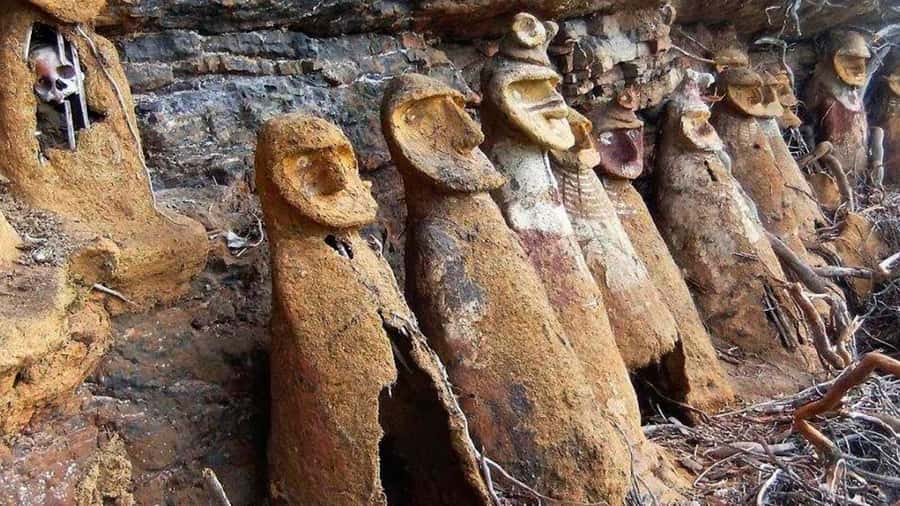
Karajía’s tall sarcophagi look like stone guardians placed high above the valley, and their purpose is still wrapped in questions about Chachapoyas beliefs and funeral rites. I like that this trip pairs them with Quiocta Caves, where you see a very different side of the same ancient culture: sacred remains and ritual traces inside a dark, damp cavern.
I also like the sensible order of the day. You visit the cave first, reserve lunch in Lamud before going farther, then make the walk to Karajía in the afternoon. The main drawback is the long road time and a full schedule, with a 2-kilometer hike and a return to Chachapoyas around 6:00 to 6:30 PM. Tall visitors should also note one report of limited legroom on the bus.
Key points at a glance
- Karajía’s upright burial towers: See the famous sarcophagi from several angles and learn how archaeologists interpret their religious role.
- Quiocta’s 550-meter passage: Walk through a large cave at 2,700 meters above sea level, with stalactites, stalagmites, and archaeological remains.
- A full day from Chachapoyas: Pickup begins at 8:00 AM, with the return expected around 6:00 to 6:30 PM.
- A useful lunch plan: Stop in Lamud before the cave to reserve lunch, then eat there on the way back.
- Equipment included: Rubber boots and flashlights are supplied for the cave, along with transport, entrance fees, and hotel pickup.
- Spanish guiding: The confirmed guide language is Spanish. One booking note says explanations were given in two languages, so ask ahead if bilingual service matters to you.
Why Karajía is the star of the afternoon
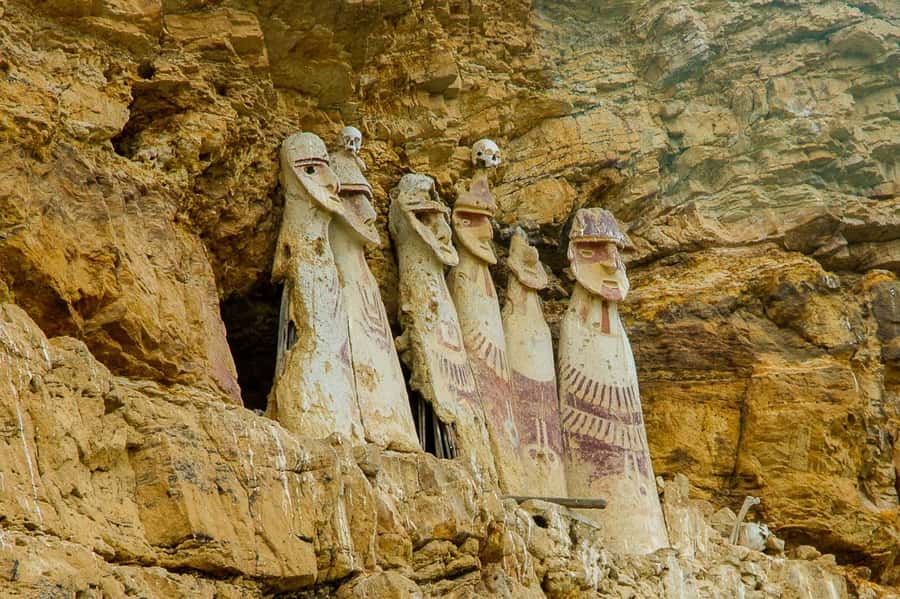
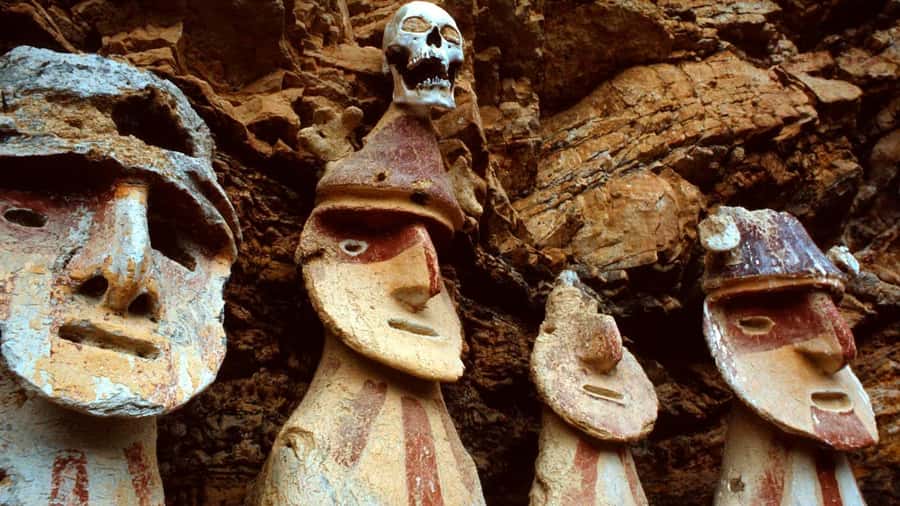
The Chachapoyas sarcophagi at Karajía are not ordinary tombs. They are tall burial figures placed on a mountainside, giving the impression that the dead are watching over the surrounding country. Their shape and position make the site memorable even before your guide explains the beliefs behind it.
You reach the site from the village of Cruzpata, then walk about 2 kilometers to the sarcophagi. That distance is manageable for many people, but it is still a real walk after a morning on the road and a cave visit. Horses and mules are available if you prefer not to walk the full route, though the supplied information does not give a separate price for that option.
At Karajía, the guide explains Chachapoyas religious beliefs and other findings connected with the tombs. This matters because the figures are easy to admire as unusual stone monuments, but the visit becomes far more meaningful when you understand that they were part of funerary and sacred practices.
The final part of the stop is especially useful. You do not simply view one group from a single lookout. The guide points out the different sarcophagi in the area and helps you examine them from various angles. Bring your camera, but give yourself time to look at the setting as well as the figures. The position high above the valley is part of the experience.
Other Peru days that pair with this one:
- Cusco: Humantay Lake Tour with Breakfast and Buffet Lunch
★ 4.9 · 2,976 reviews - From Cusco: Sacred Valley & Maras Salt Mines Tour with Lunch
★ 4.8 · 2,227 reviews - From Cusco: Moray, Maras Salt Mines & Chinchero Weavers Tour
★ 4.8 · 1,925 reviews
Quiocta Caves and the underground Chachapoyas world
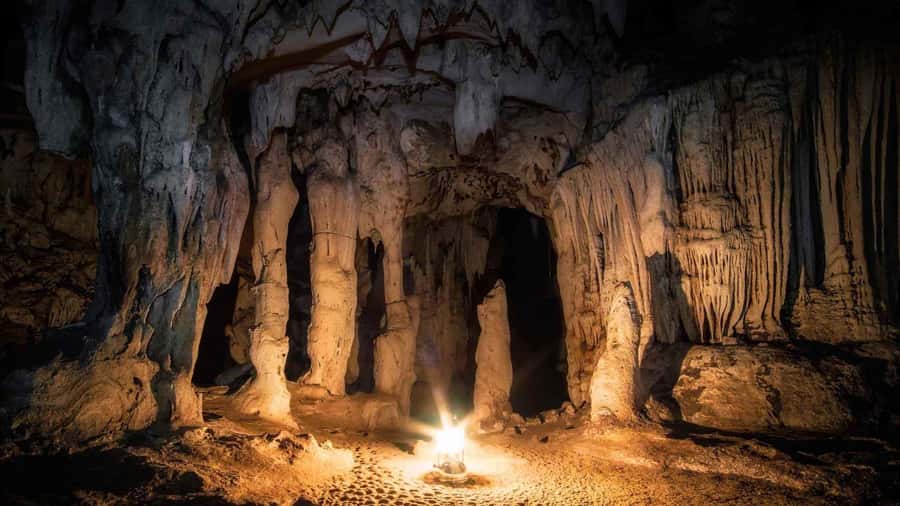
Quiocta is the first major stop after the morning departure. The cave sits at about 2,700 meters above sea level and reaches a horizontal depth of roughly 550 meters. You enter with a flashlight and rubber boots, both supplied as part of the tour.
Inside, the main attraction is the rock. Stalactites and stalagmites formed over millions of years, and the cave offers a close look at the slow process known as speleogenesis. The formations are not a quick photo stop. You have time to look around and follow the passage while the guide explains what you are seeing.
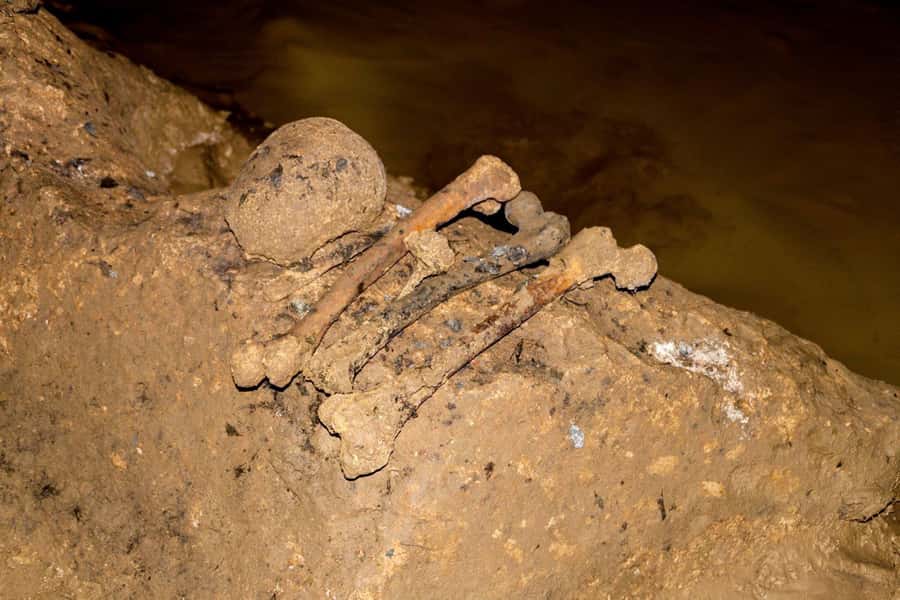
The cave also contains archaeological remains connected with Chachapoyas funerary and sacred rituals. That gives Quiocta a second layer. It is not only a natural site with unusual shapes, and it is not only an archaeological site. You get both in one visit, although the experience is more physical and less polished than a standard museum tour.
Wear shoes that can handle uneven ground, even though rubber boots are included. The supplied packing advice also recommends comfortable shoes, snacks, drinks, sunscreen, insect repellent, sunglasses, and a sun hat. Most of those items are useful during the outdoor portions, since the cave itself is the one place where boots and a flashlight matter most.
The road from Chachapoyas to Lamud
Pickup is from your hotel in Chachapoyas at about 8:00 AM. The route heads down into the Utcubamba Valley, described as one of the most important areas connected with the pre-Columbian Chachapoyas civilization. The road then rises toward Lamud, a village high in the mountains beside the valley.
This drive is not just empty transfer time. You get changing views along the way and a sense of how the settlements relate to the valley and high ground. The schedule includes scenic views, photo stops, and guided sightseeing, so keep your camera ready. At the same time, you should expect a good amount of time in the vehicle. The trip is built around two distant sites, not a compact walking circuit.
In Lamud, the group stops to arrange lunch before continuing to the cave. This is a small but smart detail. You choose and reserve your meal before the next leg, then eat when you return from Quiocta. It avoids trying to find food at the cave and keeps the day moving.
The lunch itself is listed at a local restaurant, but the meal price and menu are not specified. Bring a snack and a drink so you are not relying entirely on the later meal, particularly if you tend to eat early or need regular breaks.
A closer look at the day’s timing
The timetable gives you a clear idea of the pace:
- 8:00 AM: Pickup in Chachapoyas.
- Morning: Drive through the Utcubamba Valley toward Lamud and continue to Quiocta.
- Late morning or midday: Explore Quiocta Caves with rubber boots and flashlights.
- After the cave: Return to Lamud for lunch.
- Afternoon: Drive about an hour from Lamud to Cruzpata.
- Afternoon walk: Hike 2 kilometers to Karajía.
- Evening: Drive back to Chachapoyas, arriving around 6:00 to 6:30 PM.
The exact stop times can change, since the activity page asks you to check availability for the departure time. Still, this is clearly a full-day outing. You should not schedule a bus, flight, or important evening appointment too closely after the expected return.
The order also means the walk to Karajía comes after the cave and lunch. If you prefer to walk while fresh, this may not be ideal. On the other hand, the afternoon visit gives the day a strong finish, with the unusual burial towers as the final major sight.
Somewhere else entirely, still within reach of Peru:
- From Lima: Paracas and Huacachina Oasis Full Day Guided Tour
★ 4.7 · 1,780 reviews - From Cusco: Full-Day Group Tour of Machu Picchu
★ 4.7 · 1,767 reviews - Machu Picchu Day Trip from Cusco
★ 4.5 · 1,644 reviews - Cusco: Half-Day City Tour with Sacsayhuaman and Q’enco
★ 4.6 · 1,129 reviews
Transport, guide service, and comfort
Transport from Chachapoyas and return to your hotel are included, as is the tour vehicle. The route involves roughly an hour of driving on one listed section and another hour from Lamud to Cruzpata, in addition to the other road segments. The vehicle is comfortable according to the available information, but one tall passenger found the legroom tight after boarding.
That detail is worth taking seriously if you are tall or dislike confined seating. You may want to ask the provider about the vehicle and seating before booking. The information does not give a group size, so you should not assume a small private trip.
A live Spanish-speaking guide accompanies the visits. A booking note records that the guide explained everything in two languages, but the formal activity information lists Spanish as the language. If you need English or another language, confirm that directly with the provider, iziPeru, before paying.
The guide’s role is important at both sites. At Quiocta, the formations can look alike without explanation, and the archaeological remains need context. At Karajía, the guide connects the visible figures with Chachapoyas beliefs, burial customs, and recent archaeological interpretation. This is one of those trips where a guide adds real value rather than simply leading the way.
What the $59 price covers
At $59 per person, the tour offers reasonable value if you want both major sites in one day. The price includes hotel pickup and drop-off in Chachapoyas, transport, entrance fees, ongoing assistance, and the cave equipment. Those inclusions remove several small costs that can add up when visiting remote sites independently.
The price does not include other services not listed. Lunch is arranged at a local restaurant, but it is not clearly stated as included, so budget separately for your meal. The cost of horses or mules is also not provided, so ask before using that option.
The strongest value comes from combining logistics with interpretation. You would otherwise need to organize transport to Lamud, Quiocta, Cruzpata, and Karajía, then manage the timing between the cave and the archaeological site. The tour handles that route in a single day.
It is less compelling if you want a slow, flexible day with long stops. The schedule covers a wide area, includes several drives, and finishes in the evening. You are paying for access and coordination as much as for the sights themselves.
Who will enjoy this outing most
I would recommend this trip to you if you want to understand the Chachapoyas culture through both archaeology and nature. Karajía gives you the striking human-made monument, while Quiocta adds a cave setting with sacred remains and geological formations.
It also suits people who prefer seeing two important sites without changing hotels or arranging several separate rides. The included equipment is helpful if you did not pack cave gear, and the hotel pickup makes the early start easier.
You should think twice if you dislike long drives, uneven walking, or a fixed schedule. The 2-kilometer walk to Karajía is not extreme, but it follows a full morning and an afternoon drive. Comfortable shoes are essential, and anyone with mobility concerns should ask the provider about the path before booking.
The tour is also a better fit for Spanish speakers, unless the provider confirms bilingual service for your date. A strong guide can make the difference at both sites, so language is not a minor detail here.
Practical preparation for Karajía and Quiocta
Pack light, but bring the basics. Comfortable shoes, water, snacks, sunscreen, insect repellent, sunglasses, and a sun hat are all specifically recommended. The outdoor sections expose you to sun and insects, while the cave calls for boots and a flashlight.
You do not need to bring rubber boots or a cave flashlight because those are supplied. Still, wear clothing that can handle dust or damp conditions, since the supplied information does not promise a dry or polished cave floor.
Keep your phone charged. You will want it for photos at Karajía and for communication if the provider sends the final pickup details by WhatsApp. The day before departure, the organization of the excursion is sent by WhatsApp and email, so check both.
Free cancellation is available up to 24 hours before departure for a full refund. You can also reserve and pay later, which helps if your Chachapoyas plans are still shifting. Check the exact departure time when you book, since availability controls the start time.
What makes the cultural context worthwhile
The most valuable part of this outing is the contrast between looking and understanding. At Karajía, the figures make an immediate impression, but the guide’s explanation helps you consider why the dead were placed in this form and location.
At Quiocta, the cave offers a similar lesson. The stalactites and stalagmites are natural features, but the archaeological remains show that people used the space for funerary and sacred purposes. That combination gives you a more complete picture of Chachapoyas practices than a single monument could provide.
The tour also takes you beyond the city of Chachapoyas and into the Utcubamba Valley and surrounding mountain communities. The drive, village stops, and walk are part of the setting. You are not simply arriving at two isolated attractions, taking a photo, and leaving.
Should you book this day trip?
Book it if you want a well-organized introduction to Karajía and Quiocta, especially if you value a Spanish-speaking guide, included transport, entry fees, and cave equipment. The $59 price is fair for a long day covering two remote sites, provided you are comfortable paying separately for lunch and possibly local transport with an animal if you choose that option.
Skip it if you need an English-speaking guide without confirmation, have little tolerance for road time, or want a relaxed schedule. For most active visitors based in Chachapoyas, though, this is a strong pairing: one remarkable archaeological site, one unusual cave, and a practical route that gets you back to town the same evening.
FAQ
Where does the tour begin?
Pickup is included from your hotel in Chachapoyas.
What time does the tour start?
The day begins at 8:00 AM, though you should check availability for the exact starting time when booking.
What time does the tour return to Chachapoyas?
The expected arrival is around 6:00 to 6:30 PM.
How long is the tour?
It is a full-day experience lasting one day.
Is lunch included?
Lunch is arranged at a local restaurant in Lamud, but the supplied information does not state that the meal is included in the tour price.
How far do I walk to Karajía?
You walk about 2 kilometers from Cruzpata to the Karajía sarcophagi. Horses and mules are also available if desired, but their price is not provided.
How deep is Quiocta Cave?
The cave has a horizontal depth of about 550 meters and is located at approximately 2,700 meters above sea level.
Are cave boots and flashlights provided?
Yes. Rubber boots and flashlights for the cave interior are included.
What language is the guided tour in?
The confirmed tour language is Spanish. One booking note reports explanations in two languages, so contact the provider if you need bilingual service confirmed for your date.
Recently added around Peru
- Palcoyo colored mountain hike + stone forests★ 4.6 · 3 reviews
- Ica: Tacama Winery and Pisco Tasting Tour with Hotel Pickup★ 3.1 · 3 reviews
- Mancora: Beaches and Tumbes Mangroves Day Trip★ 4.5 · 3 reviews
- Maras Moray★ 5.0 · 3 reviews
- Full-Day Condor Viewpoint & Inca Sites Tour★ 5.0 · 3 reviews
- From Cusco: Vinicunca Mountain of Colors Excursion + Ticket★ 5.0 · 3 reviews
- Excursion Cusco – Puno – Titicaca Observatory Train★ 5.0 · 3 reviews
- Excursion 2 days/1 nights in the jungle: Tambopata★ 5.0 · 3 reviews