
Reviewed · LIMA TOURS
8-Days Peru, The Rise of the Inca Empire
Machu Picchu is the headline, but this eight-day Peru journey gives you much more: colonial Lima, Inca temples, Sacred Valley villages, Lake Titicaca, and a useful finish in Puno. I like the way the route builds from the coast into the highlands, and I like having transport, hotels, train tickets, and major admissions arranged in advance.
The two best features are the practical airport transfers and the small maximum group size of 15. The main concern is pace and communication. This is a tightly packed trip, and one reported booking problem involved a long, inactive wait near Machu Picchu and daily schedules arriving only the night before.
Key points to know before booking
- Machu Picchu takes a full day: Expect a train from Ollantaytambo, a bus up to the ruins, a guided visit, lunch, and a return journey to Cusco.
- The route finishes in Puno: This is useful if you plan to continue toward Bolivia or return to Lima.
- Altitude arrives quickly: Cusco, the Sacred Valley, Puno, and Lake Titicaca are all high-altitude destinations, so ask your doctor about suitable medicine if you are prone to altitude sickness.
- The Lima to Cusco flight is not included: You need a morning flight, with arrival by noon considered too late.
- You see both Inca and colonial Peru: The program covers Lima Cathedral, Santo Domingo, Qorikancha, Sacsayhuaman, Pisac, Moray, and Machu Picchu.
- Machu Picchu circuits matter: Route 2 is given priority, but circuit 3B or 1B may be offered if route 2 is unavailable.
Why this Peru route works so well
This tour follows a sensible geographic line. You begin in Lima, fly to Cusco, spend several days around the Sacred Valley, visit Machu Picchu, then ride by bus to Puno and Lake Titicaca. You are not doubling back across the country, which saves time and removes some of the stress of arranging separate transfers.
At $1,280 per person, the price has real value if you want a packaged trip. It includes seven nights of accommodation, airport transfers, the Cusco to Puno bus, Machu Picchu train tickets, many admissions, three lunches, and seven breakfasts. You still need to pay for flights, most food and drinks, and any extras not listed, so compare the total cost rather than treating the headline price as the entire budget.
I especially like the finish in Puno. Many Peru trips end in Cusco, leaving you to arrange the long journey to Lake Titicaca later. Here, Puno gives you an easy next step toward Bolivia or a connection back to Lima.
The tradeoff is that this is not a slow trip. You change cities, rise to high altitude, and spend several long stretches in vehicles. It suits you if you want to see the major sights in one organized sweep. It is less suitable if you prefer late mornings, open afternoons, or several nights in each place.
Other Lima days that pair with this one:
- Lima: Ultimate Peruvian Food Tour
★ 4.9 · 700 reviews - Full Day Paracas Ica and Huacachina from Lima All Included
★ 4.5 · 623 reviews - Lima’s Vibrant Heritage: Exploring the City’s Landmarks Half-day
★ 4.5 · 581 reviews
Day 1: Colonial Lima and the Larco Museum
Your arrival begins at Jorge Chávez International Airport, where a pre-arranged transfer takes you to your hotel. That simple handoff matters after an international flight. You do not need to negotiate a taxi or work out the first hotel transfer while tired.
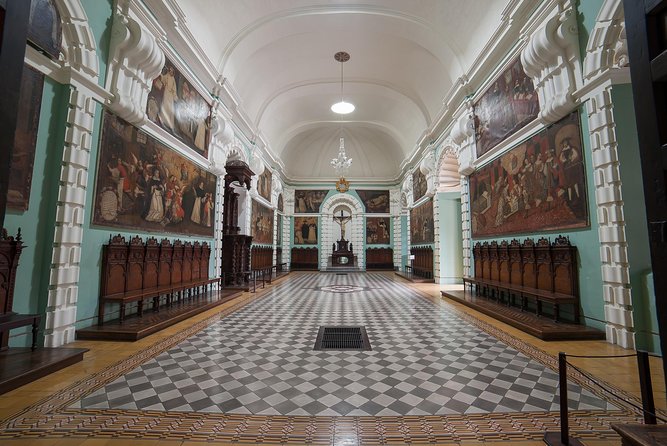
The first major visit is Lima’s Historic Center, a UNESCO World Heritage Site. At the Convent of Santo Domingo, you see one of the city’s oldest religious foundations. The site also connects to the Universidad Mayor de San Marcos, founded here and recognized as the oldest university in the Americas.
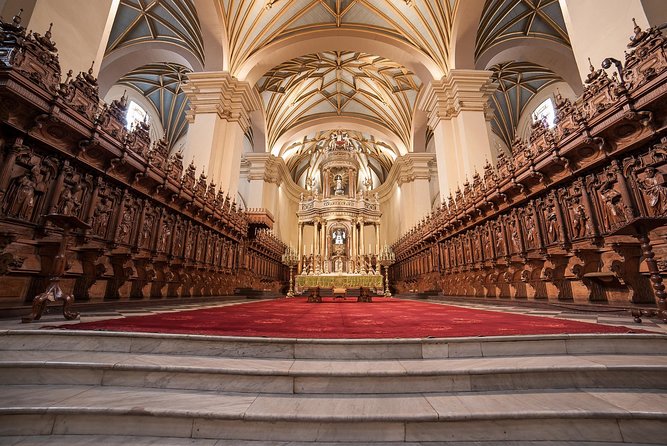
Inside, the old choir stalls and library provide a useful sense of Lima’s colonial past. The library holds about 25,000 books, including works printed in the 15th century. The complex also contains the remains of San Martín de Porres, San Juan Masías, and Santa Rosa de Lima.
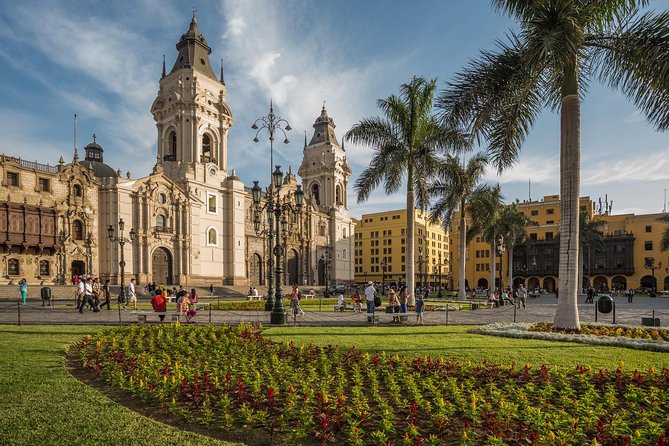
From there, the route crosses the Plaza Mayor, with views of the Government Palace and Municipality, before entering Lima Cathedral. Its art and religious furnishings help explain how Spanish colonial power took root in the city.
After about four hours downtown, you continue to the Larco Museum for two hours. This is one of the most useful museum stops on the whole route because it introduces you to the many cultures that existed in Peru before the Inca Empire. Goldwork, textiles, ceramics, and the museum’s famous erotic pottery offer a broad introduction to ancient Peruvian beliefs and daily life.
The open storage area is particularly worthwhile. Instead of seeing only a carefully selected display, you can view a much larger collection and get a better idea of the scale of Peru’s archaeological record.
Day 2: Cusco’s Inca foundations and hilltop ruins
Day 2 starts with a transfer to the airport and a flight to Cusco. Your flight is not included, and it must be booked in the morning. Arrival by noon is too late for the planned visits, so treat this as an important scheduling rule, not a minor suggestion.
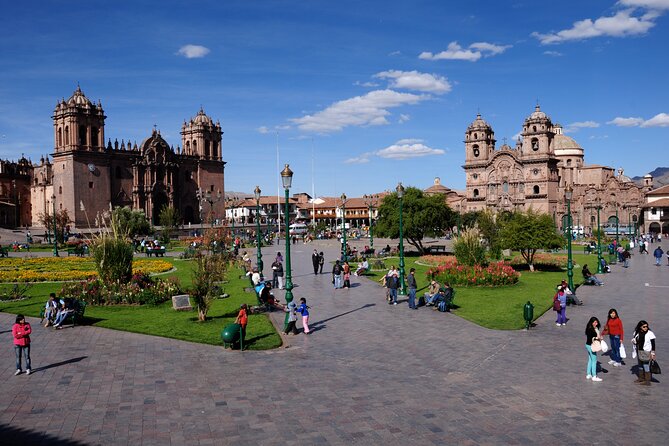
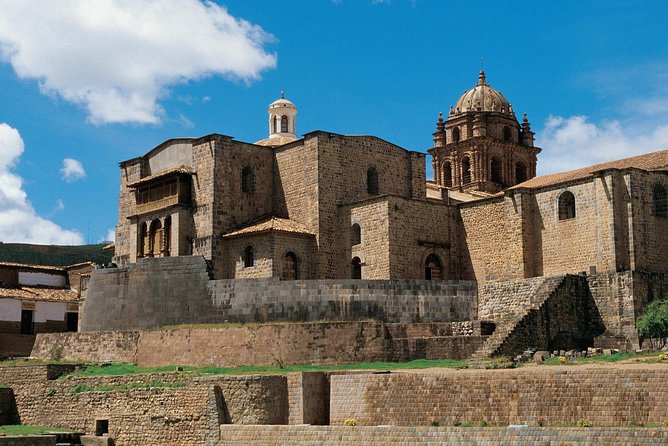
Once in Cusco, you visit Qorikancha, the former Temple of the Sun. The Incas dedicated it to Inti, the Sun God, and its walls were once covered with sheets of gold, according to historical accounts of the site. The Spanish built the Convent of Santo Domingo on top of the Inca foundations, making the building a clear example of two cultures occupying the same sacred ground.
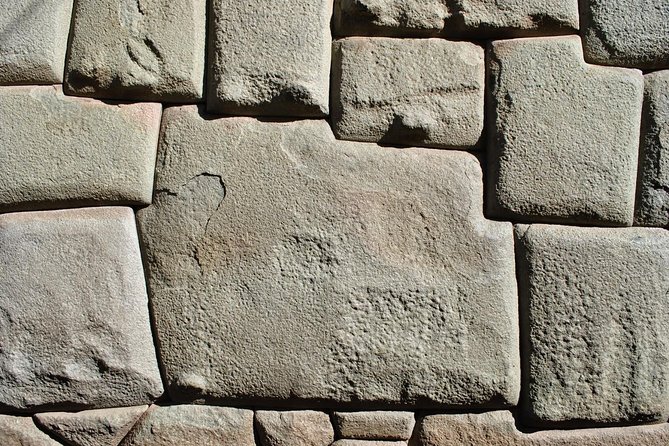
The gold is gone, but the Inca stonework remains. Look closely at the tight joints and angled walls. This is a compact visit, yet it gives you an immediate sense of how Spanish churches were placed over important Inca sites.
Cusco Cathedral follows. Built on the foundations of an Inca palace, the cathedral contains colonial paintings, ornate altars, carved choir stalls, and works from the Cusco School of Art. That school combined European painting methods with local symbols and ideas, making the collection more than a display of imported religious art.
The cathedral also holds the original cross brought by the first Spanish conquistadors. It is a powerful object, and it helps you understand the cathedral not only as a church but also as a symbol of conquest.
In the afternoon, you climb to the Sacsayhuaman Archaeological Park. The huge stone blocks here are the main attraction. Some rise more than four meters high, and the stones fit together without mortar. From the site, you also get broad views over Cusco.
The half-day excursion continues to Q’enqo, a ceremonial center carved into rock, and Tambomachay, where spring water runs through carefully made channels. You finish with a view of Puca Pucará, a former military outpost.
This is a lot for your first high-altitude day. The stops are close to Cusco, but the combination of walking, stairs, and elevation can leave you tired. Move slowly and drink water. If altitude sickness is a concern, speak with your doctor before departure and bring any recommended medicine.
Day 3: Pisac, local crafts, and Andean traditions
The Sacred Valley is one of the most rewarding parts of the tour. The Urubamba River runs through a fertile corridor framed by high mountains, and the Incas valued the area for farming, climate, and strategic position.
At Pisac, the archaeological site sits above the modern town. Terraces, religious structures, and stonework show how the Incas adapted steep mountain slopes for farming and settlement. The views down toward the town are one of the best visual moments of the day.
After the ruins, you visit the colonial village of Pisac. Its cobbled streets and adobe buildings were built on an older Inca setting. The artisan market offers textiles, ceramics, silver jewelry, and other handmade goods. If you plan to shop, this is a good place to compare colors, patterns, and prices before buying later in the trip.
The Inkariy Museum provides a different kind of stop. Its exhibits use representations of pre-Hispanic cultures from across Peru. This can help you place the Inca Empire in context, since the Incas were only one part of a much longer story.
Lunch is included, followed by the Yucay Live Culture Center. Here, local residents demonstrate textile weaving and dyeing, adobe making, and the preparation of chicha, a traditional corn drink. You also get a close look at llamas and alpacas.
I like this part because it links archaeological sites with living skills. The ruins show what the Inca state built, while the cultural center focuses on techniques and customs that remain part of Andean life today.
Somewhere else entirely, still within reach of Lima:
- From Lima: Day trip to Paracas, Ica and Oasis Huacachina
★ 4.6 · 409 reviews - Private transfers from Lima Airport or to Lima Airport
★ 4.0 · 359 reviews - Lima: Paracas and the Huacachina Oasis Guided Day Tour
★ 4.5 · 354 reviews - Lima: The Charm of Barranco & Pre Inca Pyramid in Miraflores
★ 4.9 · 322 reviews
Day 4: Moray’s terraces and the salt pools of Maras
Moray is one of the most unusual Inca sites in the region. Its circular terraces descend into the earth, creating different growing conditions from one level to another. The site is often described as an agricultural laboratory, with as many as 20 microclimates represented within the terraces.
You do not need to accept every theory about its original purpose to appreciate the engineering. The shapes are striking, and the site gives you a clear example of how the Incas worked with temperature, soil, and altitude.
The next stop is Salinas de Maras. These thousands of small salt pools cover the mountainside in bright white patches. Saltwater from a natural spring flows into the pools, then evaporates in the sun. Local families continue to work the pans, a practice that began before the Inca period.
Maras is highly visual, but it is not just a photo stop. The salt pans show how a local resource can support generations of families through a simple process of directing water and collecting salt. The red clay hills around the pools provide a sharp contrast with the white terraces.
The two visits take only a few hours, leaving this day lighter than the others. That is welcome before Machu Picchu. Still, the tour information does not spell out a full afternoon schedule, so ask your local contact or hotel desk for the next day’s timing.
Day 5: Machu Picchu by train from Ollantaytambo
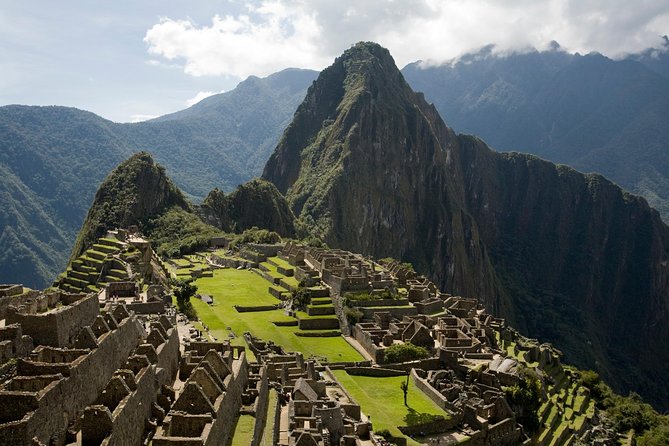
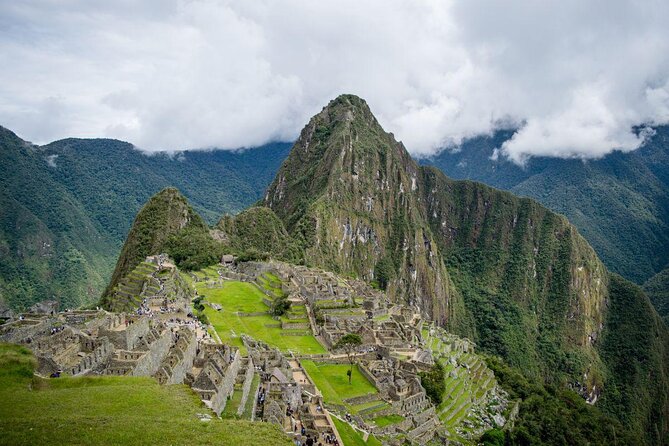
Machu Picchu is the longest day, at about 10 hours. You board the train at Ollantaytambo, travel to Machu Picchu station, then take the bus up the winding road beside the Urubamba River.
At the ruins, the route covers terraces, stairways, ceremonial areas, and urban sections. The site rewards patience. Instead of rushing from one famous viewpoint to the next, take time to notice how the buildings relate to the mountain ridges and the river canyon below.
A buffet lunch at Sanctuary’s Lodge restaurant is included. After the visit, you return by train and transfer to your Cusco hotel.
Pay close attention to the entry circuit assigned to you. Machu Picchu now uses several visitor routes to spread people across the site. Route 2 receives priority, but if it is not available, you may be offered route 3B or route 1B before the ticket is issued. Ask what each option covers before confirming.
The admission ticket is nonrefundable, and the date cannot be changed after it is issued. That makes accurate passport details and flight information important. Provide the required passport name, number, expiration date, and country for every person at booking, and check your dates carefully.
There is also a practical timing warning. One reported arrangement required a very quick exit from Machu Picchu to collect a lunch ticket, while other members of the same English-speaking group were allowed to stay longer. Confirm where and when you collect your meal ticket before entering the site so you do not spend your visit watching the clock.
Day 6: The long road from Cusco to Puno
The bus trip to Puno takes about seven hours, but it is broken up by several visits. At Andahuaylillas, you visit the chapel, then continue to Raqchi and the Temple of Wiracocha, known for its large walls and narrow streets.
Lunch is included along the route. At La Raya Pass, you reach the natural boundary between the Cusco and Puno regions. The views here show the high Andean setting in a direct way, with open mountain scenery and a strong sense of altitude.
Before reaching Puno, you stop at the Pucara Museum. The visit adds another layer to the region’s pre-Inca past, and you have a chance to buy one of the area’s classic bull-shaped ceramic pieces.
This is useful transportation, but do not mistake it for a quick transfer. You spend much of the day on the road. The stops make the journey worthwhile, yet the schedule can feel tiring after Machu Picchu, especially if your previous evening in Cusco was late.
Day 7: Uros and Taquile on Lake Titicaca
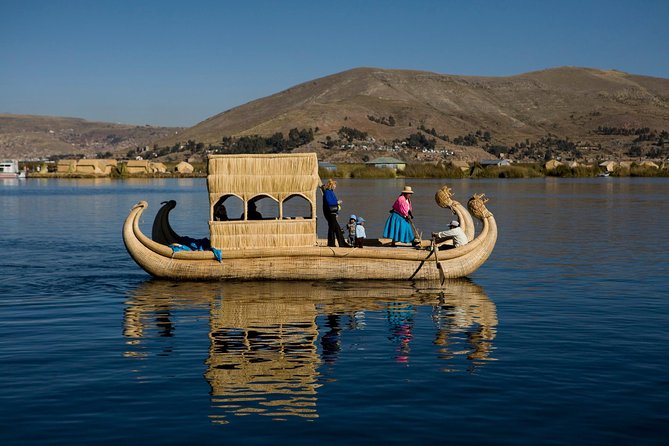
The final full day takes you onto Lake Titicaca. At the Uros Floating Islands, you see islands made from totora reeds and meet the local inhabitants who maintain them. The reeds are central to the construction of the islands and to many daily activities.
You then continue to Taquile Island, where local communities maintain traditional clothing and customs. The island offers broad views across the lake, along with a chance to see how life continues at a slower pace in a remote highland setting.
A typical lunch is included on Taquile. The excursion lasts about six hours and returns you to Puno in the afternoon.
The visit is a strong ending because it shifts the focus from imperial monuments to living communities. Keep in mind that Lake Titicaca is at high altitude. The combination of boat travel, walking, and thin air may be demanding if you have not adjusted well.
Hotels, transport, and the communication question
The tour includes seven nights in selected hotels, but the hotel names are not provided in advance in the information available here. Transfers cover the Lima and Cusco airports, the bus and hotel connections in Puno, and the Machu Picchu transport sequence.
The maximum group size is 15, which is small enough for a more manageable group without promising a private tour. English-language arrangements are referenced, but no specific guide names are supplied.
The biggest practical weakness is the flow of information. One booking experience involved receiving the next day’s schedule through the hotel front desk only in the evening, despite earlier requests for hotel names and dates. That can create needless uncertainty, especially around the Machu Picchu train and hotel timing.
I would ask for the full day-by-day schedule, hotel names, train departure times, and Machu Picchu circuit before departure. If the plan places you at Hotel Ferre in Machu Picchu Pueblo for roughly 26 hours with no scheduled activity before a 3:20 p.m. train the following day, ask if the arrangement can be changed. The possible idle time is significant on an eight-day trip.
Who should book this Peru trip?
I would choose this tour if you want major highlights with one booking. It suits first-time visitors who value pre-arranged vehicles, airport assistance, included admissions, and a planned route through several regions.
It also works well for anyone who wants to continue to Bolivia after Peru. Ending in Puno saves you from arranging a separate Lake Titicaca visit.
I would be more cautious if you want a relaxed pace or firm control over every hotel and departure time. The tour covers a lot, and the communication issue means you should take the initiative before arrival. Ask questions early, not after you land.
The 4.8 rating from 49 reviews and 94 percent recommendation rate suggest strong overall satisfaction, but the operational warning should not be ignored. The sights are excellent. The value depends on whether the local arrangements are clearly confirmed.
FAQ
Does the tour include flights from Lima to Cusco?
No. Flights are not included. You must arrange the Lima to Cusco flight yourself, and it needs to be in the morning with arrival no later than noon.
Where does the tour begin and end?
The tour begins at Jorge Chávez International Airport in Lima and ends in Puno.
Is Machu Picchu admission included?
Yes. The Machu Picchu excursion and admission are included, along with Voyager service train tickets and a buffet lunch at Sanctuary’s Lodge restaurant.
Which Machu Picchu circuit will I receive?
Route 2 is given priority. If it is unavailable, route 3B or route 1B may be offered for your confirmation before the ticket is issued.
Can I change my Machu Picchu ticket date?
No. The Machu Picchu admission ticket is nonrefundable, and date changes or amendments are not accepted after issuance.
Are meals included?
Seven breakfasts and three lunches are included. Other food and drinks are not included unless specifically stated.
How large is the tour group?
The maximum group size is 15 people.
Recently added around Lima
- Enjoy Lima Walking Historic Center, Plaza San Martin and Plaza de Armas★ 5.0 · 3 reviews
- From Lima: City tour Prehispanic + Colonial & Modern Lima★ 5.0 · 3 reviews
- Lima: City Sightseeing Panoramic Bus Tour★ 3.3 · 3 reviews
- City Tour Colonial and Modern Lima for 5 Hours★ 3.2 · 3 reviews
- Lima: Lunuhuaná Extreme All In + Cerro Azul + Rafting + ATV + Canopy★ 4.4 · 3 reviews
- Lima: Shanty Town Exploration★ 5.0 · 3 reviews
- Lima: Tour to Huaca Pucllana and Huaca Mateo Salado★ 5.0 · 3 reviews
- Lima: Historic Center Walking Tour with Pisco Sour Tasting★ 5.0 · 3 reviews
Lima Tours, compared.

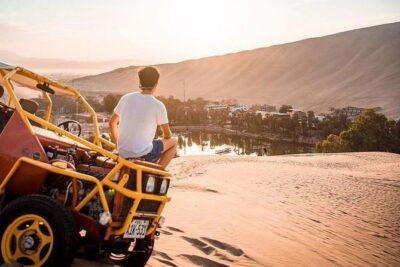
Full Day Paracas Ica and Huacachina from Lima All Included
Read our review →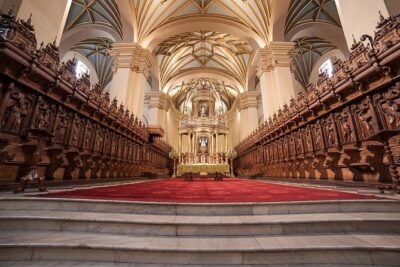
Lima’s Vibrant Heritage: Exploring the City’s Landmarks Half-day
Read our review →

Paracas and the Huacachina Oasis Guided Day Tour
Read our review →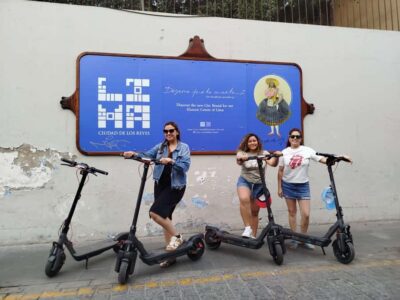
The Charm of Barranco & Pre Inca Pyramid in Miraflores
Read our review →
Full Day to Paracas and Huacachina Desert Oasis
Read our review →
Pachacamac Ruins & Barranco Half-Day Guided Tour
Read our review →Browse the lists this tour appears in